

Type B MCB selection is a trip-curve decision tied to the load, cable and fault conditions. Under IEC 60898-1, Type B describes a magnetic tripping range of 3–5 times rated current for products within that standard’s scope; it is not a shortcut for approving every lighting, motor or electronic load.
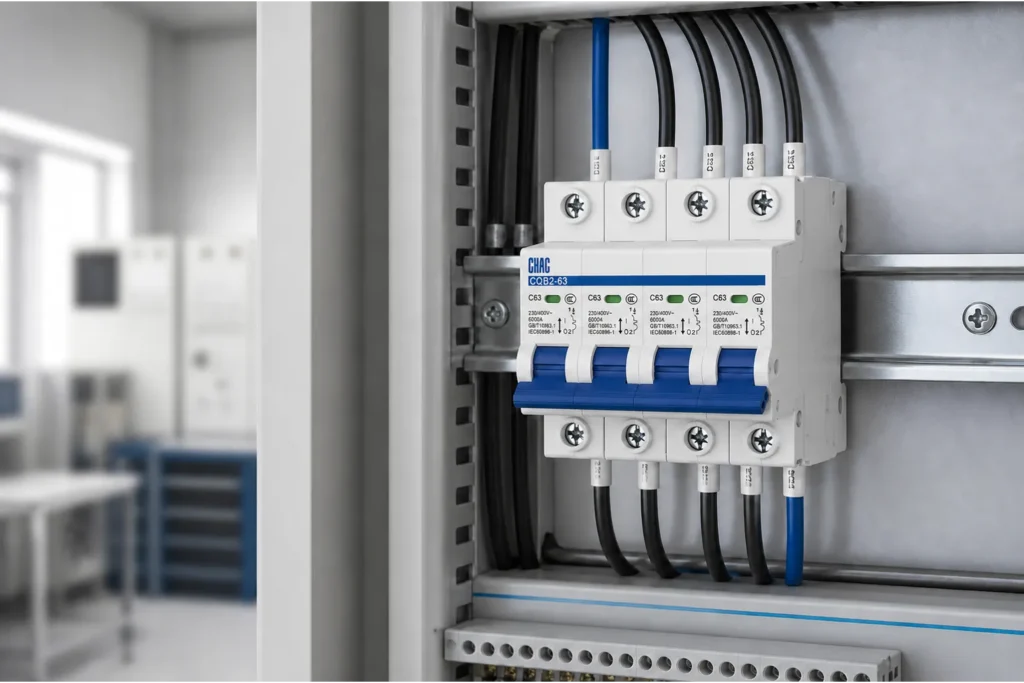
Separate the trip curve from the rest of the protection design
Record the load type, normal current, expected inrush, conductor capacity, prospective short-circuit current, disconnection time and Brechkraft before comparing curves. The MCB category can then be narrowed to models whose marked curve and ratings match the schedule.
What does a Type B review actually decide?
It decides whether the instantaneous magnetic behaviour is suitable for the circuit’s expected inrush and fault conditions. It does not decide pole count, residual-current type, enclosure size or compliance by itself.
Which load and circuit inputs should be collected first?
Collect steady-state current, cable installation method, ambient and grouping conditions, load technology, transformer or motor starting behaviour, fault-loop impedance and the applicable installation rules. An apparently low-current circuit can still have an inrush profile that affects curve selection.
How should the curve intent appear on the schedule?
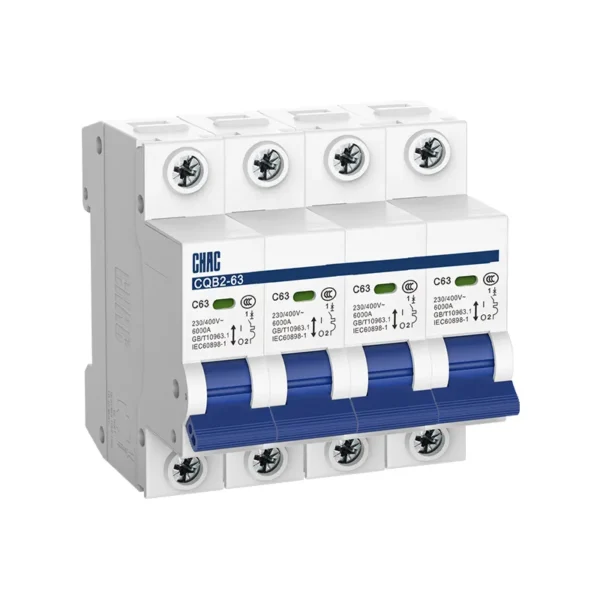
List the curve, rated current, pole configuration, voltage, breaking capacity and standard as separate fields. The selected model’s marking and datasheet should be returned with the quotation so the reviewer can see exactly what was proposed.
Where do nuisance trips and discrimination enter the review?
A higher magnetic threshold may reduce nuisance operation during inrush, but it can also make the required disconnection harder to achieve under a low fault current. Check the worst-case fault-loop impedance and coordination rather than choosing the curve from stock availability.
What should a Type B request contain?
Send the circuit schedule, load description, current, conductor details, supply voltage, fault level, trip curve, breaking capacity, pole arrangement and required documents. Avoid using “Type B” without stating whether the request concerns an MCB curve rather than an RCD waveform type.
Which CHAC product page should be checked first?
Review the CQB2-63 MCB page for the exact model information available, then compare the requested curve and ratings with the project schedule. Do not generalize one model’s data to the entire category.
When should curve selection return to the protection designer?
Return to the designer when the circuit includes motors, transformers, LED drivers, long cable runs, high fault levels or a local rule that changes the disconnection calculation. The IEC 60898-1 publication record is a standards reference, not a product approval.
The final Type B trip curve decision should therefore be visible beside the rated current, breaking capacity and fault-loop assumptions, rather than hidden in a supplier’s model code.
FAQs
What does Type B refer to on an MCB?
It refers to a trip-curve intent defined by the product standard family and confirmed on the selected model markings.
Can Type B be chosen because it is commonly stocked?
Stock availability is not a design approval; match the curve to the circuit and project rules first.
How is this different from pole-count selection?
Pole count and trip curve answer different questions and should be specified as separate RFQ fields.
What load information helps the curve review?
Provide load type, expected inrush context, and the circuit schedule notes that define operating expectations.
What should the supplier confirm in writing?
Confirm the proposed model identification, marked trip curve, and the documents requested in the RFQ.
When should the curve decision be locked?
Lock it after the load list and protection review are complete, before the panel bill of materials is released.


