A panel with empty breaker spaces can still lack capacity for a heat pump or EV charger. A larger enclosure may solve a circuit-layout problem without changing the service conductors, feeder limits, or utility supply. Solar and storage add another question: which sources can energize the bus, even when the main disconnect is open? Treating all three issues as a request for a bigger panel can leave the actual constraint unresolved. A useful upgrade plan separates equipment condition, calculated demand, circuit space, and source interconnection before deciding what to replace or expand.
The short answer is to begin with a field audit and a documented load calculation, then coordinate EV charging, heat pumps, solar, storage, and ordinary building loads as one system. A bus marked 200 A does not establish a 200 A service or prove spare load capacity. For US installations, panel markings and the adopted NEC determine permitted devices and source connections. Compare capacity expansion with load management only where the applicable rules permit the proposed control method, then finish with accurate source labels and as-built records.
Un electrical panel upgrade may replace an obsolete distribution point, create additional circuits, support electrification, or improve maintainability. It can also affect service conductors, feeders, meter equipment, grounding and bonding, fault-current ratings, and utility approvals. Electrical panel upgrade planning therefore starts with the whole power path rather than the enclosure alone.
The planning logic applies across homes and commercial facilities, although operating constraints differ. The authority having jurisdiction (AHJ), utility rules, adopted code, equipment instructions, and site conditions determine the final design. A qualified professional should verify them before equipment is ordered.
What existing panel and service data should be collected?
What should be inspected upstream of the panel?
Record the service voltage and phase, service-disconnect rating, panel and bus ratings, feeder conductor size, main protective device, circuit count, grounding and bonding arrangement, and signs of heat, corrosion, or moisture. Confirm the panel catalog data and the permitted breaker types from its labeling. Field tracing matters because a directory that says “plugs” or “lights” cannot support safe isolation or a reliable load schedule.
Support visual inspection with appropriate tests. Infrared thermography under representative load can reveal abnormal temperature patterns, while manufacturer instructions may call for calibrated torque tools. Insulation-resistance, continuity, or functional tests may also be appropriate, but no single result proves that the installation is suitable. Qualified personnel should select methods compatible with connected electronics and record the conditions and results for future comparison.
Why are spare spaces, bus ratings, service capacity, and fault duty different?
Spare spaces show where permitted devices may physically fit. The panelboard current rating limits current supplied through its main terminals under the specified conditions; the main protective device or other marked limitations may impose a lower usable rating. Service capacity depends on service equipment, conductors, utility supply, and calculated load. Available fault current is the prospective current at a point during a fault; it must be compared with device interrupting ratings and assembly short-circuit ratings at the applicable voltage. UL Solutions explains these markings in its Panelboard Application Guide, under “Current rating” and “Short-circuit current ratings.”
A panel can have empty positions and no practical load headroom. Conversely, a crowded panel may have calculated capacity but need a suitable subpanel or a larger enclosure for additional circuits. A tandem breaker accommodates two circuits in one breaker space only where the panel labeling permits it; it does not increase the bus, feeder, or service capacity. Document spare, reserved, and unusable positions separately, then state remaining calculated headroom in amperes or kilovolt-amperes.
How should current demand be compared with future loads?
NEC Article 220 provides calculation methods for branch circuits, feeders, and services in US installations. Adding every breaker-handle value is not a valid substitute. Continuous loads, motors, electric space heating, cooking, EV supply equipment, and other loads require the treatment specified by the adopted rules. Where an existing-load measurement method is permitted, interval utility data or a correctly installed load logger can help reveal coincident peaks and seasonal patterns. Use the locally adopted edition of NFPA 70: National Electrical Code, not a generic online calculation.
Model the current building, the first day after renovation, and a credible expansion case. State which loads can run together and which are controlled. The roadmap should include expected connection dates, voltage and phase, running and starting demand, duty cycle, connection point, and the decision that would trigger another study. This prevents “future-ready” from becoming an unsupported sales phrase.
How do EVs, solar, storage, and heat pumps affect the upgrade?
Electrification loads interact. EV charging may peak when fleet vehicles return, heat pumps may reach high demand during extreme weather, and battery charging may coincide with low electricity prices. Solar generation can reduce imported power during daylight, but it does not guarantee capacity after sunset. A battery inverter changes power direction and operating modes; it also introduces shutdown, isolation, and labeling requirements that a simple load total will not capture.
Build an operating picture before assigning capacity. Identify essential and flexible loads, EV energy needed by departure time, heat-pump backup-heater operation, battery reserve policy, solar export constraints, and demand-charge periods. Use interval data that represents the relevant season, then test equipment ratings against realistic operating scenarios. A measured snapshot cannot replace the required calculation method.
When can load management avoid a service-capacity increase?
EV load management can limit or sequence charging to reduce coincident demand, but its presence does not automatically authorize a smaller service calculation. The designer must identify the provision in the adopted code that permits the proposed method and verify the equipment’s suitability, settings, sensors, control logic, and failure behavior. A scheduling app or a monitor alone is not evidence of an accepted capacity-limiting system.
A service-capacity upgrade may be necessary when required demand exceeds the existing supply, critical loads cannot be shed, or the managed system would disrupt operations. It may involve the meter, service entrance, conductors, transformer interface, grounding-electrode system, and utility network, not just a higher-rated panel. Controls cannot repair a damaged bus or make an incompatible breaker acceptable. Resolve equipment condition and compatibility before comparing managed demand with conventional expansion.
| Upgrade path | Mejor ajuste | What it does not solve | Key evidence to request |
|---|---|---|---|
| Replace the panel at the same capacity | Obsolete, damaged, or poorly documented equipment with adequate upstream capacity | Does not add service or feeder headroom | Condition report, load calculation, ratings, and test plan |
| Add a subpanel | More circuit positions near a defined load area | Does not bypass feeder limits or bonding rules | Feeder calculation, voltage drop, protection, and location review |
| Use managed demand | Flexible loads with predictable priorities and a method permitted by the adopted rules | Does not cure deteriorated equipment, incompatible devices, or insufficient capacity for nonsheddable loads | Applicable code basis, equipment documentation, failure behavior, and commissioning record |
| Increase service capacity | Higher required demand or expansion that cannot depend on shedding | Does not automatically correct branch wiring or poor documentation | Utility approval, service design, fault-current basis, and outage plan |
Budget comparisons should include engineering, permits, utility work, shutdowns, temporary power, testing, labeling, and finish repair as well as hardware and labor. This electrical panel replacement cost guide explains why two quotes for apparently similar panel work can cover very different scopes.
Which solar and storage markings must be checked before reserving a breaker space?
Reserve a source connection, not just an empty position. UL Solutions’ Panelboard Application Guide distinguishes supply-side and load-side parallel-source arrangements. For panelboards intended for load-side connections, it describes markings specifying the maximum ampere rating of overcurrent devices for parallel sources. It also describes source-position warnings that prohibit relocating the source breaker in applicable arrangements. Check these instructions and the adopted interconnection calculation together; no universal backfeed allowance follows from the bus nameplate alone.
The upgrade file should identify every source, its connection point, disconnect, operating mode, and affected bus section. Record any specified hold-down kit for a back-fed plug-in unit. Where a power control system is used to limit source output, retain the exact approved system and settings; do not treat EV demand control as interchangeable with source-output control.
For standby or battery-backed operation, also document the transfer or interlock arrangement, whether the neutral is switched, and which circuits remain energized in backup mode. UL’s guide describes panel-specific standby interlock markings and neutral-system markings for panelboards with inlets. These are equipment-specific provisions, not permission to improvise a generator or inverter connection.
How should protection and monitoring be planned together?
How should protection match the actual hazards?
Overcurrent devices address overload and short-circuit conditions; they do not replace ground-fault, arc-fault, residual-current, or surge protection where those functions are required. For US work, apply the adopted NEC requirements for AFCI and GFCI protection. In IEC-based markets, select the appropriate RCD arrangement and type for the load characteristics and local installation rules.
Specify a surge protective device by its installation location, type, voltage configuration, ratings, upstream protection, and conductor routing. Short, direct connections generally improve surge performance, but manufacturer instructions govern the installation. Sites with rooftop equipment, long outdoor feeders, EV chargers, or sensitive controls may need a coordinated surge strategy rather than one device chosen only by a headline rating.
Available fault current deserves its own check whenever utility or transformer conditions change. The installed protective device must have an adequate interrupting rating, and the assembly must have a suitable short-circuit current rating. Commercial designs may also require a coordination study using manufacturer time-current data. Mixing breakers that physically fit is not evidence of permitted compatibility or selective coordination. UL’s panelboard guide describes required field-installed-unit markings and the limited, specific-panel scope of Classified replacement breakers.
What decision should monitoring support?
Panel-level monitoring is most valuable when the team first defines the decision it will support. Whole-building demand data can show when capacity is constrained. Circuit-level metering can separate EV, HVAC, process, tenant, or renewable-energy performance. Revenue or tenant billing may require approved metering rather than a general-purpose energy monitor. Specify measurement accuracy, sampling interval, data retention, communications, time synchronization, access rights, and the party responsible for reviewing alarms.
Monitoring does not create capacity, and a dashboard is not a substitute for protective devices. It can, however, confirm whether load-control logic works, reveal phase imbalance, support demand-charge management, and provide evidence before the next expansion. Keep the baseline data and commissioning settings with the as-built package instead of leaving them in one installer’s mobile account.
How should the outage and acceptance tests account for every source?
Define the shutdown window, essential loads, temporary-supply ratings, isolation points, lockout/tagout steps, absence-of-voltage verification, inspection hold points, and rollback plan. Commercial work may need phased feeder transfers; homes may need continuity for medical equipment, heating, refrigeration, or security. Confirm utility and inspection appointments before removal.
Do not equate an open main handle with a de-energized panel. The UL guide describes warnings that parallel-source disconnect terminals may be energized on both sides while open and that opening one source disconnect does not de-energize the panel. For US workplaces, 29 CFR 1910.333: Selection and use of work practices requires qualified-person testing for de-energization, including possible induced voltage or backfeed. The isolation procedure must follow the actual source diagram and equipment instructions.
| Área de decisión | Design question | Closeout evidence |
|---|---|---|
| Capacity | Which present and future loads can operate together? | Approved load calculation, assumptions, and measured-demand record where used |
| Protección | Are device functions and ratings suitable for the system and fault level? | Equipment data, settings, study results where required, and test records |
| Sources | What can energize each bus section in normal and backup modes? | Source diagram, connection and isolation labels, interlock or transfer data, and verified operating sequence |
| Operaciones | Which loads have priority and what happens if controls or communications fail? | Control narrative, alarm test, override instructions, and owner training |
| Expansion | Which spaces and capacity are spare, reserved, or unavailable? | Panel schedule, reserve register, and documented design trigger |
| Mantenimiento | Can technicians identify and isolate every source safely? | Labels, one-line diagram, circuit directory, test results, and as-builts |
How should spare capacity and equipment requirements be documented?
A procurement specification should state the market and adopted standards, voltage, frequency, phase, enclosure environment, service and bus ratings, fault-current basis, incomer and outgoing circuits, protection functions, neutral and grounding arrangements, cable entry, spare requirements, monitoring, labels, and required records. NEC 110.26 addresses access and working space, Article 250 covers grounding and bonding, and Article 408 covers panelboards. In IEC-based markets, local installation rules and the relevant IEC 60364 provisions govern installation; IEC 61439 addresses low-voltage switchgear and controlgear assemblies. These scopes are not interchangeable product certifications.
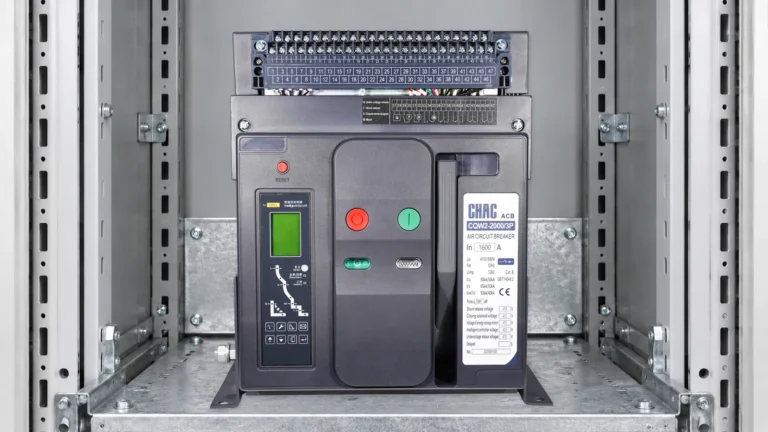
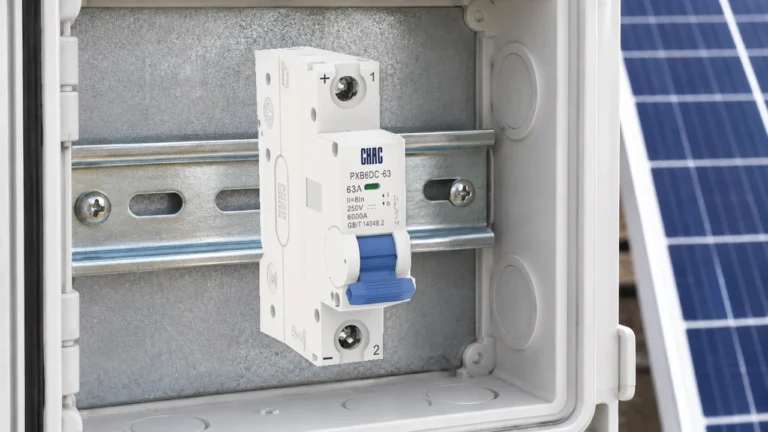
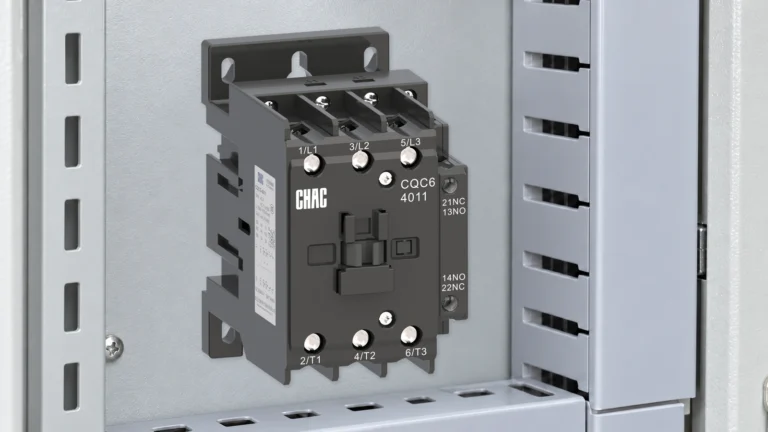
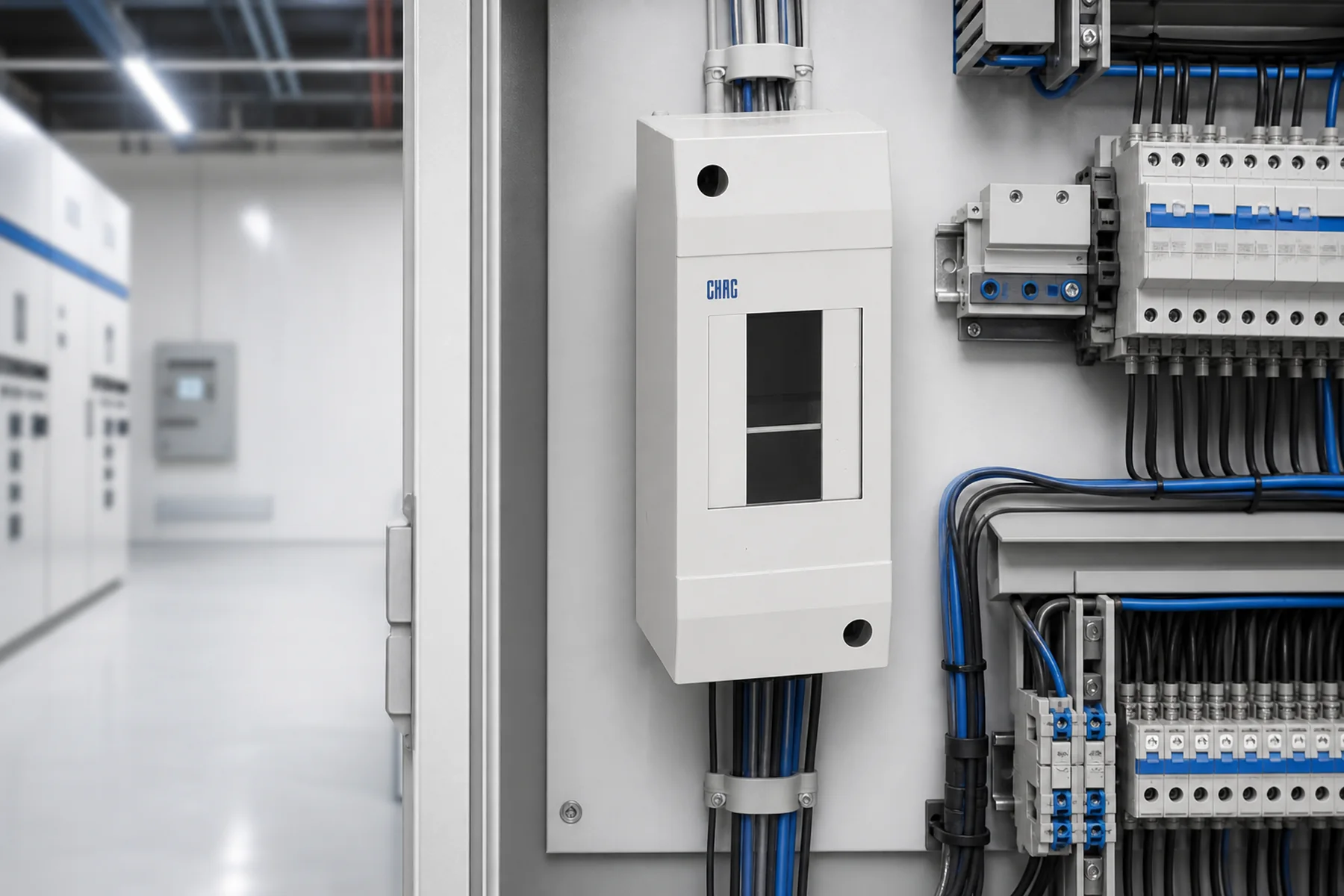
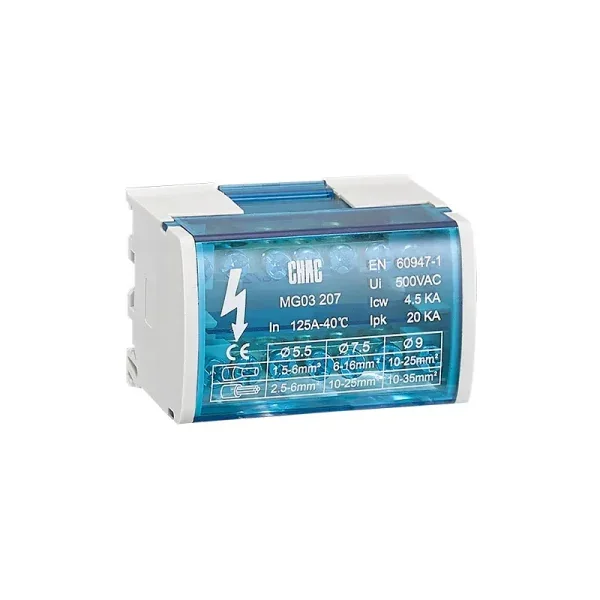
Evaluate equipment against the complete specification and manufacturer documentation. For projects whose market requirements match the proposed equipment, CHAC’s distribution boxes provide a product reference for discussing circuit layout. Exact ratings, permitted devices, installation conditions, and local acceptance still require verification. This is not a recommendation to substitute a CHAC enclosure or DIN-rail device into a proprietary US panelboard.
Closeout is the point at which many otherwise sound upgrades lose long-term value. Replace temporary markings with durable source, circuit, and shutdown labels. Update the one-line diagram and circuit directory after field changes, and include the final load calculation, equipment submittals, protection settings, torque records where required, test results, permits, and inspection outcome. Store editable and controlled PDF versions in the owner’s document system.
Create a reserve-space register that identifies each unused way as spare, reserved for a named project, or unavailable. Record the allowed load, phase, anticipated date, and the condition that requires engineering review. Record source-connection restrictions separately so a future installer does not move a backfeed breaker to free a convenient position. After any later tenant change or electrification project, update the directory and capacity model.
What other questions matter before an electrical panel upgrade?
Should I upgrade the service or install a larger panel?
A larger enclosure is useful when the main problem is circuit space and the existing feeder and service have sufficient calculated capacity. Upgrade the service when justified demand exceeds the existing supply or when utility and conductor limitations prevent the required expansion. Confirm both conditions with a load calculation and an upstream equipment review.
Can smart load management avoid a 200 amp service upgrade?
It can in some projects when flexible loads can be limited by a method permitted under the adopted code. It is not a universal substitute for capacity, damaged-equipment replacement, or breaker compatibility. Verify the required demand, equipment suitability, failure behavior, and local acceptance before comparing the operating compromise with conventional expansion.
Do EV charging and solar automatically require a panel upgrade?
No. EV charging requires a load-capacity assessment, while solar also requires a source-interconnection assessment. A panel may have enough capacity for a charger yet lack an acceptable solar connection arrangement. Check each against the applicable calculation, equipment markings, and utility requirements.
Is a 200 A service automatically enough for future electrification?
No. Service size is only one input. Confirm feeder capacity, bus rating, fault duty, voltage drop, grounding, available spaces, and the documented future-load scenario. Also distinguish the marked bus rating from the rating of the installed service disconnect.
How should solar panels and battery storage affect panel planning?
They change power-flow, protection, isolation, labeling, and operating-mode assumptions. Model generation, battery charging and discharge, backup loads, export limits, and shutdown behavior rather than subtracting solar nameplate output from the building peak. Retain the permitted connection positions and the diagram showing which sources can energize each bus section.
What records should an electrical panel upgrade include?
Keep the approved load calculation, one-line diagram, panel schedule, circuit directory, equipment data, protection settings, permits, inspection record, commissioning results, and as-built drawings. For solar, storage, or standby sources, retain the source isolation and transfer information. Where monitoring or load controls are installed, also retain sensor locations, control logic, account ownership, alarm tests, and baseline data.
How much spare capacity should an upgraded panel have?
There is no reliable universal percentage. Reserve physical spaces and calculated electrical headroom for documented future loads, while checking the bus, feeder, service, phase balance, and fault-current implications. Label reserved ways and review the capacity model whenever a new load or source is proposed.
Which references support the planning checks?
- Panelboard Application Guide, UL Solutions; current, short-circuit, field-installed equipment, standby, and parallel-source markings. Public guidance checked October 7, 2026; code-section numbering may vary by edition.
- NFPA 70: National Electrical Code, National Fire Protection Association; use the locally adopted edition for the installation.
- IEC 61439-1: Low-voltage switchgear and controlgear assemblies – Part 1: General rules, International Electrotechnical Commission; assembly requirements, not a substitute for local installation rules.
- 29 CFR 1910.333: Selection and use of work practices, US Occupational Safety and Health Administration; workplace electrical isolation and verification.
The useful distinction is between room for another circuit, capacity for another load, and permission to connect another source. Assess equipment condition first, calculate required demand, then verify the complete supply path and any proposed control method. For solar or storage, check connection limits and normal and backup operating modes before reserving breaker positions. Do not let an open main handle, a monitoring dashboard, or an apparently generous bus rating replace source isolation, equipment instructions, or the required calculation. A documented upgrade leaves the next project team a usable capacity model and a reliable shutdown procedure. Buyers developing a market-specific equipment specification can review CHAC’s equipos de distribución eléctrica against that specification without assuming US panelboard compatibility.