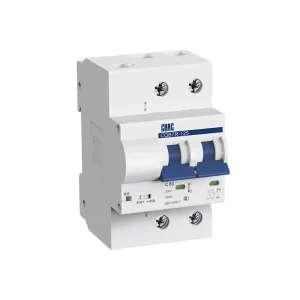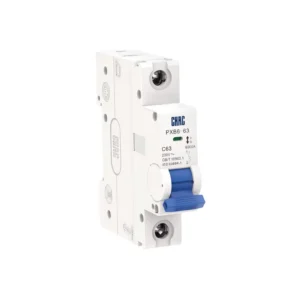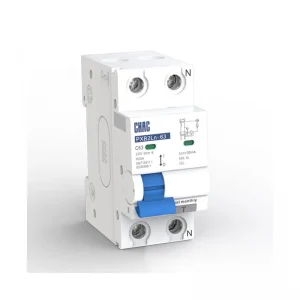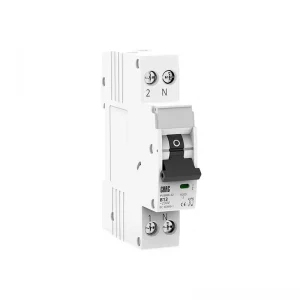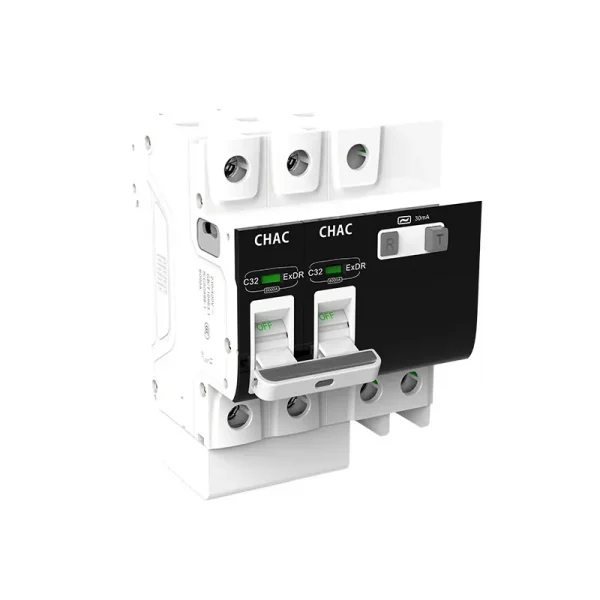


Disjoncteur miniature électronique à fuite de la série CQB3LE-63
Le CQB3LE-63 RCBO offre une protection contre les surcharges, les courts-circuits et les courants résiduels dans sa plage de 6 A à 63 A publiée. La sélection doit être basée sur la tension du circuit, le conducteur, le comportement de la charge, la valeur de courant d’impulsion prévue et les règles d’installation applicables — et non pas uniquement sur la puissance en ampères.
Vue d'ensemble du produit
CQB3LE-63 is an RCBO for 230/400V AC distribution circuits. It combines thermal-magnetic overcurrent protection with residual-current protection in one device. The published range covers 6A–63A, 1P+N / 2P / 3P / 3P+N / 4P, B / C / D curves and 30 / 50 / 100 / 300mA sensitivity options. The saved model data describes the residual-current or construction type as Electronic type; waveform type is not stated in the saved technical table.
The CQB3LE-63 range includes a 4 pole RCBO option within an electronic RCBO family covering several pole and sensitivity configurations.
The saved model record lists IEC 61009-1; GB/T 16917.1 as the applicable standard reference. It also lists CCC certification; scope must be confirmed for the ordered configuration.
Principales caractéristiques
Applications typiques
Typical use is in final or sub-distribution circuits where both overcurrent and residual-current protection are required. The project must still confirm the expected residual-current waveform, sensitivity, neutral arrangement, pole configuration, fault level, conductor size, enclosure conditions and local wiring rules.
Demandes d’admission et guide de sélection
Use the verified model values below to create a shortlist, then validate the complete circuit. Product ratings do not replace conductor calculations, a fault-current study, coordination review or local installation requirements.
| Point de sélection | CQB3LE-63 reference | Ce que le projet doit confirmer |
|---|---|---|
| Courant nominal | 6A–63A | Design current, conductor ampacity, installation method, ambient temperature and grouping |
| Voltage and frequency | 230/400V AC; 50Hz | Supply system and equipment rating |
| Configuration de la borne | 1P+N / 2P / 3P / 3P+N / 4P | Conductors to be switched/protected, including neutral treatment |
| Curve de déplacement | B/C/D | Load inrush and required disconnection performance |
| Residual-current selection | 30 / 50 / 100 / 300mA; Electronic type; waveform type is not stated in the saved technical table | Expected waveform, sensitivity, purpose and local rules |
| Capacité de rupture | 6kA (Icn = Ics) | Prospective short-circuit current and protection coordination |
Champ d'application de la protection
An RCBO combines overcurrent and residual-current protection; it is not simply an MCB with a different label.
MCB vs RCBO
Compare Protection Functions →
Residual-Current Selection
Published options: 30 / 50 / 100 / 300mA. Confirm sensitivity and waveform type for the actual circuit and market.
Sensitivity & Type
Review Selection Support →
Breaking Capacity and Curve
6kA (Icn = Ics); B / C / D curves. Both fault level and load inrush must be checked.
Fault Level & Inrush
Compare la capacité de rupture →
Pole and Wiring Arrangement
Published pole options: 1P+N / 2P / 3P / 3P+N / 4P. Use the exact model diagram; do not assume neutral routing.
Poles & Neutral
Confirm Wiring Data →
Guide d'achat
- Specify the exact model: CQB3LE-63.
- Indiquez la puissance requise entre 6 A et 63 A.
- Confirm pole arrangement: 1P+N / 2P / 3P / 3P+N / 4P.
- Confirm trip curve: B / C / D.
- Confirm residual-current sensitivity and type from the published 30 / 50 / 100 / 300mA options.
- Provide system voltage, expected fault level, destination market, quantity and document requirements.
Examens d’installation et de coordination
- Use the exact model drawing and instructions; do not infer supply direction, neutral routing or terminal positions from another product.
- Verify conductor material and cross-section against the circuit calculation and published terminal data.
- Confirm fault level, upstream/downstream coordination, enclosure temperature, grouping, altitude and clearances.
- L’installation, l’isolation, les essais et les opérations de maintenance doivent être effectués par du personnel qualifié conformément aux règles applicables.
Designation de type

Des courbes en virage

Dimensions (unité : mm)

| Pôles | L |
| 1P+N | 53.4 |
| 2P | 71.2 |
| 3P | 102.4 |
| 3P+N | 115.8 |
| 4P | 133.6 |
Technical data
| Paramètre | |
| Tension nominale | 230V~ (2P, 1P+N) / 400V~ (3P, 4P, 3P+N) |
| Courant nominal | 6, 10, 16, 20, 25, 32, 40, 50, 63 A |
| Number of Poles | 2P, 3P, 4P, 1P+N, 3P+N |
| Rated breaking capacity (Icn = Ics) | 6000 A |
| Rated residual operating current (IΔn) | 30, 50, 100, 300 mA |
| Rated residual non-operating current | 0.5 IΔn |
| Rated residual making and breaking capacity | 2000 A |
| Tripping time | ≤ 0.1 s |
| Mechanical life | 4000 operations |
| Electrical life | 4000 operations |
| Des courbes en virage | B, C, D |
| Degré de protection | IP20 |
| Catégorie de surtension | Ⅲ |
| Normes | IEC 61009-1, GB/T 16917.1 |
| Certification | CCC |
Table1 Tripping characteristics (Reference temp)
| Article | Ratedcurrent(A) | État initial | Test de courant In(A) | Temps de déclenchement ou non-déclenchement | Résultat attendu | Commentaires |
| Delay | ≤63 | Froid | 1.13ln | ≤1h | Non-chocant | |
| Delay | ≤63 | Following previous test | 1.45In | <1h | Desperance | Current smoothly rises to specified value in 5s |
| Delay | ≤32 | Froid | 2,55 en | 1<t<60s | Desperance | |
| Delay | ﹥32 | Froid | 2,55 en | 1<t<120s | Desperance | |
| Instantaneous | Any value | Froid | 3、5、10In | ≤0.1s | Non-chocant | B、C、D |
| Instantaneous | Any value | Froid | 5、10、20In | <0.1s | Desperance | B、C、D |
Note: The term “cold” means that the test is carried out at a reference calibration temperature without load before the test.
Règles relatives aux conducteurs et section de la conduite
| Section de cuivre (mm²) | Courant nominal (A) |
| 1 | En ≤6 |
| 1.5 | 6<Dans≤13 |
| 2.5 | 13<Dans ≤20 |
| 4 | 20<In≤25 |
| 6 | 25<In≤32 |
| 10 | 32<Dans ≤50 |
| 16 | 50<In≤63 |
Pourquoi choisir CHAC
Avec plus de 30 ans d'expérience dans la fabrication, 1100 employés et 100 millions de poteaux
Avec une capacité annuelle de 90% machines automatisées, CHAC garantit une production stable et rigoureuse.
contrôle qualité pour les clients OEM/ODM mondiaux. Notre système de fabrication interne permet une collaboration à long terme.
Coopération pour les marques électriques, les importateurs et les distributeurs.

30+
ANNÉE D'EXPÉRIENCE
Spécialisée dans la fabrication d'appareils électriques à faible tension

1100+
EMPLOYÉS
Une équipe professionnelle garantit une qualité et une livraison stables

100 millions d'euros
Capacité annuelle des poteaux
Capacité de production à grande échelle pour répondre à la demande mondiale

90%
PRODUCTION AUTOMATIQUE
Une automatisation avancée pour une efficacité et une cohérence élevées

Ligne de montage automatisée

Laboratoire d'essai
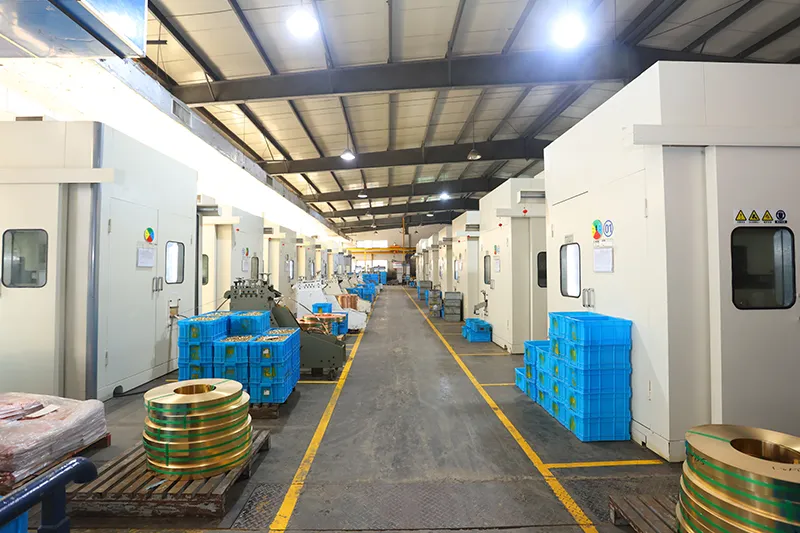
Injection et estampage
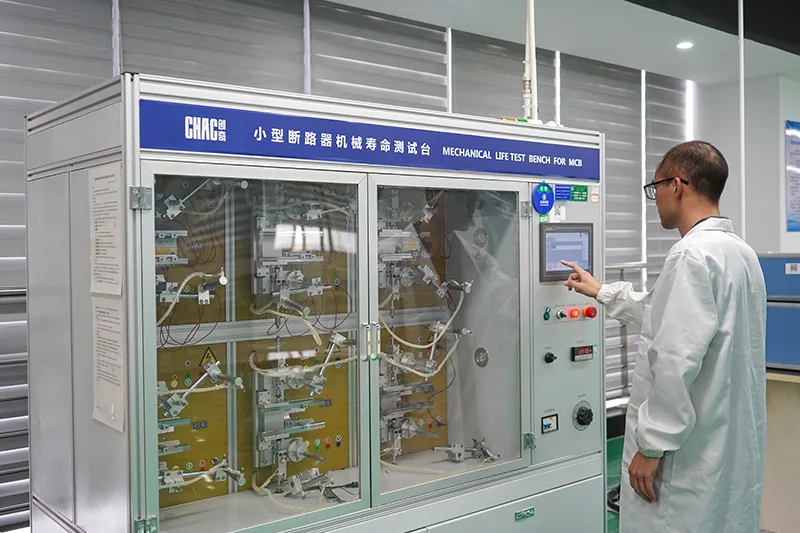
Inspection de qualité



Un système de contrôle qualité strict assure que chaque produit respecte les normes internationales.
Qu'est-ce que nous pouvons personnaliser ?
For CQB3LE-63 projects, CHAC can review private-label marking, packaging, approved appearance options, published 6A–63A electrical configurations and technical-document requirements. Requests outside the published range are subject to engineering evaluation, testing, minimum order quantity and project feasibility.

Logo et identité visuelle
Les options de marquage et de plaque d’identification de marque privée sont soumises à un contrôle de l’œuvre d’art et à l’approbation d’un échantillon.


Emballage
Personnalisation
Les cartons, les étiquettes et les manuels peuvent être préparés en fonction des spécifications de la commande approuvée et du marché de destination.
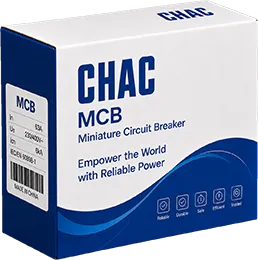

Électrique
Personnalisation
Select from the published 6A–63A, 1P+N / 2P / 3P / 3P+N / 4P and B / C / D options; non-standard requests require technical evaluation.

Produit
Apparence
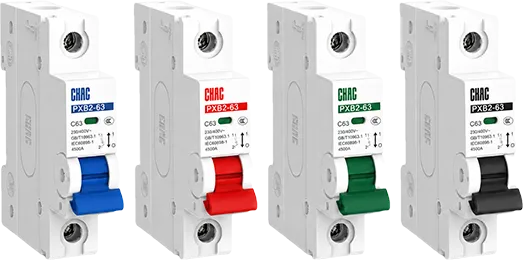
Appearance options can be reviewed subject to tooling, minimum order quantity, marking requirements and technical feasibility.

Certification
Support
Des fiches techniques, des dessins et des informations certifiées sont fournies pour la configuration approuvée applicable.


Ingénierie
Développement
Le soutien au projet peut inclure l’examen des dessins, l’évaluation des échantillons, les essais et la planification de la production, sous réserve d’approbation technique.

Télécharger
Disjoncteur miniature de la série CQB3
Vue d'ensemble complète des produits pour les composants électriques à basse tension et référence de sélection de produit.
Dois-je avoir des documents techniques ?
Contactez-nous pour obtenir des fiches techniques, des certificats, des dessins, des conseils de sélection ou une assistance pour des projets OEM/ODM.
CQB3LE-63 Product FAQ
What is the CQB3LE-63 RCBO?
The CQB3LE-63 combines overload and short-circuit protection with residual-current protection. Its verified range is 6A–63A with 1P+N / 2P / 3P / 3P+N / 4P configurations; the exact ordered option must match the circuit and local rules.
How does the CQB3LE-63 RCBO work?
A thermal-magnetic mechanism responds to overload and short-circuit conditions, while the residual-current function monitors imbalance between conductors and trips when the applicable threshold is reached. It does not remove the need for correct earthing, circuit design or testing.
How is the CQB3LE-63 RCBO different from an MCB or RCCB?
An MCB provides overcurrent protection but not residual-current protection. An RCCB provides residual-current protection but normally needs separate overcurrent protection. The CQB3LE-63 combines both functions in one product, within its published ratings.
Can the CQB3LE-63 RCBO be used as a circuit breaker?
It can provide the overcurrent and residual-current functions stated for the model, but only when 230/400V AC, 6A–63A, 6kA (Icn = Ics) and the residual-current requirements all suit the circuit. It should not be treated as a universal replacement for every breaker.
What are the selection limitations of the CQB3LE-63 RCBO?
The principal checks are residual-current sensitivity (30 / 50 / 100 / 300mA), residual-current or construction type (Electronic type; waveform type is not stated in the saved technical table), trip curve (B / C / D), pole arrangement (1P+N / 2P / 3P / 3P+N / 4P) and short-circuit data (6kA (Icn = Ics)). Board space, neutral handling, coordination and destination-market rules also have to be verified.
How should the CQB3LE-63 RCBO be wired and tested?
Use only the diagram and terminal identification supplied for the exact ordered model. Confirm supply direction, protected neutral arrangement, conductor size, torque and isolation procedure, then perform the prescribed test-button and functional checks. Qualified personnel should complete the work under local rules.
Confirm the Right CQB3LE-63 Configuration
Send the current rating, poles, trip curve, system voltage, expected fault level, destination market and quantity, plus residual-current sensitivity and type. CHAC will review the request against the published model range.