

A 50 A marking does not reveal whether a breaker is suitable for a 120 V appliance, a 240 V load, or equipment that needs both voltages. Choosing by amperage and physical fit alone can leave the wrong conductors protected, omit a required neutral, or produce a replacement that the panel does not permit. The useful comparison starts with the supply and appliance diagrams: which conductors carry the load, which must open together, and what voltage is applied to the equipment? Those questions determine pole count before conductor sizing, fault rating, and panel compatibility complete the selection.
The short answer is that, in a typical US 120/240 V split-phase system, a 50 amp single pole breaker normally serves a 120 V line-to-neutral circuit, while a two-pole 50 A device normally serves a 240 V line-to-line circuit. Calculated apparent power is 6,000 VA versus 12,000 VA at the same current, before load and installation limits. Two 50 A poles do not make a 100 A breaker. Confirm the actual supply, appliance voltage, neutral and grounding requirements, common-trip function, conductor and terminal ratings, panel compatibility, and available fault current before selecting a device.
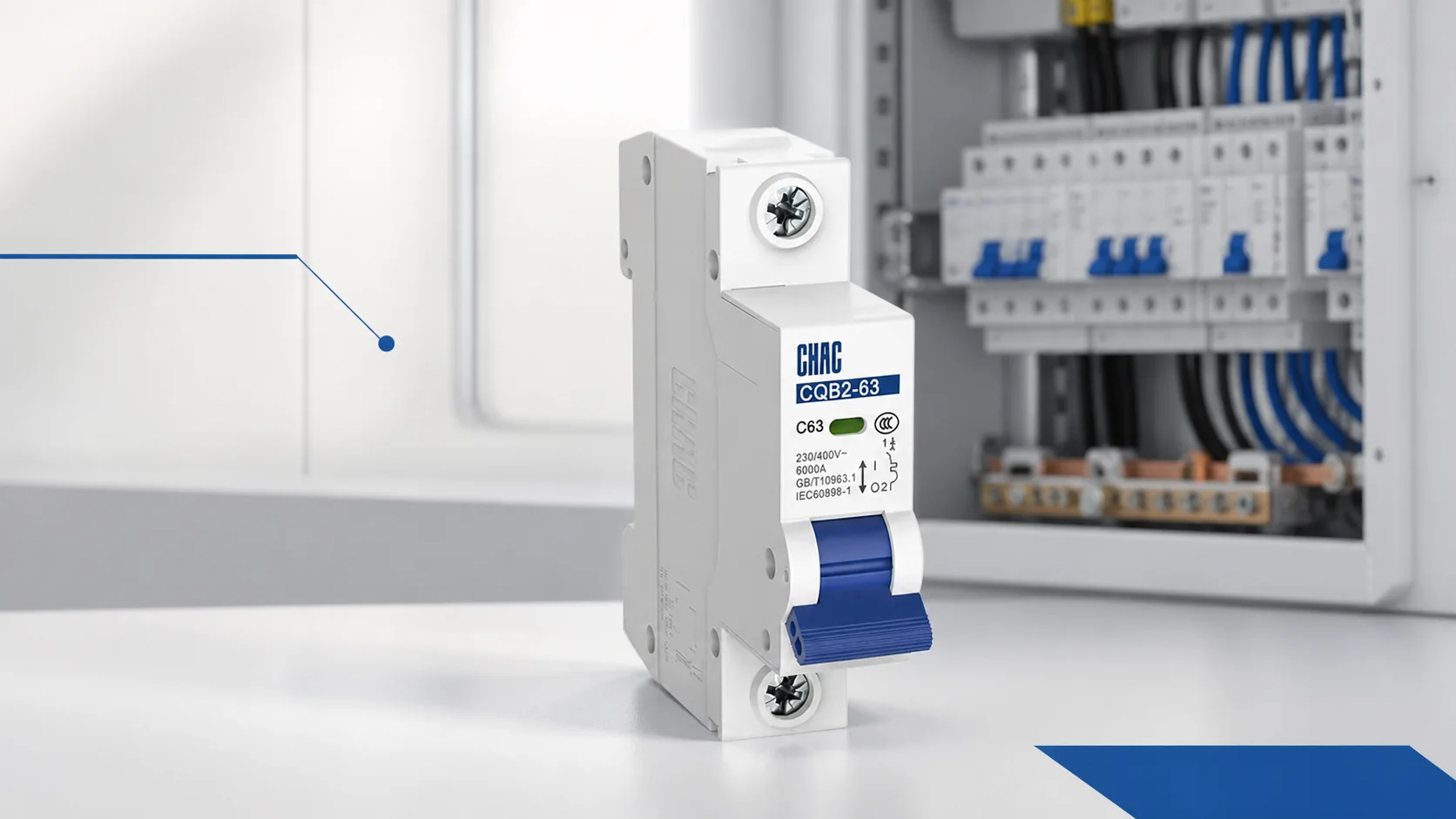
A single-pole overcurrent breaker protects and opens one pole. A common-trip two-pole breaker protects two poles and opens them together when either trips. These descriptions concern protection and disconnection, not universal voltage labels: distribution systems outside the typical US split-phase arrangement can have different line-to-earth and line-to-line voltages.
Does pole count change a 50 amp circuit’s voltage or current?
The first design question is which current-carrying conductors must be protected and opened together. In a nominal 120/240 V split-phase system, a 50 A single-pole circuit at 120 V has a calculated apparent-power value of 6,000 VA. A 50 amp double pole breaker supplying a 240 V line-to-line load gives 12,000 VA at 50 A because the voltage is twice as high. The same current flows through both ungrounded conductors of that line-to-line load; the pole ratings are not added.
These are voltage-times-current calculations, not permission to load a circuit continuously to its handle rating. Real input power also depends on power factor; useful output may be lower because of equipment losses. Duty cycle, equipment instructions, and installation rules determine the permitted load. The same distinction matters in smaller branch circuits, as this explanation of watts available on a 15 amp circuit shows.
| Decision point | Single-pole 50 A breaker | Common-trip double-pole 50 A breaker |
|---|---|---|
| Conductors protected in this comparison | One ungrounded conductor | Two ungrounded conductors operated together |
| Typical US split-phase circuit voltage | 120 V line to neutral | 240 V line to line |
| Calculated apparent power at rated current | 120 V × 50 A = 6,000 VA | 240 V × 50 A = 12,000 VA |
| Current interpretation | 50 A rating for the protected pole | 50 A rating for each pole, not a 100 A supply |
| Usual panel arrangement | One compatible branch position | Compatible positions across opposite legs; exact panel design controls |
| Primary selection risk | Assuming every 50 A load is 120 V | Ignoring trip function or the actual neutral requirement |
A pole-count comparison must remain tied to a particular supply. Informal descriptions such as 220 V or 230 V are not enough. Use the nominal system voltage, frequency, earthing arrangement, and equipment connection drawing. Schneider Electric’s Fundamental characteristics of a circuit-breaker identifies rated operational voltage, rated current, trip settings, and short-circuit breaking rating as separate selection characteristics; its individual product examples are not CHAC ratings.
What is the difference between common trip and a handle tie?
A two-pole breaker with an internal common-trip mechanism automatically opens both poles when either pole trips. A manufacturer-approved handle tie provides simultaneous manual operation where the applicable circuit rules permit it. The tie alone does not establish that two independent breakers have an internal common-trip mechanism. Determine whether the circuit requires simultaneous manual disconnection, automatic common trip, or both, then verify the exact device documentation and locally adopted code.
A tandem breaker is a different arrangement: it places independent branch poles in a compact panel format and does not, by itself, provide a common-trip line-to-line circuit. Nor does connecting two handles change the appliance’s rated voltage. This distinction matters whenever an electrical panel upgrade changes circuit count or available spaces.
UL Solutions’ Panelboard Application Guide requires attention to the marked supply and branch positions. Its example of a 240/120 V three-phase delta system warns that some handle-tied single-pole breakers are unsuitable on the leg that is 208 V to ground. That is a different system from residential split phase and demonstrates why line-to-line voltage alone cannot establish suitability.
Does a double-pole circuit need a neutral or an equipment ground?
The neutral question comes from the load diagram rather than the breaker rating. A pure 240 V line-to-line load normally does not need a neutral. Equipment combining a 240 V load with 120 V controls, lighting, or other internal loads may need two ungrounded conductors plus a neutral. A conventional two-pole overcurrent breaker does not protect or switch that neutral; devices with ground-fault sensing or neutral-switching functions need their own connection instructions.
The neutral and equipment grounding path have different functions and are not interchangeable. The neutral carries normal line-to-neutral load current; the equipment grounding path bonds exposed conductive parts and provides the protective fault-current path. Omitting a neutral because the appliance is line-to-line does not authorize omitting its required grounding connection.
Le Panelboard Application Guide, under “Factory bonded neutrals,” explains that bonding the neutral to the enclosure downstream of the service disconnect can put neutral current onto parallel grounding paths. Do not add a neutral-to-ground link at a downstream panel or appliance to compensate for a missing conductor. Service equipment, downstream panels, and appliances have different bonding arrangements; the exact installation instructions and current local rules determine the permitted connections.
Older appliance wiring needs separate review. GE Appliances’ NEC Requirements for 240/208 Volt Products describes the historical change to a separate equipment grounding conductor and limited treatment of existing installations. Its discussion of older three-wire connections is not permission to copy that arrangement into new work. Check the appliance’s current manual and the locally applicable exception, if any.
How does the load affect conductor sizing?
Start with the equipment nameplate and installation instructions. Record rated input current, supply voltage, duty, phase, frequency, and any marked maximum overcurrent protection. UL’s Panelboard Application Guide, under “Current rating,” advises that overcurrent devices should not be loaded continuously above 80% of rating unless the assembly, including those devices, is marked for 100% use. For that stated context, 80% of 50 A is 40 A; it is not a universal load limit for every equipment category or installation.
There is no universal conductor size for every 50 A installation. Conductor material, insulation rating, ambient temperature, bundling, installation method, and load calculation all matter. UL’s guide also explains that conductor temperature and size markings on the panel and breaker affect the connection. A higher insulation temperature does not automatically allow a smaller conductor at a lower-rated terminal. Voltage drop may call for a larger conductor on a long run even when minimum ampacity is satisfied.
EV charging, welding, and mixed-voltage appliances show why amperage alone cannot select the circuit:
| Application | What can change the decision? | What must be verified? |
|---|---|---|
| EV supply equipment | Sustained charging and adjustable charging settings | Maximum permitted setting, manufacturer circuit requirements, connection method, and locally required protection |
| Welder | Duty cycle and input-current characteristics | Nameplate data, permitted protective device, equipment-specific conductor calculation, and operating cycle |
| RV supply | Line-to-neutral loads rather than an assumed 240 V-only load | Specified receptacle and supply arrangement, neutral, grounding path, and applicable RV installation rules |
| Range or cooking equipment | Mixed-voltage internal loads and applicable demand calculations | Manufacturer circuit rating, neutral requirement, branch-circuit rules, and local amendments |
| Motor or transformer-related load | Starting current compared with steady operating current | Inrush profile, trip curve, conductor protection, coordination, and equipment-specific rules |
Increasing breaker amperage to stop a nuisance trip is not a diagnostic method. A qualified electrician should review operating current, startup behavior, terminations, and the time-current curve using appropriate safe-work procedures. Any proposed change must remain within the conductor and equipment limits.
Which ratings and approvals must match the panel?
After voltage, poles, and load have been resolved, check voltage and interrupting ratings. The latter must cover the available fault current under the applicable system conditions, or the installation must have a documented permitted series-rated combination. A 50 amp breaker marking describes its current rating; it does not state its short-circuit interrupting capacity. Schneider’s guide discusses Icn, Icu, and Ics in their respective product-standard contexts. Compare documented ratings at the same operating voltage and test framework, not just similar-looking kA numbers.
In North America, distinguish a branch-circuit breaker from a supplementary protector. UL Solutions’ Circuit Breaker and Supplementary Protector Services explains that supplementary protectors are not intended to provide the branch-circuit overcurrent protection required by the NEC. UL 489 and IEC product-standard references are not interchangeable proof of permission to install a device in a US panel.
The exact catalog number must be permitted for the panel. The UL panelboard guide describes panel-specific Classified replacements with limits on voltage, panel rating, and available fault current. A breaker that clips onto the bus is not necessarily compatible: mating contacts, electrical spacings, markings, and manufacturer instructions form part of the evidence. Retain any required panel label and series-rating documentation when replacing a device.
For IEC-based equipment selection, confirm the relevant product standard, supply arrangement, pole protection and switching functions, breaking rating, terminal data, and destination-market requirements. A standard number on a family page is not an exact-model conformity record, and a 1P+N device is not automatically a substitute for two protected ungrounded conductors in US split phase.
How should a 50 amp breaker be selected?
A low purchase price can be outweighed by engineering rework, rejected inspection, conductor changes, or an emergency replacement. A useful cost comparison includes the breaker, required panel or enclosure changes, conductor work, labor, testing, documentation, and spares. Compare complete approved arrangements rather than device prices alone.
- Trace the ungrounded conductors, neutral, and equipment grounding path on the supply and appliance diagrams.
- Calculate the load under the locally adopted rules for that equipment category.
- Confirm conductor ampacity and terminal limits for the actual installation conditions.
- Compare available fault current with the documented interrupting rating and any permitted series combination.
- Verify the exact part number, common-trip or handle-tie function, and panel authorization.
For a project designed around IEC-based equipment, CHAC Electric’s disjoncteur miniature information can support an exact-model documentation review. It does not establish a replacement for a proprietary UL-listed US panel breaker. The final choice must match the project diagram, load data, installation code, and approval requirements.
What else should you know about 50 amp single- and double-pole breakers?
Is a 50 amp breaker always double pole?
No. Single-pole and double-pole 50 A devices both exist. In a typical US split-phase panel, a 120 V line-to-neutral circuit may use one pole and a 240 V line-to-line circuit normally uses two protected poles. The supply, appliance diagram, trip function, and panel authorization control the choice.
How many watts can a 50 amp single-pole breaker supply?
At 120 V, 50 A corresponds to 6,000 VA before load and installation limits. It equals 6,000 W only at unity power factor. Continuous operation, equipment instructions, and applicable circuit rules can require a lower operating current.
Does a double-pole 50 amp breaker provide 100 amps?
No. The 50 A rating applies to each pole; it is not added into a 100 A rating. A 240 V line-to-line load drawing 50 A has a calculated apparent power of 12,000 VA, subject to the circuit’s permitted load.
Does every 240 V circuit need a neutral?
No. A pure line-to-line load normally does not need a neutral, while equipment with internal line-to-neutral loads may need one. A required equipment grounding path is separate and cannot substitute for the neutral. Follow the appliance diagram and current local rules, including any narrowly applicable existing-installation exception.
Can a 50 amp single-pole breaker run a 240 V appliance?
Not by taking one hot leg and the neutral from a typical 120/240 V split-phase supply: that provides 120 V, not 240 V. A line-to-line appliance normally requires the permitted two-pole arrangement across both hot legs. Different supply systems require their own voltage and conductor review.
Can two 50 amp single-pole breakers replace one double-pole breaker?
Not simply because their handles can be joined. A permitted handle tie establishes simultaneous manual operation, not necessarily automatic common trip. Use only the exact configuration allowed by the panel, equipment instructions, and adopted circuit rules.
Can the same 50 amp circuit serve an EV charger or welder?
Not by assumption. Sustained charging and a welder’s duty cycle can lead to different equipment-specific design requirements. Verify each nameplate, installation manual, conductor calculation, connection method, and applicable rules rather than transferring a circuit specification between them.
Which sources support these selection checks?
- Panelboard Application Guide, UL Solutions; public guidance reviewed October 7, 2026, particularly current ratings, conductor temperatures, field-installed units, and neutral bonding.
- Fundamental characteristics of a circuit-breaker, Schneider Electric Electrical Installation Guide; last edited August 5, 2026. Its named-device examples are not transferable product ratings.
- Circuit Breaker and Supplementary Protector Services, UL Solutions; reviewed October 7, 2026. Certification-body guidance, not a substitute for exact panel authorization.
- NEC Requirements for 240/208 Volt Products, GE Appliances; reviewed October 7, 2026. Historical appliance-wiring guidance, not the current locally adopted code.
What should determine the final choice?
Match the breaker to the circuit rather than to one ampere marking. First establish the actual supply and appliance voltages, then identify the conductors that need protection and simultaneous opening. Next resolve the neutral and equipment grounding paths without treating them as interchangeable. Only then complete the load calculation, conductor and terminal checks, fault-rating review, and exact panel authorization. Two poles do not double the current rating, and a linked handle does not by itself prove common trip. Those distinctions cannot be skipped for a convenient replacement. For an appropriately designed low-voltage project, CHAC’s équipement de distribution électrique information provides a starting point for requesting model-specific documents and selection support.


