Un fusible grillé et un disjoncteur déclenché soulèvent tous deux la même première question : la protection a-t-elle fonctionné correctement, ou l’équipement n’est-il plus adapté au circuit ? Réarmer un disjoncteur est plus pratique que de se procurer un fusible de remplacement, mais la commodité ne détermine pas si une armoire électrique est sûre. L’état de l’installation, les composants homologués, le pouvoir de coupure, la capacité de réserve et les fonctions de protection requises sont bien plus déterminants. Cette comparaison explique dans quelles circonstances il peut être judicieux de conserver une armoire à fusibles et quand une modernisation documentée du tableau électrique s’avère être la meilleure solution.
La réponse courte est : Un tableau électrique et un Disjoncteur boîte Tous deux peuvent assurer une protection efficace contre les surintensités, mais un fusible ne fonctionne qu’une seule fois et doit être remplacé, tandis qu’un disjoncteur peut normalement être réarmé après que le défaut a été identifié et corrigé. UL 248 couvre les familles de fusibles basse tension, tandis qu’UL 489 couvre les disjoncteurs à boîtier moulé et les enveloppes associées. Conservez une boîte à fusibles en bon état et correctement dimensionnée uniquement après avoir vérifié les connexions, la capacité disponible, le courant de court-circuit admissible et le contrôle des pièces ; prévoyez une mise à niveau du tableau lorsque l’état, les besoins d’extension ou la maintenabilité rendent le service continu impraticable.

La comparaison utile est d’ordre opérationnel, et non pas une simple opposition entre “ ancien ” et « nouveau ». Une documentation Remplacement du tableau électrique devrait être évalué en fonction des contraintes du tableau, de la capacité de service, de la disponibilité des pièces et de la procédure d’approbation locale. Le temps d’entretien, les pièces appropriées, l’identification des circuits, les charges futures et l’approbation locale peuvent s’avérer plus déterminants que le prix d’un seul appareil. Une planification Boîte de disjoncteur peut offrir une voie de modernisation plus claire, mais un nouveau coffret à lui seul ne peut pas remédier à une alimentation électrique sous-dimensionnée.
Comment les tableaux de fusibles et les disjoncteurs rétablissent-ils un circuit après une défaillance ?
Un fusible interrompt le courant en faisant fondre un élément calibré. Pour rétablir le circuit, il est nécessaire d’utiliser un fusible de la bonne catégorie et du bon calibre, après avoir identifié la cause de la défaillance. Un disjoncteur se déclenche et peut normalement être remis en service après correction de la panne et vérification des conditions. Dans les deux cas, il est interdit de réalimenter un circuit endommagé.
La catégorie de produit et le marché déterminent la norme. UL 248 concerne les fusibles basse tension, tandis que UL 489 porte sur les disjoncteurs à boîtier moulé et les enveloppes associées. IEC 60898-1 couvre les disjoncteurs pour installations domestiques et similaires ; IEC 60947-2 s’adresse aux disjoncteurs industriels. Leurs domaines d’application et leurs essais diffèrent, de sorte qu’une forme ou un marquage familiers ne garantissent pas l’interchangeabilité.
Après une surcharge, un tableau de fusibles doit être équipé de fusibles de rechange appropriés et conformes ; il ne faut pas y installer un fusible de calibre supérieur ou d’une catégorie inadaptée. Un tableau à disjoncteurs élimine cette gestion des stocks, mais exige toutefois une gamme de disjoncteurs homologuée. Un ajustement physique ne garantit pas la compatibilité.
| Dimension | Boîte à fusibles | Disjoncteur boîte |
|---|---|---|
| Après l'opération | Remplacez le fusible uniquement après avoir identifié la cause. | Réinitialiser uniquement après le diagnostic, la correction et les vérifications d’état. |
| Contrôle des pièces | Nécessite la classe de fusible, le calibre et les pièces de rechange disponibles appropriés. | Requires the approved breaker family and installation details |
| Interruption time | Can increase when the correct spare is unavailable | Can be shorter when a reset is appropriate |
| Expansion | Often constrained in legacy assemblies | Can offer more options for new circuits and accessories |
| Documentation | Depends on current labels and disciplined spare records | Can support clearer schedules and standardized maintenance |
| Ownership cost | May be economical where condition and parts support remain sound | May reduce repeated service effort and simplify planned additions |
When do service capacity and equipment condition justify replacement?
A panel’s service rating is not confirmed spare capacity. A qualified person should calculate existing and proposed loads under the adopted code, check conductors and service equipment, and use measured demand only where permitted. Heat pumps and EV charging can change both peak demand and required branch count.
Condition can decide the case even when load fits. Heat discoloration, melted insulation, brittle holders, corrosion, damaged bus surfaces, or loose terminations require qualified examination. Infrared scanning can reveal temperature differences under load, but it does not replace de-energized inspection or manufacturer-specified connection practices. NFPA 70B provides a maintenance framework, not certification of an installed panel.
A interrupteur tandem discussion should start with panel labeling and compatibility, not an assumption that two circuits can share one position. If the box lacks room for circuits, surge protection, metering, or required protective functions, a larger assembly may be easier to maintain.
Load growth does not always require full replacement. Compatible dynamic load management can limit an EV charger when site demand reaches a set threshold. If the calculation method, controls, fail-safe behavior, equipment, and local approval support it, this may avoid a larger service. It cannot correct heat damage, inadequate fault ratings, or a deteriorated box.
How should owners compare repair with a panel upgrade?
Begin with four records: circuit schedule, condition report, service and load calculation, and planned-load list. Document available fault current and confirm suitable interrupting or short-circuit ratings. The result is a traceable decision rather than a preference.
In multi-tenant properties, modular metering can clarify circuit or occupancy consumption. Accuracy, communications, installation category, and local billing rules must fit its intended use. EV and heat-pump readiness also requires branch capacity, conductor routes, control space, demand assumptions, and expansion positions.
Plan surge protection with the assembly. Code, exposure, building systems, and destination market determine requirements. The device needs suitable ratings, connections, any specified overcurrent arrangement, and a replacement path; reserving a module alone provides no protection.
Where a breaker design is justified, documented Disjoncteurs miniatures may support branch protection in a suitable approved assembly. Selection depends on voltage, poles, current, trip characteristics, interrupting capacity, conductors, ambient conditions, and destination-market standards.
| État observé | Pourquoi c'est important | Typical decision path |
|---|---|---|
| One isolated fuse operation with a sound enclosure and controlled spares | May be a correctable circuit event rather than an upgrade trigger | Correct the cause, replace like for like, and record the work |
| Repeated overloads or material planned load growth | Suggests the circuit plan or available capacity no longer fits the duty | Calculate loads and compare redistribution, managed loading, or replacement |
| Heat damage, degraded holders, or suspect connections | Indicates an equipment-condition problem beyond the operated device | De-energize as appropriate and obtain a qualified replacement assessment |
| No room for surge protection, metering, or needed circuits | Limits future functions and maintainability | Plan an assembly with documented expansion space |
| Sound panel but one large controllable future load | Peak coincidence may be the constraint rather than total equipment condition | Evaluate approved dynamic load management before increasing service size |
| Unclear fault rating or unavailable compliant parts | Creates safety, inspection, and procurement uncertainty | Require engineering and authority review before alteration |
Which local approvals and insurance conditions should be checked?
Installation rules depend on jurisdiction. In the United States, the adopted NFPA 70 edition, local amendments, listing, clearances, grounding, and part compatibility can affect the project. IEC-based markets may differ. A component standard does not approve an improvised panel combination or certify the installed system.
Permits and inspections also vary by location and scope, so confirm requirements with the authority having jurisdiction. Insurance is equally conditional: a carrier may ask about age, condition, loss history, inspections, or alterations, but no universal rule makes every fuse box uninsurable or every breaker conversion coverage-changing. Seek project-specific guidance.
Does removing a fuse provide the same isolation as a disconnect?
No. Removing an operated fuse may interrupt its branch, but it does not automatically provide a service-disconnecting means or make the holder safe to access. UL’s Guide d'utilisation des panneaux de contrôle distinguishes fuse removal from a switch or pullout assembly evaluated for disconnection. This is a useful boundary when planning maintenance on a legacy box: the isolation point must be identified before anyone handles internal parts.
A replacement enclosure introduces a different boundary. Its size and appearance do not establish the completed board’s short-circuit rating, accepted protective devices or suitability as service equipment. Compare the assembly markings, approved components, enclosure conditions and available fault current. A breaker with a higher individual interrupting rating does not upgrade an undocumented bus or holder arrangement.
Keep the retrofit decision auditable by separating three scopes in the quotation: repairing the existing protected circuit, replacing the distribution assembly, and increasing the service capacity. They may occur together, but they solve different problems and can require different utility or inspection work. This avoids presenting a more modern-looking box as evidence that load or fault-duty constraints have been resolved.
Fuse box vs circuit breaker box questions
Is a fuse box less safe than a circuit breaker box?
Not automatically. A correctly selected and maintained fuse system can protect circuits, but age, wrong replacements, weak labels, or deteriorated connections may add risk. Judge the complete installed condition and ratings.
Why do many panel upgrades use breaker boxes?
Breaker boxes are generally easier to restore after a corrected fault, document, expand, and coordinate with accessories. Still require a load calculation, condition assessment, fault-rating review, and approved assembly.
Can a blown fuse simply be replaced with a larger one?
No. Match the documented circuit design, holder, and approved fuse type. A larger fuse can leave conductors or equipment inadequately protected; diagnose the overload or fault instead.
When should a business replace the whole box instead of repairing it?
Replacement becomes more likely with heat damage, degraded connections, uncertain ratings, unavailable parts, repeated overloads, or insufficient room. A sound box constrained by one controllable load may instead warrant dynamic load management, subject to code and local approval.
Do breaker boxes remove the need for professional testing?
No. A breaker box still needs load and fault review, compatibility checks, installation control, identification, and verification under applicable rules. Resettable hardware is not a substitute for diagnosis.
Does changing the enclosure increase the panel’s fault rating?
No. The rating belongs to the documented assembly and its specified components and conditions. A new enclosure or higher-rated individual breaker does not establish a new short-circuit rating for the whole panel.
Official references
- Solutions UL : Guide d'application pour les panneaux de contrôle; markings, approved components, short-circuit ratings and service-disconnection boundaries.
- UL Solutions : Services de disjoncteur et de protection complémentaire; product and application scopes differ.
- OSHA 29 CFR 1910.333 : Pratiques en matière de travaux électriques; applies to covered US workplaces, including isolation and verification.
The practical rule is simple: choose the box that clears faults safely, fits the verified load plan, and can still be maintained correctly five years from now.
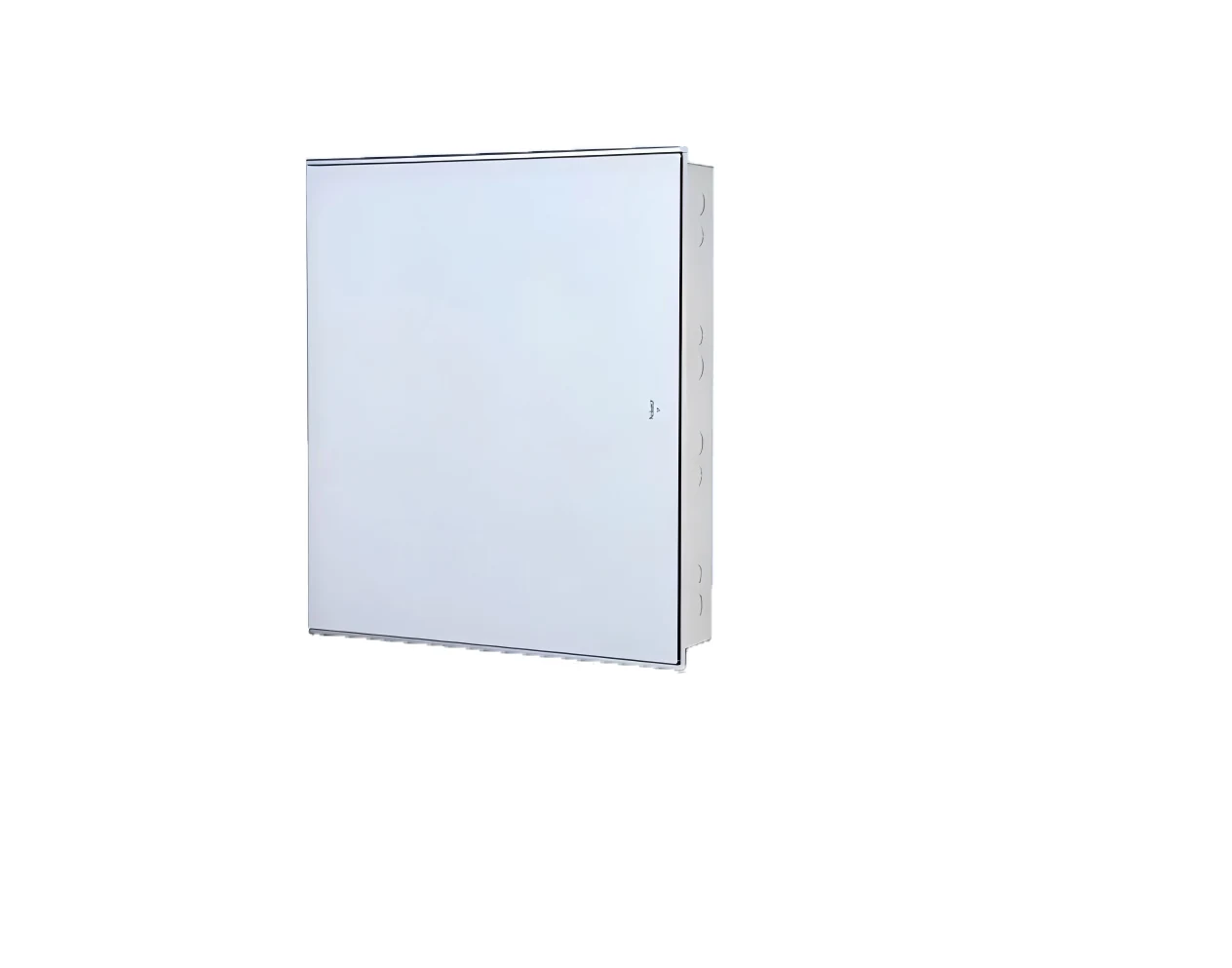
If you are comparing a legacy fuse box with a modern replacement path, review the CQMG20C distribution box and contact CHAC Electric with your circuit schedule, load-growth assumptions, destination market, and documentation needs. Product suitability should be confirmed for the specific application and approved assembly configuration.