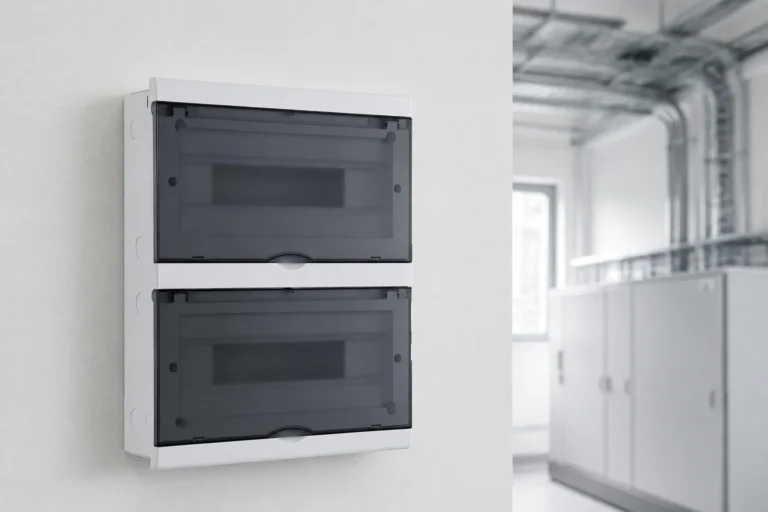
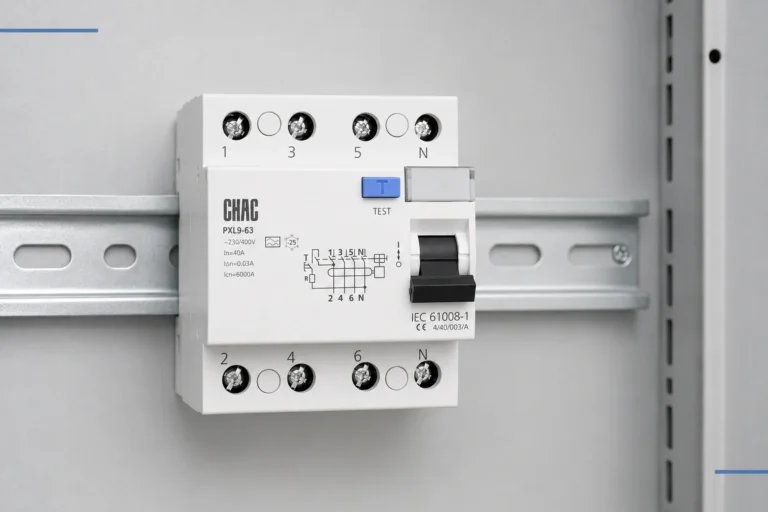
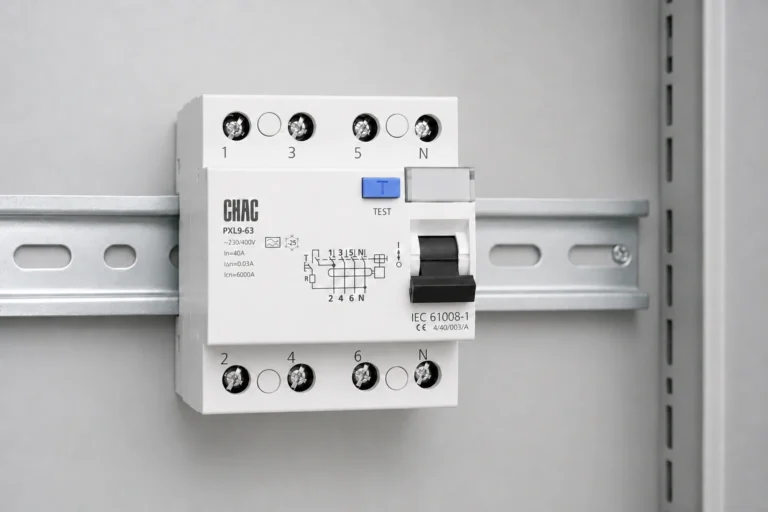
Illustrative field scenario: When Maya, a facilities manager in Houston, starts a rooftop air-conditioning unit after a summer storm, the thermostat resets, the condenser contactor drops out, and the building loses cooling within seconds. A later inspection finds no loose terminal or failed compressor; the root cause is an underspecified transient-protection arrangement and a long branch-circuit run. The lesson is practical: a device that is merely labelled “surge protector” is not automatically the right protection for an AC unit or furnace.
Ringkasan: Effective hvac surge protector installation starts with the supply system, grounding arrangement, exposure, and the equipment manufacturer’s instructions—not with a generic ampere label. NEC Article 285 addresses surge-protective devices on circuits up to 1,000 V, while IEC 61643-11 sets requirements and test methods for SPDs connected to low-voltage power systems. Have a qualified electrician coordinate the SPD location, conductors, overcurrent protection, and commissioning record with the HVAC disconnect or distribution panel before energizing the equipment.
HVAC electronics are exposed to switching transients from motors, contactors, variable-frequency drives, and nearby lightning activity. The compressor, control board, ignition module, thermostat, and communication wiring do not all experience the same path or energy. Protection therefore works as a coordinated system: reduce the transient at the service or distribution point, then limit residual voltage close to sensitive equipment where the installation permits it.
What an HVAC surge protector actually does
A surge protective device (SPD) provides a controlled path for a short-duration overvoltage so the connected circuit sees a lower transient than it would without the device. It is not a voltage regulator, backup supply, or substitute for correct overcurrent protection. It also cannot guarantee that an HVAC component will survive every event; its performance depends on the system voltage, earthing and bonding, conductor length, device coordination, and the magnitude and waveform of the surge.
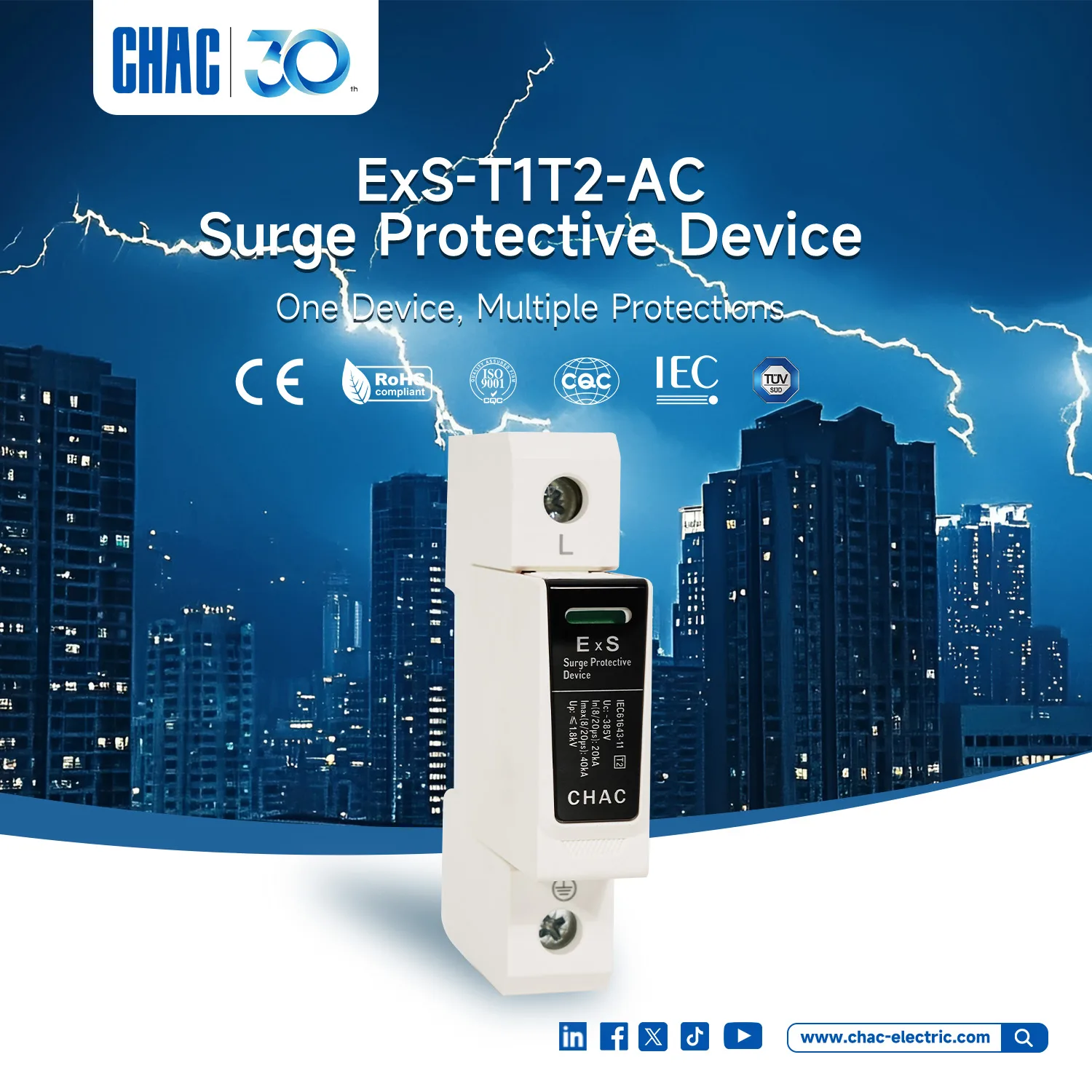
For a surge protector for hvac unit, the installer should identify whether the equipment is supplied from a dedicated disconnect, a nearby panel, or a longer feeder. A short, straight connection with the manufacturer-specified conductor size normally reduces lead inductance; routing, bend radius, and terminal torque matter because the SPD can only clamp effectively when its connection path is engineered as part of the circuit.
Where should the device be installed?
There is no universal “one box at the condenser” answer. The best location is the point that limits the surge on the conductors feeding the protected equipment while remaining accessible for inspection. Depending on the design, that may be a service-entrance or distribution-panel SPD, a branch-circuit SPD at the HVAC disconnect, or coordinated protection at more than one point. The installation must follow the SPD listing, wiring diagram, enclosure rating, and local code.
For a split system, consider the outdoor condenser circuit and the indoor air-handler or furnace circuit separately; their feeders may originate in different panels. For packaged rooftop equipment, the disconnect and control cabinet may be close physically but still require a code-compliant connection. Keep the device where status indicators can be inspected without exposing personnel to live parts, and provide the working clearance required for the electrical equipment.
The sequence below is a procurement and installation checklist, not a substitute for a licensed electrician’s design:
- Record nominal voltage, phase, frequency, grounding system, available fault current, and the HVAC manufacturer’s protection instructions.
- Map the feeder, disconnect, panel, and control wiring; note long runs, outdoor exposure, and other large inductive loads.
- Select an SPD type and ratings that match the system, enclosure location, and intended connection point.
- Install with the specified conductors and overcurrent protection; keep the connection short and mechanically protected.
- Verify torque, bonding, status indication, labels, and documentation; record the date and installer for future maintenance.
How to compare protection options
Type designations describe installation location and application context, not a universal ranking. The following comparison helps a project team discuss the trade-offs without assuming that one option is sufficient for every building.
| Option | Typical position | Useful when | Important limitation |
|---|---|---|---|
| Type 1 SPD | Service entrance or line side of the main overcurrent device, where permitted | The design needs an upstream first stage for service-level exposure | It does not remove the need to assess branch circuits and sensitive controls |
| Type 2 SPD | Load side of the service equipment, such as a distribution or HVAC panel | A branch or panel-level protection point is practical and accessible | Coordination and lead length still determine the voltage seen by equipment |
| Type 3 SPD | Close to a particular load or at a point of use, where the product is intended for it | Residual protection is needed near sensitive controls after upstream protection | It is not a replacement for properly selected upstream protection |
| Coordinated stages | More than one location, selected as a system | Large facilities, long feeders, or mixed indoor/outdoor equipment make coordination valuable | Requires a documented design rather than simply adding devices |
For a surge protector for hvac system, ask the supplier to show the intended connection point, nominal system voltage, maximum continuous operating voltage (Uc or MCOV as applicable), nominal discharge current (In), voltage protection level (Up), short-circuit or backup-protection conditions, and enclosure/environment constraints. These fields support comparison; they do not by themselves prove suitability for a particular installation.
The same discipline applies to furnace surge protector installation: identify the furnace feeder and ignition/control circuits, then verify that the selected device and its location match the manufacturer’s instructions and the adopted code.
Selection by project condition
Use the matrix below during design review. It deliberately avoids a universal rating recommendation because the correct choice changes with the supply and the installation environment.
| Dimensi keputusan | Questions to document | Procurement implication |
|---|---|---|
| Exposure | Is the building in a high-lightning area, industrial site, or location with frequent switching? | Confirm the protection strategy and whether staged SPDs are warranted. |
| Electrical system | What are nominal voltage, phase, frequency, grounding system, and fault-current conditions? | Reject devices whose Uc, configuration, or backup protection does not match the system. |
| Equipment layout | Are the condenser, furnace, air handler, and controls on separate feeders or panels? | Plan each relevant circuit and avoid assuming one device covers every cable path. |
| Lingkungan | Will the SPD be outdoors, in a wet location, or in a hot mechanical room? | Verify enclosure, temperature, ingress, and inspection requirements from the product documentation. |
| Serviceability | Can an electrician see the status indicator and replace the device safely? | Prioritize accessible mounting and a clear maintenance record over hidden placement. |
Standards, testing, and commercial risk
In the United States, the National Electrical Code is adopted and amended by jurisdictions; the adopted edition and local amendments control the installation. NEC Article 285 covers surge-protective devices on circuits rated 1,000 V or less. The article is a code framework, not a statement that every SPD or HVAC installation is automatically compliant.
IEC 61643-11 covers low-voltage SPDs connected to low-voltage power systems and specifies requirements and test methods. A test method or product standard is not, by itself, proof of certification for a destination market. Procurement teams should request the applicable declaration, listing, or third-party evidence from the manufacturer and verify that it matches the exact model and configuration being supplied.
Unsupported claims create practical exposure: an inspector may reject the installation, a distributor may face returns, and a building owner may discover that a warranty condition was not met. Keep the submittal package with the wiring diagram, data sheet, installation instructions, inspection record, and any market-specific conformity evidence.
Buying and installing with fewer surprises
- Start with the one-line diagram. Do not choose from a photograph or a nominal current alone; verify the exact system and connection point.
- Check the complete data sheet. Compare Uc/MCOV, In, Up, configuration, enclosure, backup protection, and replacement indication against the project requirements.
- Coordinate with the HVAC OEM. Confirm whether the manufacturer specifies an SPD, a disconnect arrangement, control-circuit protection, or a particular installation distance.
- Specify evidence, not slogans. Request the applicable test standard, instructions, drawings, and market documentation; do not convert a standard reference into an unverified certification claim.
- Plan maintenance. Record status checks and replacement criteria, especially where the device is exposed to repeated switching or lightning events.
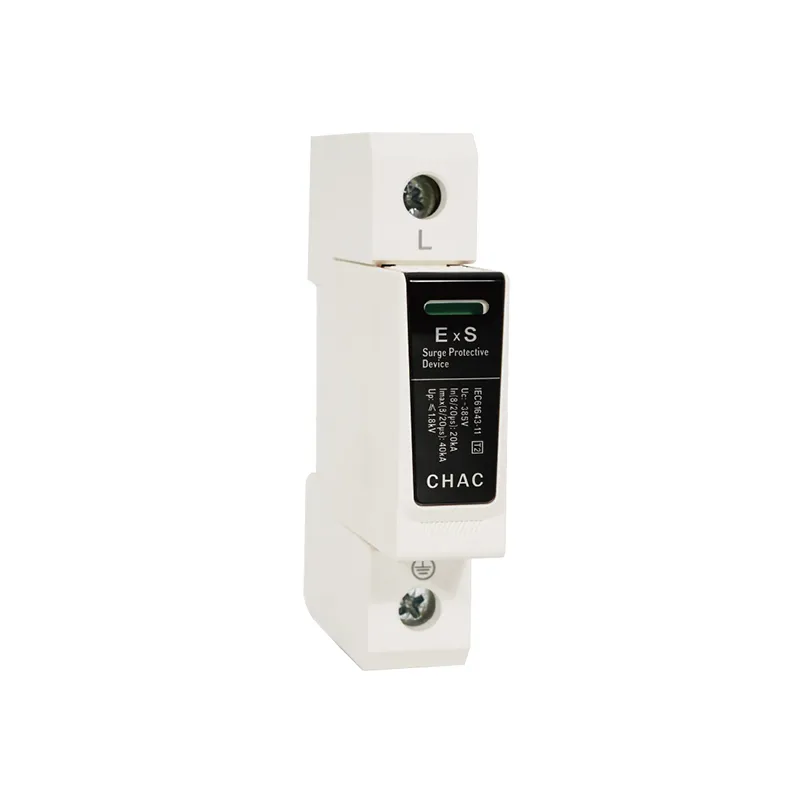
CHAC Electric supplies configurable low-voltage protection equipment for OEM, panel-builder, and distribution programs. Review the available surge protection device category against the project’s electrical data, then ask for model-specific documentation before approval. The EXS T1/T2 AC surge protector is one product reference for a technical review; final suitability still depends on the system and installation conditions.
Pertanyaan yang sering diajukan
How much does it cost to install an HVAC surge protector?
There is no responsible single price: labor access, panel space, permits, conductor routing, enclosure requirements, and the selected device all change the quote. Ask for a line-item estimate that identifies the SPD model, installation point, testing, labeling, and any required panel or disconnect work. A low device price can be misleading if the installation requires additional coordination or rework.
Does an HVAC system need a surge protector?
Many HVAC systems benefit from evaluated surge protection because they combine motors with electronic controls, but the need and arrangement depend on the building’s electrical design, exposure, and local requirements. Have an electrician assess the service, branch circuits, controls, and manufacturer guidance rather than treating a generic device as universal insurance.
Where Do You Install an Hvac Surge Protector | Thor Thor?
Install it at a code-permitted service, distribution, branch, or point-of-use location selected to limit transient voltage on the relevant conductors. For an HVAC project, that may mean the panel feeding the disconnect or a coordinated device near the equipment; the electrician must follow the product wiring diagram and local working-clearance rules.
What is hvac surge protector installation and what does it protect?
HVAC surge protector installation is the selection, mounting, wiring, and verification of an SPD for the electrical circuits serving air-conditioning, heat-pump, air-handler, or furnace equipment. It is intended to reduce transient overvoltage stress on power and, where separately addressed, control circuits; it does not regulate normal voltage or replace grounding, bonding, breakers, or maintenance.
Where should the device be installed?
Choose the nearest practical, accessible connection point that protects the intended circuit and keeps the SPD leads short, subject to the manufacturer’s instructions and the adopted electrical code. If the outdoor unit and indoor furnace are on different feeders, assess each path; one device cannot be assumed to protect every conductor.
Why does a surge protector keep tripping?
An SPD may disconnect or indicate end-of-life after a surge, or a repeated trip may point to incorrect voltage selection, a wiring fault, excessive transient exposure, or an upstream protection issue. Do not reset or bypass it repeatedly: isolate the circuit safely and have a qualified electrician inspect the device status, connections, system voltage, and manufacturer replacement procedure.
Referensi
- NFPA National Electrical Code (NEC) information — code framework and adoption context for electrical installations.
- IEC 61643-11 publication — requirements and test methods for low-voltage surge protective devices.
- NEMA surge protective device resources — industry guidance and terminology for SPD application.
- U.S. Consumer Product Safety Commission lightning safety guidance — general context for lightning exposure and safety planning.
The durable principle is simple: protect the circuit you have documented, not the product label you remember. When the one-line diagram, SPD data sheet, installation method, and inspection record agree, HVAC surge protection becomes a repeatable engineering decision rather than a last-minute add-on.
For model selection, wiring documentation, or OEM sourcing support, contact the CHAC technical team with the system voltage, phase, grounding arrangement, installation point, and destination-market requirements.