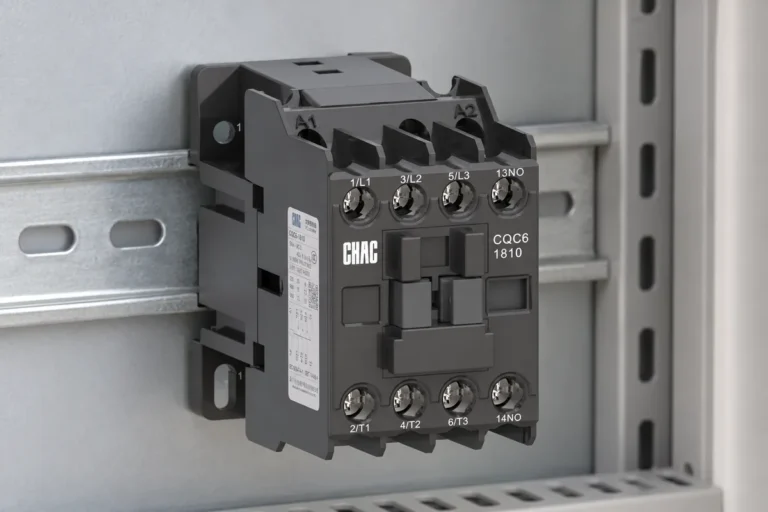
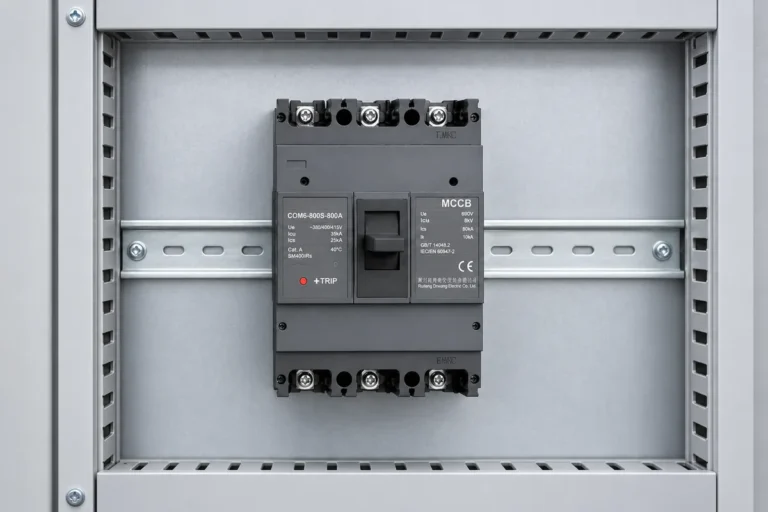
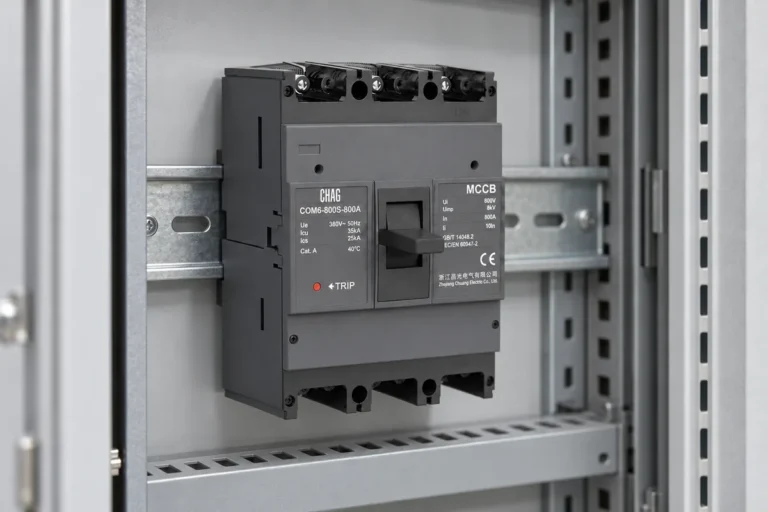
When a data-centre engineer in Dublin lost two floors after a downstream fault, both upstream and downstream devices had tripped together. A coordination study restored discrimination and reduced outage scope.
Summary: Enterprise distribution is judged by continuity, safety and evidence. Map radial or ring topology, fault levels, selectivity, maintenance bypasses and critical-load transfer paths.
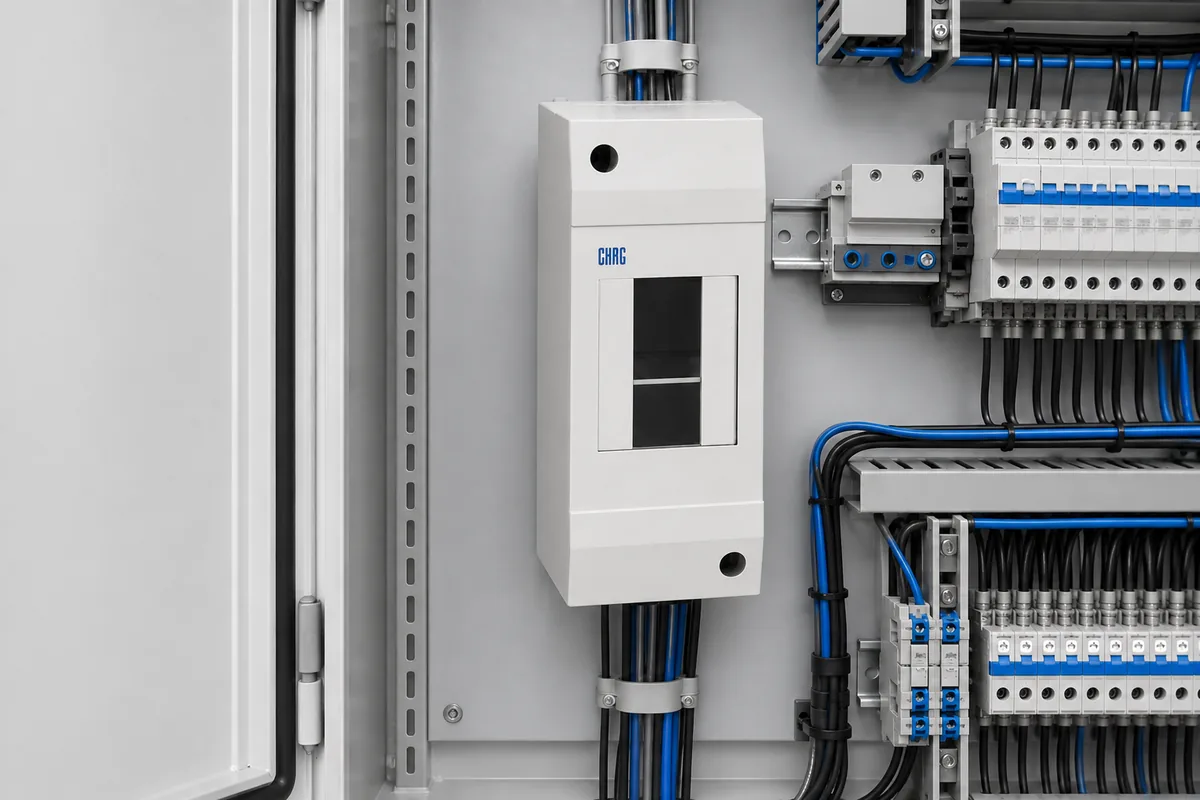
What this device does and where its operating boundary starts
Enterprise distribution is judged by continuity, safety and evidence. Map radial or ring topology, fault levels, selectivity, maintenance bypasses and critical-load transfer paths. Start by identifying whether the load is line-to-neutral, line-to-line or three-phase, then determine which conductors must open together. The device’s product standard and the installation code have different scopes; a component can be correctly tested yet still be wrong for a particular panel or disconnect function.
How to match ratings with the load and the rest of the system
For enterprise electrical distribution, compare voltage, continuous current, utilization category, temperature, conductor ampacity and available fault current. Use the manufacturer’s time-current curve or test method, and document assumptions. Coordination with upstream and downstream protection limits nuisance outages; a larger rating can increase let-through energy or violate conductor protection.
How to verify installation and commissioning before energizing
Use the listed enclosure or board, maintain required creepage and clearance, torque terminals to the published value, label circuits and verify de-energization. Commission with continuity, insulation or functional tests appropriate to the device, then measure loaded current and inspect for abnormal heat. Record instrument ID, date, readings and the person responsible.
Where small installation details can create expensive failures
The most expensive failures are often boundary errors: wrong accessory voltage, unsupported substitution, polarity reversal, missing neutral, inadequate SCCR or a maintenance record that cannot prove torque. If a device trips, chatters or heats, isolate the circuit and gather evidence before resetting or replacing it. A short decision log prevents repeat call-outs and makes the next outage safer.
How to control lifecycle cost and hand over reliable records
Unit price is only one cost driver. Include engineering time, permits, planned outage, testing, labeling, spares and the consequence of an avoidable trip. Ask suppliers to identify assumptions and exclusions so an apparently cheaper alternative can be compared on equal scope. At handover, provide the approved submittal, marked-up single-line diagram, torque sheet, test readings, settings and maintenance interval. For critical loads, record the bypass or transfer sequence and the person authorized to reset the device. These records make future troubleshooting faster and give the authority having jurisdiction a clear evidence trail without relying on unsupported claims. Review the record at the next planned outage and update it when the circuit or operating profile changes. Keep photos of labels and terminations with the revision date; they often resolve disputes faster than memory. Include the responsible reviewer and next review date so the file remains actionable.
Which criteria matter most when comparing options
| Dimension | What to compare | Evidence to retain |
|---|---|---|
| Performance | enterprise electrical distribution versus alternatives | Rating plate and curves |
| Compatibility | Voltage, poles, enclosure and accessories | Listing and submittal |
| Maintenance | Inspection, torque and functional test | Commissioning log |
| Total cost | Device, outage, testing and spares | Scope and risk register |
How the application changes the selection and cost priorities
| Scenario | Priority decision | Record |
|---|---|---|
| New installation | Load, fault level and listing | One-line and calculation |
| Replacement | Dimensions, terminals and compatibility | As-built and torque sheet |
| Harsh or critical site | Environment, selectivity and access | Inspection and contingency plan |
Which standards and compliance checks apply to the project
enterprise electrical distribution; switchboards and panels; radial vs ring; selectivity; reliability Standards are not blanket certification claims: confirm the edition adopted by the destination market, the AHJ and the complete assembly. Unsupported ratings or listing language can cause rejection, rework and unsafe operation.
- UL 489 and UL 508 where North American listing scope applies.
- IEC 60947 series for low-voltage switching and protection equipment.
- NFPA 70 or the destination installation code for conductor, spacing and permit rules.
How to turn the technical review into a procurement decision
- Capture the load, system voltage, conductor data, environment and available fault current.
- Match the product standard, listing, accessory, terminal and enclosure requirements.
- Ask for curves, installation instructions, torque values and a test plan; label illustrative calculations.
- Plan outage controls, permits, spares and maintenance records before release.
CHAC Electric can support documented sourcing through its enterprise electrical distribution, selective coordination and related distribution equipment. Request a review when the application has unusual fault, environmental or coordination constraints.
Mapping distribution topologies makes it easier to test selectivity, bypass paths and the consequence of a single feeder fault.
How selectivity keeps an enterprise outage local
Selectivity is proven with time-current data and the actual upstream and downstream settings. Map normal and alternate supply paths, bypasses, generator modes and the largest credible fault. Then test the approved settings during commissioning and keep the study revision with the single-line diagram so a later equipment change does not silently remove discrimination.

Answers to common buyer questions
What are electrical distribution systems?
Start with the enterprise electrical distribution nameplate, circuit conditions and adopted code, then verify conductor ampacity, fault level and compatibility. Follow the manufacturer’s instructions and retain the calculation or test.
What is an electrical distribution company?
The practical answer depends on the enterprise electrical distribution application, equipment marking and installation conditions. Verify the relevant standard and have a qualified person document the decision before energizing.
What are the different types of electrical distribution systems?
Start with the enterprise electrical distribution nameplate, circuit conditions and adopted code, then verify conductor ampacity, fault level and compatibility. Follow the manufacturer’s instructions and retain the calculation or test.
What is an electricity distribution system?
The practical answer depends on the enterprise electrical distribution application, equipment marking and installation conditions. Verify the relevant standard and have a qualified person document the decision before energizing.
What is the difference between radial and ring distribution systems?
The practical answer depends on the enterprise electrical distribution application, equipment marking and installation conditions. Verify the relevant standard and have a qualified person document the decision before energizing.
How is selectivity coordinated in an enterprise distribution system?
Start with the enterprise electrical distribution nameplate, circuit conditions and adopted code, then verify conductor ampacity, fault level and compatibility. Follow the manufacturer’s instructions and retain the calculation or test.
Sources for standards and further verification
- UL Standards and certification guidance
- International Electrotechnical Commission standards
- NFPA 70, National Electrical Code
Closing principle: Top-rated electrical distribution systems for enterprise-scale operations is a traceable engineering decision, not a guess based on the handle or catalogue photo. For a project review, contact CHAC Electric with the single-line diagram, nameplate and required delivery date.