An industrial controller can lose its logic supply while the motor feeder remains healthy. Replacing the upstream breaker will not repair an overloaded low-voltage regulator or a damaged input stage. This illustrative fault shows why equipment buyers need to understand the layers inside an electronic system.
Riepilogo: An electronic circuit uses components to process signals, regulate power or control a load. Industrial equipment often combines electronic control with electromechanical switching and separate circuit protection. Evaluate the supply, signal interfaces and protective boundaries together.
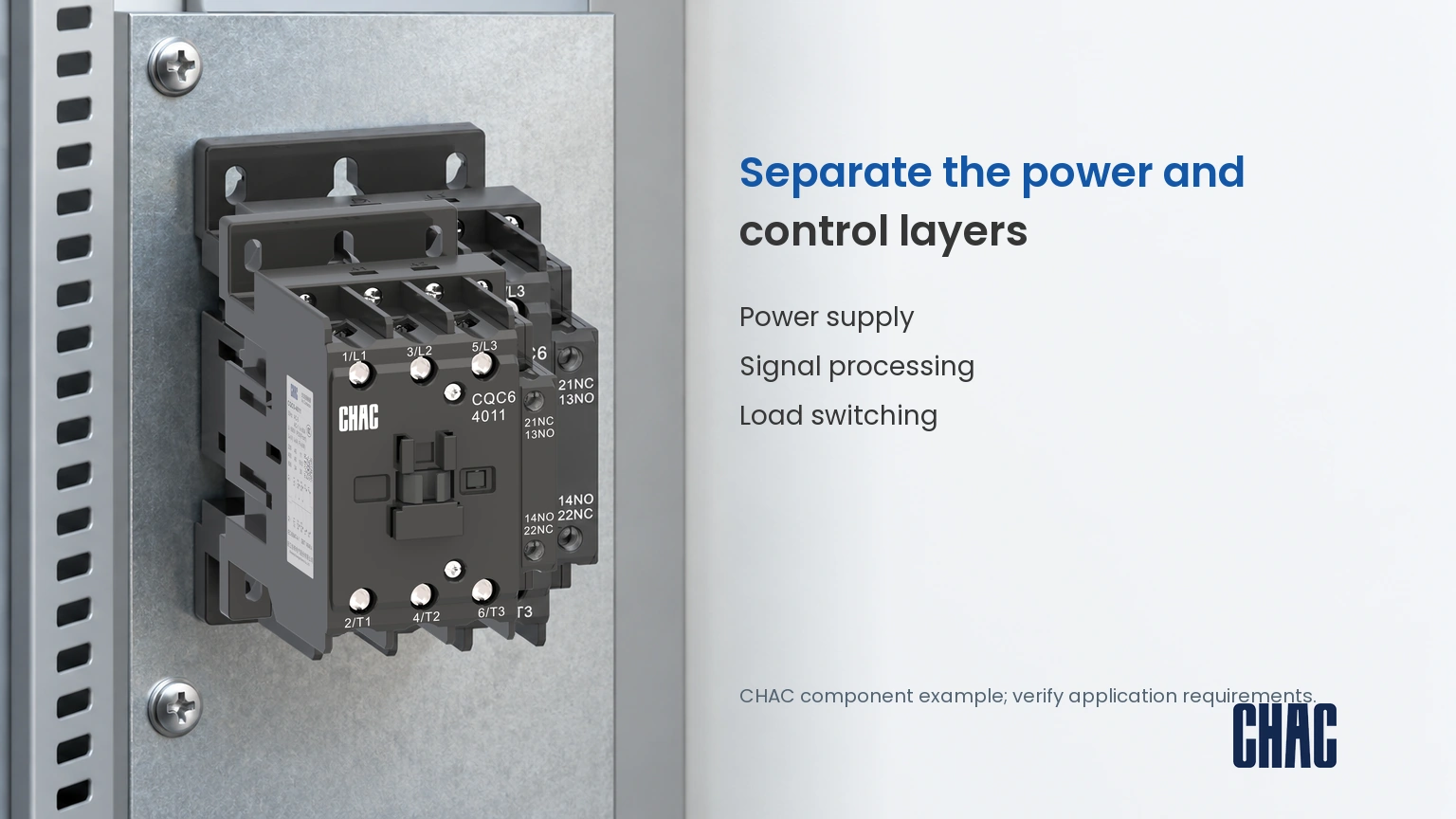
Separate the power and control layers
Electronic circuits commonly include a power supply, signal inputs, processing devices and output stages. Resistors set or limit current, capacitors store charge and influence filtering, diodes control current direction, and transistors or integrated circuits provide switching and amplification. The actual role depends on the circuit design.
Texas Instruments organizes its power-management range into functions such as AC/DC conversion, DC/DC regulation, load switches and supervisory devices. This is a useful purchasing distinction: a component that regulates voltage is not automatically a complete protective device for the upstream installation. A controller drawing and a building single-line diagram describe different levels of the system.
Identify the interfaces before choosing a substitute
When a buyer asks what is an electronic circuit, the practical answer should include its inputs, outputs and supply requirements. Record nominal supply, permitted variation, input signal type, output load and isolation requirements. A connector that fits does not prove that signal levels or polarity match.
A relay output, a transistor output and a communications port cannot be substituted simply because each controls something. For a motor or heater, the electronic controller may operate Contatori AC rather than switch the load directly. Confirm the coil supply and interface loading from the actual documentation. Do not infer compatibility from an enclosure or a generic wiring sketch.
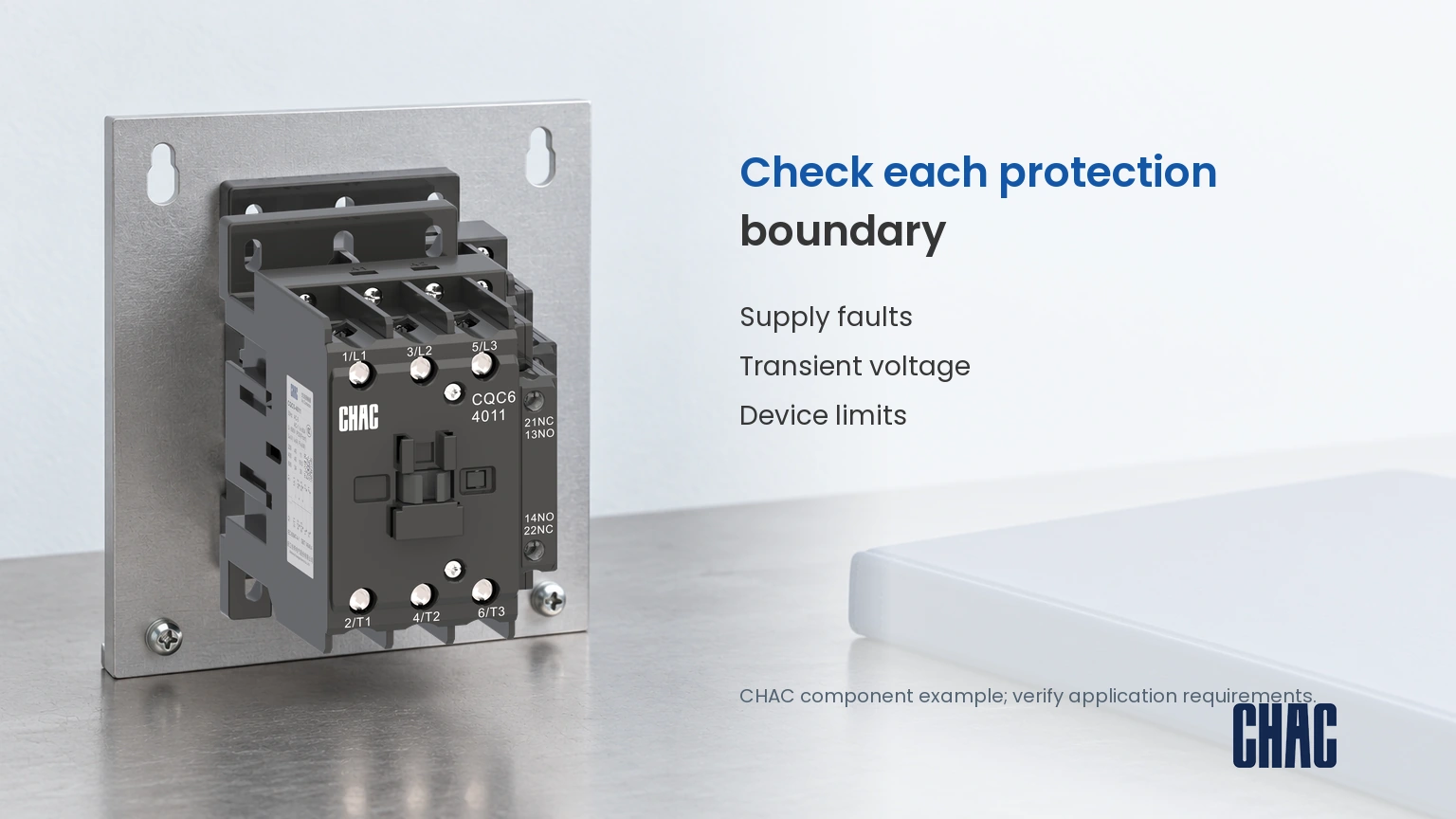
Check protection at each boundary
Power-supply protection must account for abnormal input conditions and the downstream load. Upstream overcurrent protection protects the relevant wiring and equipment according to the design, while local electronic protection may limit a smaller fault. A conventional circuit breaker may not act quickly enough to protect every semiconductor.
Ask for operating limits and the specified response to undervoltage, a shorted output and loss of a sensor signal. Simulation tools, such as the design resources published by Analog Devices, help engineers assess circuits but do not replace validation of the finished equipment. Procurement should include the exact hardware and firmware revision because a software change can alter restart or fault behavior.
Compare the options for this application
| Component or layer | Typical function | Selection evidence |
|---|---|---|
| Power converter | Provide a usable supply | Input/output ratings and thermal conditions |
| Sensor interface | Accept a measurement signal | Signal type and limits |
| Controller | Process inputs and command outputs | I/O specification and firmware |
| Contactor | Switch the specified load | Duty and coil data |
Check the conditions that affect the decision
| Potential substitution | What must remain compatible |
|---|---|
| Power supply | Voltage, current, environment and approvals |
| Output module | Load type and interface capability |
| Control software | Fault behavior and restart sequence |
| Protection device | Conductor and equipment protection requirements |
Confirm the applicable rules and documentation
Use the product and machine standards appropriate to the finished equipment. IEC 60947 requirements for switching devices do not describe every electronic circuit on a printed circuit board. Component compliance does not automatically establish assembly compliance or electromagnetic compatibility.
Turn the requirements into a purchasing brief
Begin with a functional block diagram, then obtain interface specifications and an acceptance-test plan. CHAC Electric provides circuit-protection and switching products that may form part of the external power arrangement. Confirm exact ratings and use conditions rather than treating those products as substitutes for electronic design validation.
Domande frequenti
What are electronic devices and circuits?
Electronic devices contain circuits that process signals, regulate power or control functions. A circuit is the connected arrangement of components that performs a particular electrical task.
What are common electronic components?
Examples include resistors, capacitors, inductors, diodes, transistors and integrated circuits. Connectors, sensors and protective components also appear according to the application.
How is an electronic device different from an electrical one?
Electronic equipment typically uses active components for signal processing or control. Electrical equipment is the broader category, and modern products frequently combine both functions.
Does an MCB protect all electronic components?
No. It protects against specified overcurrent conditions at the circuit level. Semiconductor protection may require additional measures chosen by the equipment designer.
Can a contactor replace an electronic controller?
No. A contactor switches a load; a controller processes inputs and determines commands. They may work together but perform different functions.
What should an equipment buyer verify?
Confirm supply limits, interfaces, output duty, environment, firmware revision and fault behavior. Request drawings and test evidence for the actual supplied configuration.
Letture correlate: DIN-rail dimensions and device compatibility.
Referenze
- Texas Instruments power-management products
- Analog Devices circuit design resources
- Phoenix Contact industrial connection technology
For a model-specific enquiry, review CHAC Electric products e send the application requirements with the destination, quantity and required documentation.