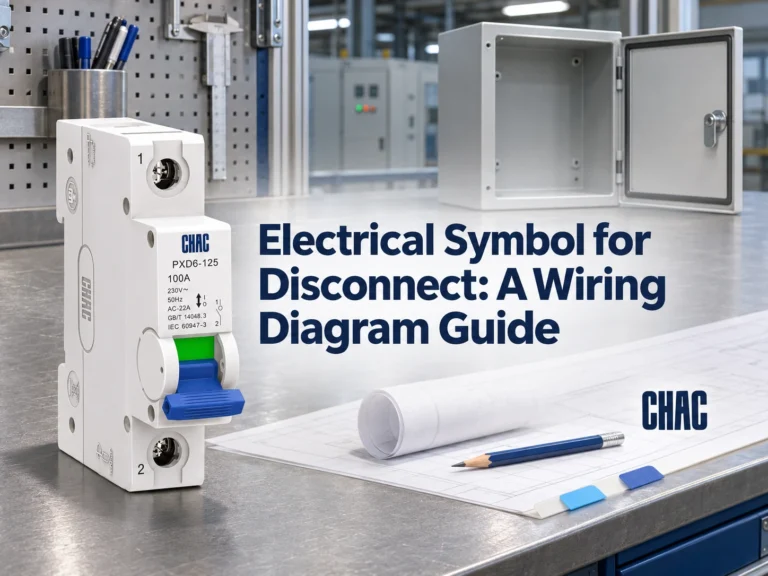
Zdalny rozłącznik jest przydatny tylko wtedy, gdy wyłącznik potrafi go odbierać i realizować w razie potrzeby. W przypadku wyłącznika z obwodem zdalnego rozłączania sterowanie zasilaniem, kompatybilność akcesoriów oraz sekwencja resetowania stanowią zatem część układu zabezpieczającego, a nie drobne szczegóły dodawane po wyborze samego wyłącznika.
Wyłącznik z wyzwalaczem szuntowym posiada kompatybilny element rozłączeniowy, który otwiera wyłącznik po zasileniu go zewnętrznym sygnałem elektrycznym. Zwykłe funkcje ochrony przeciążeniowej i przed zwarciem pozostają niezależne. Konwencjonalny wyzwalacz szuntowy wymaga podania określonego napięcia sterującego, aby uruchomić rozłączenie; utrata tego zasilania zwykle nie powoduje wyzwolenia. Wyzwalacz niskonapięciowy oparty jest na innym zasadzie działania.
W jaki sposób wyłącznik z rozrusznikiem elektromagnetycznym otwiera obwód?
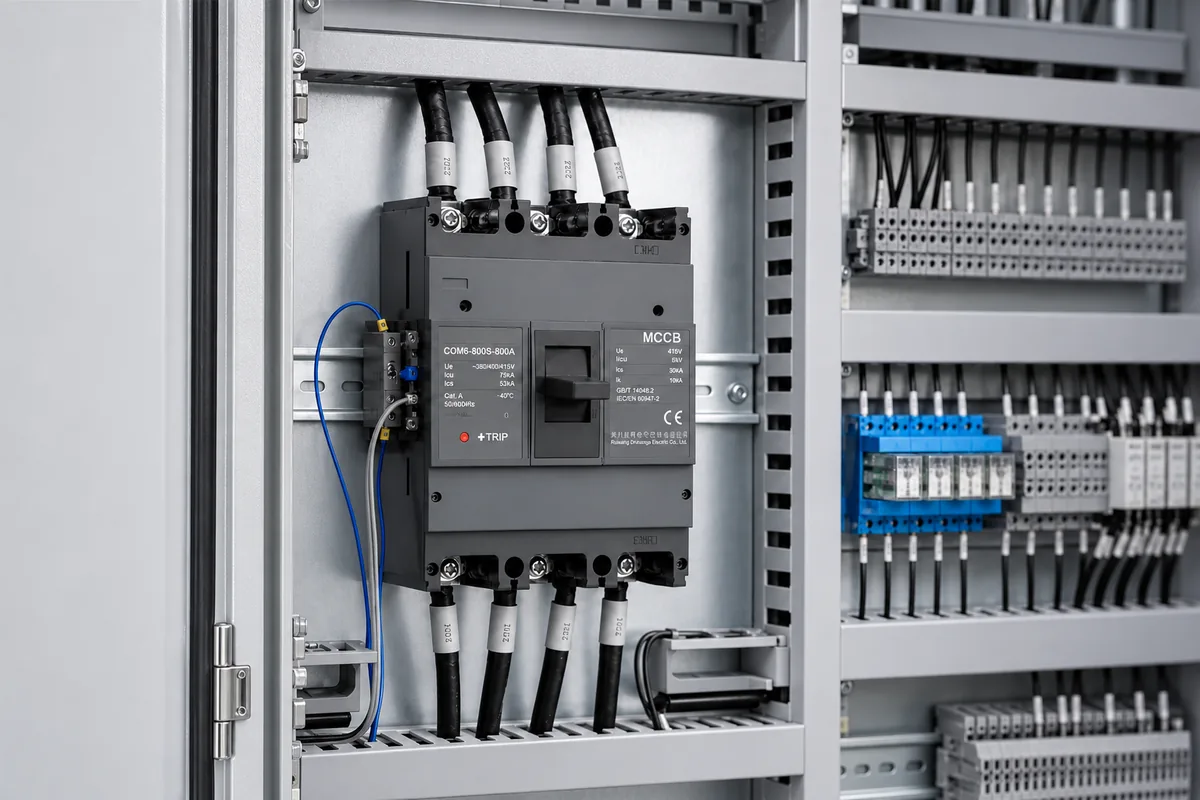
Zewnętrzny system sterowania przykłada określone napięcie do Wyłączanie przez przekaźnikowy układ. Urządzenie zwalniajace uruchamia mechanizm wyłączania wyłącznika, otwierając jego główne kontakty. Sygnał inicjujący może pochodzić z zatwierdzonego systemu kontroli awaryjnego, relazu zabezpieczającego lub interfejsu systemu budynkowego. Akcesorium samo w sobie nie identyfikuje przyczyny wysłania sygnału wyłączania.
Jest to inne niż zwykłe działanie wyłącznika, w którym urządzenie rozruchowe reaguje na aktualne warunki prądowe. Przewodnik po uruchamianiu wyłączników przeciążeniowych explains the main overcurrent and other trip causes. A breaker equipped with a shunt release can open without any overload on the power circuit.
How does shunt trip differ from an undervoltage release?
| Pytanie | Conventional shunt release | Uwolnienie napięcia pod napięciem |
|---|---|---|
| What initiates operation? | Application of a suitable trip signal | A drop or loss of the monitored control supply under its specified conditions |
| What happens if control power is absent? | The release cannot be assumed to execute an electrical trip. | The accessory is designed to respond to undervoltage; exact behavior follows its instructions. |
| Is remote closing included? | No; it needs a separately specified operating arrangement if available. | No; release function and closing function are separate. |
| What must be documented? | Control source, command, coil rating, duty and reset sequence | Supply conditions, any approved delay and the closing/interlock behavior |
Do not describe a conventional shunt-trip scheme as fail-safe merely because it is connected to an emergency button. A broken control wire, failed supply or unsuitable interface can prevent the release from operating. If the design must detect those failures, the system needs an appropriate supervised or otherwise validated arrangement.
Why does the source of control power matter?
The trip circuit needs enough voltage at the accessory terminals during the event, not simply the right nominal voltage on the control drawing. Supply interruptions, conductor voltage drop and the interface contact’s switching capability may matter. The designer should establish what remains available during the fault or shutdown condition the system is expected to handle.
Power taken from the circuit being opened can disappear after the breaker trips. That may be intentional, but it affects indication, testing and reset behavior. An independent source can create a different maintenance issue because the trip circuit may remain energized after the main breaker is open. Both arrangements require a clear source diagram and isolation instructions.
The command duration is another easily missed boundary. Some releases have intermittent coil duty; others include a cutoff arrangement or permit a maintained signal. Do not assume that a trip coil can remain energized indefinitely. Use the exact accessory instructions and test the specified command duration.
Can a shunt trip serve as an emergency-stop system?
A shunt release can be one component in an engineered shutdown function. It is not, on its own, a complete emergency-stop or fire-safety system. The required behavior depends on the machine or installation, applicable standards, risk assessment and local approval.
In particular, determine whether the function must remove power immediately, stop equipment in a controlled sequence, maintain another supply or prevent automatic restart. An auxiliary contact that reports handle position may not prove that every required power path has been removed. The relevant system design determines the feedback and test requirements.
A specification should describe the initiating condition and required response without asserting that all kitchens, elevators or commercial buildings universally require the same shunt-trip arrangement. Installation requirements and exceptions must be checked for the actual jurisdiction and equipment.
How is accessory compatibility verified?
The UL Solutions guide’s accessory section addresses accessory markings, ratings and identification of the breakers with which separately shipped accessories may be used. Mechanical fit alone is insufficient. Record the exact breaker family, frame, release reference and AC/DC control rating.
For modular equipment, CHAC’s PXB6-MX wyzwalacz szuntów is a model-specific product reference. Check its stated compatible breaker arrangement and available control variants. The existence of that accessory does not establish compatibility with unrelated MCBs or MCCBs.
What should a commissioning test demonstrate?
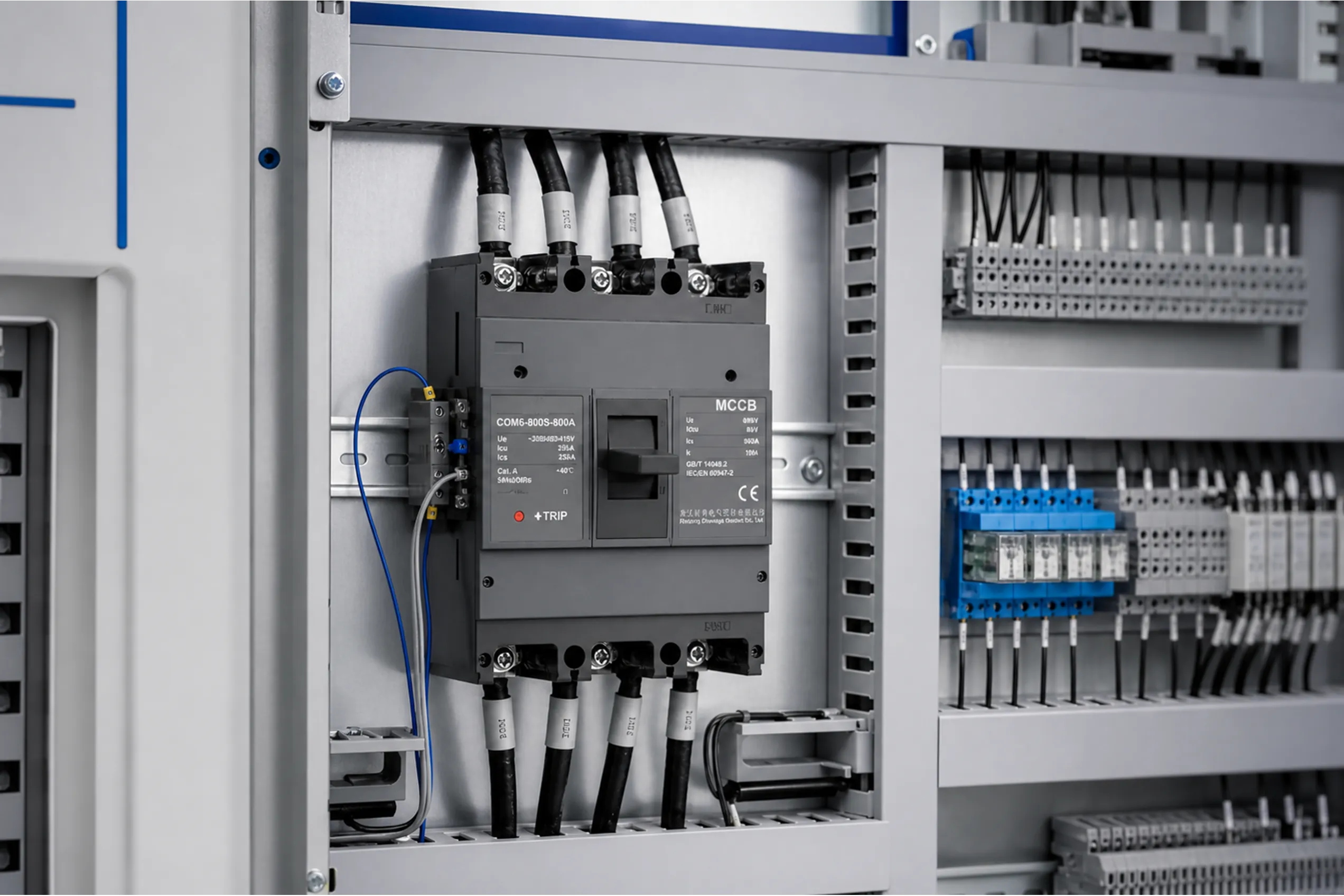
- The approved initiating signal reaches the correct interface under controlled test conditions.
- The release receives its specified control supply and the breaker opens.
- The required indication, interlocks and downstream shutdown behavior occur.
- Loss of control power produces the behavior documented in the design.
- Clearing the command does not cause an unintended restart, and the authorized reset sequence works.
Keep the test results with the circuit identification, accessory reference and control drawing. Where feedback or alarm functions are also needed, the auxiliary-contact, alarm-contact and shunt-trip guide helps distinguish commands from status signals.
What else do buyers ask about shunt-trip breakers?
Does a shunt-trip breaker need power?
A conventional electrical shunt release needs its specified control power to operate. This is separate from the breaker’s ordinary overcurrent mechanism.
Will it trip if the control supply fails?
Do not assume so. A conventional shunt release is energized to trip. If supply loss must initiate opening, specify and validate the appropriate release or supervised control arrangement.
Can a regular breaker be converted to shunt trip?
Only if the manufacturer provides an approved compatible accessory and installation method for that exact breaker. It is not a universal field modification.
Can a shunt-trip breaker be reset remotely?
The shunt release itself provides a trip function. Remote reset or closing requires a separately supported operator and an approved control sequence; many arrangements require local manual reset.
Is shunt trip the same as an alarm contact?
No. A shunt release acts on the breaker. An alarm or auxiliary contact reports a defined status. The status and permitted contact duty depend on the accessory.
Can a trip signal be held continuously?
Only if the accessory instructions permit that duty or provide the specified cutoff arrangement. An unsupported maintained signal can damage an intermittent-duty coil.
Przypisy
- UL Solutions: Złącze obwodowe w obudowie formowanej – przewodnik po znakowaniu i zastosowaniach — release ratings, compatible accessories and instructions.
- IEC 60947-2:2024: low-voltage circuit breakers — official product-standard scope.
- OSHA 1910.303: approved equipment and installation requirements.
What makes a remote-trip arrangement dependable?
A shunt-trip circuit breaker must be selected as part of the complete command path. Define what initiates the shutdown, establish which control source remains available and match the release to the exact breaker. Then test opening, indication and reset under the conditions the design is supposed to handle. The most important boundary is that loss of power to a conventional trip coil is not itself a reliable trip command. Preserve that distinction in the operating instructions so future maintenance does not undermine the design. CHAC’s MCCB options can support a breaker-family review where higher-duty distribution is involved; confirm the compatible release and operating sequence separately.