A purchasing list may describe a motor starter as electrical while listing its overload monitor as electronic. Both descriptions can be correct. The risk appears when a buyer treats the labels as proof that components are interchangeable instead of checking what each component does.
Podsumowanie: Electrical is the wider category; electronic usually describes equipment using active components to process signals or control current. Many industrial products combine both. Base purchasing decisions on interfaces, duty and protection requirements rather than the label alone.
Classify equipment by its function
The electrical vs electronic distinction is most useful when it separates power handling from information processing. A heater converts electrical energy into heat. A controller reads a temperature sensor and decides when to operate an output. A complete heating system contains both, along with wiring and protective devices.
Power electronics overlaps the categories. A variable-speed drive processes control signals and converts significant power to operate a motor. Calling it electronic does not mean it is low-power, harmless or suitable for any supply. Buyers still need voltage, current, duty, environmental and installation data.
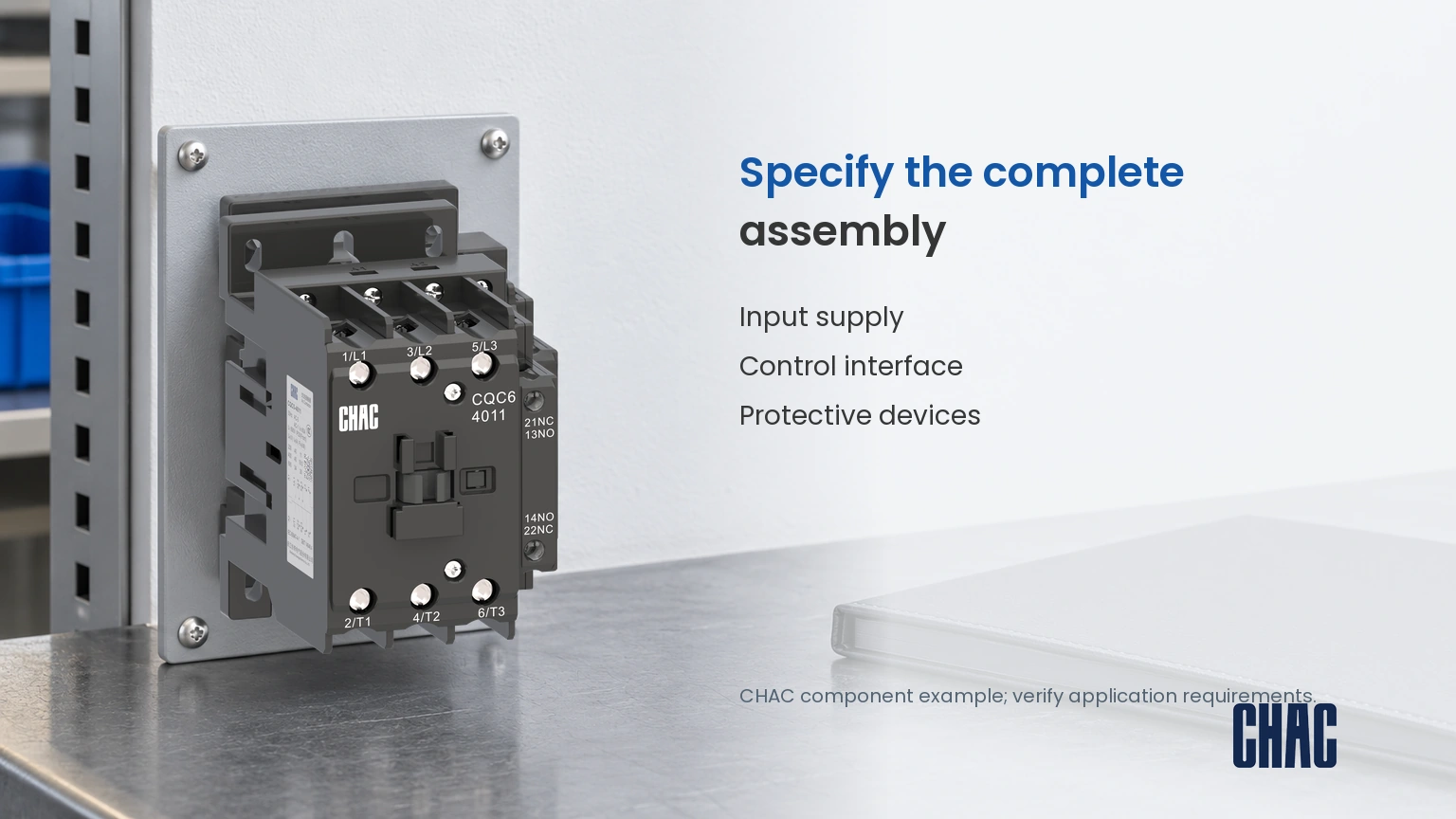
Specify the complete assembly rather than one component
For electric vs electronic equipment, identify the main power path, control supply and signal interfaces separately. An electronic output may command an electromechanical switch, but its allowable load can differ from the motor current by a large margin. The drawing should make the boundary clear.
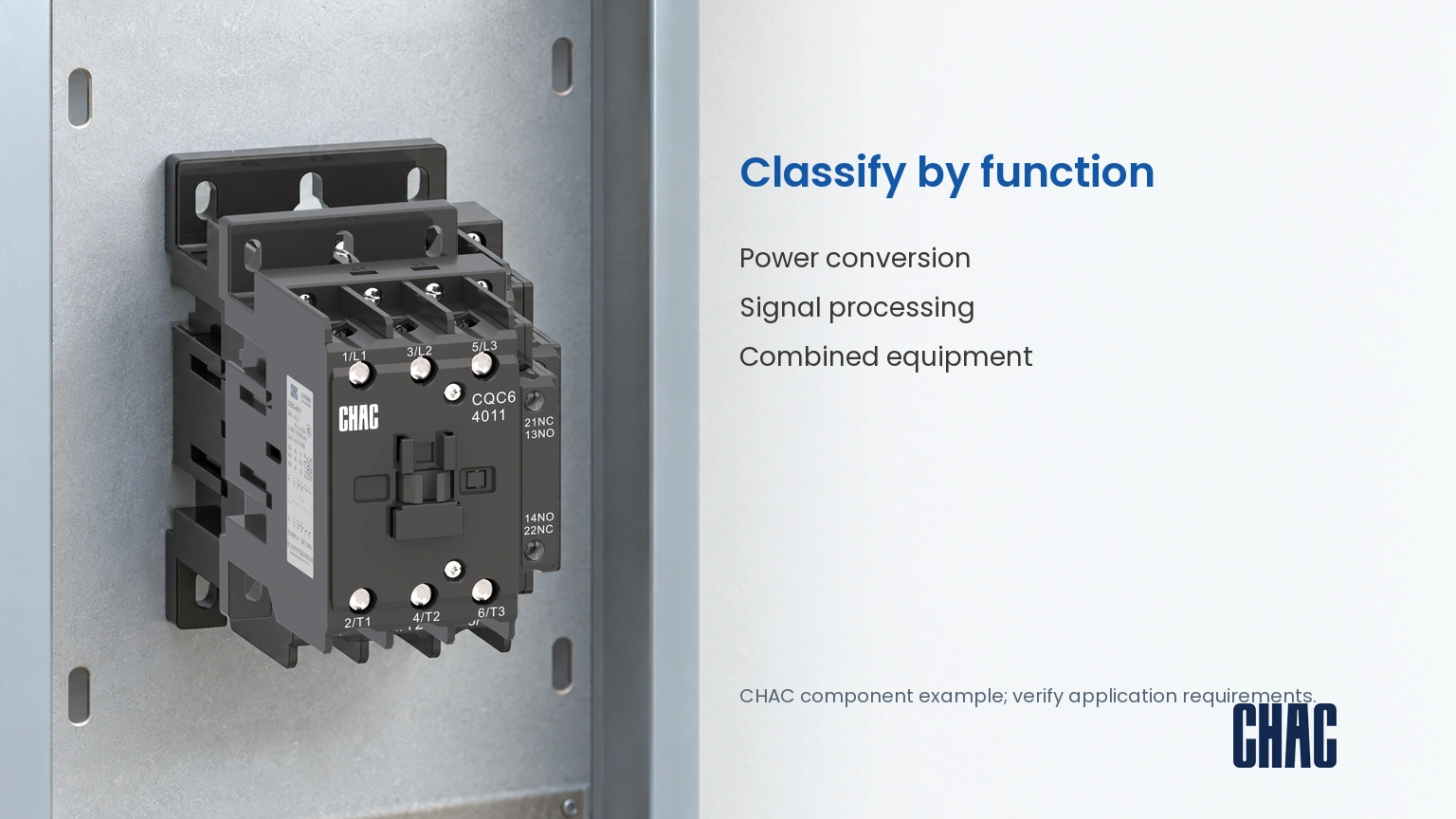
Compare Kontaktory AC using their verified switching duty and coil requirements, then check the control interface that operates them. For the incoming or outgoing circuit, select miniaturowe wyłączniki from the installation design. Neither the presence of electronics nor a modern-looking display proves additional protection functions.
Make substitutions traceable and testable
The difference between electrical and electronics also affects maintenance. A replacement switch may need matching contact configuration and mechanical dimensions. A replacement controller may additionally require compatible firmware, communication settings and a configuration backup. A part number alone may not capture every relevant revision.
Before authorizing an alternative, record the original function, the proposed difference and the acceptance test. Analog Devices and Texas Instruments publish design resources for electronic functions, while industrial switching catalogues describe different evidence. Use the documentation for the component concerned. Include behavior after loss and restoration of power, because an unexpected restart can create an operational hazard.
Compare the options for this application
| Example | Main function | Additional purchasing check |
|---|---|---|
| Heater | Convert power into heat | Load current and temperature controls |
| Kontaktor | Switch a load | Coil supply and contact duty |
| Electronic controller | Process signals and commands | I/O, firmware and configuration |
| Variable-speed drive | Control and convert motor power | Input supply, motor compatibility and settings |
Check the conditions that affect the decision
| System boundary | Evidence to request |
|---|---|
| Incoming supply | Voltage, frequency and protection requirements |
| Control supply | Permitted voltage range and load |
| Signal interface | Type, reference and isolation requirements |
| Output interface | Switching duty and abnormal-condition behavior |
Confirm the applicable rules and documentation
Product standards apply to defined equipment and functions, not simply to the word electrical or electronic. Verify the applicable installation rules and exact component approvals. A compliant individual part does not prove that every assembled combination is compliant.
Turn the requirements into a purchasing brief
Write the required function first, followed by the supply, interface, environment and acceptance criteria. CHAC Electric can support selection of protection and switching components within that documented system. Ask for the exact configuration rather than requesting a generic electrical equivalent.
Często zadawane pytania
Is a television electrical or electronic?
It is electrical equipment that uses electronic circuits to process signals and control the display. The terms are not mutually exclusive.
What is the difference between an electrical and an electronic circuit?
An electrical circuit is any connected path for electrical operation. Electronic circuits usually include active devices for control, amplification or signal processing.
Are electronic products always low voltage?
No. Power-electronic equipment can operate at hazardous voltages and substantial power. The product rating and instructions determine the conditions of use.
Can an electronic switch replace a contactor?
Only if its electrical, thermal, isolation and control characteristics suit the application. Matching nominal current alone is insufficient.
Does electronic protection eliminate the need for a breaker?
Not automatically. The upstream installation and the equipment may still require specified overcurrent or other protection. Follow the design and equipment instructions.
Does the difference affect waste disposal?
Both categories may be subject to electrical and electronic waste rules. Apply the local collection and recycling requirements to the complete product rather than deciding from a marketing label.
Powiązane lektury: Urządzenia i obwody elektroniczne: Podstawy, komponenty i ochrona kontekstu.
Przypisy
- Texas Instruments power-management products
- Analog Devices circuit design resources
- Phoenix Contact industrial connection technology
For a model-specific enquiry, review CHAC Electric products i send the application requirements with the destination, quantity and required documentation.