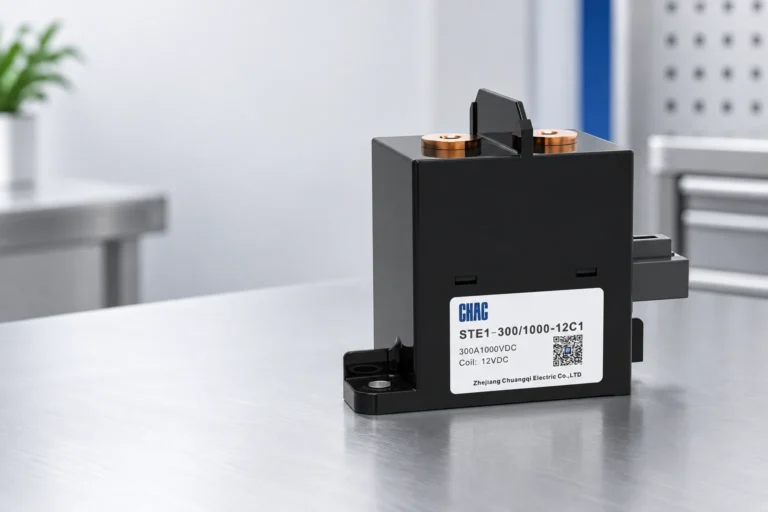
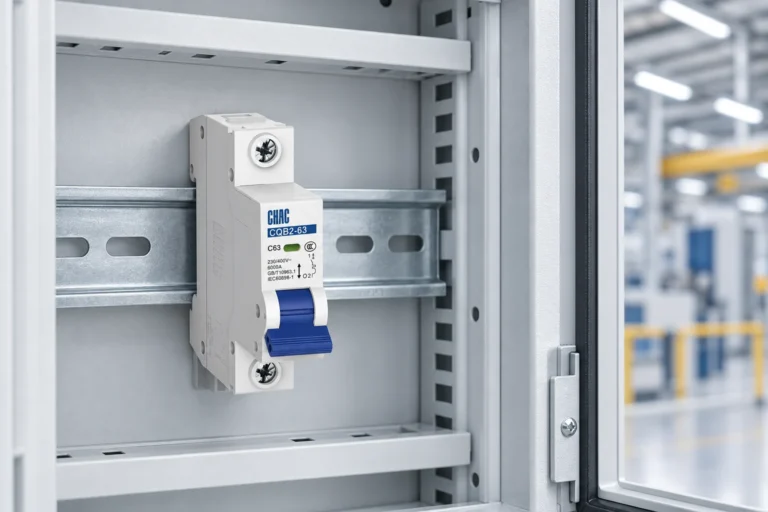
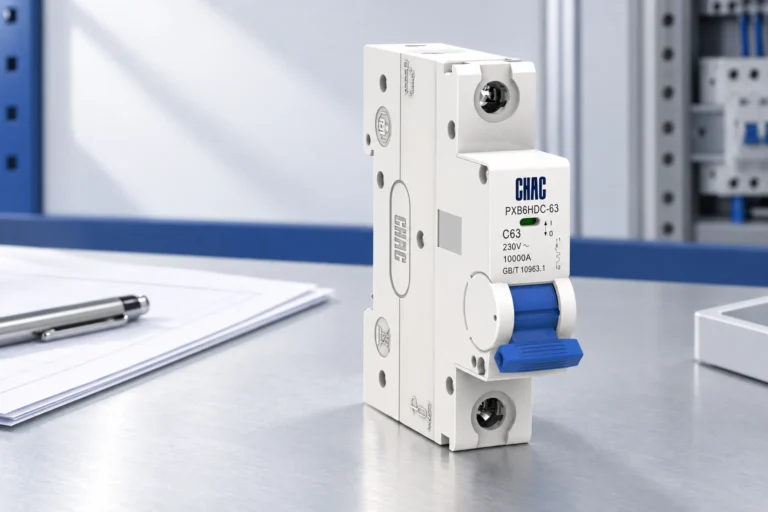
Illustrative scenario: When Elena, a product manager in Rotterdam, encountered a breaker sample whose label and terminal accessory differed from the approved drawing, she paused the pilot order; within one inspection cycle, the visible mismatch showed that the problem was not simply a bad unit. The sourcing team had approved a price and a sample without freezing the bill of materials, artwork, accessory list, or change-notification rules. Supplier selection had started before the specification and release process were complete.
Podsumowanie: A successful OEM or ODM sourcing program needs explicit responsibility, a frozen specification, a golden sample, model-matched conformity evidence, controlled changes, and defined lot-release records. For circuit-breaker projects, IEC 60947-2:2024 covers circuit-breakers used in circuits up to 1,000 V AC or 1,500 V DC, but a standard reference alone does not prove that a specific model is certified. Buyers should release production only after the ordered model, applicable standard edition, certificate scope, sample configuration, and inspection plan agree.
Evaluating a low-voltage electrical OEM is therefore a governance task as much as a factory-audit task. Equipment lists, workshop photographs, and broad statements about quality may help screen candidates, but they do not replace product-level evidence. The commercial objective is to create a repeatable path from intended use to approved production in which every decision has an owner, an input, an output, and a release record.
What Is the Difference Between OEM and ODM for Electrical Products?
“OEM” and “ODM” are often used loosely. In a buyer-led OEM route, the buyer typically controls more of the product definition and asks the supplier to manufacture against released requirements. In an ODM route, the supplier may contribute an existing platform or more design work. Neither label automatically transfers all regulatory, engineering, trademark, or market-surveillance responsibility to the other party. The contract and technical file must state who owns each decision.
| Decision area | Buyer-led OEM route | Supplier-led ODM route | Evidence required before release |
|---|---|---|---|
| Intended use and destination | Buyer defines application, market, system conditions, and claims | Buyer still confirms where and how the proposed platform will be sold and used | Approved market-and-use statement, rated conditions, and claim list |
| Product specification | Buyer issues controlled drawings, ratings, interfaces, and acceptance criteria | Supplier proposes a platform and configurable boundaries; buyer approves the final specification | Revision-controlled specification and configuration matrix |
| Design authority | Usually retained by the buyer unless delegated in writing | Often shared or supplier-led within an agreed design scope | Responsibility matrix, design-review records, and approval signatures |
| Conformity route | Buyer identifies market requirements; parties allocate testing and documentation work | Supplier may supply existing evidence, but the buyer verifies that it covers the private-label model and claims | Model-matched certificates, reports, declarations, and national-difference review where applicable |
| Branding and artwork | Buyer supplies approved marks and legal text | Supplier adapts labels and packaging within controlled templates | Signed artwork proof linked to the ordered model and revision |
| Change control | No material, component, tooling, process, firmware, or accessory change without the agreed review | Same rule; platform ownership does not permit silent changes to the approved private-label configuration | Change request, impact assessment, evidence update, and written approval |
This distinction prevents a common failure: treating a catalog platform as if every private-label variation inherits the same evidence. A different model code, terminal, trip unit, enclosure material, label, accessory, or firmware version can affect the technical file or certificate relationship. The honest answer is that the impact must be assessed against the exact change and the relevant scheme; it cannot be assumed from the words “same series.”
How an OEM/ODM Project Moves from Specification to Production
A stage-gate process turns sourcing into a sequence of conditional releases. “Gate” does not mean more paperwork for its own sake; it means the next commercial commitment occurs only after defined technical questions are closed. The number of gates can be adapted to project risk, but a buyer should not combine specification approval, sample approval, and production approval into one informal email.
| Gate | Buyer input | Supplier output | Release rule |
|---|---|---|---|
| 0. Intended use | Destination market, application, electrical system, environment, user type, and proposed claims | Feasibility response, declared platform boundaries, and open-question list | No RFQ comparison until assumptions and exclusions are visible |
| 1. Specification freeze | Ratings, poles, interfaces, accessories, artwork, packaging, documentation, and acceptance criteria | Compliance matrix and controlled quotation tied to a specification revision | Every “comply,” deviation, and option has a traceable response |
| 2. Design review | Approved responsibility matrix and required conformity route | Drawings, BOM control level, label files, configuration matrix, and evidence plan | Unresolved design or certificate-scope gaps are assigned and dated |
| 3. Sample build | Sample quantity, inspection method, test plan, and deviation process | Identified samples with build records and test results | Samples are not approved solely because they operate in a bench demonstration |
| 4. Golden sample and evidence approval | Witness or review requirements and approval authority | Golden sample, final drawings, artwork, certificate/report bundle, and deviation closure | Physical configuration and documentation match the exact orderable model |
| 5. Pilot and lot-release plan | Critical-to-quality characteristics, sampling plan, traceability fields, and nonconformity rules | Pilot records, inspection instructions, measuring-equipment records, and proposed lot-release pack | Production controls reproduce the approved configuration and acceptance method |
| 6. Production release | Purchase order tied to approved revisions and change-notification terms | Lot-specific release evidence and shipment documents | No shipment if configuration, evidence, or approved deviations do not reconcile |
For each gate, define who can approve, what counts as objective evidence, how deviations expire, and how records are retained. A factory acceptance test (FAT) can confirm agreed functions or inspections before shipment, but it is not automatically a product certification. A site acceptance test (SAT) normally addresses the installed equipment or system after delivery; it cannot repair a gap in the product’s certificate scope. The contract should describe both tests by procedure and acceptance criteria instead of relying on the acronyms.
How to Verify Certificates Against the Exact Product Model
For breaker projects, IEC 60947-2:2024 provides the current product-standard reference identified in this brief. Its voltage scope—up to 1,000 V AC or 1,500 V DC—helps define where the document applies, but the standard is not a supplier certificate. The applicable standard, edition, ratings, and conformity route depend on the product, intended use, destination market, and claims.
The IECEE CB Scheme is designed to support mutual recognition of test results and certificates among participating bodies. A buyer reviewing CB evidence should use the public IECEE certificate database and reconcile at least:
- certificate number and current database record;
- applicant, manufacturer, and factory information shown in the record;
- product category, exact model or type references, and covered variants;
- standard number and edition, including listed national differences where relevant;
- ratings, accessories, and report references relevant to the ordered configuration; and
- private-label or alternate-model relationship, when the buyer’s brand and model differ from the base certificate.
Do not accept a logo on a brochure, a cropped certificate image, or a certificate for a neighboring model as proof. Ask for the complete evidence bundle and compare it with the approved drawing, nameplate, BOM-controlled characteristics, packaging, and purchase order. The IECEE FAQ also distinguishes the CB Scheme from CE marking. In the European Union, CE marking reflects the manufacturer’s declaration that applicable EU requirements are met; it should not be presented as an EU-issued product approval or as a substitute for the underlying conformity assessment.
How to Create a Golden Sample That Production Can Follow
A golden sample is the approved physical configuration used as a reference for production and inspection. It should have a unique identifier and be linked to the final specification, drawings, artwork, BOM revision or controlled component list, accessory list, and approved deviations. Seal and storage rules should prevent an untracked replacement from becoming the new reference.
The golden sample does not replace measurements or test records. It complements them. Appearance can be checked against the sample; dimensions, ratings, trip behavior, dielectric or mechanical tests, and other acceptance items must be judged by the agreed methods, limits, and calibrated equipment appropriate to the product.
What a Lot-Release Record Should Contain
A lot-release pack should identify the purchase order, lot or batch, product revision, quantity, inspection plan, results, deviations, disposition, and approver. The buyer and supplier should agree which critical characteristics receive incoming-material, in-process, final, or periodic verification. Do not insert generic defect rates or sampling levels into the contract without a risk basis and an agreed inspection standard.
When a project includes smart accessories or connected functions, add firmware version, configuration, cybersecurity-related documentation, and update control where applicable. For purely electromechanical products, omit firmware fields rather than filling them with irrelevant boilerplate.
What to Check in the Factory, Process, and Supply Agreement
A competent circuit breaker manufacturer should be evaluated against the exact process needed for the proposed product, not against the visual impression of a large facility. Audit the flow from approved incoming components through controlled assembly, inspection, nonconformity handling, traceability, final release, packing, and change management. Where tooling belongs to the buyer, document ownership, identification, maintenance, access, transfer, and end-of-life disposition.
The four workshop images retained from the original article can support a remote-screening discussion, but photographs do not establish capacity, precision, certification, or quality outcomes. Use them to ask which operations are shown, which product families pass through them, and what records connect those operations to the proposed model.




Total cost of ownership should include engineering clarification, sample and test expense, tooling, certification work, inspection, logistics, inventory exposure, change qualification, nonconformity handling, and field support—not only unit price. Use an illustrative formula such as: total program cost = development and evidence cost + tooling + landed production cost + inspection and change-control cost + expected nonconformity and support cost. Populate it only with project-specific, documented inputs.
For CHAC Electric, buyers can begin by reviewing the available product portfolio, the company’s overview of its testing-center infrastructure, and its product catalogue. These are useful screening materials, not substitutes for model-matched certificates, raw test records, controlled specifications, or an on-site or remote process audit. Evaluate CHAC with the same gates and evidence rules applied to any candidate offering OEM/ODM electrical solutions.
Five Checks to Complete Before Choosing a Supplier
- Freeze the use case: record the destination market, system conditions, user, environment, and claims before comparing quotations.
- Issue one RFQ data set: give every candidate the same ratings, drawings, accessories, artwork, documents, volumes, and acceptance requirements; identify unknowns rather than allowing silent assumptions.
- Verify public evidence: match certificates and reports to the legal entities, model, ratings, standard edition, and proposed private-label configuration.
- Approve a controlled sample: link the golden sample to the final specification and require documented closure of every deviation.
- Contract for change: define which changes require notice, evidence review, new samples, requalification, or written buyer approval before implementation.
Questions Buyers Ask About OEM and ODM Sourcing
What is the practical difference between OEM and ODM for low-voltage products?
OEM normally describes manufacturing to a buyer-controlled specification, while ODM usually includes a supplier-originated design or platform. Actual responsibility depends on the contract and technical file, so buyers should assign design authority, compliance work, branding, tooling, documentation, and change approval line by line.
How can I check whether a CB certificate covers my exact model?
Search the IECEE certificate database, open the relevant record, and compare the model/type reference, applicant, manufacturer, factory information, standard and edition, ratings, and report references with the offered product. If your brand or model code differs, request documented evidence that establishes the relationship; do not infer coverage from visual similarity.
Is a CE mark the same as an IECEE CB certificate?
No. CE marking is tied to the manufacturer’s declaration of conformity with applicable EU legislation, while an IECEE CB certificate belongs to the CB Scheme and is based on testing to relevant IEC standards within that scheme. The correct route depends on destination market and product; one should not be advertised as if it were the other.
What should be locked in a golden sample?
Lock the approved physical configuration and connect it to revision-controlled drawings, labels, packaging, accessories, and BOM-controlled characteristics. Give the sample a unique identifier, record any accepted deviations, and define custody and replacement rules; continue to use documented measurements and tests for characteristics that cannot be judged visually.
Which supplier changes require buyer approval?
The agreement should cover changes to materials, critical components, sub-suppliers, tooling, manufacturing processes or locations, artwork, firmware, accessories, and any item affecting conformity evidence or interchangeability. Each proposed change needs an impact assessment; the result determines whether document review, sampling, testing, or certificate action is required.
Sources for OEM/ODM Verification
- IECEE — Frequently Asked Questions
- IECEE — Certificate Database
- IEC — IEC 60947-2:2024, Low-voltage switchgear and controlgear — Part 2: Circuit-breakers
- European Commission — CE Marking
A robust private-label program does not ask whether a supplier “can customize”; it asks whether every approved requirement, piece of evidence, and production change remains traceable to the product that will actually ship.
If you are preparing a new sourcing program, send CHAC Electric your intended use, destination market, draft specification, required evidence, branding scope, and target approval gates through the contact team. The first useful response should be a gap list and evidence plan—not an unsupported promise.