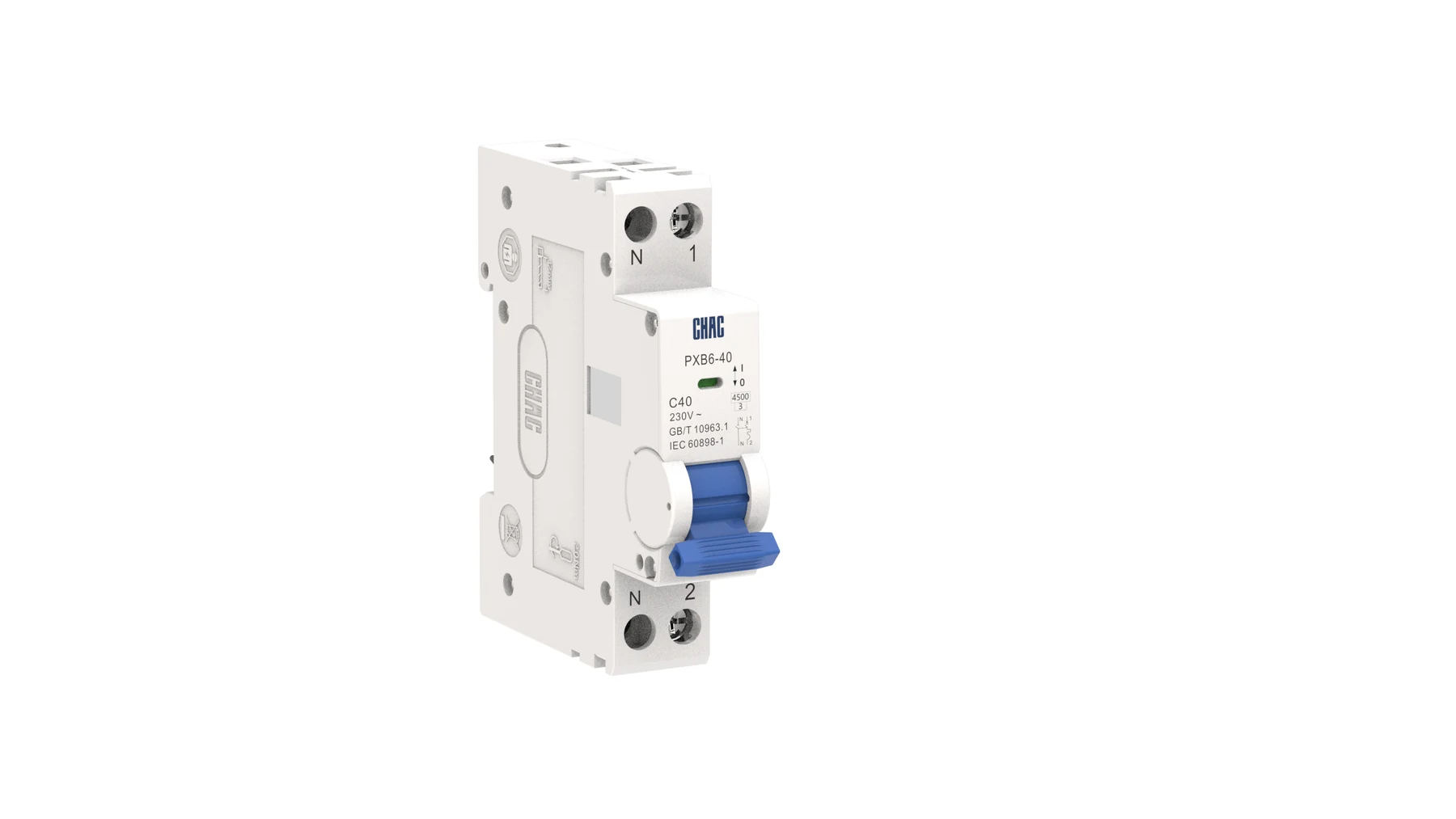
In many catalogues, DPN MCB describes a 1P+N miniature circuit breaker: one protected phase pole with a mechanically linked switched-neutral pole. The abbreviation is not enough to identify every product. Read the complete catalogue number, circuit diagram and protection functions. A compact 1P+N MCB, a two-protected-pole MCB and a 1P+N RCBO can have similar descriptions while performing different jobs.
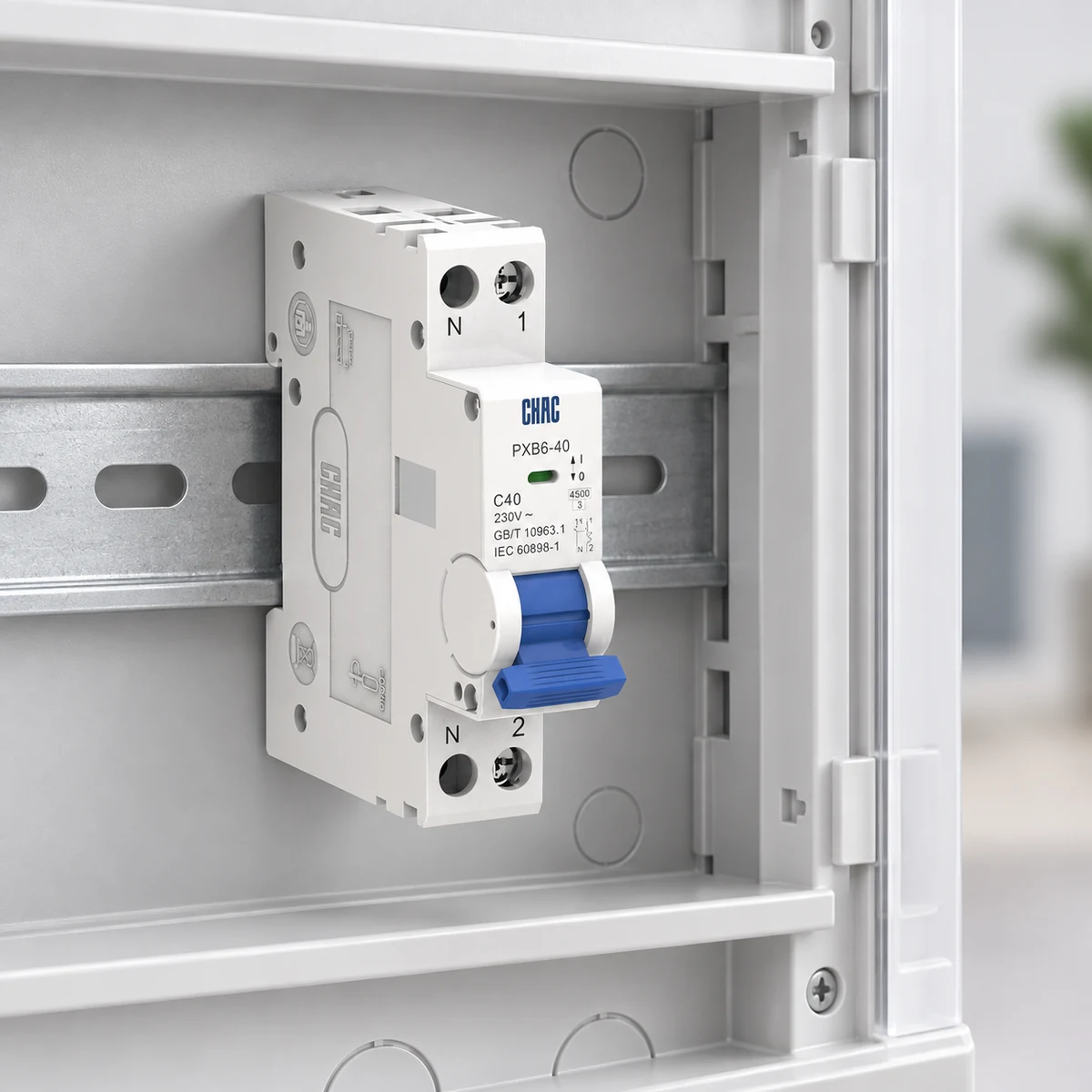
Count protected poles separately from switched poles
The most important distinction is between opening a conductor and sensing overcurrent in it. A typical 1P+N MCB opens phase and neutral together while applying overcurrent protection to the phase pole. That differs from a two-pole breaker with overcurrent protection in both poles. Check the diagram and the datasheet field for number of protected poles.
Schneider Electric’s legacy DPN N catalogue provides a concrete 1P+N example, but it is discontinued. Use it to understand terminology, not as a current purchasing recommendation or as proof of another manufacturer’s construction. On an offered device, verify which terminal is marked N and whether the internal diagram agrees with the quotation.
Match the device to the supply system
A 1P+N circuit breaker is intended for a configuration with an identified phase and neutral under its declared conditions. It is not an automatic replacement for a two-live-conductor circuit. If both conductors require overcurrent protection, substituting a switched but unprotected neutral pole changes the protective arrangement.
Neutral switching also depends on the earthing system and adopted wiring rules. Do not disconnect a protective conductor or treat a combined protective and neutral conductor as an ordinary switched neutral. Have the designer establish the arrangement before the panel builder selects the device. The distinction belongs on the schedule, not only in a conversation with the supplier.
Do not mistake DPN for leakage protection
The letters alone do not establish residual-current protection. Some product names add terms such as Vigi or RCBO to identify another protection function. A plain MCB protects against overcurrent within its rating; a residual-current function must be explicitly specified and documented if the circuit requires it.
For CHAC model information, compare the MCB configurations z pomocą RCBO product range. Confirm the actual protective functions, pole arrangement and destination-market requirements. Do not assume that a compact enclosure or a similar number of terminals makes the two product types equivalent.
Check board space without overlooking the busbar
Compact devices can reduce the width needed for a circuit, but “DPN” does not promise one universal module width. Check the dimension drawing, terminal positions, neutral side and approved busbar arrangement. A comb busbar that physically fits may still have the wrong pole pattern or an unapproved interface.
Allow usable space for conductor bending, identification and future access. A dense row of compact breakers may leave less room to inspect a termination even when the module count looks attractive. Compare the complete assembly layout, not only the sum of catalogue widths.
Make a replacement check before removing the old unit
Record the old device’s catalogue number, protected poles, curve, ratings, terminal diagram and busbar interface. Then compare the proposed replacement field by field. The single-pole versus double-pole comparison helps separate conductor count from protection function.
For DPN breaker selection, use precise wording: a neutral can be switched without being independently protected against overcurrent. If the old documentation is missing, obtain a design review rather than deciding from the width or front label. Keep the new device record and revised circuit schedule together.
How do 1P, 1P+N and two-protected-pole devices differ?
| Arrangement | Typical function to verify | Critical check |
|---|---|---|
| 1P MCB | One protected phase pole | Whether neutral switching is required |
| MCB 1P+N | Protected phase and switched neutral | Neutral terminal and wiring system |
| Two-protected-pole MCB | Overcurrent protection in both poles | Common trip and voltage suitability |
| 1P+N RCBO | Overcurrent plus residual-current function | Residual-current type and declared sensitivity |
Często zadawane pytania
Co oznacza DPN na sterowniku MCB?
Zwykle oznacza to jeden chroniony słup plus przerwany słup neutralny, zapisany jako 1P+N. Dokładna konstrukcja zależy od producenta, więc należy zapoznać się z instrukcją użytkowania, zamiast polegać na skrócie.
Czy przekaźnik DPN MCB chroni neutralny przewód?
Zwykle neutralny przewód jest podłączony, ale nie jest on niezależnie zabezpieczony. Postępuj zgodnie z oznaczeniem urządzenia i lokalnym kodem; nigdy nie należy zakładać, że oba przewody mają identyczną ochronę.
Dlaczego należy stosować urządzenia DPN w domowej sieci elektrycznej?
Można zapewnić kompaktowe jednoczesne odizolowanie fazy i neutralnej, jeśli system elektryczny to pozwala. Oszczędność przestrzeni nie może stanowić przeszkody dla selektywności lub niezawodności.
What is the difference between a 2P and 1P+N MCB?
A typical 1P+N device protects the phase against overcurrent and switches the neutral, whereas a two-protected-pole device senses overcurrent in both poles. Product terminology varies, so verify the number of protected poles, common-trip construction and circuit diagram.
Are DP and MCB the same?
No. DP describes a double-pole arrangement; MCB describes a miniature circuit breaker. A double-pole switch may have no overcurrent trip at all. Identify the switching arrangement and protection function as separate parts of the specification.
Przypisy
- Schneider Electric: legacy DPN N 1P+N product example
- Schneider Electric Electrical Installation Guide: protection requirements
For a model-specific review, skontaktuj się z CHAC Electric with the circuit diagram, supply voltage, load details and destination-market requirements.