Wyłącznik zasilający linii pakowania może się rozłączyć w momencie uruchomienia innego silnika, a następnie ponownie się otworzyć po zresetowaniu. Taki przebieg może wskazywać na luźne złącze, uszkodzoną izolację, nadmierny prąd rozruchowy lub inny błąd obwodu; sam z siebie nie dowodzi jednak, że wyłącznik jest wadliwy.
Krótką odpowiedzią jest: Tak, częste wyłączanie bezpiecznika może być niebezpieczne, ponieważ może wskazywać na nierozwiązany problem z przekładaniem obciążenia, zwarcie, usterkę doziemną lub łuczenie. Nie istnieje uniwersalna, bezpieczna liczba resetowań. Jeśli bezpiecznik ponownie się wyłączy po usunięciu znanej chwilowej przekładki, należy odizolować obwód i zorganizować jego testowanie. Normy IEC 60898-1, IEC 60947-2 i UL 489 określają różne zakresy działania bezpieczników; funkcje GFCI i AFCI odpowiadają za wykrywanie różnych typów usterek.
Pojedyncza podróż po wyraźnym przeciążeniu może być zrozumiała. Gdy a przekaźnik Ciągle się wyłączają, przyczyna może ujawnić się jedynie pod wpływem ciepła, wilgoci, wibracji, prądu rozruchowego lub upływu prądu. Istotne pytanie brzmi: w jakich warunkach wyłącznik przełącza obwód?.
Dlaczego wielokrotne wyłączanie bezpiecznika jest sygnałem ostrzegawczym?
Przekładanie obciążenia powoduje wzrost temperatury przewodów w czasie. Zwarcie tworzy ścieżkę o niskiej impedancji i może niemal natychmiast generować wysoki prąd. Przepięcie na uziemienie powoduje przepływ prądu nieprzewidzianą drogą, podczas gdy luźne połączenie może wywoływać łuki elektryczne, karbonizować izolację i pogarszać stan instalacji. W przypadku wystąpienia ciepła, zapachu spalenizny, przebarwień, roztopionego plastiku, szumu, trzasków lub dymu należy zastosować procedurę lokalną dotyczącą odizolowania; nie dotykaj gorącej obudowy.
Termografia pozwala zlokalizować nieprawidłowe nagrzewanie, jednak sama temperatura nie jest w stanie odróżnić przeciążenia od wysokiego oporu stykowego. Skracający się interwał działania wyłącznika może świadczyć o pogarszaniu się stanu połączeń, izolacji lub charakterystyki obciążenia; zamiast wielokrotnego wymiany wyłącznika rejestruj czas działania, wartości obciążeń, warunki atmosferyczne oraz stan urządzenia.
| Zauważony wzór podróży | Prawdopodobny kierunek | Dlaczego to ma znaczenie |
|---|---|---|
| Przejazdy po minutach pod obciążeniem | Utrzymane przeciążenie, niedostateczna wentylacja lub luźne złącze końcowe | Nagromadzone ciepło może zniszczyć przewody i izolację. |
| Wyłącza się natychmiast po rozpoczęciu obciążenia. | Zwarcie, zablokowany wirnik, poważna usterka instalacji elektrycznej lub nadmierny prąd rozruchowy | Energia zwarciowa lub cykliczne obciążenia rozruchowe mogą szybko uszkodzić sprzęt. |
| Wyprawy w deszczu lub podczas mycia | Zwarcie na ziemi, wniknięcie wilgoci lub ściekanie powierzchniowe | Czynnik wycieku może narazić ludzi lub elementy metalowe na niebezpieczny napięcie. |
| Przełączanie się, gdy występuje nakładanie się kilku obciążeń. | Kumulatywne przeciążenie lub jednoczesny prąd włączeniowy | Zainstalowany obwód może nie być odpowiedni dla faktycznego cyklu pracy. |
| Przełączniki wyłączają się, gdy gniazdka wydają się nieużywane. | Ukryty stały obciążnik, wspólny przewód neutralny lub uszkodzony kabel | Wentylatory, grzejniki, elementy sterujące i okablowanie mogą pozostawać pod napięciem. |
What can the breaker trip pattern reveal about the cause?
Overload, short circuit, and ground fault require different diagnoses. A thermal-magnetic breaker may delay on moderate overcurrent but open magnetically on high current; compare running and startup measurements with its time-current curve. For continuous loads, NEC 210.20(A) generally requires overcurrent protection at 125% of the continuous load plus noncontinuous load, subject to the article’s conditions and exceptions.
A GFCI compares outgoing and returning current. Under UL 943, a Class A device operates within its specified response band around a 4–6 mA imbalance. Moisture, insulation damage, downstream neutral-to-ground contact, or an incorrect shared neutral can therefore trip it below the circuit’s overcurrent rating. See Instalacja RCD a normy bezpieczeństwa elektrycznego for related leakage considerations.
An AFCI evaluates arcing signatures under UL 1699, not simply excess load. A loose splice, crushed cable, or failing appliance can cause repeatable AFCI trips without an overload; an indicator or diagnostic code helps classify the operation but does not locate the fault. “Nothing plugged in” also does not mean no load: hardwired heaters, fans, signs, controls, transformers, pumps, or equipment elsewhere may share the circuit. CHAC’s guide to a breaker tripping with nothing plugged in explains hidden loads and the need for qualified circuit tracing.
What should a qualified electrician test after repeated trips?
Start with trip history, the one-line diagram, panel schedule, and all connected or hardwired loads. Use a clamp meter to capture running current and, where supported, inrush. Compare those readings with conductor ampacity, derating, termination ratings, and the breaker time-current curve to separate overload from normal starting behavior.
Inspect conductors, terminals, bus interfaces, enclosures, and loads. Thermal imaging reveals temperature differences; de-energized torque verification must follow the equipment manufacturer’s instructions. Insulation-resistance testing can expose moisture or damage, although sensitive electronics may require disconnection. Continuity, polarity, neutral-isolation, and grounding checks can locate shared-neutral errors.
Judge device condition only after testing the circuit. A physically compatible breaker can still have the wrong voltage, interrupting rating, trip curve, poles, or panel listing. The wyłącznik nadprądowy page shows parameters to match for branch applications. Where integrated leakage and overcurrent protection is specified, the leakage-integrated molded case circuit breaker is a separate class, not a universal substitute.
| Diagnosis stage | Useful method | Decision supported |
|---|---|---|
| Load review | Clamp-meter running and inrush measurements | Overload versus normal operating or starting current |
| Connection review | Thermal scan, visual inspection, approved torque verification | Heating from resistance, looseness, or poor contact |
| Wiring review | Insulation resistance, continuity, polarity, and route inspection | Moisture, damaged insulation, shared-neutral, or grounding fault |
| Protection review | Time-current curve and available fault-current comparison | Trip characteristic and interrupting-rating suitability |
| Functional review | Manufacturer-prescribed GFCI/AFCI test and indicator check | Protective function and recorded trip signature |
How do electrical standards affect diagnosis and breaker replacement?
IEC 60898-1 covers household and similar breakers; IEC 60947-2 covers industrial low-voltage breakers. UL 489 addresses molded-case breakers in North America, while UL 943 and UL 1699 cover GFCI and AFCI functions. Adopted NFPA 70 governs installation. These standards have different scopes and do not make an incompatible panel component suitable or correct an undersized conductor.
There is no standards-based “three-reset rule.” If a known temporary overload is removed and the breaker trips again, stop. Immediate recurrence, heat, odor, noise, moisture, or visible damage requires isolation and qualified diagnosis. A GFCI/AFCI test button checks a protective function; it does not prove the branch wiring is fault-free.
Never upsize a breaker to stop trips. Without verified conductor ampacity, terminals, equipment protection, and design calculations, a larger rating can let wiring overheat. Confirm voltage, current, poles, breaking capacity, trip curve, load type, environment, special protection, destination-market rules, and the authority having jurisdiction before selecting a replacement. CHAC Electric can support a documented comparison after those conditions are known.
What should you record before a breaker is reset?
Record the affected circuit, time, connected equipment, weather or washdown conditions and any visible trip indication that can be read without opening the enclosure. A device with separate overload, residual-current or arc-fault indications can provide a useful lead. Its code is not a diagnosis of the cable or appliance, and a plain handle position may not identify which function operated. Avoid clearing useful diagnostic information through repeated resets.
Schneider Electric ComPacT NS guidance on what to do after a trip requires the cause to be identified and cleared before reclosing its named equipment. Its detailed inspections are model-specific; they are not a universal MCB service procedure. Use the installed device’s instructions to decide whether it can return to service after the fault is repaired.
Remote control does not change that boundary. An app command, timer or automatic retry can energize the same unresolved fault. Disable any inappropriate restart sequence under the site’s approved procedure and let qualified personnel determine the safe restoration conditions. OSHA’s work-practice rules also require verification of the de-energized condition in covered US workplaces; a software off state is not proof of isolation.
What should you know when a circuit breaker keeps tripping?
Is it dangerous to keep resetting a breaker that keeps tripping?
Yes. Each reset can re-energize unresolved overload, insulation damage, moisture, arcing, or a short circuit. If a known temporary overload has been removed and the breaker trips again, isolate the circuit and arrange diagnosis.
Can a bad breaker itself cause repeated tripping?
Yes, a breaker can be damaged or degraded, but it should not be blamed before load, wiring, connections, and environmental causes are tested. Replacement must be approved for the panel and match the required ratings and trip behavior.
Is a breaker trip always an overload problem?
No. An immediate trip may indicate a short circuit or severe inrush, while a GFCI or AFCI may respond to leakage or an arcing signature at current below the circuit’s normal overcurrent rating. The operating pattern and measured evidence distinguish them.
Why would a breaker trip when nothing is plugged in?
Hidden hardwired loads, standby power supplies, damaged cable, moisture, and shared-neutral faults can remain active when receptacles look unused. A circuit trace and current measurement are more reliable than the panel label alone.
Should the breaker be replaced with a larger one?
No. Upsizing without verifying conductor ampacity and the complete circuit design can defeat intended protection and increase fire risk. Correct the overload or selection problem instead.
When should a facility call a qualified electrician immediately?
Act immediately after an instantaneous repeat trip or any heat, burning odor, buzzing, crackling, smoke, moisture exposure, or visible damage. Critical, outdoor, and wet-location circuits also justify a faster response because the consequence of an incorrect reset is higher.
Is a remote reset safer than resetting the handle?
No. Either can re-energize an unresolved fault. Remote operation does not replace diagnosis, inspection of the affected equipment or the restoration conditions in the manufacturer’s instructions.
Oficjalne referencje
- UL Solutions: Przewodnik po zastosowaniach płyt sterowniczych; replacement compatibility and assembly ratings.
- Schneider Electric: What to Do When the Circuit Breaker Trips; DOCA0221EN-02, ComPacT NS equipment only; not a universal breaker test procedure.
- OSHA 29 CFR 1910.333: Wybór i stosowanie metod pracy; covered US workplace requirements.
The dependable rule is simple: a breaker that keeps tripping is a warning to diagnose the circuit, not an obstacle to bypass.
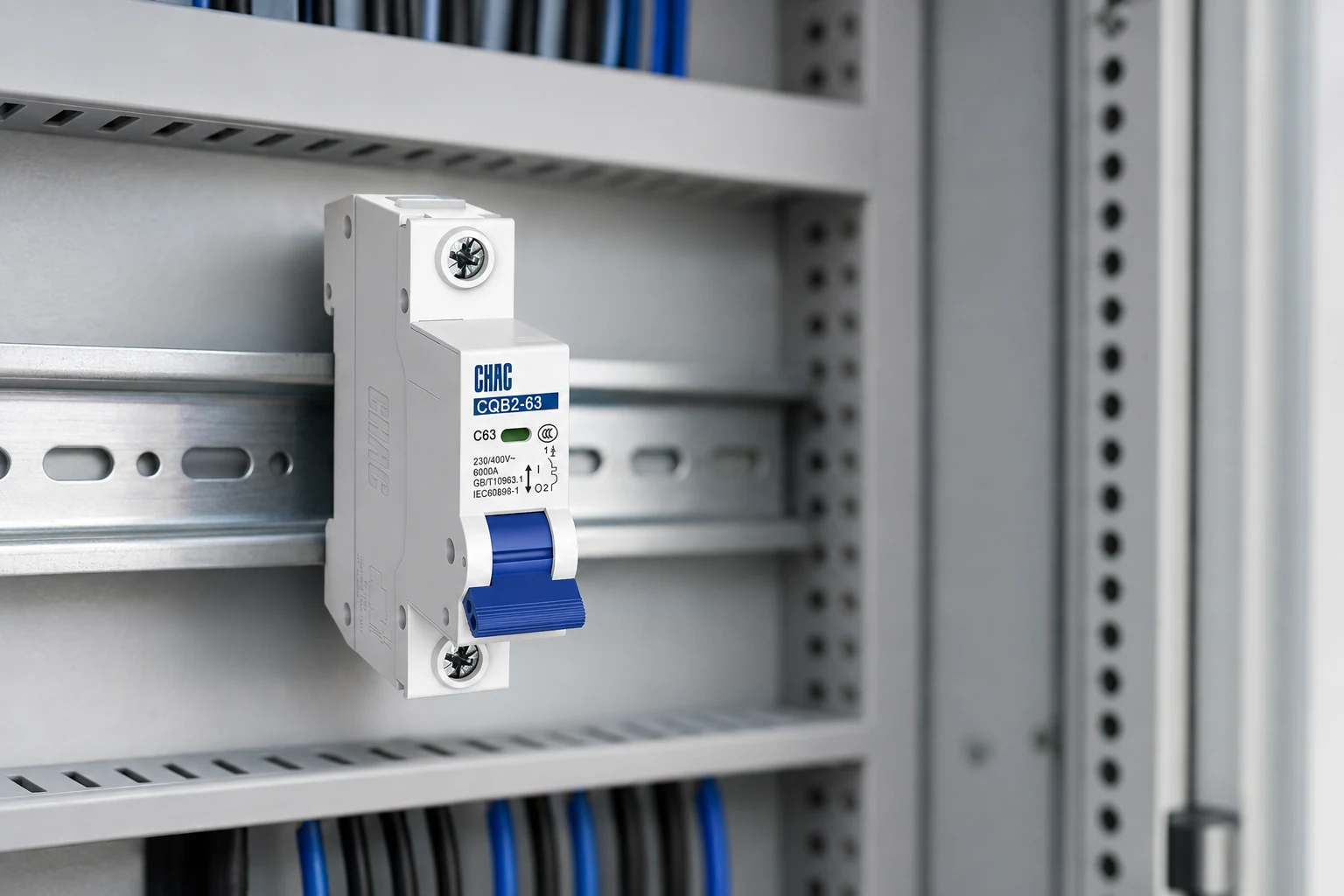
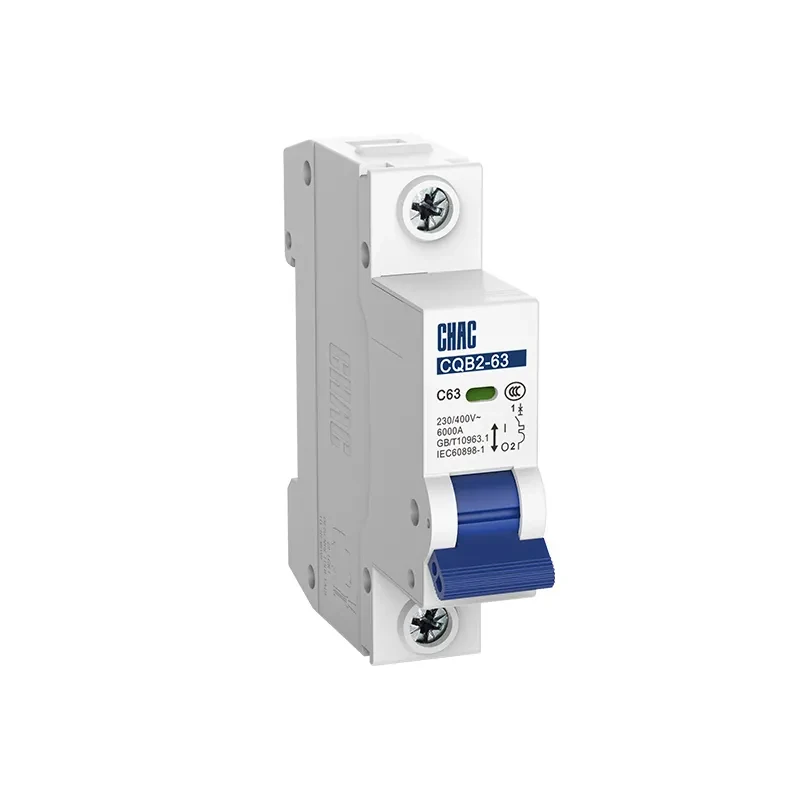
If your team is reviewing branch protection or replacement documentation, contact CHAC Electric with the circuit rating, load type, trip history, and market requirement. The CQB2-63 product information can support that discussion once the fault cause and installation conditions have been established.