Imagine a hypothetical contractor in Denver ordering cable for a 200 A workshop feeder using a chart intended for a whole-house service. During review, the dwelling-service allowance is found not to apply. The mismatch came from selecting the chart before identifying the circuit.
Resumo: For a qualifying 120/240 V single-phase whole-dwelling supply, NEC 310.12 commonly permits 2/0 AWG copper or 4/0 AWG aluminum for 200 A. Those sizes are not a universal 200 A feeder answer. Ordinary Table 310.16 starting points at 75°C are 3/0 copper or 250 kcmil aluminum, before other conditions are considered.
Establish whether the dwelling-service allowance applies
O 200 amp wire size decision depends first on what the circuit supplies. NEC 310.12 provides a specific dwelling-service and qualifying feeder allowance. It should not be transferred automatically to a workshop feeder, a partial-house feeder or a commercial installation.
The familiar allowance is based on 83% of the service or feeder rating under its specified conditions. For a qualifying 200 A supply, 200 × 0.83 is 166 A. This explains why a dwelling-service selection can differ from an ordinary 200 A ampacity-table selection; it does not authorize a general 17% reduction everywhere.
Confirm the adopted code edition, supply system and circuit scope with the designer or authority having jurisdiction. Utility service requirements may add conductor, termination or metering conditions. Keep that decision on the drawing rather than leaving the installer to infer which chart was used.
Compare copper and aluminum under the same conditions
At the ordinary 75°C Table 310.16 starting point, 3/0 copper is 200 A and 250 kcmil aluminum is 205 A. In comparison, 2/0 copper is 175 A and 4/0 aluminum is 180 A. Their use for a qualifying 200 A dwelling supply depends on the specific allowance, not a claim that their ordinary table ampacities are 200 A.
A 200 amp aluminum wire size must also fit terminals listed for aluminum, the conductor size and the specific stranding. Follow the connector instructions for preparation and torque. Do not assume every lug suitable for copper also accepts aluminum.
A higher insulation temperature marking does not automatically raise the equipment terminal rating. Ambient temperature, conductor grouping and the wiring method can also affect the final result. Record the limiting condition rather than quoting whichever column gives the smallest conductor.
Grounding, conduit and voltage drop require separate calculations
Grounded neutral conductors, equipment grounding conductors and grounding electrode conductors perform different functions. Their sizes come from different rules. A common 200 A feeder equipment-grounding starting point in NEC Table 250.122 is 6 AWG copper or 4 AWG aluminum, but applicable adjustment and installation conditions must still be checked.
Do not copy that equipment-grounding value into a grounding electrode conductor schedule. NEC 250.66 and its electrode-specific provisions address that separate connection. Neutral sizing likewise depends on the load and applicable rules, rather than an assumed match to the ungrounded conductors.
For underground routes, check wet-location suitability, raceway fill, bend space and pulling conditions using actual cable dimensions. There is no universally correct conduit size derived only from 200 A. A long route may also justify a voltage-drop calculation and a larger conductor, which can require different terminals and equipment.
Compare the selection criteria
| Rule and assumptions | Copper starting point | Aluminum starting point |
|---|---|---|
| Qualifying NEC 310.12 dwelling supply | 2/0 AWG | 4/0 AWG |
| General 75°C Table 310.16, before other checks | 3/0 AWG: 200 A | 250 kcmil: 205 A |
| Ordinary table rating of the smaller dwelling choices | 2/0 AWG: 175 A | 4/0 AWG: 180 A |
Check the conditions that change the selection
| Artigo | Selection basis | Common purchasing mistake |
|---|---|---|
| Ungrounded conductors | Applicable ampacity and circuit rules | Using dwelling sizes on any feeder |
| Neutral | Calculated neutral load and applicable rules | Copying a generic service chart |
| Equipment grounding conductor | Applicable NEC 250.122 provisions | Confusing it with an electrode conductor |
| Raceway and terminals | Actual conductor dimensions and equipment data | Ordering conduit from ampere rating alone |
Apply the correct standards and approval scope
NEC 310.12 and 310.16 apply under different conditions; NEC 110.14, Article 250 and the selected wiring method add requirements. These examples use familiar 75°C starting assumptions and are not a site-specific design. Confirm the current locally adopted text before ordering.
What to confirm before placing an order
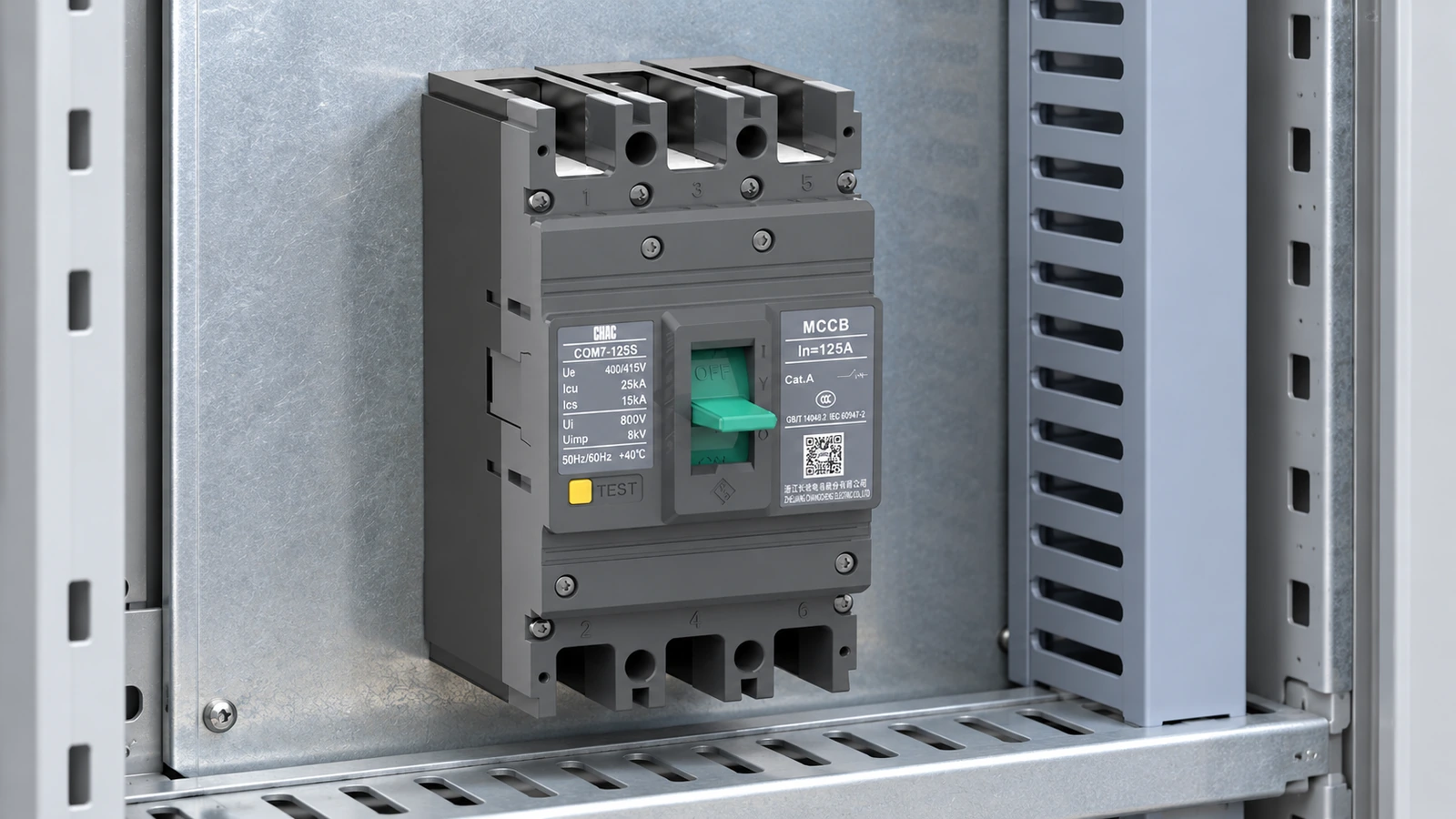
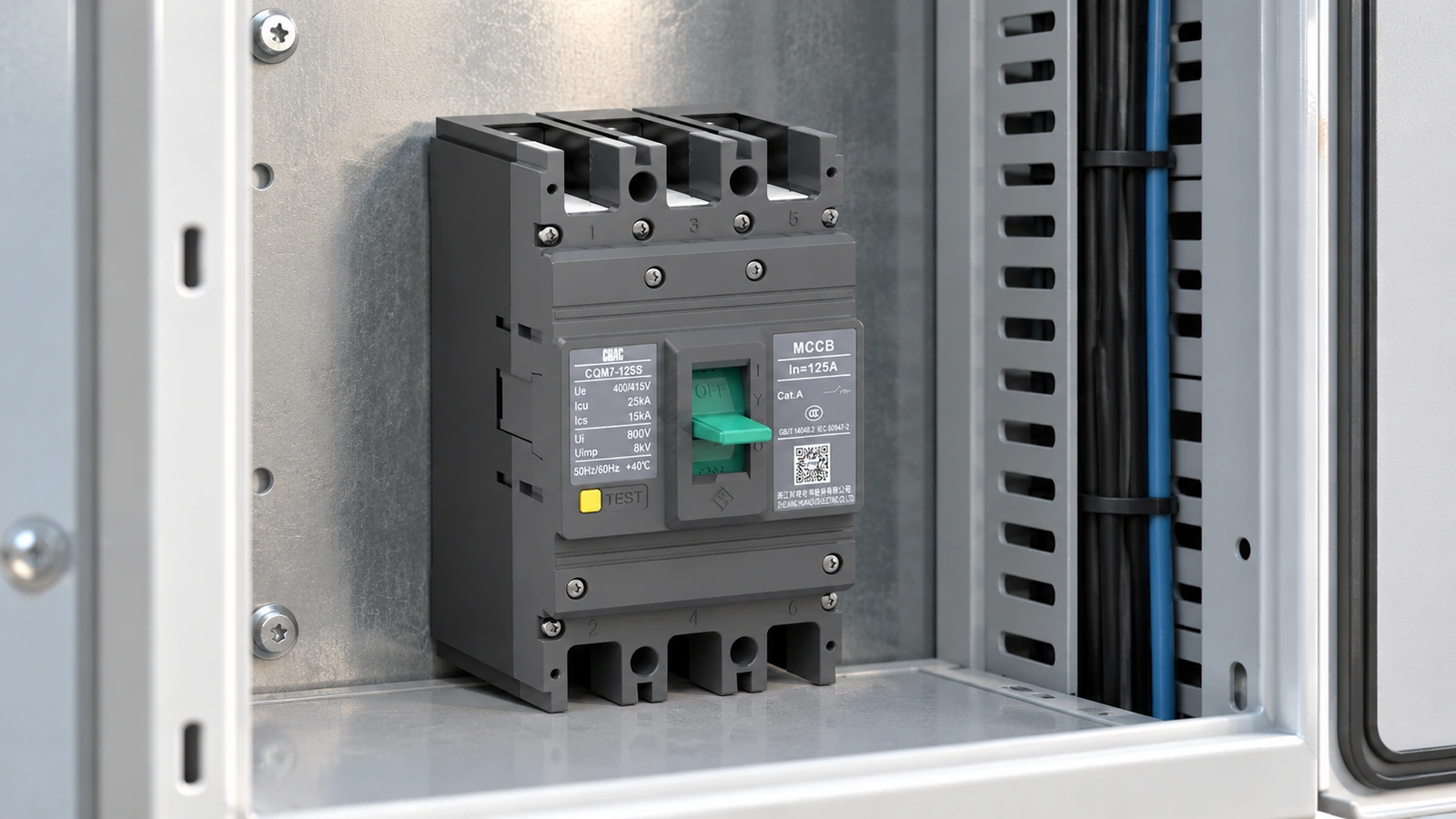
When evaluating CHAC MCCB options, provide the conductor specification and exact terminal requirement as well as load and fault duty. The CQB2-125 range is a separate lower-current product range, not a generic 200 A service device. Treat 200 amp copper wire size and breaker selection as coordinated decisions with destination-market approval verified separately.
For related selection details, read the guide to circuit breaker size and rating.
Perguntas frequentes
Can 2 AWG copper handle 200 amps?
It is not an ordinary 200 A service conductor under the table conditions discussed here. Do not confuse 2 AWG with the much larger 2/0 AWG.
What is the NEC code for 200 amp service wire?
Review NEC 310.12 when the dwelling-supply conditions apply, otherwise the applicable conductor and service rules. Terminal limits, correction factors and utility requirements also matter.
What size conduit do I need for a 200 amp service?
Calculate fill from the actual conductor dimensions, number, insulation and raceway type. Bends, pulling limits and terminal entry space may influence the selection.
What size wire is used for an underground 200 amp service?
The route does not determine one universal size. Establish the applicable ampacity rule, wet-location suitability, installation method and voltage-drop requirements.
Can every 200 A feeder use 2/0 copper or 4/0 aluminum?
No. Those familiar sizes depend on the qualifying dwelling rule or another expressly applicable provision. A partial-load or commercial feeder requires its own assessment.
What wire size is normally used for 200 amp service?
A qualifying dwelling supply commonly uses 2/0 copper or 4/0 aluminum. General 75°C table starting points differ, as shown above, and final conditions can require more.
Referências
- NFPA 70 — National Electrical Code
- Southwire — conductor, voltage-drop and conduit calculation tools
- OSHA 1910.303 — electrical equipment and installation requirements
For model-specific selection, review the CHAC product details and send the application conditions, quantity and destination requirements through the página de contacto.