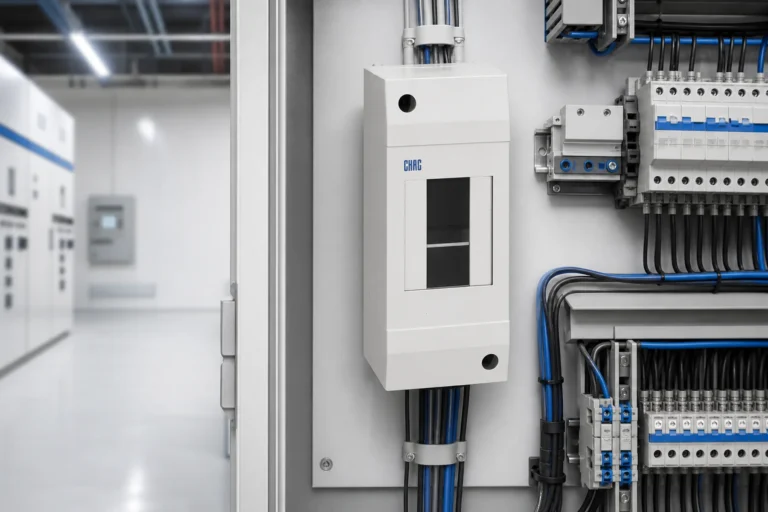
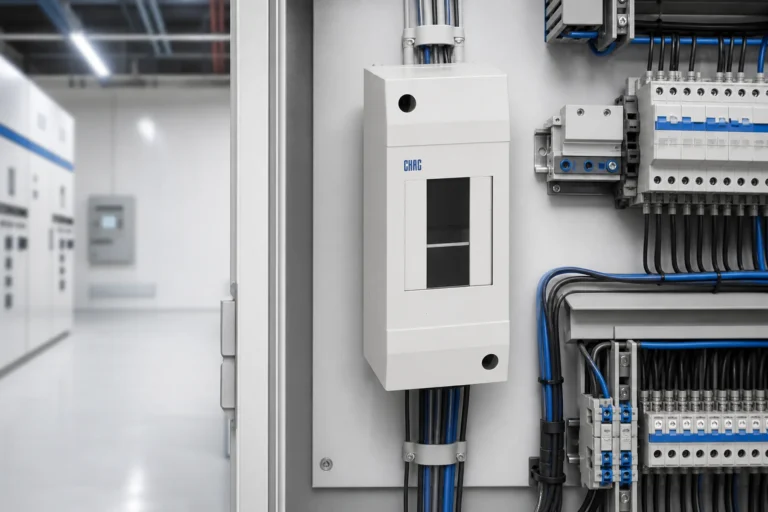
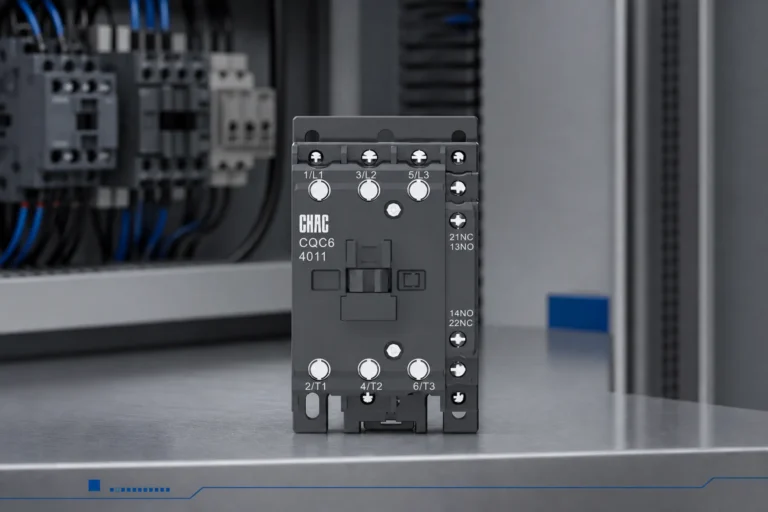
Thermal magnetic molded case circuit breaker selection starts with the circuit role, the project requirement, and selected-model documentation. Thermal-Magnetic vs Electronic MCCB: When Each Trip Approach Fits helps panel builders organize those checks before a device is specified or an RFQ is issued. Trip-unit approach remains a design decision owned by the protection study and the molded-case breaker documents on the bill of materials.

Part 1. What is being compared in a trip-unit decision?
A thermal-magnetic molded case circuit breaker uses thermal and magnetic trip functions, while an electronic trip approach uses sensing and electronic logic. The selection question is therefore about the protection and adjustment approach required by the distribution design, not a claim that either approach fits every frame, load, or project.
Part 2. When does a thermal-magnetic approach fit the brief?
A thermal-magnetic approach can fit a straightforward distribution decision when the design does not call for the extra adjustment, measurement, communications, or coordination capabilities offered by a specific electronic trip unit. The final choice still depends on the selected breaker documentation and the protection study.
Part 3. When does an electronic trip approach need review?
Electronic trip units are commonly evaluated where the design needs configurable protection functions, documented coordination, measurement, or communications. The available functions differ by product and trip-unit version, so a panel drawing must not assume that every electronic MCCB includes the same settings or accessories.
Importante: Trip-unit marketing terms do not prove coordination or selectivity; final settings belong to the project study and selected-model documentation. (fonte — IEC low-voltage switchgear references via IEC webstore)
Part 4. Which drawing checks expose the difference?
Review the single-line diagram, upstream and downstream protective devices, load characteristics, fault-study inputs, and requested operating information together. This identifies whether the trip approach must support a specified setting range or whether a simpler documented arrangement meets the design intent.
Part 5. How should buyers compare supplier responses?
Ask suppliers to map the requested trip functions, setting requirements, accessories, documentation, and coordination inputs to an exact proposed model. Do not compare quotations solely by frame appearance or a generic term such as electronic; the model-specific trip-unit scope matters.
Uma lista de introdução de RFQ compacta torna a resposta do fornecedor mais fácil de comparar:
| O comprador deve fornecer | Por que é importante | Erro comum |
|---|---|---|
| Conjunto de desenhos atual | Define o limite do circuito | A enviar um nome de produto sem um diagrama |
| Funções obrigatórias | Torna o pedido passível de revisão | Tratar opções não verificadas como padrão |
| Contexto de instalação | Identifica as condições do projeto a confirmar | Assumindo que o texto da categoria é uma aprovação de projeto |
| Pedido de documentação | Liga a RFQ à evidência exacta | Aceitar afirmações genéricas em vez de dados do modelo |
| Enviar com citação | Torna a comparação de fornecedores auditável | Citação sem o pacote de evidências solicitado |
Para um contexto mais amplo, reveja o thermal magnetic molded case circuit breaker product family e o respetivo página de linha de produtos.
Part 6. Which CHAC page should start a product discussion?
The CQM6E electronic adjustable MCCB page is an appropriate starting point when the RFQ calls for an electronic approach, while the MCCB category provides product-family context. It is not a substitute for a protection study or a statement that a particular model meets every coordination target.
Recomendação de produto
CQM6 Standard Molded Case Circuit Breaker (MCCB) OEM Manufacturer | CHAC Electric
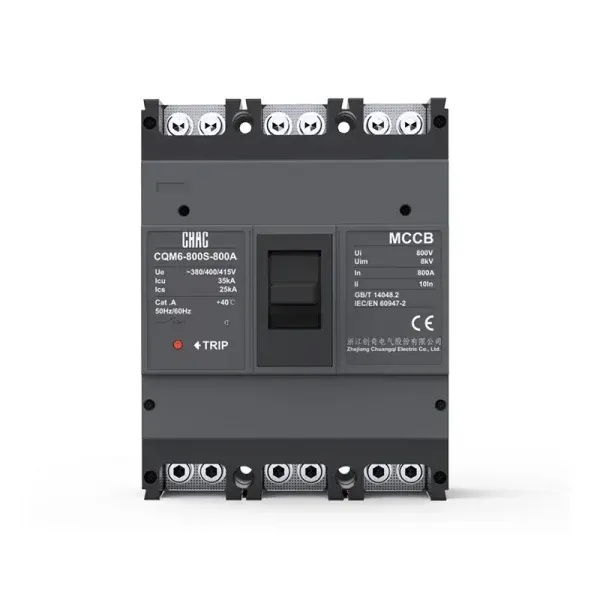
Use o publicado página de produto CHAC relevante as a documented product route starting point for a product discussion only after the RFQ inputs are complete. Programs that need branded distribution packaging can use the página de personalização da distribuição de energia. Calling two frames electronic does not prove they share the same setting range, accessories, or coordination capability.
Part 7. Where should an MCCB trip-unit comparison hand off to the study?
This guide supports early specification and quotation comparison for trip-unit approach. It is not a setting instruction, a short-circuit study, an assurance of selectivity, or a substitute for project-specific electrical design and selected-model documentation. Keep a drawing review note that lists upstream and downstream devices beside the requested trip approach.
Fit Boundary: MCCB trip-approach comparison stops before settings, selectivity claims, or short-circuit study results.
Leitura relacionada: um artigo da CHAC mais restrito e já publicado está associado por contexto, e não como substituto para o âmbito de decisão deste artigo.
For an MCCB trip-unit discussion, contactar CHAC Electric with the single-line diagram and requested trip functions.
FAQs
What does thermal-magnetic mean in an MCCB?
It describes a trip approach that uses thermal and magnetic functions for overload and short-circuit protection; the exact characteristics must be verified for the selected breaker.
Does every electronic MCCB have the same functions?
No. Functions, setting ranges, accessories, and communication options are model-specific and should be requested in the product documentation.
When should a panel builder consider an electronic trip unit?
Consider it when the design calls for configurable protection, coordination review, monitoring, or documented functions beyond the selected thermal-magnetic arrangement.
Can a thermal-magnetic MCCB be selected from frame size alone?
No. The circuit role, protection requirements, applicable project rules, and selected-model evidence must also be reviewed.
What information belongs in an MCCB trip-unit RFQ?
Include the single-line diagram, circuit duty, requested protection functions, coordination inputs, accessories, environmental context, and documentation requirements.
Who approves final MCCB settings?
The responsible project electrical designer should approve final settings using the applicable study, project rules, and selected-model documentation.