
A list of the largest US nhà thầu điện is useful only when its year, revenue basis and company names are clear. It is not the same as a list of electrical-equipment manufacturers or a recommendation for one project. The 2026 EC&M list discusses 2025 performance, so its publication year should not be presented as completed 2026 revenue. This guide identifies the leading names in an accessible reproduction of that list, explains the evidence limits, and connects contractor research with project-specific supplier qualification.
The short answer is: the largest nhà thầu điện in the US include Quanta Services, Rosendin Electric, EMCOR, Everus Construction Group and MYR Group in FSG’s reproduction of EC&M’s 2026 list. The next five names are IES Holdings, M.C. Dean, MMR Group, Faith Technologies Incorporated and ArchKey Solutions. This is an attributed revenue-list snapshot, not CHAC’s independent ranking or a measure of project suitability. Check the publication year, underlying performance period and the particular operating company before planning outreach.
US electrical contracting covers data centers, hospitals, factories, transport facilities, public buildings, and service work. Tables from Engineering News-Record and EC&M are useful snapshots, but each has defined survey fields and reporting periods. Read the methodology and year rather than turning one edition into a permanent “top contractors” claim.
Which companies appear at the top of the 2026 contractor list?
FSG’s September 16, 2026 reproduction of EC&M’s Top 50 list shows the following first ten entries in this order. EC&M’s 2026 list introduction describes 2025 performance. The downloadable publisher table was not read for this article, so the order below is attributed to FSG’s reproduction and no revenue figures are asserted.
| Position in FSG’s reproduction | Contractor or group name |
|---|---|
| 1 | Quanta Services |
| 2 | Rosendin Electric |
| 3 | EMCOR |
| 4 | Everus Construction Group |
| 5 | MYR Group Inc. |
| 6 | IES Holdings Inc. |
| 7 | M.C. Dean |
| 8 | MMR Group Inc. |
| 9 | Faith Technologies Incorporated (FTI) |
| 10 | ArchKey Solutions |
MYR Group independently announced its No. 5 position. Its official company profile describes transmission/distribution and commercial/industrial electrical construction through subsidiaries in the US and Canada. That profile illustrates why a group’s overall size is not the same as one local subsidiary’s scope.
FSG, itself a commercial participant rather than an independent ranking publisher, appears at No. 18 in its reproduced list. Its page describes electrical construction, lighting and national-account service work. For the other names, this article does not infer sector strengths, local licenses, current projects or procurement contacts from list position; confirm those through the relevant operating company’s current records.
How should buyers compare contractor scale beyond a ranking?
Revenue is the most visible measure, but reported electrical revenue may differ from total company revenue. A high figure may reflect one fast-growing sector, acquisitions, or national coverage. Backlog shows contracted future work; geographic reach, self-perform capability, workforce depth, safety performance, and service revenue reveal other forms of scale.
| Scale measure | What it indicates | Why a supplier should care |
|---|---|---|
| Prior-year electrical revenue | Completed business volume under the publisher’s definition | Useful for market mapping, but not a forecast or quality score |
| Backlog and sector mix | Committed workload and exposure to data centers, healthcare, industrial, or public work | Helps identify likely demand patterns and project-specific documentation pressure |
| Geographic coverage | Ability to mobilize across states or regions | Increases the value of consistent labeling, logistics, and technical support |
| Self-perform and prefabrication capacity | How much work the contractor controls directly | Makes dimensional accuracy, kitting, and delivery sequencing more important |
| Safety and delivery record | Operational discipline beyond sales volume | Shows why vendor screening may extend beyond commercial terms |
A fixed ranking is therefore a weak supplier-selection tool. A contractor with data-center backlog may value commissioning response and BIM-compatible data; a regional service provider may prioritize local availability. Identify firms by target sector and location, then consult the latest source year instead of assuming one list defines permanent leadership.
What should contractors verify before qualifying an electrical supplier?
Supplier prequalification should separate company capability from product evidence. Depending on the contractor and contract, a review may cover legal identity, financial capacity, quality controls, manufacturing capacity, references, applicable insurance, and technical escalation. The product review should identify ratings, environmental limits, drawings, supported standards, and any listing agency.
Compliance language must be exact. NFPA 70 is an installation code; Section 110.3(B) addresses installation and use according to instructions included in a listing or labeling. UL 489 sets requirements for molded-case circuit breakers and related equipment, not a blanket certificate. OSHA’s NRTL program recognizes laboratories that certify products within an approved scope. The authority having jurisdiction and project specification determine acceptable evidence.
Prequalification should also test lot traceability. A contractor may need cartons and device markings connected to purchase records, production lots, inspection results, and approved revisions. This can help isolate an affected batch during field investigation. A documented process for nonconforming material and corrective action is more useful than a general quality claim.
For an electronic adjustable MCCB, reviewers may need frame size, trip settings, interrupting rating at the applicable voltage, terminals, dimensions, environmental limits, and compatible auxiliaries. Evidence must match the offered configuration; a family brochure cannot replace configuration-level project documentation.
How does a complete submittal package protect the project schedule?
A complete submittal package matters because approval may precede production, prefabrication, and energization. Contractors need a complete first package, a named response owner, and a realistic resubmission time. Drawings and data sheets require revision identifiers; a response matrix should close comments without quietly changing ratings, accessories, or dimensions.
Approved-equivalent risk deserves attention. “Equivalent” should mean equal performance for the application, not a similar description. Compare voltage, current, interrupting capacity, poles, trip functions, fit, terminals, accessories, listing status, and coordination implications. The designated reviewer decides whether a substitution is acceptable; approval is never guaranteed.
Where a project uses BIM, supplier data should fit the coordination process. The National BIM Standard-United States provides a consensus framework for information exchange, not a mandate to model every breaker. For modeled assemblies, dimensions, mounting points, clearances, cable-entry zones, and identifiers matter more than decorative geometry. A 2D process still needs consistent CAD and PDF data.
Schedule certainty also depends on secondary items. Accessories and spares such as auxiliary contacts, shunt trips, interlocks, handles, terminals, and replacement mechanisms need confirmed compatibility and lead times. Packaging can map material to area, panel, feeder, or installation sequence so that one missing part does not stop an entire work package.
Change-order and closeout documentation complete the chain. A change record should show commercial, technical, and lead-time effects plus superseded files. At turnover, approved submittals, contracted as-built information, instructions, test records, warranties, spare-parts lists, and final schedules should agree. This electrical panel upgrade guide can frame related capacity and future-load questions.
What should different project sectors request from suppliers?
| Project profile | Supplier pressure point | Useful evidence to request |
|---|---|---|
| Data center | Commissioning response and repeatable configurations | Controlled settings data, accessory schedules, revision history, and escalation contacts |
| Healthcare | Phased turnover and inspection readiness | Traceable product records, installation guidance, and planned spares |
| Manufacturing | Downtime exposure and harsh service conditions | Environmental limits, maintenance access, replacement strategy, and coordination data |
| Public project | Specification accountability and formal substitution review | Clause-by-clause comparison, conservative claims, and complete approval records |
| Commercial portfolio | Repeatability across sites and phases | Stable configurations, consistent labeling, kitting rules, and delivery forecasts |
Use these priorities to shape procurement planning while keeping engineering review project-specific. Disconnecting means, overcurrent protection, available fault current, enclosure conditions, and selective coordination remain application questions. For related planning, CHAC’s disconnect switch selection guide explains why function and installation context should be established before a device is chosen.
- Define the application. Record voltage, load, available fault current, environment, installation method, accessories, and governing specification.
- Separate company capability from product evidence. Confirm capacity, quality controls, traceability, technical ownership, and the listing path.
- Check document readiness. Compare the bill of materials with drawings, data sheets, accessory schedules, labels, and revisions.
- Test schedule claims by component. Confirm release conditions, long-lead accessories, alternates, spares, and slippage reporting.
- Agree on change and closeout workflows. Name approvers, response targets, turnover files, and record-retention periods.
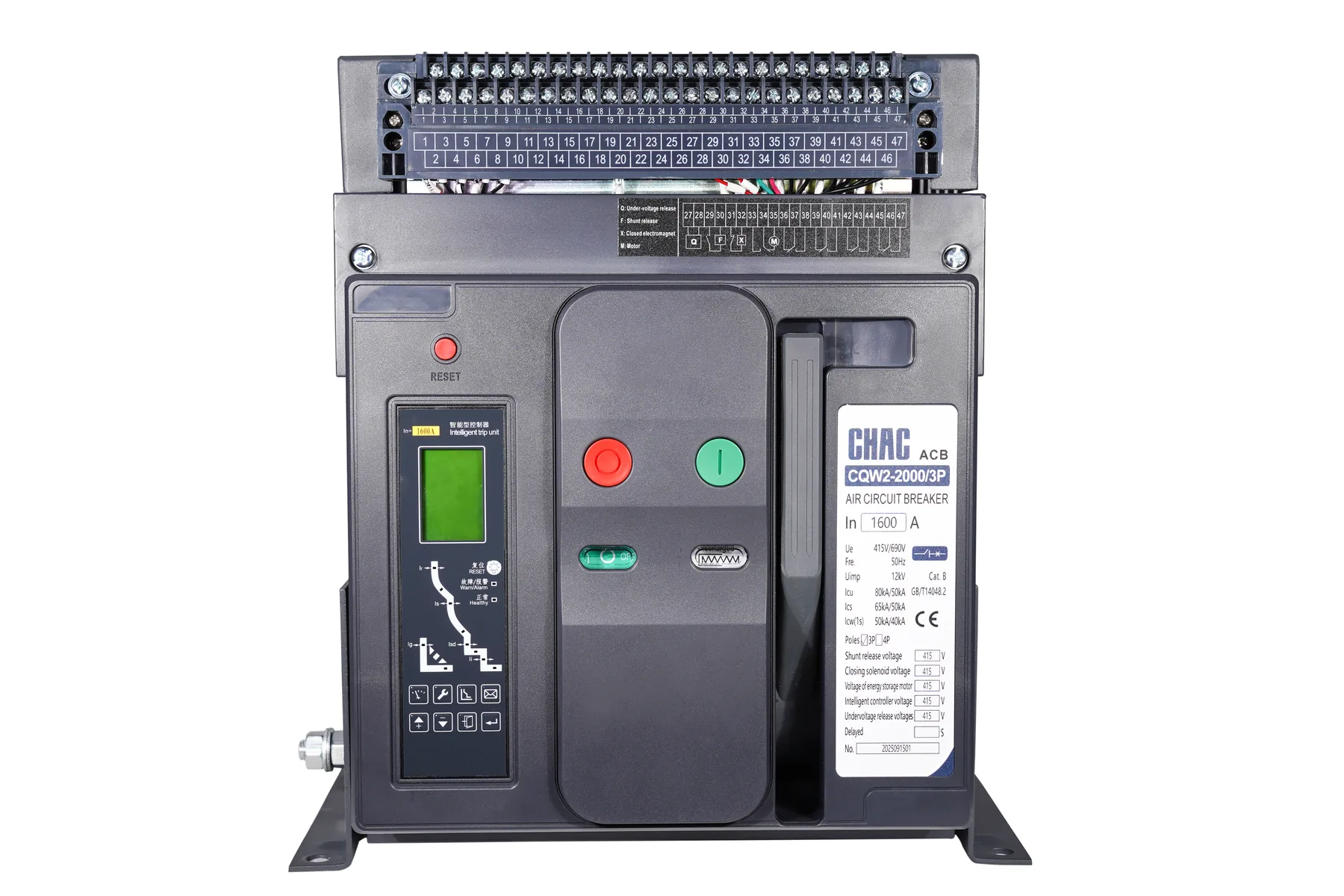
A buyer reviewing thiết bị phân phối điện should apply this framework across the full assembly rather than one isolated SKU. CHAC Electric can support that review with application data and product-family information, but final selection must follow the project specification, the applicable code, and the designated approval process.
Where does an equipment manufacturer fit in contractor research?
Electrical contractors deliver construction and service work; an equipment manufacturer supplies products that must pass the project’s approval process. CHAC Electric publishes this article and has a commercial interest in equipment sourcing. It is not presented as a US electrical contractor, and inclusion of the firms above does not establish that CHAC supplies them or has a commercial relationship with them.
For market mapping, separate the parent group, the bidding subsidiary and the responsible procurement team. Confirm the project location, specification and approved vendor process before sending a product submission. A large national revenue figure cannot establish whether a particular branch accepts a model, what listing it requires or who has authority to approve an alternative.
Answers to common contractor and supplier qualification questions
Who are the largest electrical contractors in the US?
FSG’s reproduction of EC&M’s 2026 list starts with Quanta Services, Rosendin Electric, EMCOR, Everus Construction Group and MYR Group. The list concerns prior-year performance; it is not a universal project-quality ranking. Verify the current edition and operating-company scope before selecting a contractor.
Do large electrical contractors choose suppliers mainly on price?
No single rule applies. A procurement review may also consider approval risk, accessory availability, delivery commitments, field support, and closeout documentation. Buyers should confirm the weighting in the applicable bid or vendor-qualification process.
What documents should buyers request during supplier evaluation?
Common needs include configuration-specific data sheets, ratings, dimensional drawings, accessory schedules, installation instructions, supported listing evidence, and revision-controlled submittals. The required set comes from the contract and specification, so suppliers should confirm it at the start.
Why does lot traceability matter on a large project?
Traceability can help identify which shipment or production lot is affected by a field issue. It supports targeted investigation, replacement, and closeout records without assuming every installed device has the same condition.
Should every electrical product have a BIM object?
No. BIM detail should match the project’s coordination needs. For an assembly that is modeled, reliable dimensions, clearances, connection zones, and identifiers are usually more useful than visually complex geometry.
Can an overseas manufacturer supply a major US contractor?
Potentially, if the offered product has an acceptable project-specific compliance path and the supplier can manage documentation, lead time, traceability, accessories, spares, and technical response. The contractor, engineer, owner, and authority having jurisdiction may each have approval responsibilities.
Is the 2026 contractor list based on completed 2026 revenue?
No. The observed EC&M introduction and MYR announcement describe 2025 performance for the 2026 publication. Do not confuse the publication year with the period measured.
Is CHAC listed here as a US electrical contractor?
No. CHAC is discussed as an electrical-equipment sourcing option, not a contractor. The article does not claim a supplier relationship with any listed company.
Tham khảo
- EC&M: 2026 Top 50 Electrical Contractors; September 16, 2026; introduction discusses 2025 performance. Downloadable table not independently read.
- FSG: The Top 50 Electrical Contractors; September 16, 2026 reproduction used for the first ten names; FSG is a commercial participant.
- MYR Group: EC&M Announces 2026 Top 50 Electrical Contractors; official confirmation of MYR’s No. 5 position and underlying period.
- MYR Group: About; official description of US/Canada construction scope.
- UL Solutions: Panelboard Application Guide; product and assembly suitability, not contractor qualification or ranking.
The largest contractor is not automatically the best customer for every supplier; the best fit is the contractor whose project requirements align with the supplier’s documented capability.
For an upcoming commercial distribution package, review the CHAC electrical distribution equipment information above against the required ratings, approvals, accessory plan, delivery sequence, and closeout needs. Contact CHAC Electric to discuss the application and the supporting document set.