عندما واجهت فنيّة كهرباء الخدمات في دنفر مُغذٍ بتيار 60 مع توصيلات ساخنة، قامت بإيقاف تشغيل اللوحة وتتبّعت الجدول بدلاً من مجرد شدّ كلّ عروة. كشف الفحص عن عدم تطابق بين مادة الموصل، وقائمة العروات، والعمود المفترض لدرجة الحرارة. كان العطل ناتجاً عن مشكلة في التنسيق، وليس دليلاً على الحاجة إلى قاطع أكبر.
الملخص: غالبًا ما يتم تقييم دائرة مضخم 60 باستخدام نحاس من نوع 6 AWG أو موصل ألومنيوم مختار بشكل صحيح، ومع ذلك فإن الصحيح سعة سلك مقبس 60 أمبير يتم تحديده بناءً على القدرة الحالية، والعزل، والموصلات، وعوامل التصحيح، وانخفاض الجهد، واللوائح المحلية. “6 Romex” أو “8 AWG” ليست معلومات كافية. يرجى التحقق من طريقة التوصيل، ولوحة بيانات المعدات، وقائمة قواطع الدائرة حسب كود NEC المعتمد محليًا قبل التركيب.
ما الذي يمكن لجدول حجم أسلاك قاطع التيار الكهربائي 60 أن يخبرك به، وما الذي لا يستطيع إخبارك به
توفر جداول القدرة التحملية في المادة 310 من قانون NEC نقطة الانطلاق. ثم يطبّق المصمم تصحيح درجة الحرارة المحيطة، وتعديلًا لعدد الموصلات الناقلة للتيار، وأقل تصنيف لدرجة حرارة للموصل والقاطع ونقطة التوصيل. بالنسبة للمعدات المصنفة بـ 100 أمبير أو أقل، قد تكون عمود 60 C ذات أهمية ما لم تكن المجموعة الكاملة مُدرجة لعمود 75 C. لا يمكن للجدول أن يأخذ في الاعتبار تلك الظروف الميدانية.
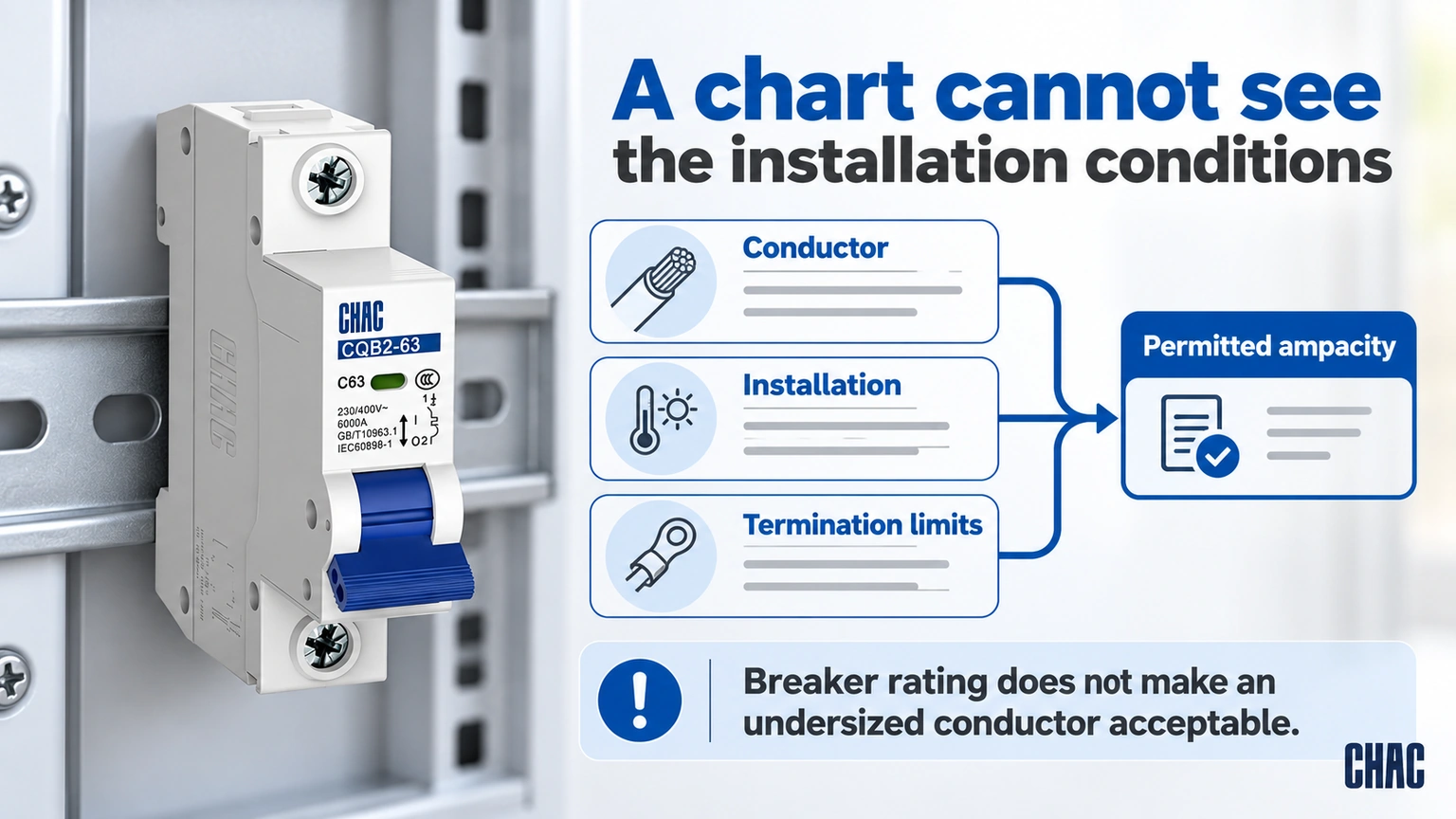
Feeder calculations also include demand, grounding and bonding, disconnect location, and panel ratings. A 60 amp breaker protects the feeder from overcurrent; it does not make an undersized conductor safe. Continuous loads are generally calculated at 125 percent under NEC 215.2 and 215.3 concepts, with the adopted edition and equipment instructions controlling the final result.
| تحقق | لماذا هذا مهم | دليل للإبقاء |
|---|---|---|
| Conductor type | Copper, aluminum, or cable assembly changes ampacity and termination practice. | Manufacturer marking and data sheet |
| Insulation rating | Wet locations, heat, and raceway conditions can limit usable ampacity. | Wire marking and installation method |
| Termination rating | Lugs may restrict the temperature column or conductor size. | Panel and breaker instructions |
| Load and distance | Continuous current and voltage drop may justify a larger conductor. | Load schedule and voltage-drop calculation |
Is 6 AWG or 8 AWG suitable for 60 amps?
The honest answer is conditional. 6 AWG copper is frequently considered in preliminary designs because common ampacity values can align with a 60 amp protective device under ordinary assumptions. However, insulation temperature, bundling, ambient heat, and terminal ratings can change the permitted ampacity. 8 AWG may be acceptable only under a specific table entry or code allowance; it should never be selected from a generic internet chart alone.
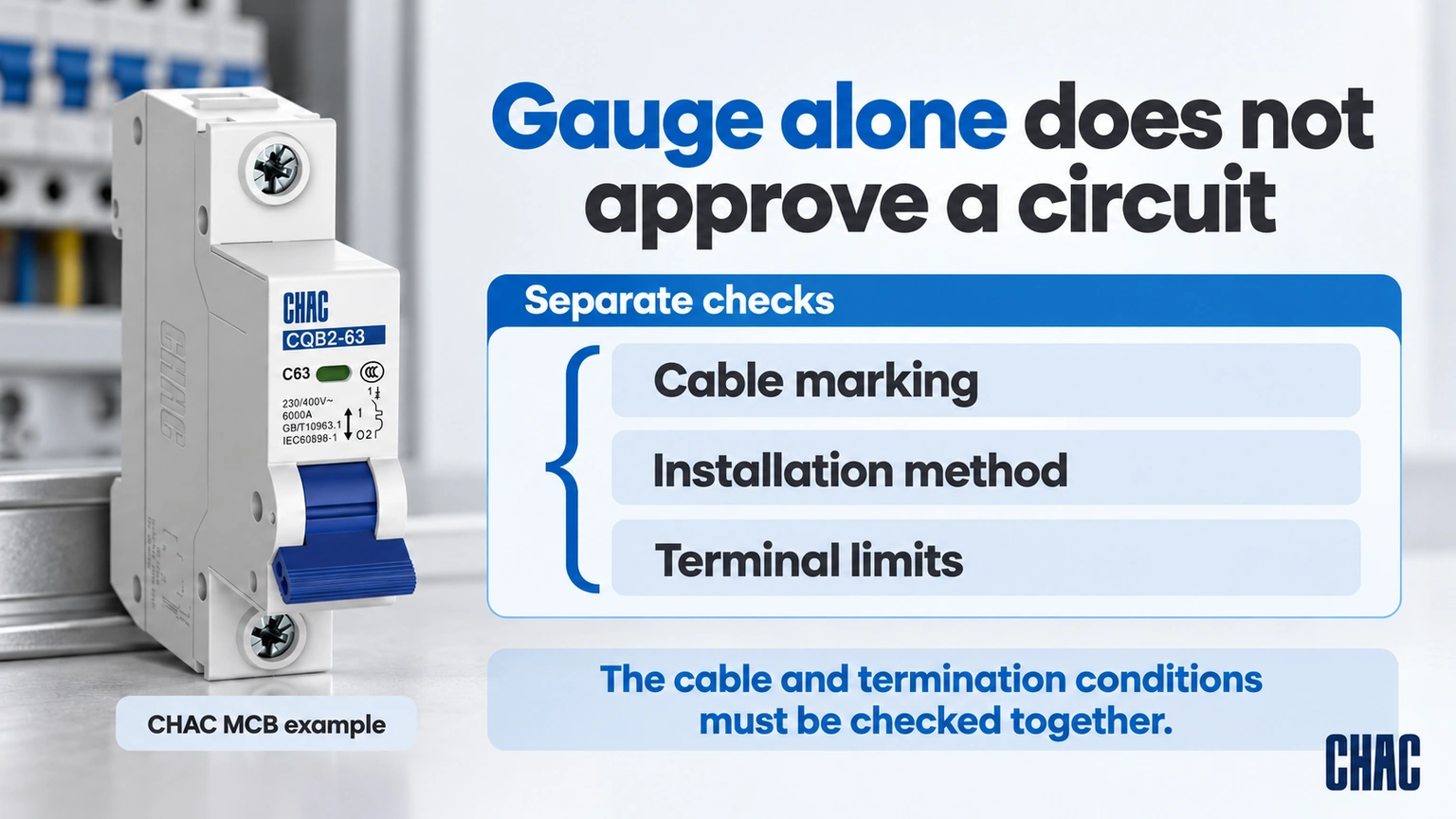
“Romex” is a trade name often used for Type NM-B cable, not a universal conductor rating. The cable jacket, conductor insulation, installation location, and terminal markings must be checked together. A 60 amp circuit in a dwelling may also invoke dwelling-service or feeder rules, but those rules do not excuse incompatible lugs or an incorrect cable type.
THHN is an insulation designation commonly used for individual conductors in raceway. Confirm whether the marking is THHN/THWN-2 for the actual environment, then size the conductor using the applicable ampacity and terminal limits. Pulling larger THHN may improve voltage drop but can increase conduit fill, bending radius, and labor.
How do distance, voltage drop and conductor material change the choice?
| Design path | Strength | Trade-off | Required verification |
|---|---|---|---|
| 6 AWG copper branch or feeder | Compact conductor with familiar termination practice | Higher material cost and weight | Temperature column, lugs, voltage drop |
| 6 AWG aluminum | Lower mass and potential feeder cost advantage | Different ampacity and preparation requirements | Alloy, listed lugs, torque, oxide instructions |
| 8 AWG copper under a specific allowance | Smaller raceway fill in limited cases | Less design margin and higher sensitivity to conditions | Exact code allowance and equipment listing |
| Larger conductor | Lower voltage drop on a long route | Cost, conduit space, and termination range | Pulling tension, bending space, lug capacity |
Voltage drop is a design quality issue rather than a simple ampacity rule. The familiar 3 percent branch-circuit and 5 percent feeder-plus-branch targets appear as NEC informational guidance. Calculate using actual one-way distance, current, conductor resistance, phase arrangement, and power factor where relevant. Motor starting current can make a short circuit behave differently from a steady resistive load.
Safety checks before energizing
Confirm the source and load voltage, breaker pole configuration, interrupting rating, panel bus rating, and available fault current. Check that the breaker is listed for the panelboard and that the conductors fit the lug range. Torque every termination to the manufacturer’s value and document the result; “tight” is not a measurement. Inspect conductor insulation for damage and maintain the required working space.
For a coordinated panel, a listed CHAC miniature circuit breaker can be evaluated alongside the enclosure and feeder schedule. The CQMG20B distribution box page can help confirm enclosure information, while leakage-sensitive applications may require a separately specified residual-current device. These products do not replace the engineer’s code calculation.
Standards and procurement discipline
Use the adopted NFPA 70 NEC for U.S. projects and the relevant national wiring rules elsewhere. IEC 60898-1 covers certain low-voltage AC circuit breakers for household and similar applications; it is a product standard, not a complete feeder-design manual. OSHA’s electrical installation requirements address guarding, identification, and safe use in covered workplaces.
Ask suppliers for conductor compatibility, terminal temperature, short-circuit rating, installation instructions, and test documentation. Avoid unsupported claims that a product is automatically code compliant in every market. The commercial risk of an incorrect 60 amp wire size includes rework, inspection delay, overheating, and equipment downtime.
الأسئلة الشائعة
Is 6 romex good for 60 amps?
It may be suitable only when the exact cable type, ampacity, terminal ratings, installation conditions, and code allowances support it. “6 Romex” is not a complete specification. Have the electrician verify the cable marking and the 60 amp breaker coordination before use.
Is 8 AWG good for 60 amps?
Do not assume so. The answer depends on conductor insulation, temperature column, adjustment factors, and any specific dwelling or equipment rule. A generic chart cannot authorize an 8 AWG installation.
How far can you run 6 gauge wire for 60 amps?
Distance is limited by voltage drop, installation method, and the actual load rather than by a single universal number. Calculate the two-way length and compare the result with the project target. Also confirm conduit fill and termination capacity.
What size THHN wire should I use for a 60 amp breaker?
Start with the applicable NEC ampacity table and the lowest terminal temperature rating, then adjust for ambient temperature and conductor count. Confirm whether the environment requires THWN-2 or another wet-location marking. The breaker and lugs must be listed for the selected conductor.
What wire size is normally used for 60 amp breaker wire size?
6 AWG copper is a common preliminary reference, but it is not a universal prescription. Continuous load, distance, material, insulation, and terminals can require another size. Document the calculation instead of copying a chart.
How does copper compare with aluminum for 60 amp breaker wire size?
Aluminum can require a different gauge and careful termination because its electrical and mechanical properties differ from copper. Use listed conductor-lug combinations, follow preparation and torque instructions, and check the correct ampacity column. Do not exchange one material for the other by gauge alone.
أي مصادر رسمية ينبغي للمشترين التحقق منها؟
Reliable feeder design starts with the load schedule and ends with documented terminations. At the buying stage, review CHAC Electric’s 60 amp circuit protection options against your panel, conductor, and destination-market requirements, then contact the technical team for the applicable product documents.
للاطلاع على مرجع اختيار ذي صلة، انظر 60 Amp Breaker and Wire.
Continue with this related guide: Voltage Protector Keeps Tripping How.