

A smaller residual-current rating is not automatically the right choice for every circuit. A 10mA device offers a lower rated operating threshold than a 30mA device, but a circuit with substantial normal leakage may then lose supply without a new insulation fault. Choosing sensitivity also leaves other decisions unanswered: the residual-current waveform, earthing arrangement, required disconnection behavior and separate overcurrent protection still matter. This comparison explains those decisions in order. It focuses on how distribution-panel designers should justify sensitivity and circuit subdivision, rather than presenting 10mA as a universal safety upgrade or 30mA as permission to ignore leakage.
The short answer is that a 30mA RCCB is commonly used for additional protection where the applicable installation rules require it; a 10mA RCCB should be considered only with a specific application and compatibility basis. Schneider’s Electrical Installation Guide describes high-sensitivity additional protection as 30mA or less, subject to the installation requirements it discusses. Sensitivity is not a load-current rating and does not select the residual-current type. Neither rating replaces safe installation, earthing or overcurrent protection. Assess normal leakage and the required circuit arrangement before approving a more sensitive device.
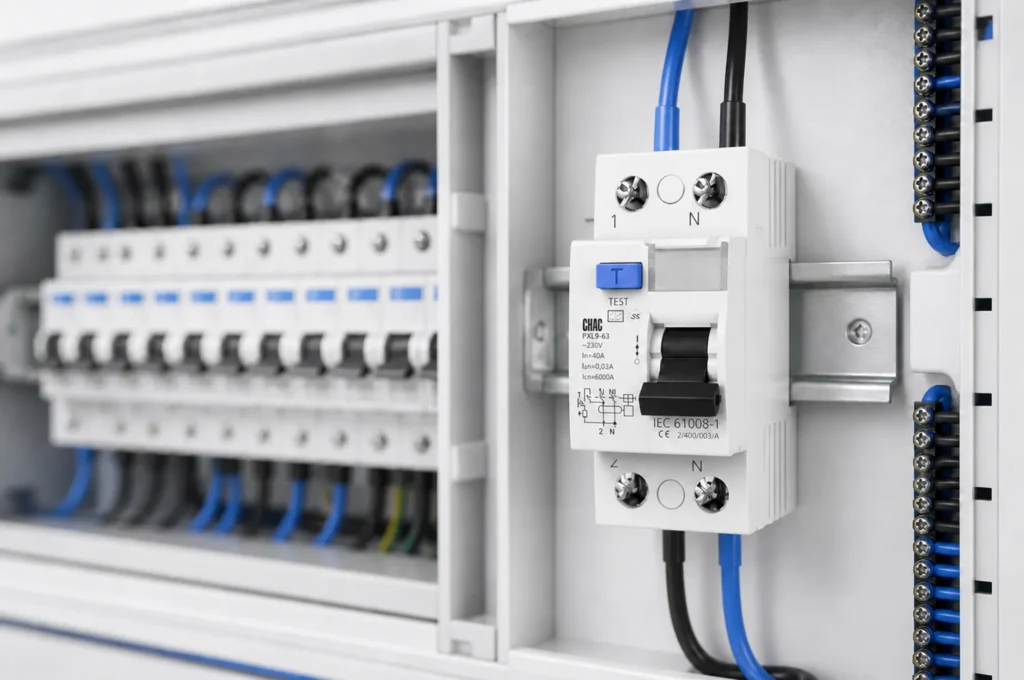
What do 10mA and 30mA describe?
They describe rated residual operating current, usually identified as IΔn. This concerns an imbalance in the monitored circuit conductors, not the total current the device can carry. A device’s ampere rating and milliampere sensitivity therefore answer different questions.
| Characteristic | 30mA option | 10mA option |
|---|---|---|
| Rated residual operating current | 30 مللي أمبير | 10mA |
| Selection basis | Applicable additional-protection requirements | Specific higher-sensitivity requirement and circuit assessment |
| Normal leakage assessment | Still required | Less margin for the same leakage |
| Waveform and load-current ratings | Separate choices | Separate choices |
The comparison is based on rated thresholds and public guidance reviewed October 10, 2026. It is not a claim that every fault trips at exactly the printed rating or that one rating is preferable in all markets.
When should higher sensitivity be considered?
Schneider’s high-sensitivity RCD guidance, edited August 2026, discusses additional protection at 30mA or less and references IEC 60364-4-41. National adoption, circuit use and special-location requirements still need checking. The guidance is not a blanket requirement to fit 10mA on every bathroom, appliance or outdoor circuit.
A higher-sensitivity proposal should name the applicable equipment or installation requirement and identify the circuit it protects. Check whether the normal operating leakage and switching transients are compatible. If not, review the circuit arrangement instead of simply reducing the threshold on a whole group of loads.
How does standing leakage change the decision?
Cables and filtering capacitors can contribute standing leakage current without a newly developed insulation fault. The sum changes as equipment is connected and operated. Measure or obtain supported leakage data for the intended load mix; do not classify every trip as nuisance before investigating it.
ال Electrical Installation Guide’s disturbance discussion notes that relevant RCDs may trip between 0.5 IΔn and IΔn, and recommends considering subdivision when residual current exceeds the lower value. Applied arithmetically, half of 10mA is 5mA and half of 30mA is 15mA. These values illustrate why margins differ; they are not universal design targets or a promise of immunity below them.
Separating circuits can also reduce the consequences of a single trip. Do not increase sensitivity thresholds to conceal a fault or sacrifice required additional protection merely to keep equipment running.
Why must residual-current type be selected separately?
AC, A, F and B designations concern residual-current waveforms, not 10mA versus 30mA sensitivity. Electronic equipment and drives can change the waveform the protection must detect. Use the equipment instructions and local rules to establish the required type.
Schneider’s RCD-type guide distinguishes sinusoidal AC, pulsating DC and other waveform conditions. Selecting a lower sensitivity does not correct an unsuitable type. Time delay and upstream/downstream selectivity are additional decisions; two sensitivities alone do not establish a coordinated arrangement.
What protection does an RCCB not provide?
An RCCB does not incorporate overload and short-circuit protection in the way an RCBO does. Specify the coordinated fuse or breaker, rated carrying current and applicable conditional short-circuit data. Do not treat a conditional fault-current figure as the RCCB’s independent overcurrent-interruption capability.
| Panel decision | Evidence to check |
|---|---|
| Sensitivity | Application rule and leakage assessment |
| Residual-current type | Equipment waveform requirements |
| Current and poles | Load, neutral arrangement and conductor design |
| Fault protection | Exact upstream protective-device combination |
| Subdivision | Leakage margin and acceptable outage extent |
Which PXL9-63 sensitivities are actually published?
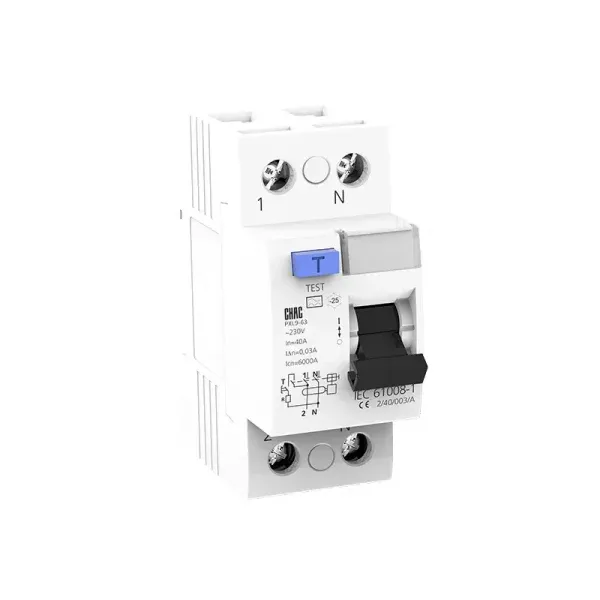
CHAC’s قاطع التيار الزائد page lists PXL9-63 options at 30, 100 and 300mA. It does not list 10mA. Therefore, this general comparison must not be read as an offer of a PXL9-63 10mA variant. The published record also lists 2P/4P and residual-current protection without overcurrent protection.
استخدم قاطع تيار تسرب أرضي category for other documented choices, or review the قاطع دائرة معد مع حماية تسريب أرضي category when combined functions are required. Model-specific waveform options and their availability need confirmation for the ordered configuration.
What should the panel acceptance record show?
Record the installed model, sensitivity, type, poles, upstream protection and measured or justified leakage basis. Retain authorized functional and installation test results under the applicable procedure. A test button is useful for its documented purpose, but is not a complete verification of earthing, wiring or every required disconnection condition.
الأسئلة الشائعة
Is 10mA always better than 30mA?
No. Higher sensitivity needs an application basis and compatible circuit leakage; it does not replace other protection decisions.
Does a 63A RCCB trip on a 63A overload?
Its carrying-current rating is not integral overload protection. Provide the coordinated overcurrent device.
Can electronic loads cause leakage without an insulation fault?
Yes, filtering and capacitance can contribute normal leakage. Still investigate trips before deciding they are unwanted operation.
Does Type A mean a lower trip threshold than Type AC?
No. Those designations concern waveform capability; sensitivity is specified separately.
Does PXL9-63 offer 10mA in its published table?
No. The record checked lists 30, 100 and 300mA. Any other proposal needs separate verified documentation.
Can subdivision replace fixing an insulation fault?
No. Subdivision can address accumulated normal leakage and outage extent, but faults still require correction.
المراجع
- Schneider Electric Electrical Installation Guide: high-sensitivity RCD additional protection.
- Schneider Electric Electrical Installation Guide: RCD sensitivity to disturbances.
- Schneider Electric Electrical Installation Guide: RCD waveform types.
Choose sensitivity as part of the complete circuit design. Establish the applicable protection requirement first, then assess load waveforms and normal leakage, and finally confirm carrying current, poles and the coordinated overcurrent device. Where greater sensitivity is justified, make sure the circuit arrangement supports it without undermining required availability. Never use a lower threshold to compensate for the wrong residual-current type, or a higher threshold to conceal a fault. CHAC’s published PXL9-63 information supports review of the listed configurations, not an undocumented 10mA option. اتصل بـ CHAC with the sensitivity basis and circuit details for an appropriate model review.


