
Choosing a breaker for a clothes dryer starts with two checks: what does this exact appliance require, and what can the existing branch circuit safely supply? The answer depends on the dryer’s heating method, nameplate, connection, conductors, panel compatibility, and locally adopted electrical code. A generic assumption based on cabinet size, plug shape, or a previous installation is not enough.
The short answer is: A common full-size U.S. electric dryer installation uses a dedicated 30A two-pole breaker, but 30A is not a universal answer. Gas dryers use electricity differently, while compact, heat-pump, stacked, commercial, and non-U.S. models may specify other supplies. Read the appliance nameplate and installation manual first; then confirm conductor ampacity, receptacle or hardwired connection, breaker-panel compatibility, and the locally adopted electrical code. Never install a larger breaker simply to stop tripping.
What should you check on the dryer before choosing a breaker?
The short answer to “what كسارة الحجم for a clothes dryer?” depends first on how the appliance produces heat. A conventional electric resistance dryer has a substantial electrical heating load, so a dedicated 30A, 120/240V branch circuit is a common U.S. arrangement. That familiar configuration is a starting point only; the appliance instructions remain controlling for the specific model.
A gas dryer burns fuel for heat but still needs electricity for components such as the motor and controls. Its electrical requirement is therefore usually different from that of a full-size electric dryer. Do not transfer an electric-dryer breaker assumption to a gas dryer circuit, and do not infer the answer from cabinet size, plug appearance, or fuel type alone.
| Dryer type | Useful planning assumption | Required verification |
|---|---|---|
| Full-size electric resistance dryer | A dedicated 30A two-pole circuit is common in U.S. homes | Nameplate voltage/current or wattage, installation manual, conductor and connection |
| Gas dryer | Electrical load is not the same as an electric heating load | Exact model supply and dedicated/shared-circuit instructions |
| Compact or heat-pump dryer | Supply is model-dependent | Do not infer the breaker from cabinet size or dryer technology |
| Stacked, combination, or commercial equipment | One cabinet can contain multiple or larger loads | Equipment schedule, each nameplate, manufacturer instructions, and engineered design |
| Non-U.S. model | U.S. plug and circuit conventions may not apply | Destination-market voltage, frequency, protection, product approvals, and local code |
How do you coordinate the breaker, conductors, and connection?
The breaker is only one part of the answer. For the common 30A branch circuit, the NEC 240.4(D) small-conductor rule generally limits 10 AWG copper conductors to 30A overcurrent protection. Usable conductor ampacity can still be affected by conductor material, insulation and terminal temperature ratings, cable or raceway conditions, ambient temperature, and the number of current-carrying conductors. Those conditions must be checked rather than assumed.
A long run may justify a larger conductor to manage voltage drop; it does not justify increasing the breaker rating. NEC informational notes use a 3% branch-circuit voltage-drop target as design guidance, but this is not permission to substitute a larger breaker for a conductor calculation.
Modern U.S. cord-and-plug installations commonly use a four-wire 14-30 arrangement with two ungrounded conductors, a neutral, and a separate equipment grounding conductor. Older three-wire dryer connections can exist under limited legacy conditions; they should not be copied into new work. An electrician should evaluate the installed cable, grounding path, appliance instructions, and adopted code before changing a cord or receptacle.
A full-size electric dryer commonly requires a device that disconnects both ungrounded conductors together. The guide to double-pole versus single-pole breakers explains the pole-count distinction. A double-pole circuit breaker is suitable only when its ampere and voltage ratings, interrupting rating, approvals, trip characteristics, and panel compatibility all match the project; a product page alone does not establish that suitability.
What should you check when a dryer circuit keeps tripping?
Repeated tripping can indicate a circuit-appliance mismatch, grounded heating element, damaged cord, loose or overheated termination, worn receptacle, or defective breaker. Restricted venting can lengthen drying cycles, but it does not by itself prove that the breaker is undersized. Stop using a circuit that shows overheating, arcing, burning odor, or repeated trips, and have a qualified person follow the appliance service procedure and applicable electrical test methods.
Replacing a 30A breaker with a 40A breaker without redesigning and verifying the complete circuit can leave 30A-rated wiring, connections, or appliance components inadequately protected. The correct sequence is to identify the fault or mismatch, repair it, and confirm operation with the specified protection. See the CHAC guide to warning signs from a repeatedly tripping breaker for escalation guidance.
| Field check | Evidence to record | Decision it supports |
|---|---|---|
| Appliance | Nameplate, model number, manual, voltage, current or wattage | Required supply and overcurrent protection |
| Breaker and panel | Poles, ampere/voltage ratings, interrupting rating, approved breaker type | Panel compatibility and coordinated disconnection |
| Conductors | Size, material, insulation, terminal limits, routing, ambient and bundling | Allowable ampacity and any adjustment or correction |
| اتصال | Receptacle or hardwire method, cord, neutral, grounding path, heat damage | Whether the existing connection can remain |
| Jurisdiction | Adopted code edition, amendments, GFCI requirement, permit and inspection path | Final local acceptance |
Which standards and records support a compliant dryer installation?
Start with the exact model’s nameplate and installation manual. Record the required voltage and frequency, current or wattage, connection type, and any dedicated-circuit or protective-device instruction. Next, inspect the complete installed circuit and verify the panel accepts the proposed breaker. Current NEC provisions can require GFCI protection for certain 125V through 250V receptacles in dwelling-unit laundry areas; the adopted NEC edition and local amendments determine whether and how that rule applies.
NFPA 70 provides the principal U.S. installation framework: Article 110 addresses installation and use of listed equipment, Article 210 covers branch circuits and GFCI protection, Article 240 covers overcurrent protection, Article 250 addresses grounding, and Article 422 covers appliances. UL 489 covers molded-case circuit breakers and related enclosures, while UL 2158 covers electric clothes dryers. A component evaluated to one standard does not certify the complete installation or authorize its use in an incompatible panel.
Where a hardwired design or maintenance procedure calls for a separate suitable isolation device, a documented miniature isolating switch may be considered only after its ratings and intended use are verified. An isolator does not replace branch-circuit overcurrent protection. For procurement, ask the supplier for the exact datasheet, applicable approvals, test documentation, and panel or enclosure constraints before ordering.
Can a heat-pump dryer use the circuit from an older electric dryer?
Possibly, but its heating technology does not answer the wiring question. Check the replacement model’s specified supply voltage, frequency, connection method and branch-circuit requirements. A lower running load does not authorize an improvised plug adapter, a missing neutral or a mismatched receptacle. The electrician must confirm whether the existing circuit and protection can remain or need alteration.
Supply voltage also needs an exact check. A building with 208 V line-to-line service is not the same as a home with 240 V split-phase service. The appliance manual must explicitly support the available supply; do not infer approval from a two-pole breaker. Likewise, an appliance that uses line-to-neutral controls may need a neutral even though its heating load is line-to-line.
GE Appliances’ guidance on NEC requirements for 240/208 V products explains the historical separation of neutral and equipment grounding in newer installations and the existence of limited older arrangements. It is historical guidance, not permission to recreate three-wire wiring in new work. Confirm the exact appliance instructions and locally adopted code before retaining or changing a legacy connection.
For a handover record, keep the dryer model and manual revision with the panel identification, circuit rating, conductor details and connection type. That small record prevents the next replacement from being selected solely because the old appliance worked on the circuit.
What questions should you answer before sizing a dryer breaker?
Is a 30 amp breaker standard for all clothes dryers?
No. A 30A two-pole breaker is common for full-size U.S. electric dryers, but it is not universal. Gas, compact, heat-pump, combination, commercial, and non-U.S. models require a model-specific check of the nameplate, manual, and local code.
Can a clothes dryer go on a 20 amp circuit?
Only when the specific dryer’s documentation permits that supply and the complete circuit complies with local requirements. Do not adapt a plug or receptacle, or choose a breaker from a generic dryer-type assumption, to make an incompatible appliance fit.
Should I install a 40 amp breaker if a 30 amp dryer circuit trips?
No, not as a troubleshooting shortcut. Diagnose the appliance, receptacle or hardwire connection, terminations, conductors, and breaker; change the rating only as part of a fully verified redesign supported by the appliance instructions and applicable code.
Does a gas dryer need a double-pole breaker?
Do not assume so. Because gas provides the heat, a residential gas dryer’s electrical supply is typically different from a full-size electric dryer’s supply, but the exact breaker arrangement must come from that model’s nameplate and instructions.
Does an old three-prong dryer outlet change the breaker size?
Not by itself. A three-prong connection indicates a legacy wiring arrangement; breaker size still depends on the appliance requirements and the conductors being protected. Have the neutral, grounding path, cable, receptacle, and adopted code evaluated before replacing the cord, receptacle, or dryer.
Does a heat-pump dryer always need a smaller breaker?
No. Use its exact supply and branch-circuit instructions. Heating technology and running consumption alone do not establish the required breaker, receptacle, neutral or grounding arrangement.
Can a dryer rated for 240 V automatically run on 208 V?
Only if the manufacturer supports that supply for the exact model. Verify its voltage range and instructions; a two-pole breaker does not make 208 V and 240 V interchangeable.
مراجع موثوقة
- GE Appliances: NEC Requirements for 240/208 Volt Products; historical wiring guidance referring to the 1996 change, not current local-code approval.
- UL Solutions: Panelboard Application Guide; panel ratings, conductor terminals and accepted components.
- OSHA 29 CFR 1910.333: Electrical work practices; covered US workplace isolation and verification requirements.
The durable rule is simple: match protection to the dryer’s documented load and the installed circuit, not to the breaker size that merely silences a symptom.
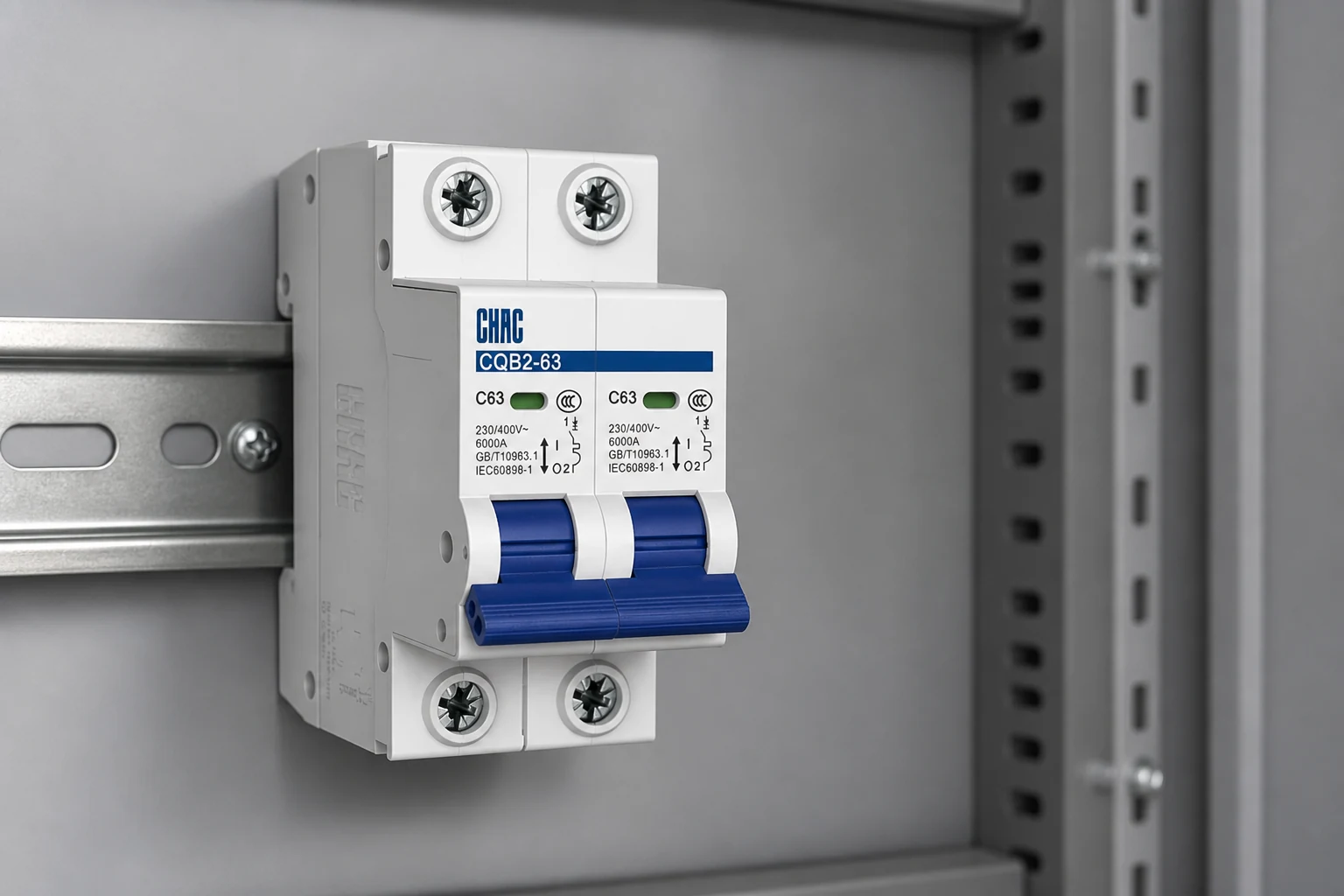
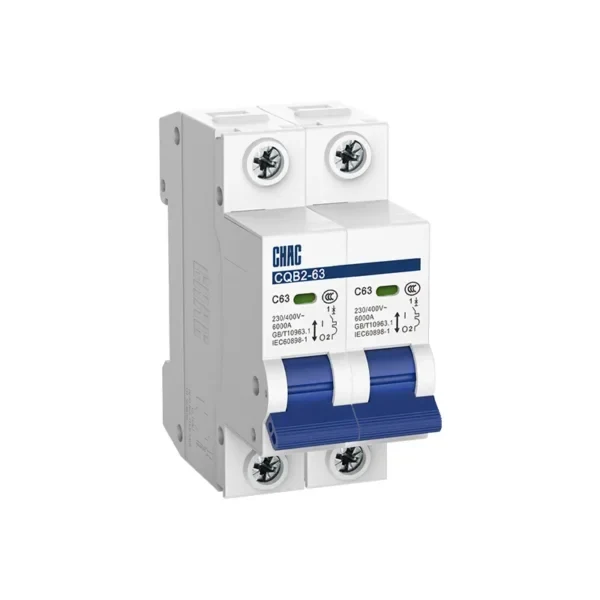
For a documented branch-protection review, compare the CHAC CQB2-63 miniature circuit breaker product range with the actual dryer-circuit specification, then contact CHAC Electric for available ratings and technical documents. The project designer or electrician must still confirm destination-market approvals, breaker-panel compatibility, conductor protection, and local-code acceptance.