Outdoor junction box selection should begin with documented project conditions and the selected model’s evidence, not with an assumed rating or a similar-looking enclosure. This guide helps panel teams prepare a reviewable RFQ while keeping the final approval with the project design and product documentation.
Part 1. What does outdoor junction-box selection actually cover?
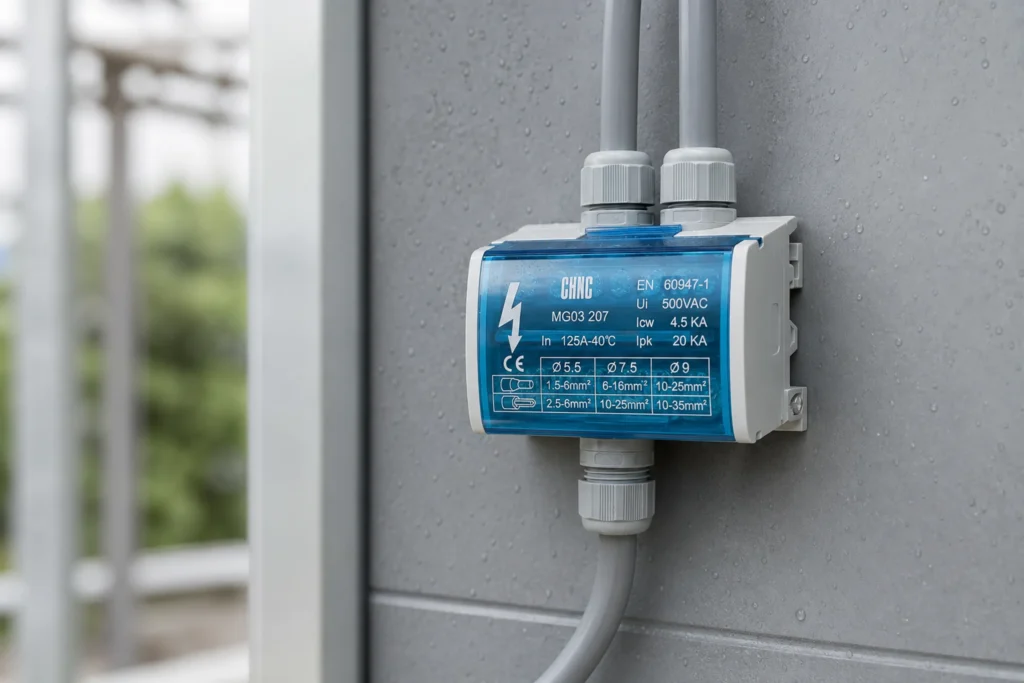
An outdoor junction box selection starts with the installation exposure, the required connection function, the cable-entry plan, and the product evidence for the chosen enclosure. It is an enclosure-selection exercise, not a comparison between a distribution box and a junction box or a claim that any box is weatherproof in every installation.
IEC 60670-22:2024 addresses connecting boxes and enclosures for household and similar fixed electrical installations, including indoor or outdoor use within its stated scope. The selected product and project requirements still control the final decision.
Part 2. Which site conditions must be recorded first?
Record where the enclosure will be mounted, the expected exposure to dust, moisture, sunlight, corrosion risk, mechanical impact, and temperature conditions, plus the access needed for inspection and maintenance. These are project inputs, not characteristics that can be inferred from a catalogue image.
Where an ingress-protection level is required, write the exact project requirement and ask for product evidence for the complete assembly. An enclosure rating does not automatically prove the installed condition after entries, glands, plugs, and mounting are changed.
| Project input | Por qué importa | Pruebas para solicitar |
|---|---|---|
| Exposure description | Sets the environmental review | Project specification and installation location |
| Cable-entry layout | Defines fittings and internal routing | Cable or conduit schedule and drawing |
| Enclosure route | Connects request to a product review | Selected-model instructions and datasheet |
Part 3. How should cable entries be planned?
List each cable or conduit, its outside diameter or relevant entry requirement, the entry direction, termination space, and any need for strain relief or sealing. The enclosure and every entry component must be reviewed together because unused openings, mismatched fittings, or unsuitable cable routing can change the installed result.
Plan the entry layout before cutting or ordering. A practical layout keeps connections accessible and avoids forcing bends, crowding terminations, or putting a connection method outside the product documentation.
Part 4. What should the enclosure evidence include?
Request the selected product’s datasheet, installation instructions, dimensions, material information where relevant, entry options, and any test or rating documentation required by the project. Do not turn a generic IP-code explanation into a claim that a CHAC enclosure has a particular rating.
IEC 60529 defines the IP code system, while the product documentation identifies what has been tested or declared for a specific enclosure and configuration. Those are complementary, not interchangeable, records.
Part 5. Which installation details affect the final assembly?
The mounting surface, fastening method, cable approach, drainage considerations, access clearance, grounding or bonding requirements where applicable, and maintenance access should be shown on the installation drawing. A box that fits a cable count on paper can still be unsuitable if the installation leaves no safe termination or service space.
Follow the selected product’s instructions and the applicable local project rules for installation. This guide does not replace electrical installation design or site acceptance.
| El comprador debe proporcionar | Por qué importa | Error común |
|---|---|---|
| Application and circuit role | Defines the function to review | Naming a device without a drawing |
| Control and installation data | Defines interfaces and assembly context | Assuming a family variant is interchangeable |
| Required documentation | Makes the request auditable | Treating a catalogue page as approval evidence |
Part 6. Which CHAC route should buyers use for a product review?
CHAC Electric’s published junction-box route is a useful starting point after the project team has defined the enclosure and entry data. Provide the planned installation details with the RFQ so the supplier can respond against a specific product route rather than an unspecified outdoor-use claim.
Do not recommend a distribution-box product simply because it is an enclosure, and do not recommend a junction box solely from appearance. The connection function, internal space, entry arrangement, and documented installation evidence must match the application.
CHAC Junction Box Recommended:
Junction Box – CHAC Electric
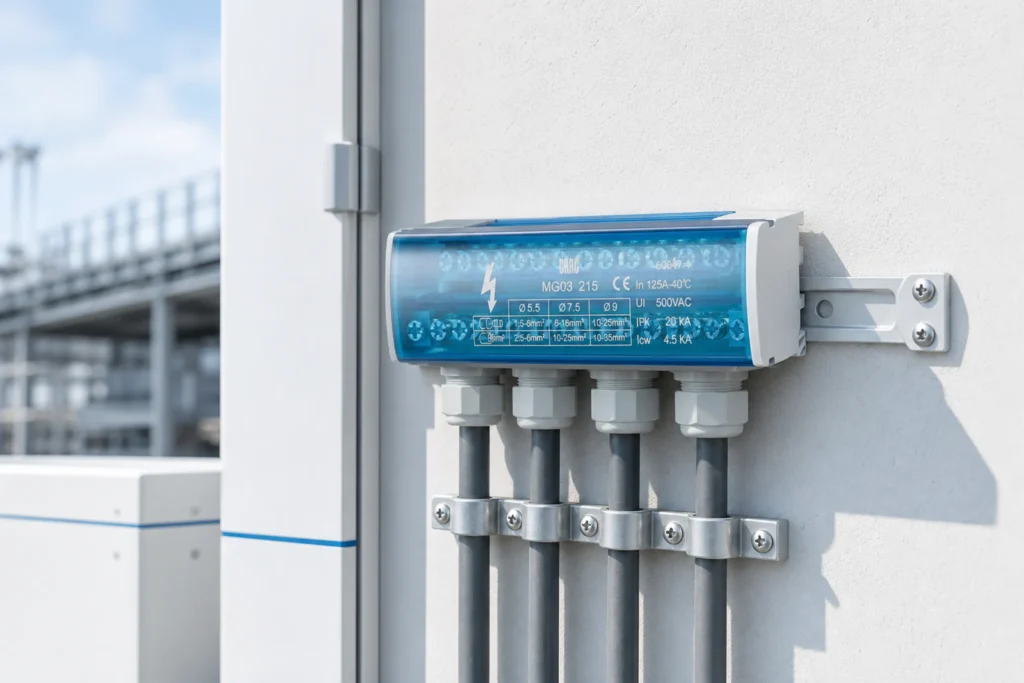
Recomendación de producto
Utilice el publicado product route only as a starting point for a documented product review. For branding, packaging, or panel-program discussion, use CHAC Electric’s relevant customization route after the engineering inputs are complete.
Part 7. Where is the fit boundary for this guide?
Fit Boundary: this guide supports early planning for an outdoor junction-box RFQ. It is not a substitute for a hazardous-location assessment, a final installation design, a site-specific environmental evaluation, or a declaration of enclosure rating, certification, or compatibility.
Before procurement, confirm the selected model, complete entry system, installation method, applicable project rules, and any required testing or approvals.
Preguntas frecuentes
How do I choose an outdoor junction box?
Begin with the documented circuit or connection function, site conditions, and the project drawing or schedule.
What information is needed for outdoor enclosure selection?
No. A category page can identify a product family, but the selected model documentation controls the final review.
How should cable entries be planned for a junction box?
Provide the application, drawing, control or entry arrangement, installation conditions, required documentation, and project requirements.
How do cable glands affect enclosure protection?
The requested function must be shown in the control or installation design before an accessory or enclosure route is chosen.
What should be checked before mounting an outdoor enclosure?
Ask for the exact selected-model evidence rather than inferring ratings, approvals, or compatibility from a generic product family.
Which details belong in an outdoor junction-box RFQ?
The final review is needed before a purchase decision or installation approval, after the project inputs and selected-model data are available.