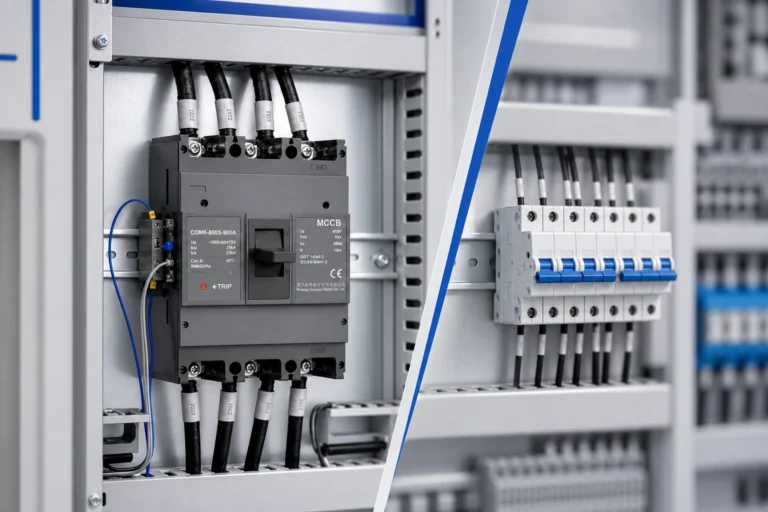
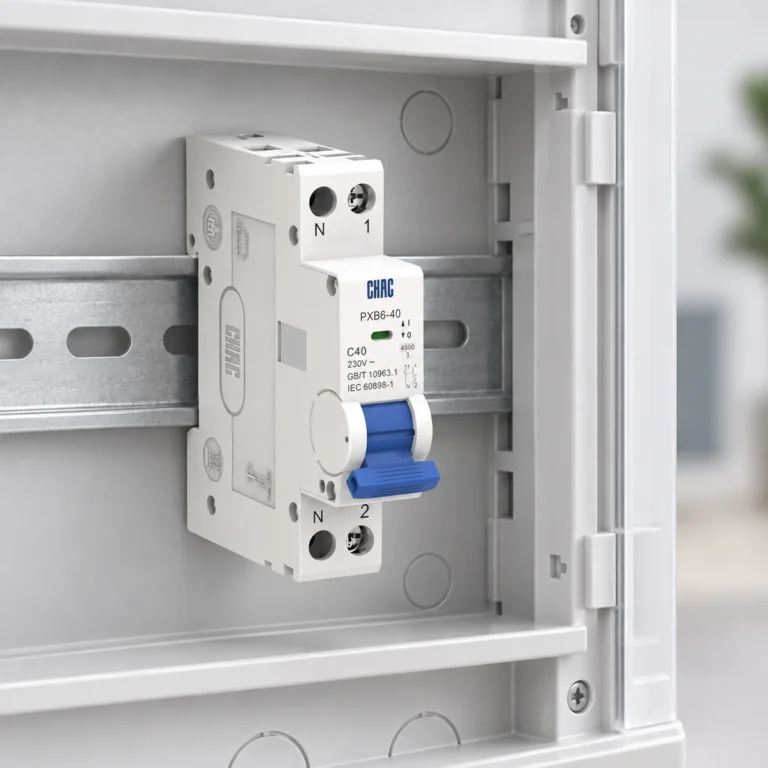
La selección del dispositivo de corriente residual de 30 mA comienza con la función del circuito, los requisitos del proyecto y la documentación del modelo seleccionado. RCCB de 30 mA frente a 10 mA: Preguntas de selección de sensibilidad para cuadros de distribución ayuda a los armadores de tableros a organizar esas comprobaciones antes de especificar un dispositivo o emitir una solicitud de cotización. Las opciones de sensibilidad quedan a cargo del equipo del proyecto y de la documentación del dispositivo de corriente residual seleccionada para el circuito.
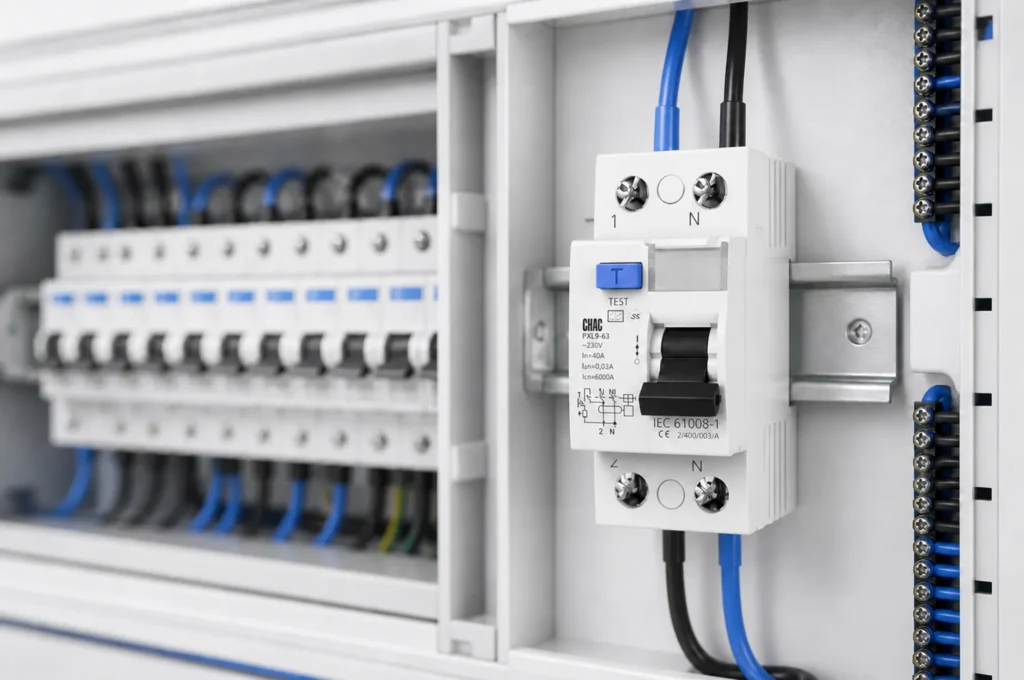
Parte 1. ¿Qué cambia realmente entre 30mA y 10mA?
El ajuste es la sensibilidad a la corriente residual que debe revisarse, no una promesa de que un dispositivo sea universalmente más seguro o adecuado. Un ajuste de 10 mA exige un umbral de corriente residual más bajo que uno de 30 mA, por lo que requiere una revisión más exhaustiva del circuito, las normas de instalación locales y la fuga esperada en funcionamiento normal.
Parte 2. ¿Qué entradas del panel pertenecen a la decisión de sensibilidad?
Comience con el cuadro de circuitos, el diagrama unifilar, la lista de carga conectada, los usuarios previstos, el entorno de instalación y las normas aplicables del proyecto. Estas entradas establecen si la decisión se refiere a la protección personal suplementaria, la continuidad del suministro o un requisito local que debe confirmarse a partir de la documentación del proyecto.
Parte 3. ¿Por qué las fugas normales pueden afectar la disponibilidad?
Los equipos electrónicos y los filtros pueden generar corrientes de fuga en servicio normal, mientras que un ajuste de 10 mA deja un margen menor antes de un disparo no deseado. Eso no justifica sustituir una sensibilidad requerida por un dispositivo menos sensible; significa que el equipo del panel debe identificar la agrupación de circuitos y los generadores de fugas antes de aprobar el esquema de protección.
Importante: No trate la sensibilidad a la corriente residual como una mejora de seguridad universal; el ajuste requerido debe seguir el diseño del proyecto y las instrucciones del modelo seleccionado.fuente — Descubrimiento de normas sobre dispositivos de corriente residual de la tienda web de la IEC
Parte 4. ¿Cómo debe el panel adoptar decisiones de protección separadas?
Mantenga identificables en los planos el dispositivo de corriente residual, los dispositivos de protección, la disposición del neutro, las cargas y cualquier circuito de control. El plano debe dejar en claro qué conductores pasan a través de la ruta de detección y qué circuitos aguas abajo comparten el dispositivo de protección; las instrucciones del producto seleccionado y el diseño del proyecto siguen siendo determinantes.
Parte 5. ¿Qué debe decir una solicitud de cotización (RFQ) sobre un dispositivo de corriente residual de 30 mA?
Una solicitud de cotización (RFQ) útil identifica el propósito del circuito, la sensibilidad a la corriente residual solicitada, la disposición de la alimentación, los tipos de carga, el contexto ambiental, la norma del proyecto aplicable, los planos y la documentación requerida para el modelo seleccionado. Debe solicitar al proveedor que confirme únicamente la evidencia exacta del modelo solicitado, en lugar de inferir valores nominales o aprobaciones a partir de la imagen de una categoría.
Una lista de entradas de RFQ compacta facilita la comparación de las respuestas de los proveedores:
| El comprador debe proporcionar | Por qué importa | Error común |
|---|---|---|
| Conjunto de planos actual | Define el límite del circuito | Envío del nombre de un producto sin un diagrama |
| Funciones requeridas | Hace que la solicitud sea revisable | Tratar opciones no verificadas como estándar |
| Contexto de instalación | Identifica las condiciones del proyecto para confirmar | Asumiendo que la copia de la categoría es una aprobación del proyecto |
| Solicitud de documentación | Conecta la RFQ con la evidencia exacta | Aceptando afirmaciones genéricas en lugar de datos del modelo |
| Enviar con cotización | Hace que la comparación de proveedores sea verificable | Citando sin el paquete de evidencia solicitado |
Para un contexto más amplio, revise el familia de productos de dispositivos de corriente residual de 30 mA y lo relacionado página de línea de productos.
Parte 6. ¿Qué página de CHAC es el punto de partida adecuado para el producto?
Para una discusión preliminar sobre la familia de productos, utilice la página publicada del dispositivo de corriente residual CQL14 junto con la categoría RCCB. Ninguna de las páginas sustituye a una revisión del diseño del proyecto o a la documentación del modelo seleccionado; la selección final debe confirmarse con respecto a la aplicación y la evidencia requerida.
Recomendación de producto
Utilice el publicado página de producto CHAC relevante como punto de partida de la ruta del producto documentada para una discusión sobre el producto solo después de que se completen las entradas de RFQ. Los compradores OEM que necesitan envases de marca para dispositivos de corriente residual pueden abrir el Debate sobre la personalización del RCCB. La similitud de las carcasas de plástico no es prueba de que otro dispositivo de corriente residual cumpla con los requisitos de sensibilidad y trayectoria de detección del dibujo.
Parte 7. ¿Dónde deja de ser suficiente esta comparación de 10 mA/30 mA?
Esta guía se adapta a los fabricantes de tableros y a los compradores que definen las cuestiones relacionadas con la sensibilidad de 10 mA y 30 mA. No proporciona instrucciones para trabajos con tensión, interpretación de códigos locales, aprobación de coordinación ni la afirmación de que un producto CHAC catalogado sea compatible con un tablero en particular. Incluya un punto de control de revisión de planos para que la ruta de detección y los circuitos secundarios compartidos sean visibles antes de emitir la solicitud de cotización (RFQ).
Límite de ajuste: la guía de sensibilidad a la corriente residual finaliza en la preparación de la RFQ; no establece la aprobación de la instalación ni la interpretación de las normas locales.
Lectura relacionada: un artículo de CHAC más específico y ya publicado está enlazado por contexto, no como un sustituto del alcance de decisión de este artículo.
Enviar el programa de corriente residual, las notas de fugas y la evidencia del modelo solicitada a Contactar a CHAC Electric para una discusión sobre la ruta del producto.
Recomendación de producto
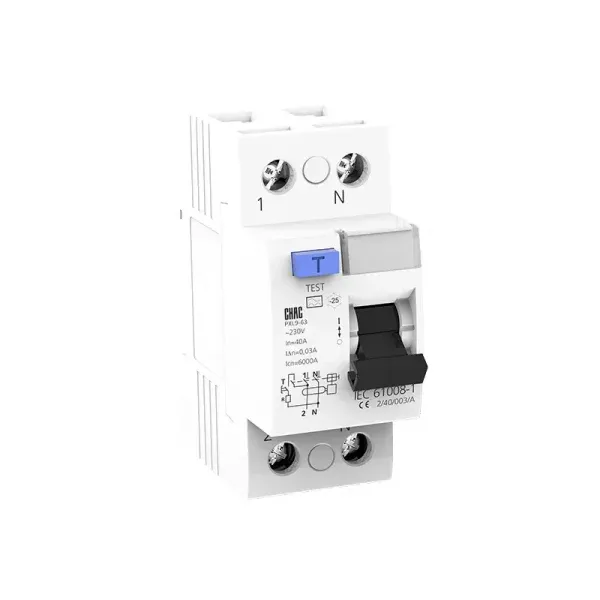
Interruptor automático de corriente residual electromagnética serie PXL9-63 RCBO | CHAC Electric
Preguntas frecuentes
¿Cuál es la diferencia práctica entre una sensibilidad de 10 mA y 30 mA?
Son diferentes ajustes de sensibilidad a la corriente residual. El ajuste más bajo requiere una revisión más detallada de la fuga del circuito, el requisito del proyecto y las consecuencias de un disparo no deseado.
¿Un ajuste de 10 mA reemplaza automáticamente a un ajuste de 30 mA?
No. La sensibilidad requerida está establecida por el diseño de la instalación y las normas aplicables del proyecto, no por una preferencia genérica por el número más bajo.
¿Se puede ignorar la fuga esperada durante la selección del panel?
No. La fuga por servicio normal y la agrupación de circuitos deben revisarse porque pueden afectar a la disponibilidad, especialmente cuando se especifica una menor sensibilidad.
¿Qué planos debe proporcionar un armador de tableros para una revisión de un interruptor diferencial (RCCB)?
Proporcione el diagrama unifilar, el cuadro de cargas, la disposición del neutro, la información de la carga y el plano de control o distribución necesario para comprender el límite del circuito.
¿Qué debe solicitar una solicitud de cotización (RFQ) de un IDR al proveedor?
Solicite la documentación del modelo seleccionado, la sensibilidad prevista, la función del circuito, la información de la fuente de alimentación, la evidencia requerida del proyecto y los planos que definen la instalación.
¿Cuándo debe un diseñador confirmar el dispositivo de corriente residual final?
Confírmelo después de que las entradas del circuito y los requisitos del proyecto estén completos, y antes de que el diseño del panel se libere para su fabricación o instalación.