When a maintenance electrician in Chicago found a breaker opening each time a pump started, he isolated the load and tested the branch rather than repeatedly resetting it. Moisture had created a current path to the equipment grounding conductor, while a separate damaged cable showed a line-to-neutral short. The symptoms looked similar, but the protection and troubleshooting path were different.
Summary: A ground fault is unintended current flowing from an energized conductor to ground or exposed metal; a short circuit is an unintended low-impedance connection between conductors at different potentials. Both can trip overcurrent protection, but ground-fault devices measure imbalance and short-circuit protection responds primarily to excessive current. The safe response to ground fault vs short circuit is to de-energize, identify the fault path, and test before resetting.

What is a ground fault?
A ground fault occurs when current leaves its intended circuit path and reaches grounded metal, a grounding conductor, earth, or another conductive surface. Common causes include wet enclosures, damaged insulation, loose strands, incorrect neutral-to-ground connections downstream of the service point, and equipment with a failed insulation barrier. The fault current may be small enough to avoid a conventional breaker but large enough to create shock risk.
A ground-fault circuit interrupter compares current leaving and returning on the monitored conductors. If the difference reaches its trip threshold, the device opens quickly. The exact threshold and time depend on the device type and standard. An equipment grounding conductor remains important; a GFCI does not make an ungrounded installation acceptable.
What is a short circuit?
A short circuit is a low-resistance connection between conductors that should be separated, such as line-to-neutral or line-to-line. The available fault current can be very high and is limited by transformer impedance, conductor length, and system design. The magnetic or instantaneous element of an overcurrent device is intended to clear this event, while the thermal element responds to sustained overload.
A short circuit can damage insulation, terminals, and busbars before the protective device clears if the interrupting rating is inadequate. That is why the breaker’s short-circuit or interrupting rating must meet the available fault current at the installation point. Do not infer this rating from the ampere handle marking.
| Characteristic | Ground fault | Short circuit |
|---|---|---|
| Unintended path | Conductor to ground or exposed conductive part | Conductor to conductor at different potentials |
| Typical risk | Shock, fire, nuisance trips, touch voltage | Arc energy, conductor damage, fire |
| Detection | Current imbalance or insulation testing | High fault current and overcurrent trip |
| First action | De-energize, isolate moisture or damaged insulation | De-energize, isolate conductors and inspect fault energy damage |
| Symptom | Possible direction | Safe next check |
|---|---|---|
| Trips immediately after reset | Short circuit, neutral-ground contact, or failed device | Lock out, isolate loads, and test continuity. |
| Trips after rain or washing | Moisture-related ground fault | Inspect enclosures, seals, and insulation. |
| Trips only at motor start | Inrush, locked rotor, or shorted winding | Check nameplate data and motor circuit protection. |
| Test button fails | Device, supply, or wiring issue | Remove from service and follow manufacturer test procedure. |
How protection devices divide the work
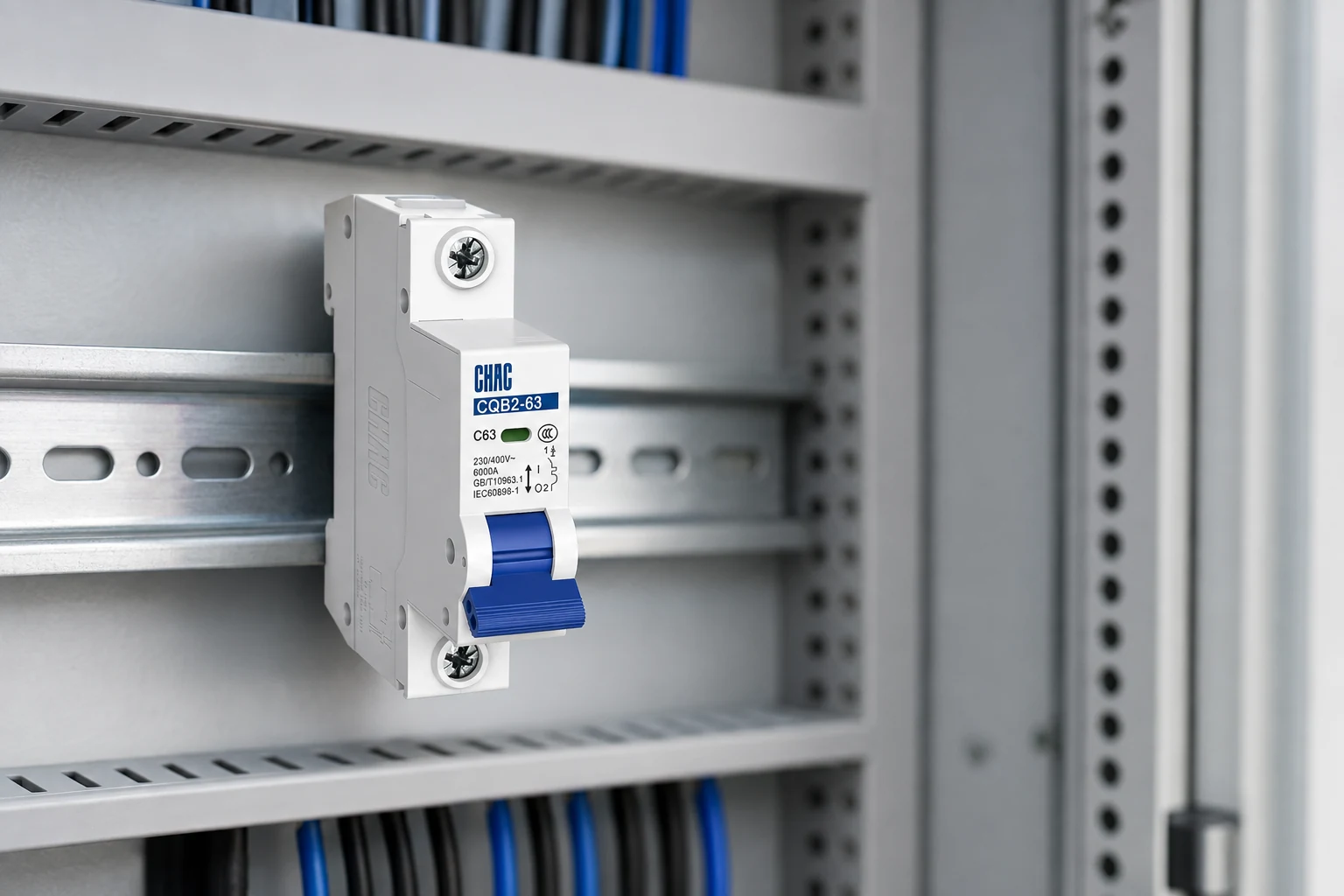
A standard miniature circuit breaker protects against overload and short circuit within its ratings. An RCD, RCCB, or GFCI monitors residual current. An RCBO combines residual-current and overcurrent functions in one device when its product standard and marking say so. AFCI protection addresses certain arcing patterns and does not replace ground-fault or overcurrent protection.
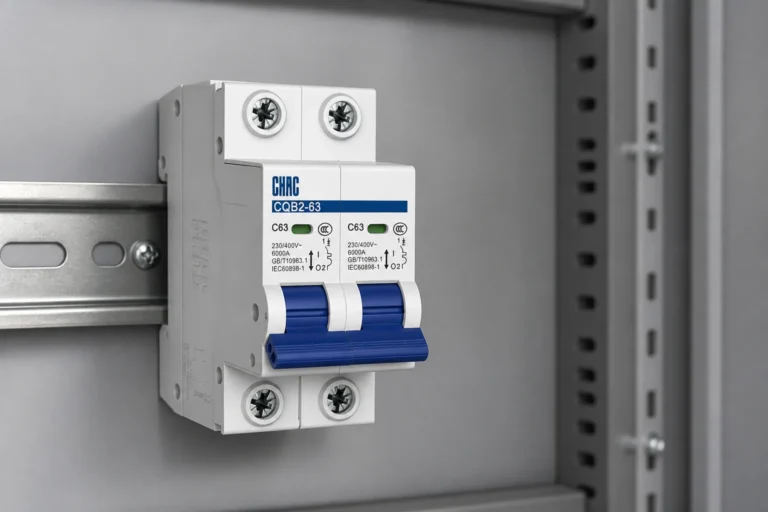
For a panel application, a listed CHAC miniature circuit breaker can address overcurrent when its voltage, pole, curve, and interrupting ratings match the system. A device such as the PXL9-63 leakage circuit breaker may be evaluated for residual-current protection, while the PXB6L-63 RCBO should be assessed for combined protection and the intended wiring arrangement.
Where code requires special protection
The adopted NFPA 70 NEC identifies locations and equipment where GFCI or AFCI protection is required, including many dwelling, wet, outdoor, and personnel-protection applications. Requirements vary by edition and jurisdiction. IEC 61008-1 covers RCCBs without integral overcurrent protection, while IEC 61009-1 covers RCBOs; IEC 60898-1 addresses certain overcurrent circuit breakers.
Standards define device performance and test methods, not a universal wiring permission. The product must be installed according to its instructions, and the authority having jurisdiction decides code compliance. Unsupported claims about “shock proof” or universal protection can create liability if the device type, residual-current setting, or installation is wrong.
How should you test, reset and find the root cause?
When a device trips, unplug or disconnect downstream loads, lock out the supply, and inspect for water, crushed cable, heat, loose terminals, and neutral-ground contact. Use a properly rated meter or insulation tester under the equipment procedure; never test a live circuit casually. Reset only after the fault is isolated and the device passes its test function.
Record the time, load state, weather, and device indication. A trip that occurs only when a motor starts suggests inrush or a short, while a trip after rain suggests leakage, but these are clues rather than proof. Repeated resets without testing can turn a manageable fault into an arc or fire event.
Preguntas frecuentes
How to tell if a ground is shorted?
De-energize the circuit and have a qualified person test continuity and insulation between conductors and ground. Inspect for moisture, damaged jackets, loose strands, and neutral-ground connections downstream of the permitted bonding point. A simple continuity beep does not prove insulation quality under operating voltage.
How serious is a ground fault?
It can be extremely serious because exposed metal may become energized and a fault may continue below the trip level of a standard breaker. Treat every unexplained trip as a safety event. Isolate the circuit and test before restoring power.
How to fix a short circuit or ground fault?
There is no universal reset procedure. De-energize, identify the damaged conductor or equipment, repair or replace it using approved parts, test insulation and grounding, then verify protective-device operation. A licensed electrician should make the final decision.
Will a ground fault trip a regular breaker?
It may, but only if enough current flows to meet the breaker’s overcurrent trip curve. Small leakage can remain dangerous without opening a regular breaker, which is why GFCI or residual-current protection is used where required.
What is ground fault vs short circuit and how does it work?
A ground fault diverts current to ground or exposed conductive parts; a short circuit connects conductors through a low-impedance path. Overcurrent devices respond to high current, while residual-current devices respond to imbalance. The correct device depends on the hazard and installation.
Where is ground fault vs short circuit required?
Overcurrent protection is required throughout electrical systems, and ground-fault protection is required in locations identified by the adopted code and equipment instructions. AFCI rules address selected arcing hazards. Check the jurisdiction, occupancy, voltage system, and latest adopted edition.
Which official sources should buyers verify?
The key distinction is the fault path, not the label on the handle. For coordinated overcurrent and residual-current choices, review CHAC Electric’s ground-fault protection products against the system study and contact the technical team for installation documentation.