Mpcb vs mccb motor protection selection starts with the circuit role, the project requirement, and selected-model documentation. MPCB vs MCCB: Motor Protection Boundary for Panel Builders helps panel builders organize those checks before a device is specified or an RFQ is issued. Motor-branch versus feeder duties stay with the approved motor circuit design and the protective devices named on that design.
Índice
Part 1. What boundary is this comparison trying to clarify?
Panel teams often need to decide whether a motor protection circuit breaker or a molded-case circuit breaker is being asked to cover a motor branch, a feeder, or a combined duty. The useful question is which documented functions the design assigns to each device, not which marketing label sounds stronger.
Part 2. When does an MPCB-centered review usually appear?
An MPCB review commonly appears when the motor branch needs a compact protective device coordinated with a contactor or starter arrangement defined on the control drawing. Confirm motor data, starting method, and the protection functions requested before treating any MPCB as a universal motor solution.
Part 3. When does an MCCB-centered review usually appear?
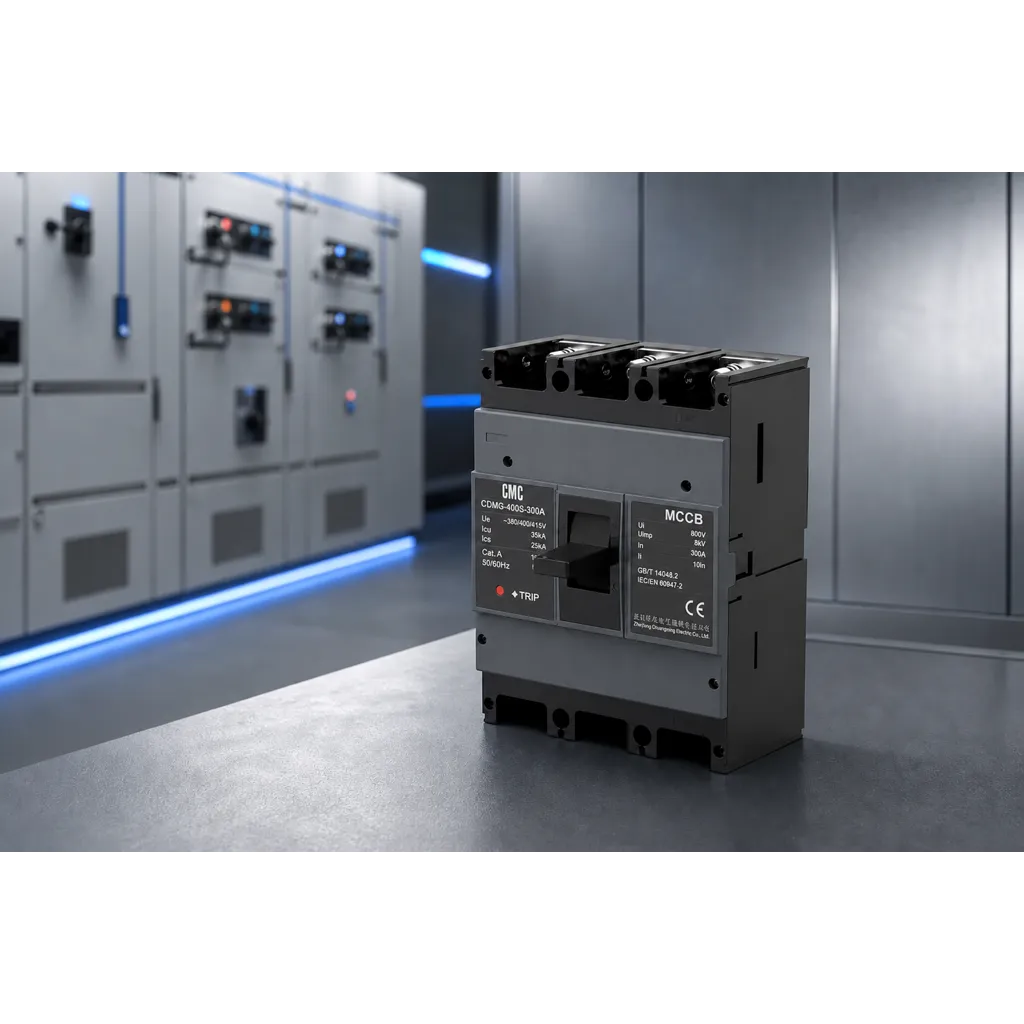
An MCCB review more often appears for distribution feeders or higher-frame protection scopes where the design calls for molded-case protection characteristics. Using an MCCB in a motor circuit still requires the project study and selected-model evidence; frame size alone is not a motor-protection approval.
Importante: Do not assign motor overload, short-circuit, and feeder protection duties by catalogue family name alone; the approved motor circuit diagram and selected-model evidence control the boundary. (fuente — IEC motor-starter and breaker standards discovery)
Part 4. Which drawing checks keep the two duties from merging accidentally?
Place the motor nameplate data, starter topology, upstream feeder protection, and cable limits on one review sheet. Mark which device provides overload, short-circuit, isolation, or control interlocking so the RFQ does not ask one product to absorb undocumented duties.
Part 5. What should a comparative RFQ request from suppliers?
Ask each supplier to map the requested motor or feeder duties to an exact model, list accessories, and return the documentation that supports only those duties. Reject quotations that answer with a family name and no model evidence.
Una lista de entradas de RFQ compacta facilita la comparación de las respuestas de los proveedores:
| El comprador debe proporcionar | Por qué importa | Error común |
|---|---|---|
| Conjunto de planos actual | Define el límite del circuito | Envío del nombre de un producto sin un diagrama |
| Funciones requeridas | Hace que la solicitud sea revisable | Tratar opciones no verificadas como estándar |
| Contexto de instalación | Identifica las condiciones del proyecto para confirmar | Asumiendo que la copia de la categoría es una aprobación del proyecto |
| Solicitud de documentación | Conecta la RFQ con la evidencia exacta | Aceptando afirmaciones genéricas en lugar de datos del modelo |
| Enviar con cotización | Hace que la comparación de proveedores sea verificable | Citando sin el paquete de evidencia solicitado |
Para un contexto más amplio, revise el mpcb vs mccb motor protection product family y lo relacionado página de línea de productos.
Part 6. Which CHAC routes support the discussion?
Use the CQV2 motor protection circuit breaker product route when the RFQ is motor-branch oriented, and keep the MCCB category available when the drawing points to molded-case feeder protection. Product routes are navigation aids after the duty boundary is written down.
Recomendación de producto
CQM6 Standard Molded Case Circuit Breaker (MCCB) OEM Manufacturer | CHAC Electric

Utilice el publicado página de producto CHAC relevante as a documented product route starting point for a product discussion only after the RFQ inputs are complete. Branded motor-control packaging can be requested through the industrial-control customization page. Family names such as MPCB or MCCB are not interchangeable proof of overload, short-circuit, or feeder capability.
Part 7. Where must the MPCB/MCCB duty map return to the designer?
This article helps teams write a clearer motor-circuit RFQ. It is not a coordination study, a starter setting sheet, or permission to mix MPCB and MCCB duties without project design approval. Use a drawing review sheet that separates motor-branch protection from feeder protection before RFQs are compared.
Fit Boundary: the MPCB/MCCB duty map is an RFQ aid, not a finished coordination or starter-setting package.
Lectura relacionada: un artículo de CHAC más específico y ya publicado está enlazado por contexto, no como un sustituto del alcance de decisión de este artículo.
For a motor-protection boundary discussion, Contactar a CHAC Electric with the motor data and protection duty map.
Preguntas frecuentes
Can an MPCB and an MCCB be compared by frame size alone?
No. Compare documented duties against the motor or feeder drawing first.
Does an MCCB automatically protect every motor branch?
No. Motor-branch protection must be confirmed from the design and the selected model.
What motor data belongs in the RFQ?
Include motor rating information, starting method, cable context, and the protection functions assigned on the drawing.
How does this differ from contactor coordination guidance?
Coordination with a contactor is a related but separate review once the protective-device duty is defined.
What evidence should suppliers return?
Return proposed model identification and the documents that support the requested protection duties only.
¿Quién es el propietario del límite de protección final?
The responsible project electrical designer owns the boundary using the approved drawings and selected-model data.