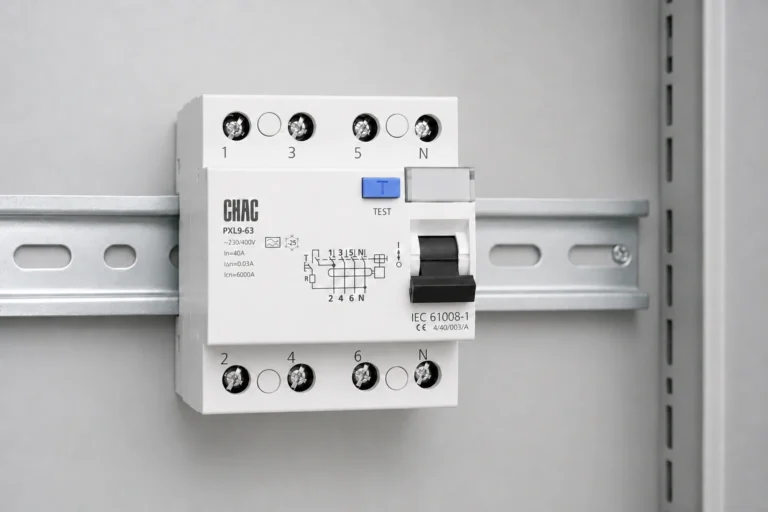
Mpcb vs mccb motor protection selection starts with the circuit role, the project requirement, and selected-model documentation. MPCB vs MCCB: Motor Protection Boundary for Panel Builders helps panel builders organize those checks before a device is specified or an RFQ is issued. Motor-branch versus feeder duties stay with the approved motor circuit design and the protective devices named on that design.
Contents
Part 1. What boundary is this comparison trying to clarify?
Panel teams often need to decide whether a motor protection circuit breaker or a molded-case circuit breaker is being asked to cover a motor branch, a feeder, or a combined duty. The useful question is which documented functions the design assigns to each device, not which marketing label sounds stronger.
Part 2. When does an MPCB-centered review usually appear?
An MPCB review commonly appears when the motor branch needs a compact protective device coordinated with a contactor or starter arrangement defined on the control drawing. Confirm motor data, starting method, and the protection functions requested before treating any MPCB as a universal motor solution.
Part 3. When does an MCCB-centered review usually appear?
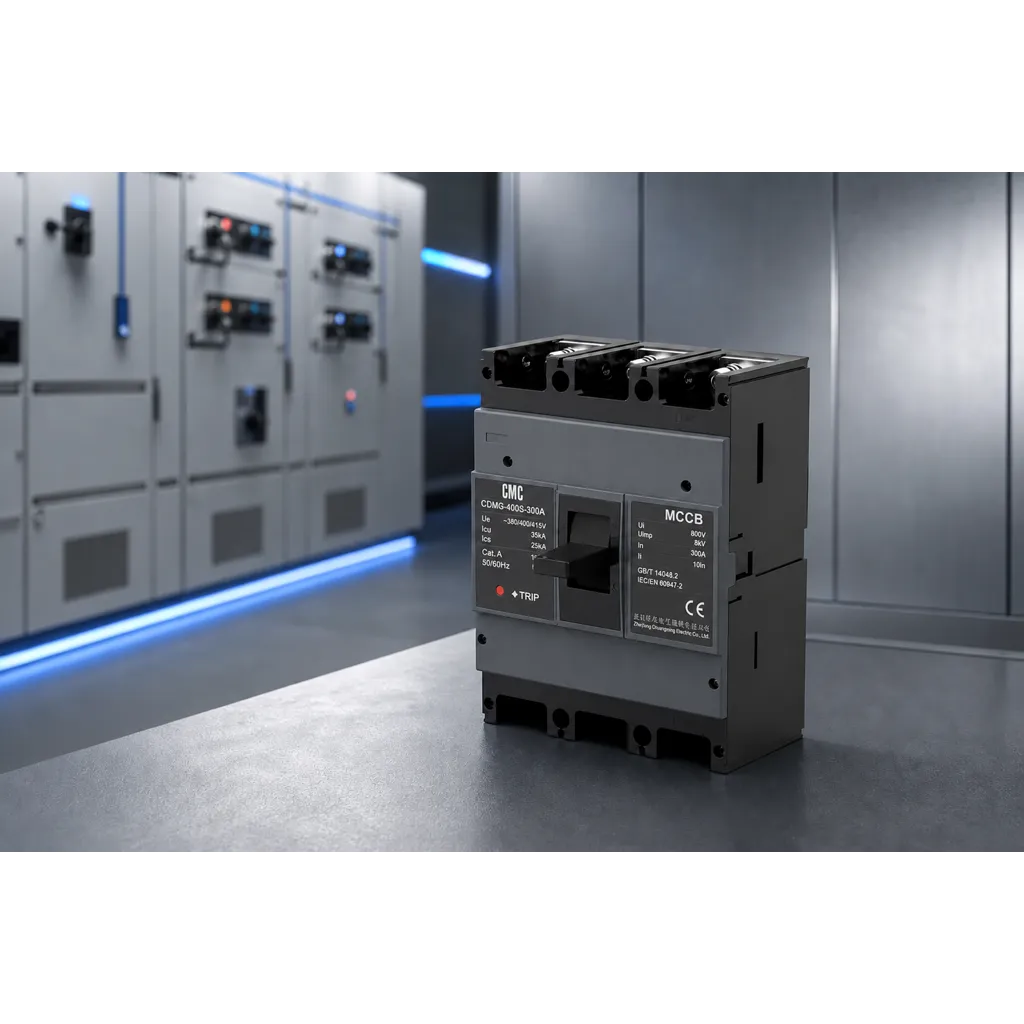
An MCCB review more often appears for distribution feeders or higher-frame protection scopes where the design calls for molded-case protection characteristics. Using an MCCB in a motor circuit still requires the project study and selected-model evidence; frame size alone is not a motor-protection approval.
Important: Do not assign motor overload, short-circuit, and feeder protection duties by catalogue family name alone; the approved motor circuit diagram and selected-model evidence control the boundary. (source — IEC motor-starter and breaker standards discovery)
Part 4. Which drawing checks keep the two duties from merging accidentally?
Place the motor nameplate data, starter topology, upstream feeder protection, and cable limits on one review sheet. Mark which device provides overload, short-circuit, isolation, or control interlocking so the RFQ does not ask one product to absorb undocumented duties.
Part 5. What should a comparative RFQ request from suppliers?
Ask each supplier to map the requested motor or feeder duties to an exact model, list accessories, and return the documentation that supports only those duties. Reject quotations that answer with a family name and no model evidence.
A compact RFQ input list makes the supplier response easier to compare:
| Buyer should provide | Why it matters | Common mistake |
|---|---|---|
| Current drawing set | Defines the circuit boundary | Sending a product name without a diagram |
| Required functions | Makes the request reviewable | Treating unverified options as standard |
| Installation context | Identifies project conditions to confirm | Assuming category copy is a project approval |
| Documentation request | Connects the RFQ to exact evidence | Accepting generic claims instead of model data |
| Send with quote | Makes supplier comparison auditable | Quoting without the requested evidence pack |
For broader context, review the mpcb vs mccb motor protection product family and the related product line page.
Part 6. Which CHAC routes support the discussion?
Use the CQV2 motor protection circuit breaker product route when the RFQ is motor-branch oriented, and keep the MCCB category available when the drawing points to molded-case feeder protection. Product routes are navigation aids after the duty boundary is written down.
Product recommendation
CQM6 Standard Molded Case Circuit Breaker (MCCB) OEM Manufacturer | CHAC Electric

Use the published relevant CHAC product page as a documented product route starting point for a product discussion only after the RFQ inputs are complete. Branded motor-control packaging can be requested through the industrial-control customization page. Family names such as MPCB or MCCB are not interchangeable proof of overload, short-circuit, or feeder capability.
Part 7. Where must the MPCB/MCCB duty map return to the designer?
This article helps teams write a clearer motor-circuit RFQ. It is not a coordination study, a starter setting sheet, or permission to mix MPCB and MCCB duties without project design approval. Use a drawing review sheet that separates motor-branch protection from feeder protection before RFQs are compared.
Fit Boundary: the MPCB/MCCB duty map is an RFQ aid, not a finished coordination or starter-setting package.
Related reading: a narrower, already-published CHAC article is linked for context, not as a replacement for this article’s decision scope.
For a motor-protection boundary discussion, contact CHAC Electric with the motor data and protection duty map.
FAQs
Can an MPCB and an MCCB be compared by frame size alone?
No. Compare documented duties against the motor or feeder drawing first.
Does an MCCB automatically protect every motor branch?
No. Motor-branch protection must be confirmed from the design and the selected model.
What motor data belongs in the RFQ?
Include motor rating information, starting method, cable context, and the protection functions assigned on the drawing.
How does this differ from contactor coordination guidance?
Coordination with a contactor is a related but separate review once the protective-device duty is defined.
What evidence should suppliers return?
Return proposed model identification and the documents that support the requested protection duties only.
Who owns the final protection boundary?
The responsible project electrical designer owns the boundary using the approved drawings and selected-model data.