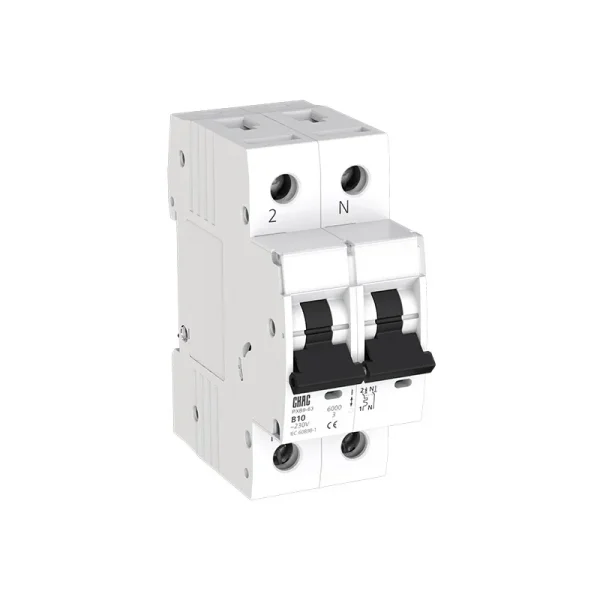


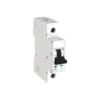

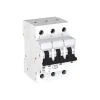
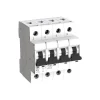
PXB9-63 Series Overload Protection Miniature Circuit Breaker
The PXB9-63 miniature circuit breaker provides overload and short-circuit protection within its published 6A–63A range. Selection should be based on the circuit voltage, conductor, load behaviour, prospective fault current and applicable installation rules—not the ampere rating alone.
Product Overview
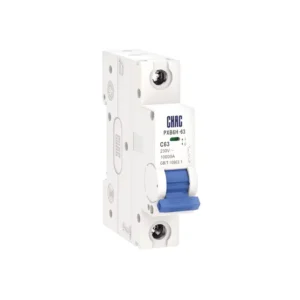
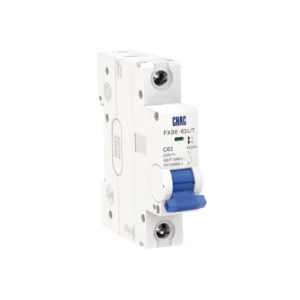
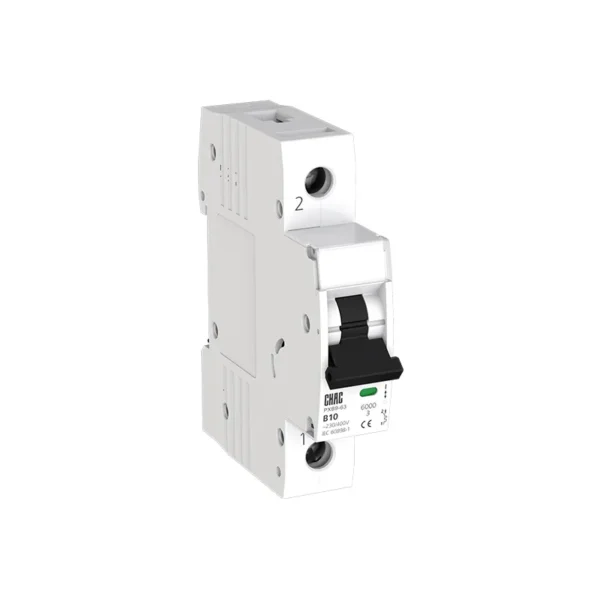
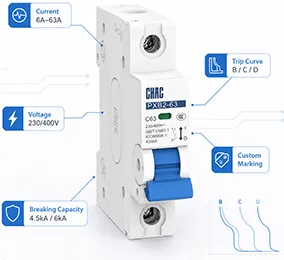
PXB9-63 is a miniature circuit breaker for 230/400V AC final-distribution circuits. The verified product range covers 6A–63A, 1P / 2P / 3P / 4P, B / C / D curves and 6kA (Icn/Ics) short-circuit data.
For projects that need a 63A miniature circuit breaker, the PXB9-63 MCB range includes 1P through 4 pole MCB configurations.
The saved model record lists EN/IEC 60898-1; GB/T 10963.1 as the applicable standard reference. No certification claim is added beyond the saved model record.
Key Features
Typical Applications
Typical project contexts include residential, commercial and light-industrial final distribution. Suitability depends on the actual load and circuit study: conductor ampacity, inrush current, fault level, pole and neutral requirements, enclosure conditions and local rules.
Applications and Selection Guide
Use the verified model values below to create a shortlist, then validate the complete circuit. Product ratings do not replace conductor calculations, a fault-current study, coordination review or local installation requirements.
| Selection point | PXB9-63 reference | What the project must confirm |
|---|---|---|
| Rated current | 6A–63A | Design current, conductor ampacity, installation method, ambient temperature and grouping |
| Voltage and frequency | 230/400V AC; 50/60Hz | Supply system and equipment rating |
| Pole configuration | 1P / 2P / 3P / 4P | Conductors to be switched/protected, including neutral treatment |
| Trip curve | B / C / D | Load inrush and required disconnection performance |
| Breaking capacity | 6kA (Icn/Ics) | Prospective short-circuit current and protection coordination |
6kA vs 10kA
6kA (Icn/Ics) is the saved model value. Confirm the prospective short-circuit current at the installation point.
Fault Level
Compare Breaking Capacity →
B vs C vs D Curves
Available curves: B / C / D. Match the curve to normal load current, inrush and required fault clearing.
Load Inrush
Choose a Trip Curve →
1P+N vs 2P
Published pole options: 1P / 2P / 3P / 4P. Confirm which conductors must be switched and protected under local rules.
Poles & Neutral
Compare Pole Arrangements →
MCB vs RCBO
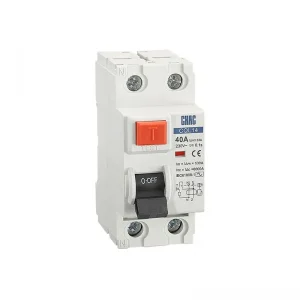
An MCB covers overload and short circuit; choose an RCBO where residual-current protection is also required.
Protection Scope
Compare MCB and RCBO →
Ordering Guide
- Specify the exact model: PXB9-63.
- State the required current rating within 6A–63A.
- Confirm pole arrangement: 1P / 2P / 3P / 4P.
- Confirm trip curve: B / C / D.
- Provide system voltage, expected fault level, destination market, quantity and document requirements.
Installation and Coordination Checks
- Use the exact model drawing and instructions; do not infer supply direction, neutral routing or terminal positions from another product.
- Verify conductor material and cross-section against the circuit calculation and published terminal data.
- Confirm fault level, upstream/downstream coordination, enclosure temperature, grouping, altitude and clearances.
- Installation, isolation, testing and maintenance must be carried out by qualified personnel under applicable rules.
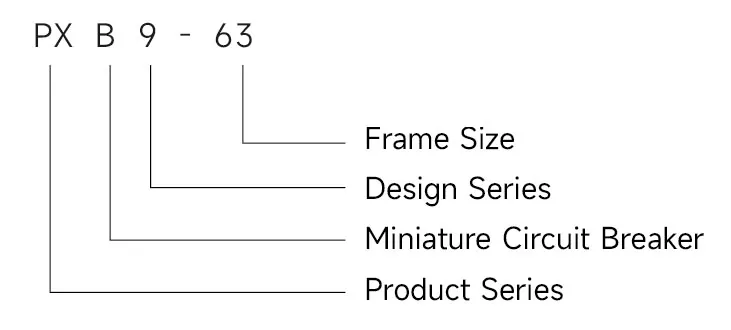
Type designation
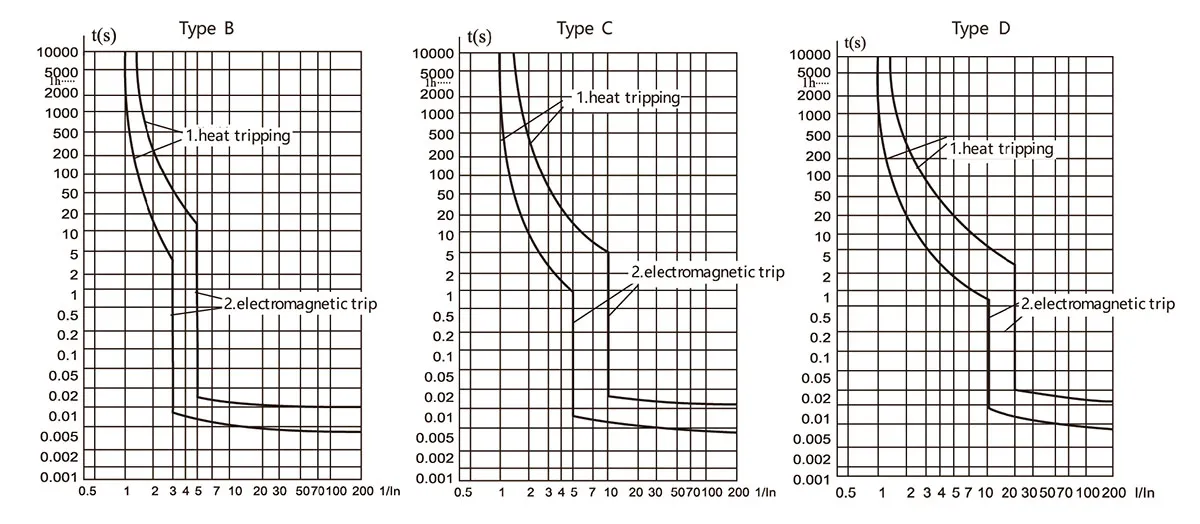
Tripping Curve
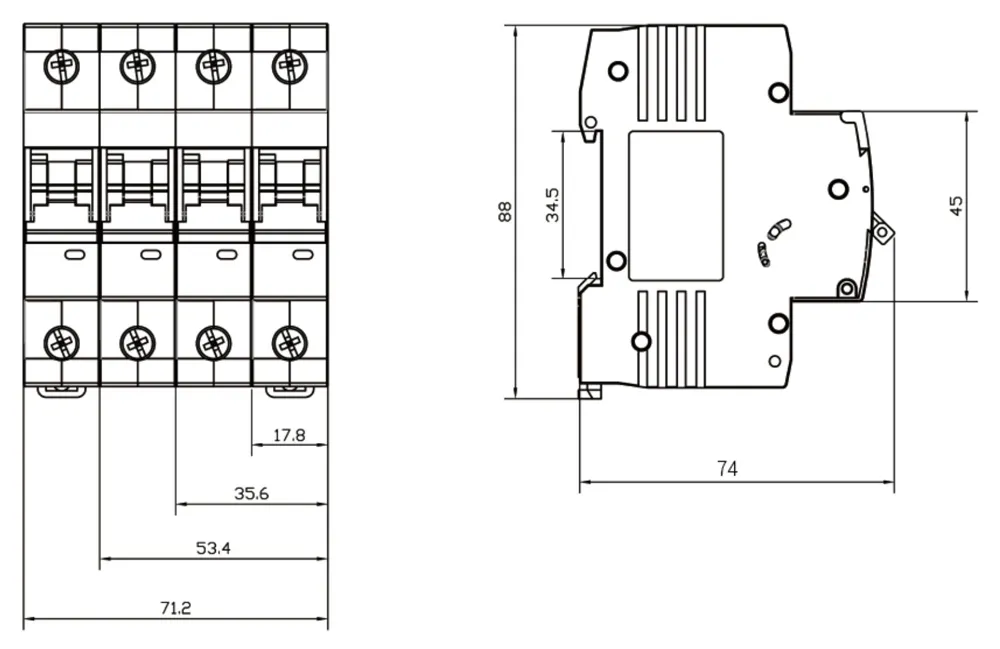
Dimension
Technical Specifications
| Parameter | |
| Rated voltage | 230V / 400V |
| Rated impulse withstand voltage (Uimp) | 4000 V |
| Rated current | 6A, 10A, 13A, 16A, 20A, 25A, 32A, 40A, 50A, 63A |
| Rated frequency | 50 Hz / 60 Hz |
| Number of poles | 1P, 2P, 3P, 4P |
| Rated breaking capacity (Icn/Ics) | 6000 A |
| Mechanical life | 10,000 operations |
| Electrical life | 6,000 operations |
| Tripping characteristics | B, C, D |
| Pollution degree | 2 |
| Degree of protection | IP20 |
| Standards | EN/IEC 60898-1, GB/T 10963.1 |
| Tightening torque | 3.5 N∙m |
Table1 Tripping characteristics(Reference temp.30℃)
| Item | Tripping Curve | Test current In(A) | Initial Status | Time limit for tripping or non-tripping | Expected result | Remark |
| a | B、C、D | 1.13In | Cold | t≤1h | Non-tripping | Current smoothly rises to specified value within 5s |
| b | B、C、D | 1.45In | Following item a test | t<1h | Tripping | |
| c | B、C、D | 2.55In | Cold | 1s<t<60s(In≤32A) 1s<t<120s(In>32A) |
Tripping | |
| d | B | 3In | Cold | t≤0.1s | Non-tripping | Switch on the power supply by closing the auxiliary switch |
| C | 5In | |||||
| D | 10In | |||||
| e | B | 5In | Cold | t<0.1s | Tripping | Switch on the power supply by closing the auxiliary switch |
| C | 10In | |||||
| D | 20In |
Note: The term “cold” means that the test is carried out at a reference calibration temperature without load before the test.
Conductor requirements and cross section
| Copper cross-section(mm2) | Rated current In(A) |
| 1 | In≤6 |
| 1.5 | 6<In≤13 |
| 2.5 | 13<In≤20 |
| 4 | 20<In≤25 |
| 6 | 25<In≤32 |
| 10 | 32<In≤50 |
| 16 | 50<In≤63 |
Why Choose CHAC
With 30+ years of manufacturing experience, 1100+ employees, 100M+ poles
annual capacity and 90% automated production, CHAC provides stable production capacity and strict
quality control for global OEM/ODM customers. Our in-house manufacturing system supports long-term
cooperation for electrical brands, importers and distributors.

30+
YEARS EXPERIENCE
Specialized in low-voltage electrical manufacturing

1100+
EMPLOYEES
Professional team ensures stable quality and delivery

100M+
POLES ANNUAL CAPACITY
Large-scale production capacity to meet global demand

90%
AUTOMATED PRODUCTION
Advanced automation for high efficiency and consistency

Automated Assembly Line

Testing Laboratory

Injection & Stamping

Quality Inspection



Strict quality control system ensures every product meets global standards.
What Can We Customize?
For PXB9-63 projects, CHAC can review private-label marking, packaging, approved appearance options, published 6A–63A electrical configurations and technical-document requirements. Requests outside the published range are subject to engineering evaluation, testing, minimum order quantity and project feasibility.

Logo & Branding
Private-label marking and nameplate options are subject to artwork review and sample approval.


Packaging
Customization
Cartons, labels and manuals can be prepared for the approved order specification and destination market.

Electrical
Customization
Select from the published 6A–63A, 1P / 2P / 3P / 4P and B / C / D options; non-standard requests require technical evaluation.

Product
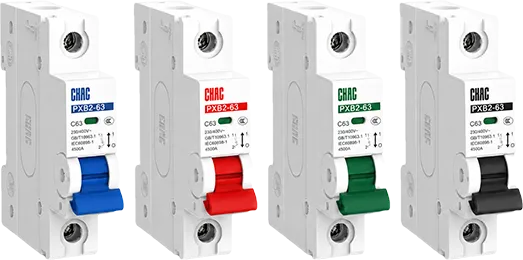
Appearance
Appearance options can be reviewed subject to tooling, minimum order quantity, marking requirements and technical feasibility.

Certification
Support
Datasheets, drawings and verified certificate information are supplied for the applicable approved configuration.


Engineering
Development
Project support may include drawing review, sample evaluation, testing and production planning, subject to technical approval.

Download
PXB9 Series Miniature Circuit Breaker
Complete product overview for low-voltage electrical components and product selection reference.
Need Technical Documents?
Contact us for datasheets, certificates, drawings, selection guidance or OEM/ODM project support.
PXB9-63 Product FAQ
What is the PXB9-63 miniature circuit breaker?
The PXB9-63 is a miniature circuit breaker that provides overload and short-circuit protection in the published 6A–63A range. It does not add residual-current protection; use a separate RCD or a suitable RCBO when that function is required.
How does the PXB9-63 miniature circuit breaker work?
A thermal element responds to sustained overloads and a magnetic element responds to high fault current. Actual tripping behaviour depends on current magnitude, selected curve, reference conditions and the complete circuit.
What does the PXB9-63 6kA rating mean?
The saved product data lists 6kA (Icn/Ics). This is short-circuit breaking data, not the normal load current. The prospective short-circuit current at the installation point must not exceed the applicable rating.
Which trip curve should be selected for the PXB9-63?
The published options are B / C / D. Selection should reflect normal current, starting or inrush current and the fault current available for timely operation; no curve is automatically best for every load.
How should the PXB9-63 pole configuration be selected?
Available arrangements are 1P / 2P / 3P / 4P. Confirm the supply system and which live conductors—and, where required, the neutral—must be switched, protected and isolated together.
How should the PXB9-63 miniature circuit breaker be installed?
Use the exact product drawing and instructions. A qualified installer should verify voltage, conductor size, terminal torque, fault level, panel fit, enclosure conditions and coordination before energising the circuit.
Confirm the Right PXB9-63 Configuration
Send the current rating, poles, trip curve, system voltage, expected fault level, destination market and quantity. CHAC will review the request against the published model range.