Quando a un costruttore di quadri elettrici di Rotterdam viene richiesto di sostituire un dispositivo di protezione da sovratensioni guasto a seguito di un’interruzione del quadro di comando, la soluzione più rapida che si presenta è spesso quella di una marca ben nota. La domanda più difficile, tuttavia, è se il dispositivo di ricambio sia compatibile con la tensione di alimentazione, la configurazione di messa a terra, il punto di installazione, la capacità di scarico e la protezione di backup. Un dispositivo può essere di ottima fattura e tuttavia risultare la scelta sbagliata se le sue caratteristiche nominali o il cablaggio non sono adeguati all’impianto. Questa guida illustra come gli appaltatori, i team di approvvigionamento degli OEM e i distributori possano confrontare protezione da sovratensione marchi senza fare affidamento su classifiche inventate, affermazioni non supportate di “massima valutazione” o su un dato attuale preso fuori contesto.
Riepilogo: Il miglior dispositivo di protezione dalle sovratensioni è quello la cui portata e le cui specifiche di prova corrispondono all'impianto elettrico e alle apparecchiature protette. Inizia dall'ubicazione di installazione e dalla norma applicabile per i dispositivi di protezione dalle sovratensioni a bassa tensione, quindi verifica la tensione massima di funzionamento continua (Uc), la corrente nominale e la corrente massima di scarica (In e Imax, ove indicate), il livello di protezione in tensione (Up), le modalità di protezione, i requisiti relativi al cortocircuito/dispositivo di protezione e l'indicazione dello stato. La IEC 61643-11 definisce i requisiti e le prove per i dispositivi di protezione dalle sovratensioni a bassa tensione in corrente alternata; non stabilisce una classifica universale dei marchi. Confronta innanzitutto la documentazione e la compatibilità d'impiego, quindi richiedi una conferma specifica per il prodotto prima dell'acquisto.
{{FEATURED_IMAGE}}
Cosa significa “miglior marca di protezione dalle sovratensioni” in un acquisto B2B?
Per una ciabatta elettrica domestica, l’acquirente può confrontare le funzionalità di comodità e le condizioni della garanzia. Per un quadro elettrico o un armadio di comando, la definizione di “migliore” è una questione ingegneristica più circoscritta: il fornitore è in grado di documentare che il dispositivo è conforme al sistema di tensione previsto, all’ambiente transitorio, alla topologia di collegamento e alla categoria di installazione? Un migliore marca di salvavolta Una decisione è utile solo quando ogni candidato viene valutato sulla base degli stessi dati di candidatura e dello stesso ambito di prova.
IEC 61643-11 è il riferimento pertinente fornito per gli SPD in corrente alternata a bassa tensione. La pubblicazione IEC descrive una norma di prodotto con requisiti e prove definiti; non costituisce tuttavia una dichiarazione che ogni prodotto recante un'etichetta commerciale sia certificato. Nei progetti nordamericani, gli acquirenti possono anche imbattersi nelle informazioni sul servizio dei dispositivi di protezione dalle sovratensioni di UL e nei requisiti del codice elettrico localmente adottato. Verificare l'edizione e l'applicabilità al mercato con il progettista responsabile o con l'autorità competente.
Quali valutazioni dovrebbero confrontare gli acquirenti tra i diversi marchi?
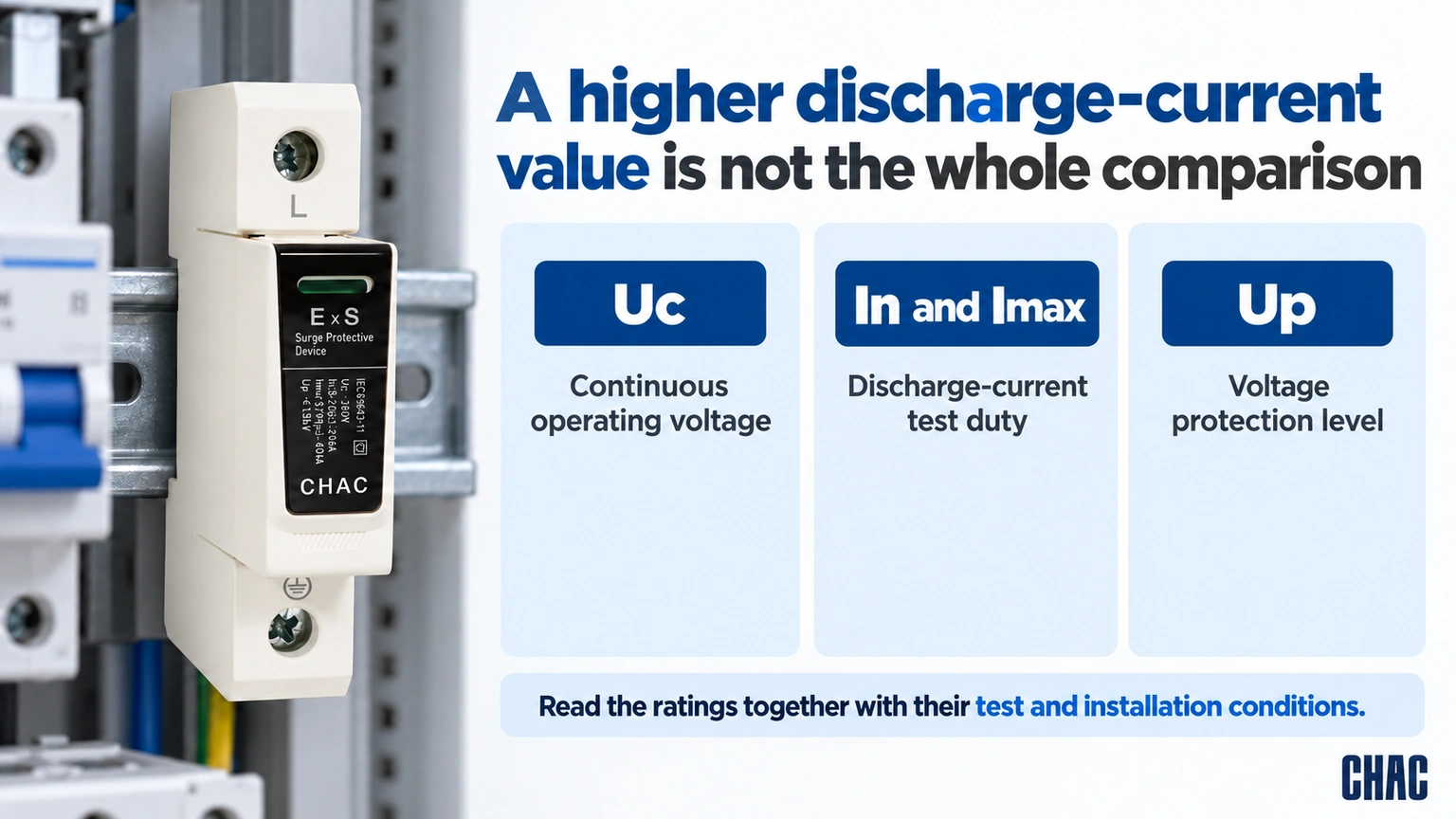
Le specifiche devono essere lette nel loro insieme. Uc deve essere adeguata alla normale tensione di esercizio del sistema e alle condizioni di sovratensione temporanea. In e Imax indicano le condizioni di prova per la corrente di scarica, mentre Up rappresenta il livello dichiarato di protezione in tensione durante la relativa prova. I modi di protezione, la configurazione dei poli, la disposizione dei conduttori e il fusibile di protezione prescritto o Interruttore di circuito sono ugualmente importanti perché determinano come l'SPD viene collegato e isolato durante un evento anomalo. Ecco perché migliori marchi di protezioni da sovratensione Dovrebbero essere confrontati sulla base di schede tecniche complete, e non solo in base alla popolarità.
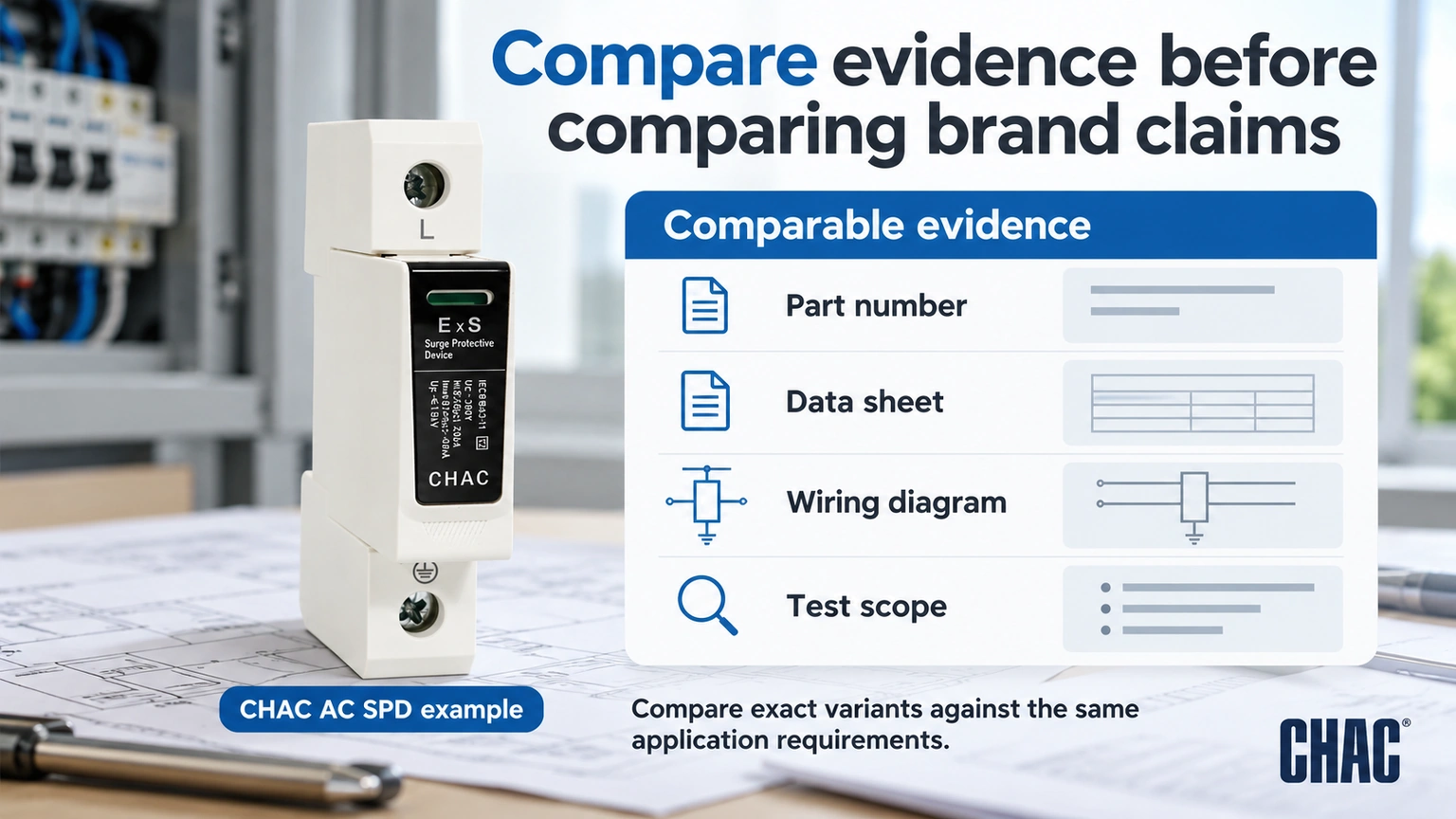
Non dedurre la qualità della protezione da un singolo valore elevato di corrente. Un valore Imax più alto non implica automaticamente un valore Up più basso, una migliore coordinazione né l’idoneità a un particolare sistema di messa a terra. Richiedi la scheda tecnica, lo schema elettrico, la norma di prova e le istruzioni di installazione relative alla specifica variante del prodotto; le famiglie di modelli possono infatti comprendere configurazioni diverse per tensione, poli e contatti.
| Dimensione di confronto | Cosa verificare | Perché influisce sulla selezione |
|---|---|---|
| Adeguamento del sistema | Tensione di alimentazione, frequenza, sistema di messa a terra, poli e modalità di protezione | Impedisce che un dispositivo venga collegato al di fuori della sua topologia elettrica prevista. |
| Valutazione continua | Uc e qualsiasi capacità dichiarata di sopportazione delle sovratensioni temporanee | Aiuta lo SPD a rimanere stabile sia in condizioni di alimentazione normali che anomale. |
| Dovere di prova di scarica | In, Imax, forma d'onda dell'impulso/corrente e ambito di prova dichiarato | Consente un confronto diretto tra elementi omogenei, anziché trattare i termini di marketing come risultati dei test. |
| Tensione residua | Su e le condizioni di prova utilizzate per dichiararlo | Shows whether the expected let-through voltage is compatible with downstream equipment. |
| Installation and service | Backup-device guidance, conductor length, torque, enclosure, remote contact, and status indication | Determines installation quality, inspection effort, and replacement workflow. |
Which application should each protection approach serve?
Selection begins at the point where transient energy enters or travels through the installation. A service entrance or main distribution board may need a coordinated upstream layer; a sub-panel, automation cabinet, or sensitive load may need a downstream device selected for the remaining surge environment and equipment withstand. Signal, data, photovoltaic DC, and battery circuits require products designed for their own voltage and connection conditions rather than a direct substitution of an AC device.
The installation path matters as much as the device label. Short, direct conductors and a verified protective-earth path reduce added inductive voltage during a fast impulse. Separation from sensitive conductors, correct tightening, and the specified upstream protective device should be checked during commissioning. A point-of-use protector cannot correct a poor bonding arrangement or replace a coordinated panel design.
| Application context | Primary selection questions | Documenti da richiedere |
|---|---|---|
| Main low-voltage board | Where is the service boundary, what is the earthing system, and what upstream protection is required? | Single-line diagram, SPD type/class information, Uc/Up/In/Imax data, and installation instructions. |
| Sub-distribution panel | What upstream SPD is already installed, and what residual voltage can the load tolerate? | Coordination guidance, conductor-length limits, and equipment withstand information. |
| Industrial control cabinet | Are power, control, and signal circuits exposed to different transient paths? | Separate circuit ratings, wiring diagram, status/remote-contact details, and maintenance instructions. |
| OEM or distributor program | Can the supplier maintain variant consistency across markets and revisions? | Controlled datasheets, test reports or declarations within scope, change notification, and traceable part numbers. |
How can a buyer compare good surge protector brands without inventing a ranking?
A defensible comparison uses a scorecard rather than a numbered list. Record the same fields for each candidate, identify missing evidence, and separate a product’s tested characteristics from the supplier’s service capability. The following framework is suitable for an RFQ review and does not assume that any brand is universally superior. Include how failed protection is identified and replaced. Surge protectors can go bad while connected equipment still runs, so a power light is useful only if the manual defines what it indicates. Ask each supplier how to determine whether its surge protector is still providing protection.
| Scorecard area | Strong evidence | Procurement warning |
|---|---|---|
| Technical transparency | Exact part number, ratings table, wiring diagram, and stated standard/test scope | Only a family name or a headline current value is provided. |
| Application coverage | Separate AC, DC, signal, and enclosure options with clear boundaries | One generic device is presented as suitable for every circuit. |
| Installation support | Backup protection, conductor, torque, coordination, and replacement guidance | Installer is expected to infer wiring from a product photograph. |
| Quality and continuity | Traceable revisions, repeatable documentation, and an agreed change-control process | Equivalent substitutions can occur without engineering review. |
| Total cost of ownership | Purchase, installation, inspection, spare modules, downtime exposure, and service access considered together | Lowest unit price is treated as the complete economic comparison. |
Which standards and compliance checks apply?
IEC 61643-11 is the supplied official reference for low-voltage AC SPDs and their requirements and tests. UL’s surge protective device service page explains the role of evaluation services in the UL framework. These references help define the evidence a buyer should seek, but a standard or listing must be checked for the exact product, market, edition, and intended use. A test method is not the same as a blanket installation approval.
Before release, map the device to the destination market’s adopted electrical code, installation rules, and authority requirements. Keep the product data sheet, applicable declaration or listing, single-line diagram, and commissioning record together. Unsupported claims about certification, lightning immunity, energy savings, or guaranteed equipment survival can create rework, delayed approvals, warranty disputes, and liability exposure.
What should an electrical buyer do before placing an order?
- Define the system: record nominal voltage, frequency, earthing arrangement, poles, available fault conditions, and the circuit type.
- Define the exposure: identify the installation point, incoming service arrangement, cable routing, lightning or switching exposure, and equipment withstand requirement.
- Request exact evidence: require Uc, In, Imax, Up, protection modes, test scope, backup-device guidance, wiring diagram, and replacement indication for the exact part number.
- Review installation: confirm conductor length, bonding, torque, enclosure space, labeling, and status inspection before energization.
- Servizio del piano: decide how failed or end-of-life modules will be identified, isolated, replaced, and recorded across the installed base. Ask whether the manufacturer specifies an inspection interval or surge protector expiration date. Surge protector life expectancy is not a universal number of years. How often surge protectors should be replaced depends on the model’s condition, service history and instructions, not simply its brand or purchase date.
CHAC Electric provides low-voltage surge protection options for review against a project-specific specification. Buyers can start with the CHAC surge protection products category and verify the exact ratings and application documents before approval. The product page for an AC surge protector product should be read as a model-specific source, not as a substitute for the installation design.
Frequently asked questions about surge protector brands
What is the best whole home surge protector for 2026?
There is no universal best model for every home or service. The suitable choice depends on the service voltage, earthing arrangement, panel position, required protection modes, declared ratings, and the rules adopted in the installation market. For that reason, what is the best power surge protector is answered by application data, not by a generic ranking. Compare exact documentation and have the installation checked by a qualified electrician.
What is the best brand for surge protectors?
The best brand is the supplier that can document a product for the intended application and support correct installation, inspection, and replacement. In practice, good surge protector brands make those boundaries and documents easy to verify. Use a consistent scorecard covering standard/test scope, ratings, wiring, continuity, and service rather than relying on a global ranking that has no defined method or date.
Is Anker or Belkin better surge protector?
That comparison cannot be answered responsibly without the exact models, market, load, and use case. Consumer power strips and low-voltage panel SPDs serve different applications, so compare declared protection characteristics, approval scope, connected-load limits, and installation requirements for the specific product.
What should never be plugged into a surge protector?
Do not connect a load that exceeds the protector’s voltage, current, or outlet rating, and do not use a consumer strip as a substitute for a correctly designed panel device. High-demand or permanently wired equipment should follow the equipment instructions and local electrical requirements. When the load or wiring is uncertain, obtain an electrician’s review before connection.
What is top rated surge protectors and what does it protect?
“Top rated surge protectors” is a search phrase, not a defined technical category. A surge protective device limits specified transient overvoltage by diverting surge current through its designed connection path; it does not automatically provide overload, short-circuit, or residual-current protection. Check the product’s ratings, modes, test scope, and installation instructions.
Where should top rated surge protectors be installed?
Install an SPD at the location identified by the electrical design, commonly at a service or distribution point and, when required, at downstream equipment. Keep conductors short and direct, maintain the specified protective-earth path, and coordinate upstream and downstream devices. The device’s wiring diagram and local code determine the final arrangement.
References for verifying ratings and application scope
- IEC 61643-11, Low-voltage surge protective devices (official IEC publication and scope reference).
- Servizi per dispositivi di protezione da sovratensioni UL (official UL overview of evaluation services).
- NFPA 70, Codice elettrico nazionale (official code information; apply the edition adopted for the project).
The practical answer to “what is the best power surge protector?” is a documented match between the system, the installation point, and the equipment’s withstand requirements. Confirm the electrical conditions first, compare the complete ratings and test scope second, and verify wiring, coordination, and service access before release. Do not skip the destination-market compliance check simply because a product name is familiar. For a project-specific review of AC SPD options, request application guidance from CHAC Electric with the single-line diagram, supply details, and target market available.