

Choosing an MCB by its amp rating alone leaves several important questions unanswered: will it tolerate the load’s starting current, disconnect a fault at the far end of the cable, and interrupt the highest fault current available at the panel? Two breakers with the same current rating can answer those questions differently. A curve change that stops startup trips can also raise the fault current needed for rapid disconnection, while a higher breaking-capacity rating does not correct an overloaded cable. For engineers, installers and purchasing teams, the useful comparison is therefore between the load, conductor, installation conditions and documented protective characteristics. This guide explains the working principle, curve choices, current ratings and AC/DC limits, then turns those distinctions into a practical selection and procurement sequence.
The short answer is to select the rated current for the load and protected conductor, check the time-current curve against both inrush and the minimum fault current, and check breaking capacity against the maximum prospective short-circuit current at the installation point. IEC 60898-type B, C and D curves have magnetic operating bands of 3-5, 5-10 and 10-20 times rated current respectively, but those bands are not application approvals. The Schneider Electric Electrical Installation Guide separates these characteristics and also defines rated current at a manufacturer-stated ambient temperature. Obtain the exact model’s temperature, voltage, pole and coordination data before finalizing a selection.
When the panel decision turns on conductor switching and protection, review this single-pole and double-pole MCB selection guide before finalizing the pole arrangement.

How does a miniature circuit breaker interrupt an overload or short circuit?
A conventional thermal-magnetic MCB automatically opens a circuit when its protective mechanism responds to an overload or sufficiently high fault current. Its thermal and magnetic mechanisms perform different jobs; neither should be confused with the device’s maximum interrupting capability. Resetting restores the operating mechanism, but does not remove the electrical fault that caused a trip.
How does thermal overload protection work?
Current heats a bimetallic strip formed from metals with different thermal expansion characteristics. Sufficient bending releases the trip latch. The response is inverse-time: a sustained small overload can take longer to operate the mechanism than a larger overload. Actual operating times must come from the manufacturer’s time-current chart rather than a universal rule based on a single percentage of rated current.
This delayed response helps accommodate some temporary overloads, but it does not guarantee that a brief electronic-load inrush will pass. A high, short-duration pulse may operate the magnetic mechanism before the thermal element becomes decisive.
What does the magnetic trip mechanism do?
The magnetic mechanism uses the field produced by current through a coil to operate the trip latch rapidly once the applicable threshold is reached. The B, C or D designation primarily distinguishes this high-current operating region. It does not state how much short-circuit current the breaker can safely interrupt.
Why is an arc chute needed?
Opening contacts can produce an electrical arc, so mechanical separation alone is not the whole interruption process. An arc chute divides and cools the arc as part of the breaker’s interrupting design. The outcome depends on the rated supply conditions and the complete device, which is why appearance or a curve letter cannot establish AC/DC suitability or breaking capacity.
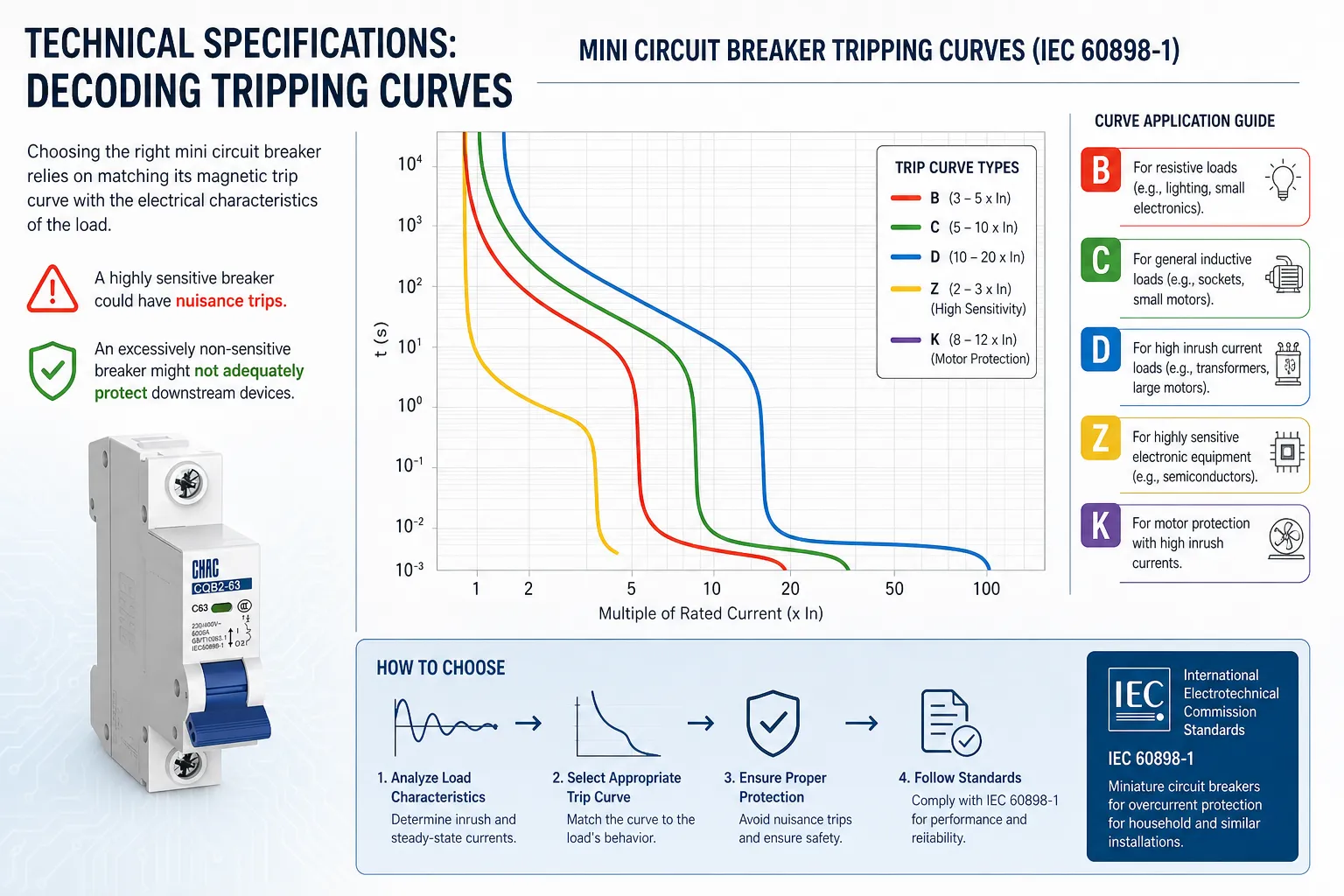
What do B, C and D tripping curves mean?
MCB tripping curves describe operating behavior across current and time. The following comparison uses the IEC 60898-type magnetic bands reported in the Electrical Installation Guide’s tripping-current table, checked on 7 October 2026. It compares operating bands, not brands or prices; CHAC is the publisher of this article.
| Curva | Magnetic operating band | Selection question | Important limitation |
|---|---|---|---|
| B | 3-5 × In | Does the load have low enough inrush for this lower threshold? | A lower threshold may help where fault current is limited, but disconnection still requires calculation and verification. |
| C | 5-10 × In | Does measured or documented starting current fit the actual curve? | A commercial or motor-load label is not sufficient evidence. |
| D | 10-20 × In | Is the higher threshold needed, and can the circuit still disconnect faults in time? | Greater inrush tolerance raises the magnetic fault-current requirement. |
These are operating bands, not single guaranteed trip points. Use the actual time-current envelope and the applicable disconnection requirement. Specialized K and Z characteristics, and industrial breakers marked under other standards, must be checked against their own manufacturer data; their letter designations should not be assigned one universal range. An MCB also should not be assumed to provide complete motor or semiconductor protection merely because a catalog associates its curve with those loads.
Should a C-curve breaker be replaced with D to stop LED or SMPS trips?
Not without a circuit assessment. LED drivers and switched-mode power supplies can draw a short startup pulse that differs substantially from their steady-state current. First establish whether the trip occurs at energization or after sustained operation, and obtain the equipment manufacturer’s inrush amplitude, duration and recommended maximum number of devices per breaker.
If simultaneous startup is the cause, assess grouping, staged energization or a documented inrush-limiting solution before changing protection. A D curve can tolerate a higher magnetic-current band, but it can also leave the available minimum fault current below the rapid-trip region. Any curve change must preserve conductor protection, required disconnection times and upstream coordination. Increasing the amp rating to suppress trips is not a substitute for these checks.
Which current and fault ratings must be checked separately?
Does rated current apply at every enclosure temperature?
No. In is a continuous-current rating under specified conditions, not a temperature-independent promise. The Electrical Installation Guide’s rated-current definition explicitly refers to the ambient temperature stated by the manufacturer. A warm enclosure or closely grouped devices can require application of the exact product’s correction data.
Separate the design load current, the conductor’s permissible current after installation corrections, and the breaker’s documented current-carrying capability in that environment. An enclosure’s internal temperature may differ from the room temperature. Do not apply a derating percentage from another model or assume that a higher amp rating is acceptable merely because the panel is warm.
Why must minimum and maximum fault current both be considered?
The minimum relevant fault current tests whether protection will disconnect quickly enough; the maximum prospective short-circuit current tests whether the breaker can interrupt safely. These are different ends of the design problem. Cable impedance can limit earth-fault current at the remote end of a circuit even when the panel has a substantial short-circuit fault level.
For fault protection that relies on the MCB, verify the minimum earth-fault current or earth-fault loop impedance against the actual operating curve and the locally required disconnection time. A higher magnetic threshold generally requires more fault current for rapid operation. Where the earthing arrangement requires residual-current protection, an MCB alone does not provide that function. This check requires a qualified designer or electrician; a building type or curve-selection chart cannot replace it.
Separately, compare the maximum prospective short-circuit current at the breaker’s location with its rated breaking capacity at the actual voltage and supply type. If a design relies on upstream backup protection rather than the device’s standalone capacity, use a manufacturer-documented combination and its stated limits, not an assumed benefit from having a larger breaker upstream.
| Check | Evidence to obtain | What it does not establish |
|---|---|---|
| Rated current and thermal behavior | Load current, conductor sizing, ambient and grouping correction data, time-current chart | Maximum interrupting capability |
| Inrush tolerance | Startup amplitude and duration, simultaneous-load count, magnetic operating curve | Earth-fault disconnection at the remote end |
| Minimum fault current | Circuit impedance or minimum fault-current assessment and required disconnection time | Ability to interrupt the panel’s maximum fault level |
| Maximum prospective fault current | Short-circuit calculation or assessment, capacity at operating voltage, documented backup combination if used | Suitability of rated current or curve for the load |
How do Icn, Icu and Ics differ?
Potere di interruzione degli interruttori automatici (MCB) is not simply another name for Icu. The Electrical Installation Guide’s breaking-capacity section distinguishes Icn for domestic-type breakers from Icu for industrial breakers and explains that ratings are established through specified test sequences.
Under IEC 60947-2, Icu is rated ultimate short-circuit breaking capacity and Ics is rated service short-circuit breaking capacity. They address different test and service requirements. Read both at the specified operating voltage; do not compare a catalog’s largest kA value while ignoring its voltage column. A device carrying ratings under more than one standard needs a comparison under the same standard and conditions.
Ics can matter to continuity planning, but a value equal to Icu is not a universal procurement requirement and does not authorize immediate reuse after a real fault. Nor does operation at Icu prove that every breaker is destroyed. Follow the exact manufacturer’s post-fault instructions and inspection requirements before returning equipment to service.
What does let-through energy tell a designer?
Let-through I2t describes the current-squared time integral associated with interruption and is expressed in ampere-squared seconds. It helps assess thermal stress on protected conductors or equipment when the relevant manufacturer data and design limits are available. Peak let-through current is a separate consideration for mechanical stress. Neither is established by the amp rating or curve letter alone; do not infer an energy-limiting classification or performance value without the exact product’s documentation.
Can an AC MCB be used in a DC circuit?
Only if the exact device is rated and documented for the intended DC duty. AC current naturally passes through zero, which assists arc interruption; DC interruption requires a design appropriate to the stated circuit conditions. An AC rating must not be reused as a DC voltage or fault rating.
Dual-rated products do exist: c3controls’ AC/DC explanation identifies its own Series 1100 as an example with different AC and DC operating-voltage limits. This establishes neither CHAC ratings nor a universal pole-wiring arrangement. For PV, battery or DC control applications, check DC voltage, fault current, polarity requirements, number of poles and the manufacturer’s approved connection arrangement. Do not assume every DC breaker is non-polarized or shares the same internal magnetic design.
When does an MCB need inspection or replacement?
Age alone is not a universal replacement interval. Endurance specifications, switching duty, environment, fault history and the manufacturer’s maintenance instructions are more useful than an invented number of operating hours. Scorching, case damage, abnormal heating, unusual noise, an unreliable operating mechanism or repeated trips require investigation, but none by itself proves thermal calibration drift.
Do not repeatedly reset an unidentified trip or perform an improvised toggle test on energized equipment. A qualified electrician should identify and clear the cause, isolate all relevant supplies and determine whether the device or its connections require replacement. A resettable mechanism is an operating feature, not evidence that the circuit or breaker is fit for immediate re-energization.
How should buyers compare MCB specifications and supplier documents?
A useful interruttore magnetotermico miniaturizzato types comparison starts with the installation requirements, then checks each proposed model against the same conditions. Manufacturing capability can support a supplier assessment, but automation, enclosure material or an attractive product photograph does not establish protective performance. Ask for model-specific evidence rather than generalized claims about premium materials or production methods.
- Record the supply type, voltage, frequency where applicable, earthing arrangement, poles and required protection functions. An MCB addresses overcurrent; residual-current protection requires an appropriate additional device or RCBO.
- Establish design load current, conductor capacity and enclosure conditions. Apply only the proposed model’s temperature and installation correction data.
- Compare the documented inrush with the complete operating curve, then verify minimum fault-current disconnection and maximum short-circuit capacity independently.
- Check upstream and downstream coordination, terminal conductor range, installation instructions, torque requirements and busbar compatibility. Keep a commissioning record with the selected ratings and verified results.
- Request the exact model’s declarations, certificates or listings required by the destination market. Match the document to the model and relevant ratings rather than accepting a generic logo or family-wide claim.
CHAC’s Interruttori di circuito miniaturizzati category is a starting point for comparing available models. The CQB2-63 miniature circuit breaker page provides a product-specific entry for a specification inquiry. Request the applicable datasheet and installation documentation before assigning that product to a circuit.
Which standards or certification claims need closer examination?
IEC 60898-1 covers the relevant household and similar-installation AC circuit-breaker scope; IEC 60947-2 addresses low-voltage circuit breakers in its industrial standard framework. A reference to either standard is not itself proof of certification, and those references do not automatically require both CE marking and CB Scheme certification in every destination market. Check the applicable market requirements and exact product documents.
Il European Commission’s CE-marking guidance explains that affixing CE marking is the manufacturer’s declaration that the product meets the applicable legal requirements. It is not EU or other authority approval of product safety. For an EEA purchase, obtain the applicable EU declaration of conformity and supporting model identification; do not describe the CE mark itself as independent certification. No particular CHAC declaration has been verified for this article.
For North American projects, branch-circuit protection and supplementary protection are different functions. UL Solutions’ circuit-breaker and supplementary-protector guidance states that UL 1077 supplementary protectors are not intended to provide the branch-circuit overcurrent protection required by the NEC. A supplementary protector is therefore not an interchangeable branch breaker merely because its amp and voltage ratings match. No UL certification of a CHAC model is inferred here.
Is there a fixed current dividing line between MCB and MCCB?
No universal amp threshold decides the choice. Product ranges can overlap, while trip adjustability, breaking capacity, coordination, accessories, mounting and application requirements differ. A feeder needing adjustable protection or a particular coordination arrangement may require a different device even when a fixed-trip MCB has the same nominal amp rating. Use the MCB vs MCCB selection guide to compare the decision criteria rather than scaling a branch-circuit choice by current alone.
Do smart functions change the protection checks?
Monitoring and remote-operation features add questions about communications, measurement, power supply and behavior when connectivity is lost. They do not remove the need to verify overcurrent protection, fault ratings, isolation suitability and installation compatibility. Request the exact model’s feature list and operating instructions; predictive-maintenance capability or a particular protocol should not be assumed for every device sold as a smart breaker.
Which existing product illustrations can help a specification inquiry?
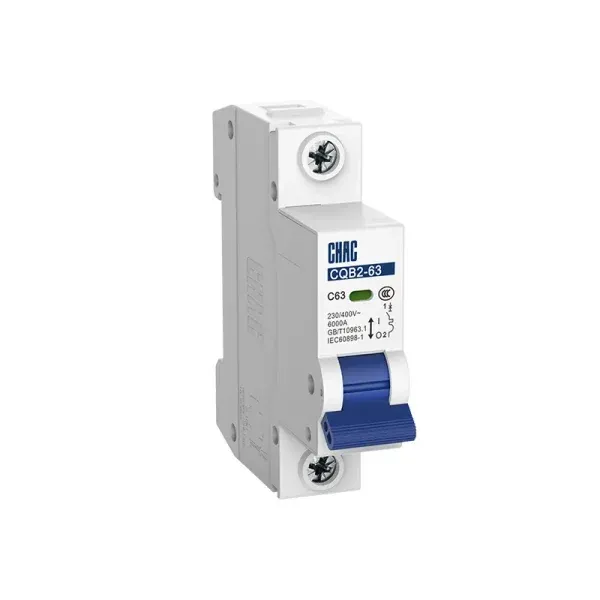
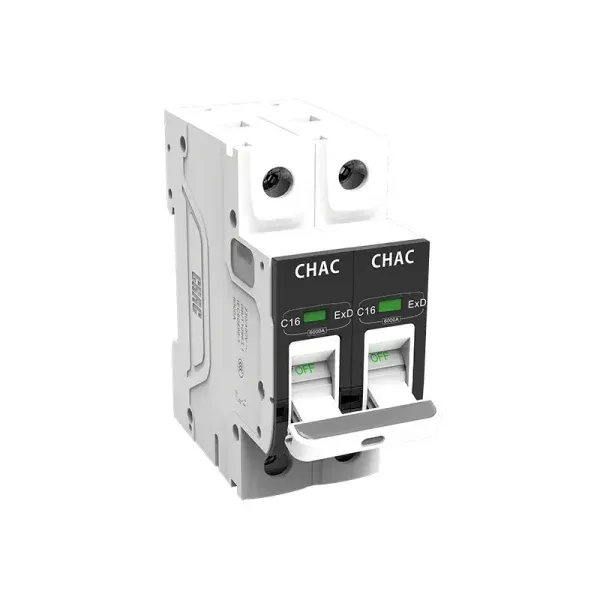
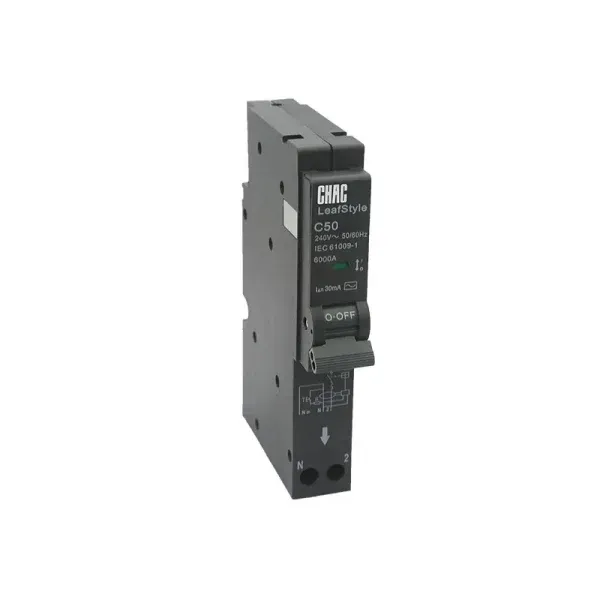
The following existing images identify the product families shown in this article. Images assist identification, but they are not substitutes for the applicable rating sheet or an approved wiring diagram.
CQB2-63 series
CQB3-63 series
FB series
FAQ
What is a miniature circuit breaker (MCB) used for?
An MCB provides overload and short-circuit protection within its stated ratings. It does not provide residual-current protection unless that function is incorporated in an appropriate combined device such as an RCBO.
What is the difference between a mini circuit breaker and a fuse?
A fuse must be replaced after its element operates; an MCB has a resettable mechanism. That does not make MCBs universally more accurate or reliable than fuses. Compare the actual protective characteristics and clear the fault before restoring power.
How do I choose the right MCB type for my application?
Check load current and inrush, conductor capacity, temperature conditions, voltage, poles and the actual trip curve. Verify minimum fault-current disconnection separately from maximum short-circuit breaking capacity. A residential, commercial or industrial label alone does not select the curve.
What do B, C, and D curves mean in miniature circuit breakers?
For the IEC 60898-type characteristics discussed here, the magnetic operating bands are 3-5 times rated current for B, 5-10 for C and 10-20 for D. These are bands rather than single trip points, and they do not replace the complete time-current chart or establish a different continuous-current rating.
Can miniature circuit breakers be used in DC systems like solar panels?
Yes, if the exact device is rated for the intended DC circuit and installed in the manufacturer’s approved arrangement. Check DC voltage, fault current, polarity and pole requirements. An AC rating or a similar-looking enclosure does not establish suitability.
What does breaking capacity mean in an MCB?
It is the rated prospective short-circuit current the device can interrupt under specified test conditions at the stated voltage. Check Icn for the applicable domestic-type rating or Icu and Ics under the industrial framework, as documented for the exact model. It is not the magnetic trip threshold.
Why do miniature circuit breaker prices vary so much?
Quotes can differ with model ratings, poles, documented approvals, accessories, order quantity and supply terms. Compare products meeting the same specification and include the cost of unsuitable selections, replacement work and missing documentation. Price alone does not verify protective performance.
What should I check before buying from a miniature circuit breaker manufacturer?
Request model-specific technical data, installation instructions, applicable conformity evidence and traceable product identification. Confirm that the quoted configuration fits the circuit and panel. Supplier capability is relevant, but it does not replace evidence for the particular device.
Why are two MCBs with the same amp rating not equivalent?
They can have different magnetic curves, breaking capacities, AC/DC ratings, pole arrangements and temperature conditions. Even matching front markings may not establish terminal or busbar compatibility. Compare the complete model documentation before treating one as a replacement.
What do Icu and Ics mean on a circuit breaker?
Under IEC 60947-2, Icu means rated ultimate short-circuit breaking capacity and Ics means rated service short-circuit breaking capacity. Read the values at the actual operating voltage and do not substitute one for the other. Post-fault reuse still depends on the manufacturer’s instructions and the condition of the installation.
Can I change a C-curve MCB to D to stop LED or SMPS startup trips?
Only after confirming the trip cause and reassessing the circuit. Check equipment inrush data and possible load grouping or inrush control first. A higher magnetic threshold must still satisfy fault-disconnection, conductor-protection and coordination requirements.
Referenze
- Schneider Electric Electrical Installation Guide: Fundamental characteristics of a circuit-breaker, last edited 5 August 2026; checked 7 October 2026. Manufacturer guidance on rated current, trip thresholds and breaking-capacity terminology, not the purchased IEC standard text.
- UL Solutions: Circuit Breaker and Supplementary Protector Services, checked 7 October 2026; publication date not displayed. Functional distinction between branch-circuit breakers and supplementary protectors.
- European Commission: CE marking, checked 7 October 2026; page publication date not displayed. Manufacturer declaration and limits of what CE marking signifies.
- c3controls: AC MCBs vs DC MCBs: The Difference is More Than a Letter!, checked 7 October 2026; publication date not displayed. Used only to identify a documented dual-rated product example, not to establish CHAC ratings.
What is the final selection principle?
A sound MCB selection keeps continuous current, trip behavior and interrupting capacity separate until each has been checked against the circuit. Start with the supply and load, size protection around the conductor and installation temperature, then assess both startup behavior and fault disconnection. The minimum fault current tells the designer whether protection can operate in time; the maximum prospective fault current tells the designer whether the device can interrupt the duty safely. Neither question is answered by the amp rating alone. Do not skip those checks to avoid a nuisance trip, and do not treat an MCB/MCCB label as a universal current boundary. For a CHAC specification inquiry, provide the circuit conditions and request the exact model’s ratings, correction data and installation documents before placing the order.


