Zastąpienie bimetalowego przekaźnika przeciążeniowego przekaźnikiem elektronicznym nie stanowi automatycznie ulepszenia. Nowe urządzenie może oferować przydatne funkcje diagnostyczne, jednak jego logika resetowania, zakres prądowy czy charakterystyka pamięci termicznej mogą różnić się od tej, którą posiada zabezpieczenie, które zastępuje. Z drugiej strony, prosty przekaźnik termiczny może okazać się odpowiednim wyborem, gdy jego udokumentowana charakterystyka odpowiada obciążalności silnika i nie są potrzebne żadne dodatkowe funkcje. Dlatego też praktyczne porównanie powinno dotyczyć dwóch kompletnych rozwiązań zabezpieczających, a nie dwóch rodzajów technologii. Niniejszy przewodnik analizuje metody detekcji, charakterystykę uruchamiania, proces regeneracji oraz kwestie adaptacji, prezentując przykłady producentów, które pokazują, w których przypadkach dodatkowe funkcje rzeczywiście mają znaczenie, a gdzie nieuzasadnione założenia mogą osłabić efektywność zabezpieczenia.
Krótka odpowiedź brzmi: wybrać a bimetaliczny przekaźnik przeciążeniowy dla udokumentowanej aplikacji z zakresu ochrony termicznej może spełniać i oceniać a elektroniczny przekaźnik przeciążeniowy kiedy regulowane charakterystyki lub specyficzne diagnostyki rozwiązują określony problem. Żadna z metod detekcji nie gwarantuje wszystkich funkcji ochronnych. Dokument Rockwell na temat ochrony silników wyjaśnia podstawowe podejścia; FAQ Schneider’a TeSys Giga przedstawia konkretny przykład elektroniczny z klasą 5e/10e/20e/30e i resetem ręcznym lub zdalnym. To są cechy specyficzne dla danego produktu, a nie uniwersalne możliwości przekaźników elektronicznych. Rozruch silnika, ograniczenia termiczne, koordynacja przeciwprzepięciowa oraz zachowanie po ponownym uruchomieniu nadal decydują o finalnym wyborze.
Jakie problemy z silnikiem ma rozwiązać przekaźnik?
Określ, czy problem wynika z trwałego przeciążenia, trudnego rozruchu, wielokrotnych rozruchów w stanie gorącym, utraty jednej fazy czy braku istotnych informacji dotyczących działania urządzenia zabezpieczającego. Rozwiązanie jest inne w każdym przypadku. Większe ustawienie parametrów lub dłuższy dozwolony czas rozruchu nie stanowi dopuszczalnej alternatywy dla zrozumienia przyczyn przeciążenia silnika lub napędzanej maszyny.
Użyj danych z tabliczki znamionowej: prąd znamionowy, sposób podłączenia silnika, metodę rozruchu, czas przyspieszenia i cykl pracy. Wskaz pozycję relazu w obwodzie. Rela jest zwykle włączany przez obwód sterowania rozrusznikiem; nie zastępuje samodzielnie urządzenia ochronnego przed zwarciem znajdującego się powyżej w obwodzie.
Czym różnią się metody czujnikowe?
Dokument Rockwell’a dotyczący ochrony silników niskiego napięcia Opisuje bimetaliczne elementy grzejne, które reagują na zmiany temperatury, w przeciwieństwie do elektronicznego wykrywania prądu i logiki zabezpieczającej. Artykuł zawiera omówienie amerykańskich norm oraz konkretne przykłady produktów; ich zakresy i funkcje nie powinny być kopiowane do każdego specyfikacji produktu zgodnego z normami IEC.
| Punkt decyzyjny | Bimetaliczne podejście | Electronic approach |
|---|---|---|
| Overload evaluation | Thermal response of the sensing mechanism | Current measurement and documented protection logic |
| Charakterystyka podróży | Use the actual relay’s curve | Check fixed or selectable functions |
| Additional information | Check indication and contact options | Confirm supported diagnostics and interfaces |
| Recovery | Cooling and reset conditions | Thermal model, supply and reset rules |
Kiedy przekaźnik bimetaliczny jest wystarczający?
A bimetallic relay remains a reasonable candidate when its adjustment range, time-current response, environmental limits and reset mode meet the application. Do not assume it lacks phase-loss sensitivity or temperature compensation: some models document those features.
CHAC’s CQR2 record, for example, lists phase-loss protection, temperature compensation and manual/automatic reset. That is a useful reminder to compare actual functions rather than describing all thermal relays as basic devices with identical behavior.
Które funkcje elektroniczne uzasadniają zmianę?
An electronic option can be worth evaluating when the application needs selectable trip characteristics, more informative trip indications or a supported remote-reset function. Write each required function as an acceptance item and ask which exact model provides it.
Schneider’s TeSys Giga LR9G FAQ lists selectable classes, motor-ON and trip LEDs, trip indication and manual/remote reset. It does not establish that every electronic relay provides communications, every imbalance function or the same reset options. A remote-reset facility is also not permission to restart machinery without the appropriate command logic.
Co się dzieje z pamięcią termiczną po utracie zasilania?
The motor can remain hot after a supply interruption. Ask how the exact relay represents that condition when power returns. Electronic protection may have model-specific memory and initialization behavior; do not assume its thermal estimate survives every outage.
For a bimetallic example, Schneider’s LRD reset guidance, modified August 2026, states that reset time depends on the trip, thermal condition and ambient temperature. No single waiting period applies. Compare restart frequency and available cooling against the documented response.
Motor protection and restart permission are separate decisions. A relay may become ready while a maintained run command still exists. Review power recovery, manual reset, automatic reset and remote reset in the complete control circuit.
Co musi zawierać porównanie modernizacyjne?
| Sprawdź | Evidence required before replacement |
|---|---|
| Mechanical fit | Contactor interface, independent mounting and dimensions |
| Electrical fit | Current range, control-contact ratings and any supply requirements |
| Ochrona | Time-current response, supported functions and coordinated upstream device |
| Recovery | Thermal memory, reset mode and restart sequence |
| Działanie konserwacyjne | Settings record, spare variant and diagnostic access |
Compare installation effort and support needs as well as purchase cost. Extra diagnostics are useful only if the operator can interpret them and retain the associated settings. This is a function-based comparison, checked against public manufacturer documents on October 10, 2026, not a performance ranking or claim of tested interchangeability.
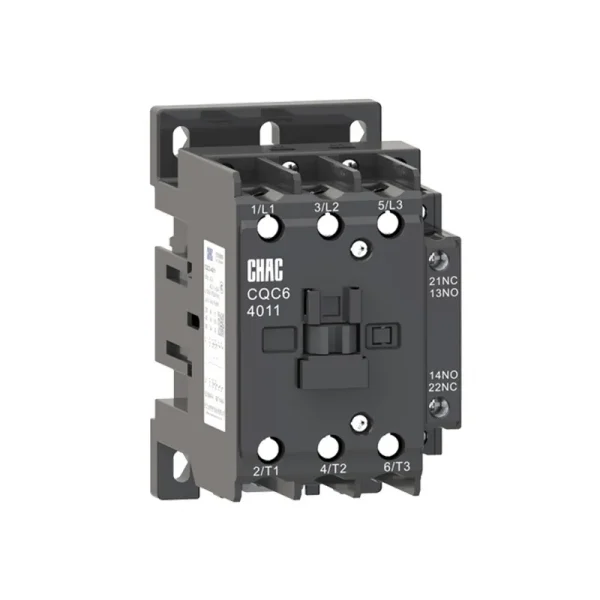
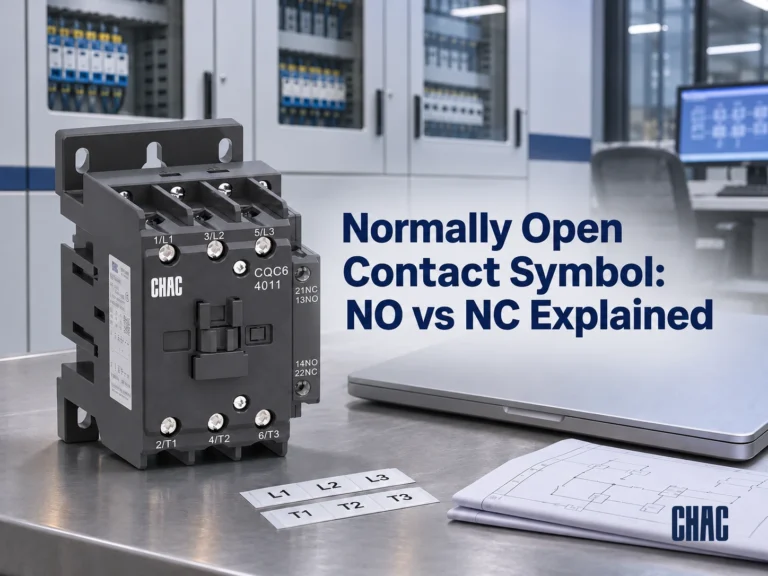
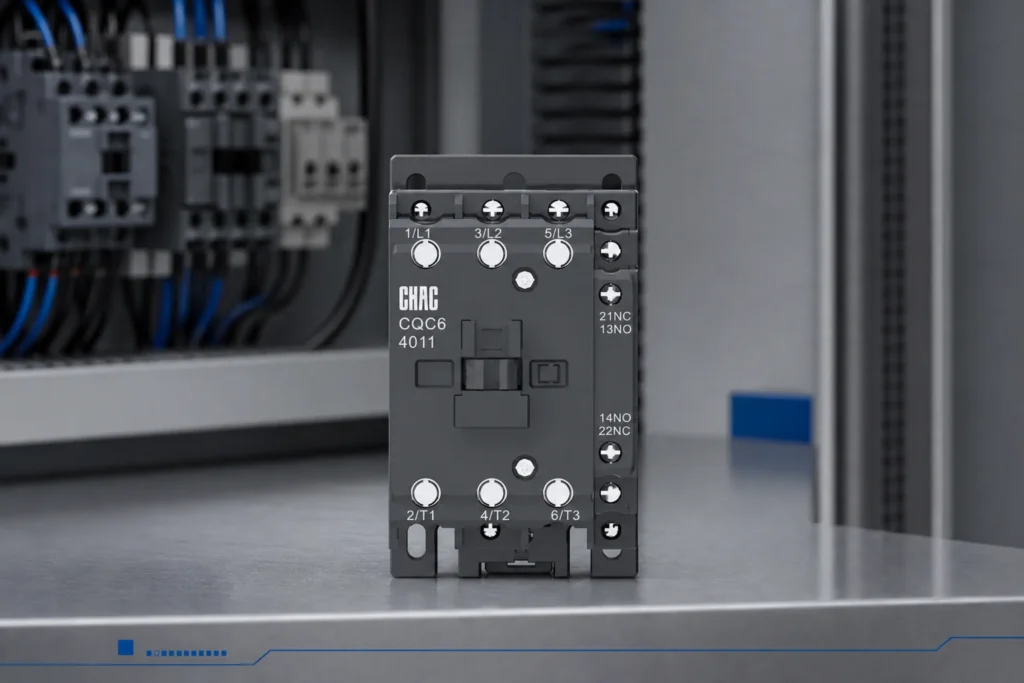
The retained contactor photo shows starter context, not the internal construction or capabilities of an electronic overload relay.
Które zapisy CHAC wspierają wybór startera?
The przekaźnik termiczny product record provides CQR2 variant and setting information. Compare it with the proposed Przekaźnik prądu przemiennego and the exact documented interface. The trip-class and reset selection guide explains the separate motor-duty and recovery checks.
Często zadawane pytania
Is an electronic relay always more accurate or safer?
Do not assume so from the technology label. Compare the exact response, functions and application evidence.
Can a bimetallic relay detect phase loss?
Some can. Check the selected model’s specified function and test conditions rather than ruling it out by sensing method.
Does electronic mean adjustable trip class?
Not necessarily. Some electronic designs have fixed characteristics; use the exact variant documentation.
Can a new relay plug directly into the old contactor?
Only with a documented mechanical and electrical match. Similar dimensions do not establish compatibility.
Does power cycling clear the motor’s thermal condition?
No. The motor may remain hot; the relay’s recovery behavior must account for the application’s thermal requirements.
Can remote reset replace a deliberate restart?
No. Reset restores protection-device availability; the approved control sequence determines whether starting is permitted.
Przypisy
- Rockwell Automation: Ochrona silników niskiego napięcia, sensing methods and product-specific examples.
- Schneider Electric: TeSys Giga electronic overload relay functions.
- Schneider Electric: Czas resetowania termicznego przekaźnika LRD, zmodyfikowana w sierpniu 2026 roku.
Select the relay that meets a defined motor duty, not the one with the more sophisticated label. Start with current, acceleration and thermal conditions, then compare the actual trip and diagnostic functions. Check mounting, short-circuit coordination and power-loss recovery before approving a retrofit. Finally, document how reset interacts with the run command so a protection upgrade does not introduce a restart problem. CHAC’s starter-component records can support the mechanical and electrical shortlist, but additional electronic functions require their own product evidence. Skontaktuj się z CHAC with the motor data and required functions to review the appropriate documented combination.
Więcej informacji na temat powiązanych selekcji można znaleźć w Where Should Motor Starter Teams.