Der Austausch eines bimetallischen Überlastrelais durch ein elektronisches ist nicht automatisch eine Modernisierung. Das neue Gerät bietet zwar möglicherweise nützliche Diagnosefunktionen, doch seine Rückstelllogik, sein Strommessbereich oder sein thermisches Gedächtnisverhalten können sich von dem Starter unterscheiden, den es ersetzt. Umgekehrt kann ein einfaches Thermorelais die geeignete Wahl sein, wenn seine dokumentierte Ansprechcharakteristik zur Motorbelastung passt und keine zusätzlichen Funktionen erforderlich sind. Der praktische Vergleich sollte daher zwischen zwei vollständigen Schutzkonzepten und nicht zwischen zwei Technologielabels erfolgen. Dieser Leitfaden untersucht die Sensorik, die Anlaufbedingungen, die Wiederherstellung und die Nachrüstbarkeit anhand von Herstellerbeispielen, die zeigen, wo zusätzliche Funktionen tatsächlich von Bedeutung sind und wo Annahmen den Schutz beeinträchtigen können.
Die kurze Antwort lautet, zu wählen. Bimetallischer Überlastrelais für eine dokumentierte Anwendung im Bereich des thermischen Schutzes kann es erfüllen und bewerten ein elektronisches Überlastrelais wenn einstellbare Eigenschaften oder spezifische Diagnosen einen definierten Bedarf decken. Keine der beiden Erfassungsmethoden garantiert jede Schutzfunktion. Das Motor-Schutz-Papier von Rockwell erläutert die zugrunde liegenden Ansätze; die TeSys Giga-FAQ von Schneider bietet ein konkretes elektronisches Beispiel mit Klasse 5e/10e/20e/30e und manueller oder ferngesteuerter Rückstellung. Dies sind produktspezifische Merkmale, keine universellen Fähigkeiten elektronischer Relais. Der Motorstart, thermische Grenzwerte, Kurzschlusskoordination und das Wiederanlaufverhalten bestimmen weiterhin die endgültige Entscheidung.
Welches Motorproblem muss das Relais lösen?
Definieren Sie, ob es sich um eine anhaltende Überlastung, einen schwierigen Anlauf, wiederholte Heißstarts, den Verlust einer Phase oder fehlende aussagekräftige Auslöseinformationen handelt. Die Lösung ist jeweils unterschiedlich. Eine höhere Einstellung oder eine längere zulässige Anlaufzeit sind kein akzeptabler Ersatz dafür, die Ursache einer Überlastung des Motors oder der angetriebenen Maschine zu ergründen.
Verwenden Sie den Nennstrom des Typenschilds, die Motoranschlussart, das Anlaufverfahren, die Beschleunigungszeit und den Betriebszyklus. Geben Sie außerdem die Position des Relais im Stromkreis an. Das Überlastrelais wirkt in der Regel über den Steuerkreis des Schützes; es ersetzt nicht eigenständig die vorgeschaltete Kurzschlussschutzeinrichtung.
Wie unterscheiden sich die Sensormethoden?
Rockwells Fachbeitrag zur Niederspannungs-Motorschutztechnik Es werden heizungsgetriebene Bimetallelemente beschrieben, die sich temperaturabhängig bewegen, im Gegensatz zur elektronischen Strommessung und Schutzlogik. Das Papier enthält eine Diskussion über nordamerikanische Normen sowie konkrete Produktbeispiele; seine Leistungsbereiche und Merkmale sollten nicht ohne Weiteres in jede IEC-Produktspezifikation übernommen werden.
| Entscheidungspunkt | Bimetallischer Ansatz | Elektronischer Ansatz |
|---|---|---|
| Überlastbewertung | Thermische Reaktion des Sensormechanismus | Strommessung und dokumentierte Schutzlogik |
| Charakteristik des Trips | Verwenden Sie die Kennlinie des tatsächlichen Relais. | Überprüfen Sie feste oder wählbare Funktionen |
| Zusätzliche Informationen | Prüfen Sie die Anzeige und die Kontaktmöglichkeiten. | Unterstützte Diagnosefunktionen und Schnittstellen bestätigen |
| Wiederherstellung | Cooling and reset conditions | Thermal model, supply and reset rules |
Wann ist ein Bimetallrelais ausreichend?
A bimetallic relay remains a reasonable candidate when its adjustment range, time-current response, environmental limits and reset mode meet the application. Do not assume it lacks phase-loss sensitivity or temperature compensation: some models document those features.
CHAC’s CQR2 record, for example, lists phase-loss protection, temperature compensation and manual/automatic reset. That is a useful reminder to compare actual functions rather than describing all thermal relays as basic devices with identical behavior.
Welche elektronischen Funktionen rechtfertigen eine Änderung?
An electronic option can be worth evaluating when the application needs selectable trip characteristics, more informative trip indications or a supported remote-reset function. Write each required function as an acceptance item and ask which exact model provides it.
Schneider’s TeSys Giga LR9G FAQ lists selectable classes, motor-ON and trip LEDs, trip indication and manual/remote reset. It does not establish that every electronic relay provides communications, every imbalance function or the same reset options. A remote-reset facility is also not permission to restart machinery without the appropriate command logic.
Was geschieht mit dem thermischen Speicher nach einem Stromausfall?
The motor can remain hot after a supply interruption. Ask how the exact relay represents that condition when power returns. Electronic protection may have model-specific memory and initialization behavior; do not assume its thermal estimate survives every outage.
For a bimetallic example, Schneider’s LRD reset guidance, modified August 2026, states that reset time depends on the trip, thermal condition and ambient temperature. No single waiting period applies. Compare restart frequency and available cooling against the documented response.
Motor protection and restart permission are separate decisions. A relay may become ready while a maintained run command still exists. Review power recovery, manual reset, automatic reset and remote reset in the complete control circuit.
Was muss ein Nachrüstungsvergleich umfassen?
| Überprüfen | Evidence required before replacement |
|---|---|
| Mechanical fit | Contactor interface, independent mounting and dimensions |
| Electrical fit | Current range, control-contact ratings and any supply requirements |
| Schutz | Time-current response, supported functions and coordinated upstream device |
| Wiederherstellung | Thermal memory, reset mode and restart sequence |
| Wartung | Settings record, spare variant and diagnostic access |
Compare installation effort and support needs as well as purchase cost. Extra diagnostics are useful only if the operator can interpret them and retain the associated settings. This is a function-based comparison, checked against public manufacturer documents on October 10, 2026, not a performance ranking or claim of tested interchangeability.
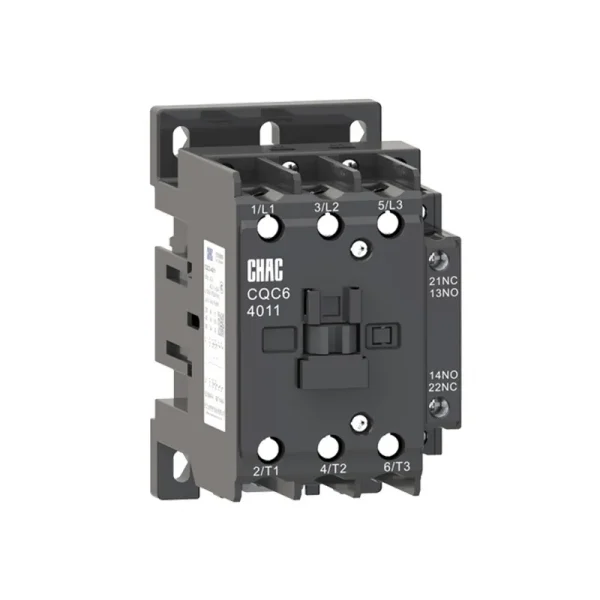
The retained contactor photo shows starter context, not the internal construction or capabilities of an electronic overload relay.
Welche CHAC-Daten unterstützen die Auswahl des Starting Pitchers?
Der Thermisches Überlastrelais product record provides CQR2 variant and setting information. Compare it with the proposed AC-Kontaktor and the exact documented interface. The trip-class and reset selection guide explains the separate motor-duty and recovery checks.
Häufig gestellte Fragen
Is an electronic relay always more accurate or safer?
Do not assume so from the technology label. Compare the exact response, functions and application evidence.
Can a bimetallic relay detect phase loss?
Some can. Check the selected model’s specified function and test conditions rather than ruling it out by sensing method.
Does electronic mean adjustable trip class?
Not necessarily. Some electronic designs have fixed characteristics; use the exact variant documentation.
Can a new relay plug directly into the old contactor?
Only with a documented mechanical and electrical match. Similar dimensions do not establish compatibility.
Does power cycling clear the motor’s thermal condition?
No. The motor may remain hot; the relay’s recovery behavior must account for the application’s thermal requirements.
Can remote reset replace a deliberate restart?
No. Reset restores protection-device availability; the approved control sequence determines whether starting is permitted.
Verweise
- Rockwell Automation: Low Voltage Motor Protection, sensing methods and product-specific examples.
- Schneider Electric: TeSys Giga electronic overload relay functions.
- Schneider Electric: LRD thermal overload relay reset time, modified August 2026.
Select the relay that meets a defined motor duty, not the one with the more sophisticated label. Start with current, acceleration and thermal conditions, then compare the actual trip and diagnostic functions. Check mounting, short-circuit coordination and power-loss recovery before approving a retrofit. Finally, document how reset interacts with the run command so a protection upgrade does not introduce a restart problem. CHAC’s starter-component records can support the mechanical and electrical shortlist, but additional electronic functions require their own product evidence. Kontaktieren Sie CHAC with the motor data and required functions to review the appropriate documented combination.
Für eine ähnliche Auswahlhinweise siehe Where Should Motor Starter Teams.