When a homeowner in Bristol swapped fuses for breakers one-for-one, the new devices still overheated because the old wiring was undersized. The real work was a conductor and enclosure assessment.
Podsumowanie: Fuses and breakers both limit fault energy but differ in reset behavior, current limitation and coordination. Conversion requires a wiring, enclosure, fault-current and permit review.
Start with the wiring and fault duty
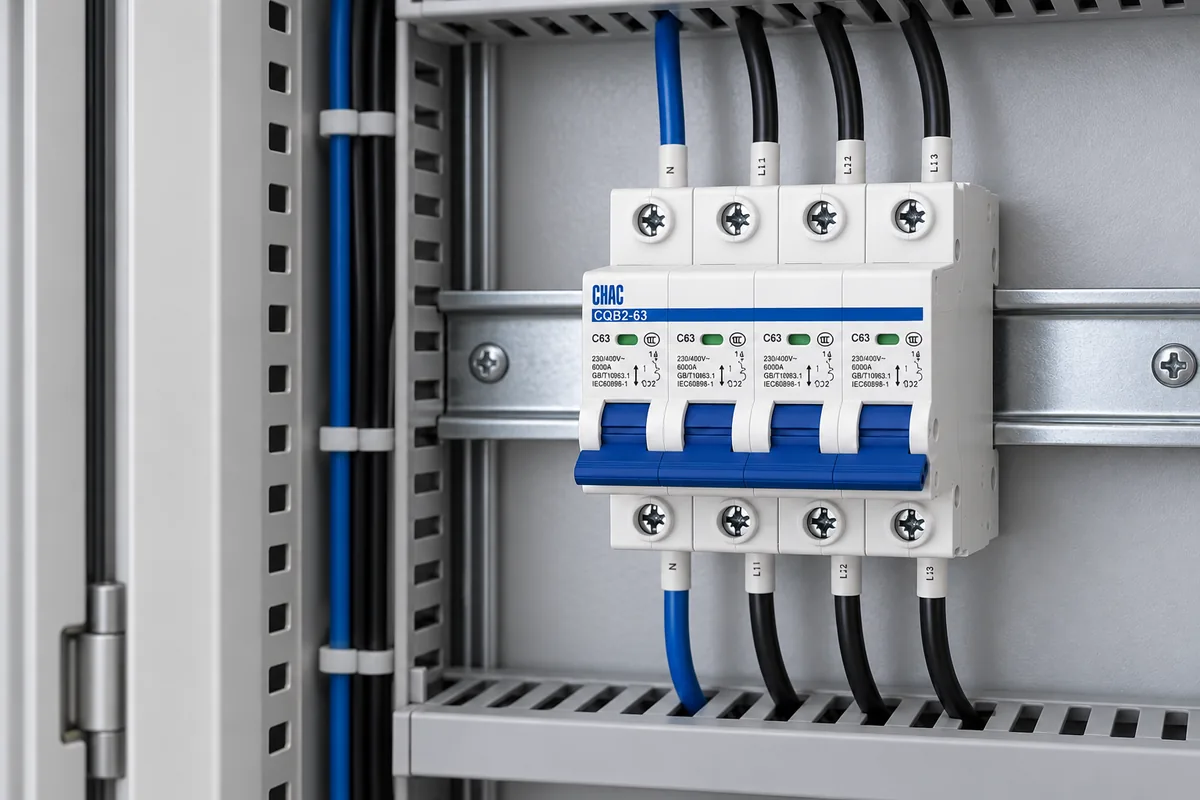
Fuses and breakers both limit fault energy but differ in reset behavior, current limitation and coordination. Conversion requires a wiring, enclosure, fault-current and permit review. Start by identifying whether the load is line-to-neutral, line-to-line or three-phase, then determine which conductors must open together. The device’s product standard and the installation code have different scopes; a component can be correctly tested yet still be wrong for a particular panel or disconnect function.
Match the replacement to the complete circuit
For przekaźnik replacement, compare voltage, continuous current, utilization category, temperature, conductor ampacity and available fault current. Use the manufacturer’s time-current curve or test method, and document assumptions. Coordination with upstream and downstream protection limits nuisance outages; a larger rating can increase let-through energy or violate conductor protection.
Verify the conversion before energizing
Użyj podanych obudów lub płyt montażowych, zachowaj wymagany odstęp i przestrzeń między elementami, mocuj zaciski zgodnie z publikowaną wartością, opatrz etykietami obwody i sprawdź wyłączenie zasilania. Zrealizuj testy stałości, izolacji lub funkcjonalności odpowiednie dla urządzenia, następnie zmierz obciążony prąd i sprawdź występowanie nieprawidłowego ciepła. Zapisz identyfikator instrumentu, datę, wartości pomiarów oraz nazwę osoby odpowiedzialnej.
Resolve enclosure and conductor gaps first
Najdroższe awarie to często błędy związane z granicami: niewłaściwe napięcie zasilania, niepoprawne zamiany akcesoriów, odwrócenie biegunowości, brak uziemienia, niewystarczający poziom SCCR lub brak dokumentacji konserwacyjnej, która nie potwierdza momentu obrotowego. Jeśli urządzenie wykrywa awarie, szum lub nagrzewanie, odizoluj obwód i zebraj dowody, zanim go naprawisz lub zastąpisz. Krótkie logowanie zdarzeń zapobiega powtarzaniu się problemów i zwiększa bezpieczeństwo kolejnych awarii.
Keep records that make a conversion auditable
Cena jednostkowa to jedynie jeden czynnik kosztowy. Do kosztów należy doliczyć czas inżynierii, pozwolenia, planowane przerwy w pracy, testy, etykietowanie, części zamienne oraz konsekwencje nieuniknionego przestoju. Poproś dostawców o wskazanie założeń i wykluczeń, aby możliwe było porównanie pozornie tańszej alternatywy w równym zakresie. Podczas przekazania dostarczonych urządzeń dostarcz wtyczkę wraz z zatwierdzonym projektem, schematem z jednej linii, arkuszem parametrów momentu obrotowego, wynikami testów, ustawieniami i cyklem konserwacji. W przypadku obciążeń krytycznych należy zarejestrować procedurę obrotu lub transferu oraz osobę uprawnioną do odzyskania urządzenia. Te zapisy przyspieszają rozwiązywanie problemów w przyszłości oraz zapewniają właściwemu organowi jasny ślad dowodowy bez konieczności polegania na niepodważalnych twierdzeniach. W trakcie kolejnego planowanego przestoju należy przejrzeć zapis i zaktualizować go, gdy zmiana nastąpi w obwodzie lub profilu pracy. Przechowuj zdjęcia etykiet i zakończeń z datą zmiany; często te dokumenty szybciej rozwiązują spory niż pamięć. Włącz odpowiedzialnego recenzenta i datę kolejnego przeglądu, aby dokument ten pozostawał dostępny do wykorzystania.
Compare reset, interruption and coordination evidence
| Wymiar | Czego porównywać | Dowody do zachowania |
|---|---|---|
| Wykonanie | przekaźnik replacement versus alternatives | Tablica oceny i krzywe |
| Kompatybilność | Napięcie, bieguny, obudowa i akcesoria | Listowanie i składanie wniosków |
| Działanie konserwacyjne | Przegląd, kontrola momentu i test funkcjonalny | Log dokumentacji uruchomienia |
| Całkowity koszt | Urządzenia, awarie, testowanie i zapasy | Zakres działalności i rejestr ryzyka |
Let the application decide between fuse and breaker
| Scenariusz | Decyzja priorytetowa | Rekord |
|---|---|---|
| Nowa instalacja | Wysokość obciążenia, poziom awarii i lista | Jedna linia i obliczenia |
| Zamiana | Wymiary, złącza i kompatybilność | Szczegółowy rysunek konstrukcji i tabela momentu obrotowego |
| Szkodliwe lub krytyczne miejsce | Środowisko, selektywność i dostępność | Inspekcja i plan awaryjny |
Apply the adopted standard to the replacement
fuse vs circuit breaker; fuse box replacement; MCB retrofit; overcurrent protection; rewiring checks Standards are not blanket certification claims: confirm the edition adopted by the destination market, the AHJ and the complete assembly. Unsupported ratings or listing language can cause rejection, rework and unsafe operation.
- Normy UL 489 i UL 508 mają zastosowanie w krajach Ameryki Północnej.
- Seria IEC 60947 przeznaczona jest do urządzeń przełączających i zabezpieczających niskiego napięcia.
- NFPA 70 lub kod instalacji docelowej dotyczący przewodu elektrycznego, odległości między przewodem a ścianami oraz przepisów dotyczących pozwolenia.
Turn the conversion review into a procurement decision
- Zapisz obciążenie, napięcie systemu, dane dotyczące przewodów, środowisko oraz dostępny prąd awaryjny.
- Zgodność z wymaganiami dotyczącymi standardu produktu, katalogu, akcesoriów, złączy i obudów.
- Zapytaj o krzywe, instrukcje montażu, wartości momentu obrotowego oraz plan badań; opatrz etykietami ilustracyjne obliczenia.
- Przed wydaniem planu należy przygotować dokumentację dotyczącą kontroli przestoju, zezwoleń, zapasów i konserwacji.
CHAC Electric can support documented sourcing through its wymiana bezpiecznika, fuse-to-breaker conversion i związane z tym urządzenia dystrybucyjne. Wnioskowanie o przegląd, gdy w aplikacji występują nietypowe problemy techniczne, ograniczenia środowiskowe lub ograniczenia w zakresie koordynacji.
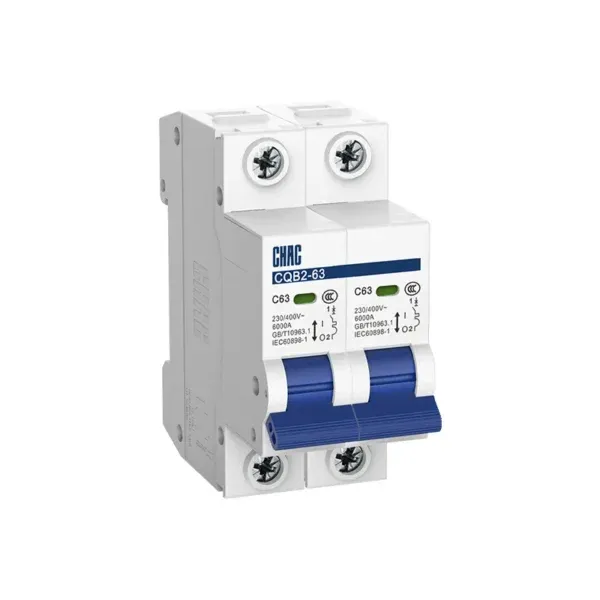
A fuse replacement circuit breaker decision still requires a conductor, enclosure, fault-current and code review.
What must be checked before replacing a fuse box
A fuse-to-breaker conversion is a system change, not a one-for-one device swap. Inspect conductor size and insulation, busbar condition, enclosure space, neutral and grounding arrangements, available fault current and the adopted code. Document the new circuit schedule and test results so future maintenance teams know which assumptions were verified.
Choose between a fuse and a breaker by the service need
The replacement decision is not a one-for-one ampere comparison. Check the existing conductors, enclosure, short-circuit current, available space, disconnecting method and the maintenance process. A breaker may reset after a trip, while a fuse requires replacement, but the faster or more current-limiting device still has to be suitable for the complete circuit.For a project starting with a breaker solution, review CHAC’s MCB product range a także distribution equipment page together. Keep fuse-to-breaker conversion as the decision phrase, because the enclosure listing, conductor protection and local approval—not convenience alone—control whether a substitution is acceptable.A useful supplier comparison records the original fuse class, prospective fault current, conductor size, available interrupting rating, enclosure temperature and evidence required by the authority having jurisdiction. If any of those fields is missing, pause the conversion rather than inferring equivalence from the ampere marking.
Odpowiedzi na najczęściej zadawane pytania kupujących
Can you replace a fuse box with circuit breakers?
The practical answer depends on the circuit breaker replacement application, equipment marking and installation conditions. Verify the relevant standard and have a qualified person document the decision before energizing.
How do you convert a fuse box to a breaker box?
Start with the circuit breaker replacement nameplate, circuit conditions and adopted code, then verify conductor ampacity, fault level and compatibility. Follow the manufacturer’s instructions and retain the calculation or test.
How much does it cost to change from a fuse box to circuit breakers?
There is no defensible single price because engineering, permits, outage time, testing, accessories and remedial wiring can dominate the device cost. Request an itemized scope and label any calculation as illustrative.
Can I replace a fuse with an MCB?
The practical answer depends on the circuit breaker replacement application, equipment marking and installation conditions. Verify the relevant standard and have a qualified person document the decision before energizing.
Does replacing a fuse box require rewiring?
The practical answer depends on the circuit breaker replacement application, equipment marking and installation conditions. Verify the relevant standard and have a qualified person document the decision before energizing.
What checks are needed before converting to a breaker panel?
The practical answer depends on the circuit breaker replacement application, equipment marking and installation conditions. Verify the relevant standard and have a qualified person document the decision before energizing.
When is a fuse preferable to a circuit breaker?
A fuse may be preferable when the design requires its documented current-limiting behavior, physical format or coordination characteristics. The choice should follow the circuit duty, product standard, replacement practice and local requirements rather than a general claim that one device is always safer.
What should be checked before converting a fuse box to breakers?
Check the enclosure and bus compatibility, conductor ampacity, available fault current, interrupting rating, neutral and grounding arrangement, working space, labeling and any permit or inspection requirement. A qualified person should approve the complete replacement.
Źródła dla standardów i dalsza weryfikacja
- Normy UL i wytyczne dotyczące certyfikacji
- Normy Międzynarodowej Komisji Elektrotechnicznej
- NFPA 70, Krajowy Kodeks Elektryczny
Zasada zamknięcia: Fuse vs Circuit Breaker: Protection, Replacement and Application Differences is a traceable engineering decision, not a guess based on the handle or catalogue photo. For a project review, skontaktuj się z CHAC Electric z schematem jednosilnikowym, tabliczką znamionową oraz wymaganym terminem dostawy.