When a homeowner in Bristol swapped fuses for breakers one-for-one, the new devices still overheated because the old wiring was undersized. The real work was a conductor and enclosure assessment.
Summary: Fuses and breakers both limit fault energy but differ in reset behavior, current limitation and coordination. Conversion requires a wiring, enclosure, fault-current and permit review.
Start with the wiring and fault duty
Fuses and breakers both limit fault energy but differ in reset behavior, current limitation and coordination. Conversion requires a wiring, enclosure, fault-current and permit review. Start by identifying whether the load is line-to-neutral, line-to-line or three-phase, then determine which conductors must open together. The device’s product standard and the installation code have different scopes; a component can be correctly tested yet still be wrong for a particular panel or disconnect function.
Match the replacement to the complete circuit
For circuit breaker replacement, compare voltage, continuous current, utilization category, temperature, conductor ampacity and available fault current. Use the manufacturer’s time-current curve or test method, and document assumptions. Coordination with upstream and downstream protection limits nuisance outages; a larger rating can increase let-through energy or violate conductor protection.
Verify the conversion before energizing
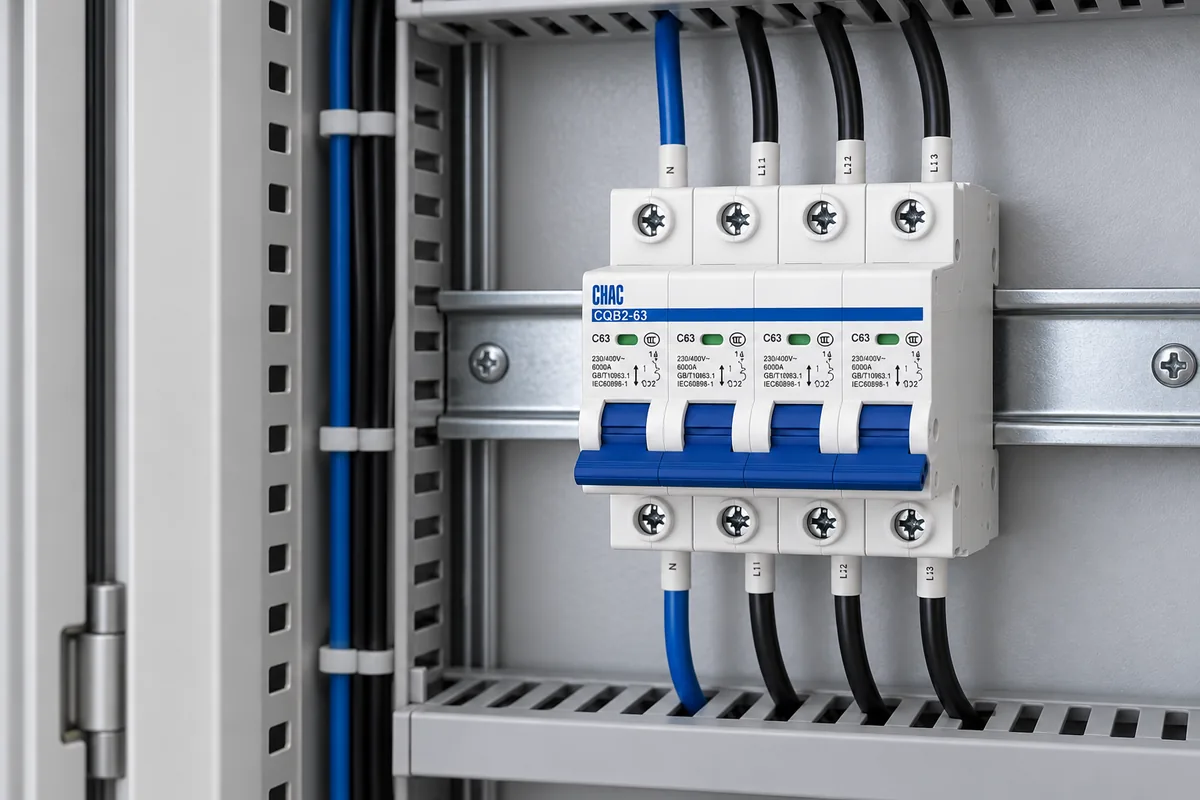
Use the listed enclosure or board, maintain required creepage and clearance, torque terminals to the published value, label circuits and verify de-energization. Commission with continuity, insulation or functional tests appropriate to the device, then measure loaded current and inspect for abnormal heat. Record instrument ID, date, readings and the person responsible.
Resolve enclosure and conductor gaps first
The most expensive failures are often boundary errors: wrong accessory voltage, unsupported substitution, polarity reversal, missing neutral, inadequate SCCR or a maintenance record that cannot prove torque. If a device trips, chatters or heats, isolate the circuit and gather evidence before resetting or replacing it. A short decision log prevents repeat call-outs and makes the next outage safer.
Keep records that make a conversion auditable
Unit price is only one cost driver. Include engineering time, permits, planned outage, testing, labeling, spares and the consequence of an avoidable trip. Ask suppliers to identify assumptions and exclusions so an apparently cheaper alternative can be compared on equal scope. At handover, provide the approved submittal, marked-up single-line diagram, torque sheet, test readings, settings and maintenance interval. For critical loads, record the bypass or transfer sequence and the person authorized to reset the device. These records make future troubleshooting faster and give the authority having jurisdiction a clear evidence trail without relying on unsupported claims. Review the record at the next planned outage and update it when the circuit or operating profile changes. Keep photos of labels and terminations with the revision date; they often resolve disputes faster than memory. Include the responsible reviewer and next review date so the file remains actionable.
Compare reset, interruption and coordination evidence
| Dimension | What to compare | Evidence to retain |
|---|---|---|
| Performance | circuit breaker replacement versus alternatives | Rating plate and curves |
| Compatibility | Voltage, poles, enclosure and accessories | Listing and submittal |
| Maintenance | Inspection, torque and functional test | Commissioning log |
| Total cost | Device, outage, testing and spares | Scope and risk register |
Let the application decide between fuse and breaker
| Scenario | Priority decision | Record |
|---|---|---|
| New installation | Load, fault level and listing | One-line and calculation |
| Replacement | Dimensions, terminals and compatibility | As-built and torque sheet |
| Harsh or critical site | Environment, selectivity and access | Inspection and contingency plan |
Apply the adopted standard to the replacement
fuse vs circuit breaker; fuse box replacement; MCB retrofit; overcurrent protection; rewiring checks Standards are not blanket certification claims: confirm the edition adopted by the destination market, the AHJ and the complete assembly. Unsupported ratings or listing language can cause rejection, rework and unsafe operation.
- UL 489 and UL 508 where North American listing scope applies.
- IEC 60947 series for low-voltage switching and protection equipment.
- NFPA 70 or the destination installation code for conductor, spacing and permit rules.
Turn the conversion review into a procurement decision
- Capture the load, system voltage, conductor data, environment and available fault current.
- Match the product standard, listing, accessory, terminal and enclosure requirements.
- Ask for curves, installation instructions, torque values and a test plan; label illustrative calculations.
- Plan outage controls, permits, spares and maintenance records before release.
CHAC Electric can support documented sourcing through its circuit breaker replacement, fuse-to-breaker conversion and related distribution equipment. Request a review when the application has unusual fault, environmental or coordination constraints.
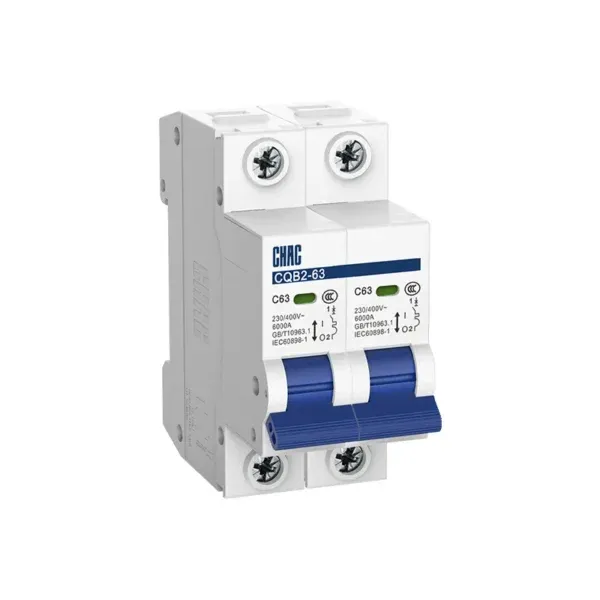
A fuse replacement circuit breaker decision still requires a conductor, enclosure, fault-current and code review.
What must be checked before replacing a fuse box
A fuse-to-breaker conversion is a system change, not a one-for-one device swap. Inspect conductor size and insulation, busbar condition, enclosure space, neutral and grounding arrangements, available fault current and the adopted code. Document the new circuit schedule and test results so future maintenance teams know which assumptions were verified.
Choose between a fuse and a breaker by the service need
The replacement decision is not a one-for-one ampere comparison. Check the existing conductors, enclosure, short-circuit current, available space, disconnecting method and the maintenance process. A breaker may reset after a trip, while a fuse requires replacement, but the faster or more current-limiting device still has to be suitable for the complete circuit.For a project starting with a breaker solution, review CHAC’s MCB product range and the distribution equipment page together. Keep fuse-to-breaker conversion as the decision phrase, because the enclosure listing, conductor protection and local approval—not convenience alone—control whether a substitution is acceptable.A useful supplier comparison records the original fuse class, prospective fault current, conductor size, available interrupting rating, enclosure temperature and evidence required by the authority having jurisdiction. If any of those fields is missing, pause the conversion rather than inferring equivalence from the ampere marking.
Answers to common buyer questions
Can you replace a fuse box with circuit breakers?
The practical answer depends on the circuit breaker replacement application, equipment marking and installation conditions. Verify the relevant standard and have a qualified person document the decision before energizing.
How do you convert a fuse box to a breaker box?
Start with the circuit breaker replacement nameplate, circuit conditions and adopted code, then verify conductor ampacity, fault level and compatibility. Follow the manufacturer’s instructions and retain the calculation or test.
How much does it cost to change from a fuse box to circuit breakers?
There is no defensible single price because engineering, permits, outage time, testing, accessories and remedial wiring can dominate the device cost. Request an itemized scope and label any calculation as illustrative.
Can I replace a fuse with an MCB?
The practical answer depends on the circuit breaker replacement application, equipment marking and installation conditions. Verify the relevant standard and have a qualified person document the decision before energizing.
Does replacing a fuse box require rewiring?
The practical answer depends on the circuit breaker replacement application, equipment marking and installation conditions. Verify the relevant standard and have a qualified person document the decision before energizing.
What checks are needed before converting to a breaker panel?
The practical answer depends on the circuit breaker replacement application, equipment marking and installation conditions. Verify the relevant standard and have a qualified person document the decision before energizing.
When is a fuse preferable to a circuit breaker?
A fuse may be preferable when the design requires its documented current-limiting behavior, physical format or coordination characteristics. The choice should follow the circuit duty, product standard, replacement practice and local requirements rather than a general claim that one device is always safer.
What should be checked before converting a fuse box to breakers?
Check the enclosure and bus compatibility, conductor ampacity, available fault current, interrupting rating, neutral and grounding arrangement, working space, labeling and any permit or inspection requirement. A qualified person should approve the complete replacement.
Sources for standards and further verification
- UL Standards and certification guidance
- International Electrotechnical Commission standards
- NFPA 70, National Electrical Code
Closing principle: Fuse vs Circuit Breaker: Protection, Replacement and Application Differences is a traceable engineering decision, not a guess based on the handle or catalogue photo. For a project review, contact CHAC Electric with the single-line diagram, nameplate and required delivery date.