In a hypothetical air-conditioning replacement in Phoenix, an estimator orders a breaker from the unit’s minimum circuit ampacity label. The installer then finds a separate maximum protective-device value and different conductor conditions. The confusion came from using one nameplate number for two different design decisions.
Podsumowanie: Minimum circuit ampacity, or MCA, is the minimum conductor ampacity required for the specified equipment circuit. It is not the operating current or a direct instruction to select the same breaker rating. For listed HVAC equipment, use the nameplate MCA and maximum overcurrent protection value with the applicable NEC Article 440 rules, terminal ratings and installation conditions.
MCA sets a conductor requirement, not a breaker size
The minimum circuit ampacity on an HVAC nameplate establishes the required conductor capacity for that equipment. The maximum overcurrent protection, often labeled MOCP or MOP, limits the permitted fuse or circuit breaker. Read both values and any restriction on the type of protective device.
Equipment circuits can have special conductor and protection rules to accommodate motor starting. This is why a seemingly large breaker next to a smaller conductor cannot be assessed from a generic branch-circuit chart alone. It also does not create permission to oversize breakers on unrelated circuits.
The MCA commonly incorporates a 125% treatment of the relevant largest motor or compressor load plus other applicable loads, but the equipment and adopted rule determine the calculation. Do not add another automatic 25% to a published MCA without a rule requiring it.
The final wire size depends on installed conditions
Compare the required ampacity with the conductor’s applicable table value, temperature limitations, ambient correction and conductor-count adjustment. Higher-temperature insulation may be useful for adjustment calculations while terminals still limit the final permissible ampacity.
Copper and aluminum require different cross-sections for the same starting ampacity. Confirm that the equipment terminals accept the material, size and stranding. A conductor selected from an ampacity table may fail the physical connection check, especially when a voltage-drop review leads to a larger size.
For a hypothetical unit labeled MCA 24 A and MOCP 40 A, those two numbers require separate conductor and protection checks. They do not mean the equipment normally draws 40 A or that any 40 A breaker is acceptable. Keep the manufacturer’s protective-device restrictions and the applicable equipment rules attached to the selection record.
Cable length and operating changes can reveal a hidden problem
Ampacity and voltage drop answer different questions. A conductor can satisfy its thermal requirement while a long route gives unacceptable voltage at startup. Use the actual run length, supply voltage, current and conductor data, and distinguish running-voltage drop from a motor-starting voltage dip.
Do not assume a replacement unit can reuse the old supply because its nominal cooling capacity is similar. Compare the new nameplate, control requirements and protective-device instructions. Added electric heat or a different compressor arrangement can change the electrical requirements.
A useful procurement check is to reconcile the equipment schedule, electrical drawing and supplier nameplate before ordering cable and protective devices. This catches a common handover failure: the equipment changes, while the conductor and breaker schedule stays on an earlier revision.
Compare the selection criteria
| Nameplate item | Meaning | Use in selection |
|---|---|---|
| MCA | Minimum required conductor ampacity | Starting point for conductor verification |
| MOCP or MOP | Maximum permitted overcurrent protection | Upper limit subject to device-type instructions |
| Rated operating data | Specified equipment operating values | Load and performance context |
| Terminal data | Permitted material, temperature and range | Connection and final ampacity check |
Check the conditions that change the selection
| Installation condition | Dlaczego to ma znaczenie | What to retain |
|---|---|---|
| Hot environment | Changes conductor capacity | Ambient assumptions and correction |
| Grouped circuits | Can require adjustment | Current-carrying conductor count |
| Long route | Can increase voltage drop | Run-length and voltage calculation |
| Replacement equipment | Can change MCA and protection limits | New nameplate and drawing revision |
Apply the correct standards and approval scope
NEC Article 440 addresses air-conditioning and refrigerating equipment; other motor circuits have their own Article 430 provisions. NEC 110.14 temperature limitations and applicable conductor tables remain relevant. Apply the adopted edition and exact equipment instructions rather than transferring a special HVAC exception to a general-purpose branch circuit.
What to confirm before placing an order
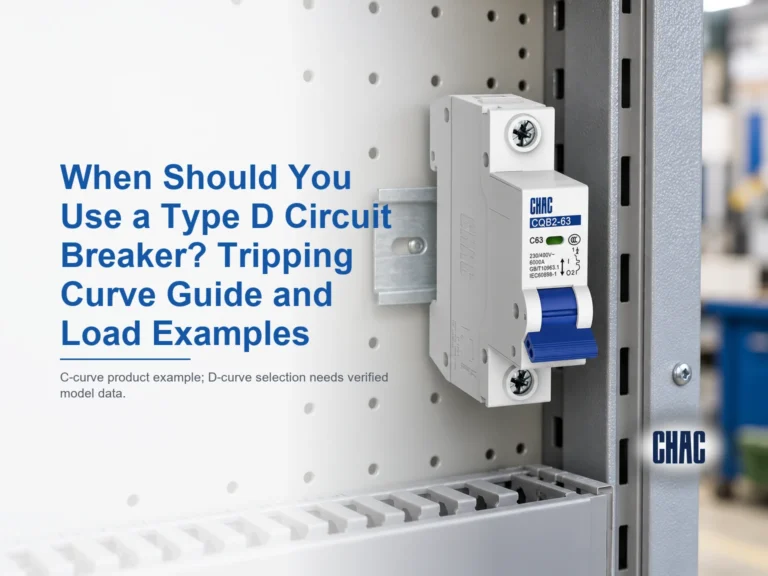
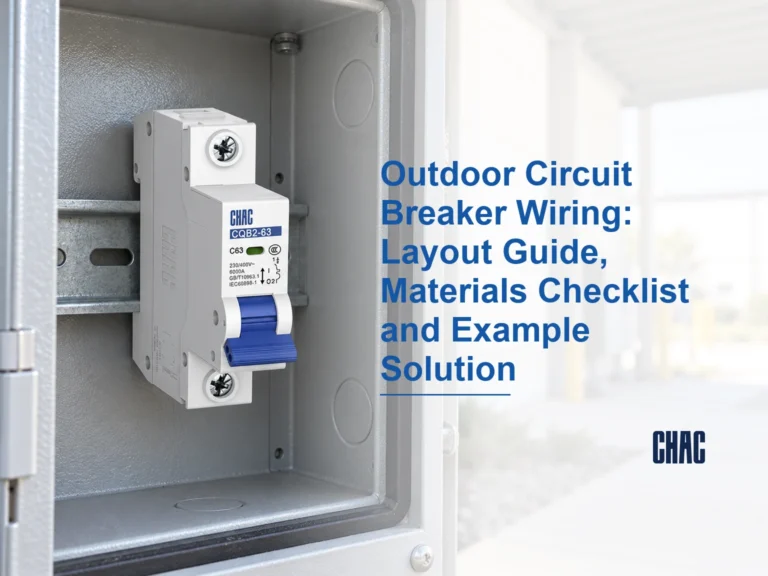
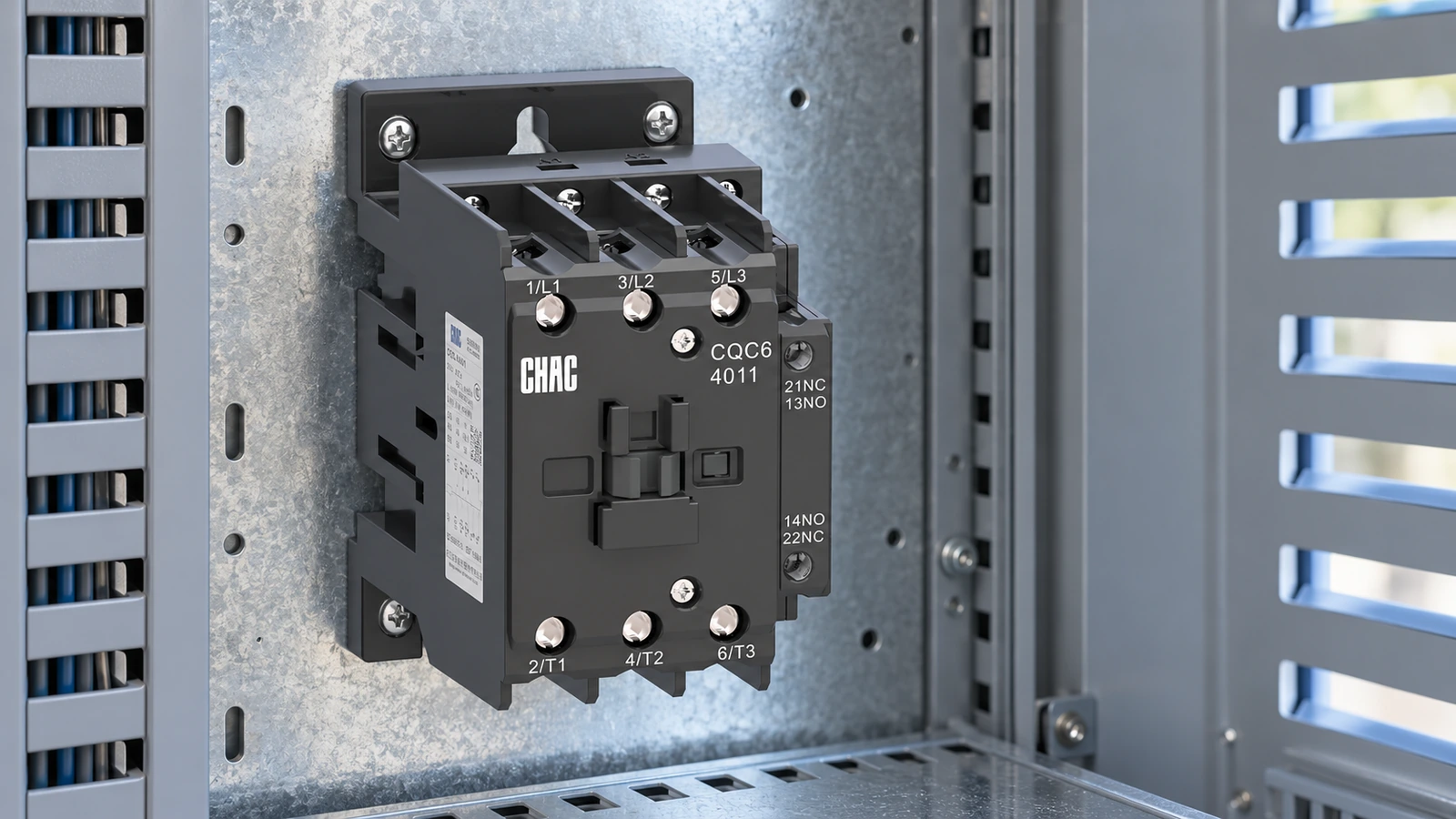
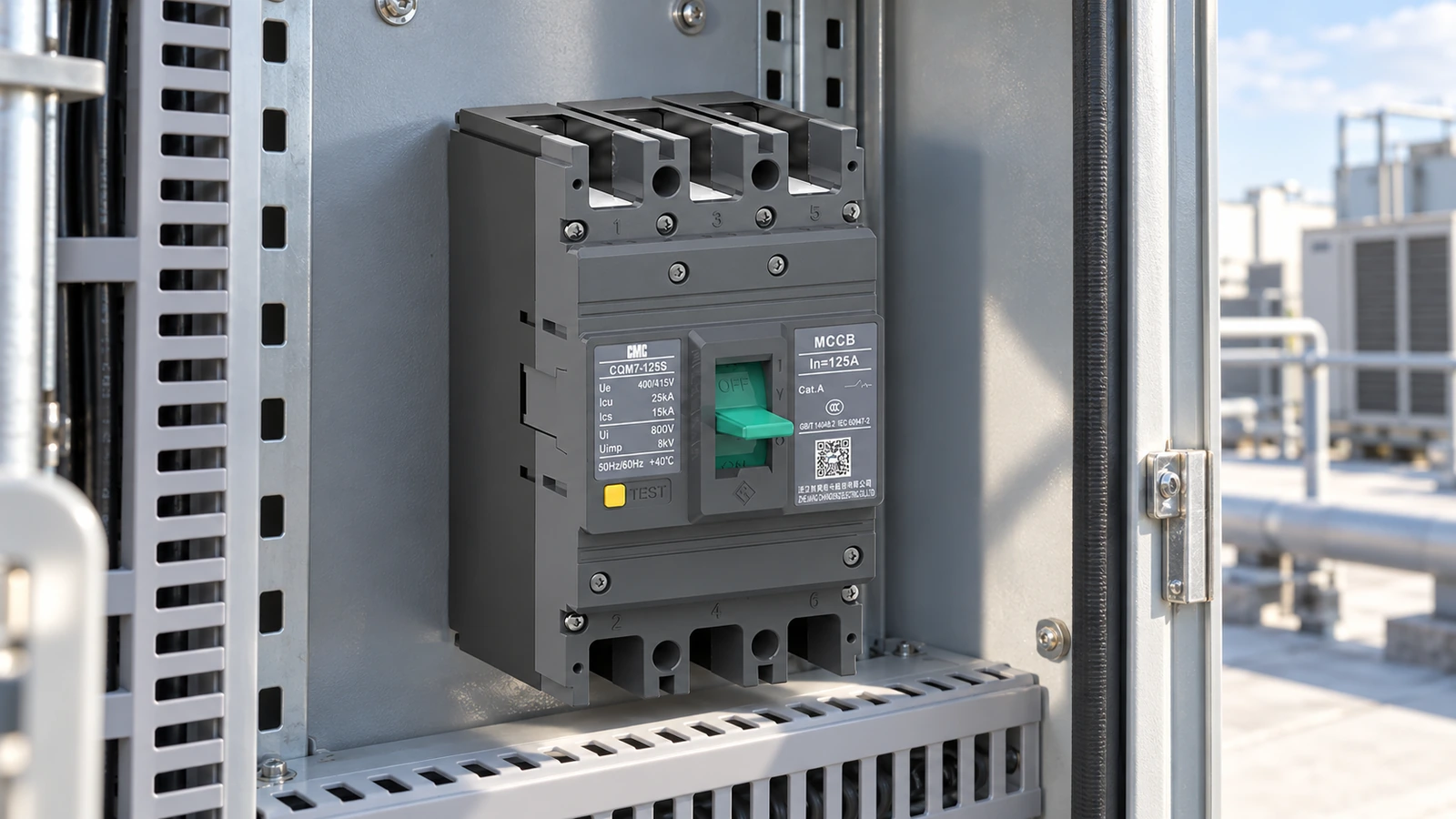
When discussing higher-current miniature circuit breakers lub Kontaktory AC with CHAC, provide the complete equipment schedule. Keep maximum overcurrent protection separate from moc przewodnika. Component selection must also satisfy the required voltage, fault duty, control function and destination-market approval.
For related selection details, read the guide to HVAC surge protection.
Często zadawane pytania
Can you run 25 amps on 12 gauge wire?
For ordinary 12 AWG copper branch circuits, NEC 240.4(D) normally limits overcurrent protection to 20 A. Specific equipment rules can differ; a table value alone is not permission for a 25 A circuit.
Do you need 200 amp service for a mini split?
Not necessarily. Evaluate the building load calculation, available capacity and the unit’s nameplate. Service size cannot be determined from the term mini split.
What is the NEC 125% rule?
Several rules use a 125% factor, including certain continuous-load and motor calculations. The relevant rule and equipment category determine its application, so it is not a universal multiplier for every nameplate number.
How many amps are allowed on a 20 amp circuit?
The permitted load depends on whether it is continuous, the equipment and the governing rule. For many ordinary continuous-load situations, a 20 A circuit supports 16 A of continuous load.
What wire size is normally used for minimum circuit ampacity?
There is no single size. Start from the equipment’s MCA and apply conductor material, temperature, grouping, installation and terminal limitations.
How does copper compare with aluminum for minimum circuit ampacity?
Aluminum usually needs a larger cross-section for an equivalent table ampacity. The terminal must also accept aluminum and the selected conductor configuration.
Przypisy
- NFPA 70 — National Electrical Code
- Southwire — conductor, voltage-drop and conduit calculation tools
- OSHA 1910.303 — electrical equipment and installation requirements
For model-specific selection, review the CHAC product details and send the application conditions, quantity and destination requirements through the contact page.