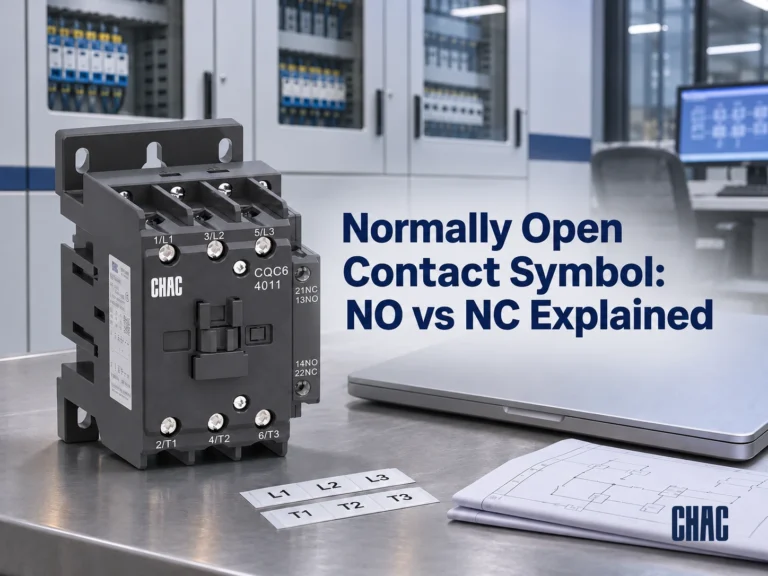
Tablica może wyświetlać całkowite zużycie energii, nie podając jednak żadnego użytecznego wyjaśnienia, który obwód spowodował daną zmianę. Dodanie inteligentnych wyłączników nie rozwiązuje automatycznie tego problemu: urządzenia te mogą przekazywać informacje o stanie, ale bez dokładności pomiarowej, historii danych ani funkcji eksportu, których wymaga projekt. W przypadku rozwiązania monitorującego opracowanego przez producenta oryginalnego sprzętu pierwszym pytaniem powinno być, gdzie mają znajdować się pomiary i komendy, a nie to, która aplikacja wydaje się najbardziej kompletna. Niniejsze porównanie oddziela urządzenia na poziomie gałęziowego obwodu, agregację na poziomie tablicy oraz usługi łączące je ze sobą. Ponadto wskazuje, co musi nadal działać w przypadku awarii komunikacji, aby atrakcyjny panel sterowania nie był mylony z kompletnym systemem ochrony czy monitoringu.
Krótką odpowiedzią jest to, że a inteligentny wyłącznik może łączyć udokumentowane funkcje ochronne z połączeniami na poziomie urządzenia, podczas gdy a inteligentny panel opisuje szerszą architekturę montażu lub monitorowania. Obie mogą działać razem. Centralne pomiary mogą monitorować konwencjonalne obwody bez zapewnienia zdalnego sterowania dla każdego wyłącznika; połączone wyłączniki mogą dostarczać informacji na poziomie obwodu bez wspólnej platformy danych na miejscu. Wybierz architekturę w oparciu o dokładność pomiarów, wymagane sterowanie, kompatybilność elektryczną i zobowiązania dotyczące wsparcia. Wskazówki producenta IoT 2026 opracowane przez NIST uwzględniają również kwestie związane z cyklem życia, ale nie ustalają certyfikacji elektrycznej ani nie gwarantują zachowania żadnego wyłącznika w trybie offline.
Co należy zmierzyć na każdym torze?
Start with the decision the data will support. Whole-panel energy can reveal a site’s consumption trend, but cannot independently allocate consumption to individual branches. Branch measurements may help investigate equipment schedules or compare tenants, provided the sensing points and circuit assignments are correct.
Specify the required quantities, sampling interval, timestamp source, retained history and export format. Current alone is not a complete measurement of real energy. Where billing or contractual allocation is involved, obtain the applicable metering requirements and accuracy evidence rather than relying on an app display.
Gdzie powinny znajdować się systemy pomiaru i sterowania?
This comparison concerns functions, not a ranking of suppliers. The term smart panel is not used here as a single standardized product specification. An actual implementation must identify which component measures, which switches and which stores data.
| Architektura | Useful role | What needs confirmation |
|---|---|---|
| Panel incomer meter | Aggregate energy and demand | Whether aggregate data is sufficient |
| Branch sensors and gateway | Monitor selected conventional circuits | Sensor fit, assignment, accuracy and data path |
| Connected protective devices | Device-level status and supported commands | Actual measurements, protection and command behavior |
| Combined architecture | Shared view of multiple measurement points | Common timestamps, identifiers and interfaces |
A gateway is not automatically a protective device. Equally, a breaker that communicates is not automatically a gateway for other brands. Require an interface document for every intended integration.
Does energy monitoring require connected breakers?
No. Monitoring and remote switching are different requirements. If the project only needs energy visibility, assess whether an approved metering arrangement can retain the existing protective devices. If remote actuation is necessary, define authorized users, command priorities and permitted operating conditions separately.
For retrofits, compare the complete installation effort: enclosure space, sensing access, neutral arrangements, downtime, commissioning and revised documentation. A device’s purchase price alone does not capture these costs. Do not replace an approved breaker simply because another device fits the same rail.
What should happen when the network fails?
Write a failure-state matrix before approving the architecture. Local electrical protection must be evaluated independently of remote monitoring. Require the supplier to document loss of WiFi, gateway, internet, cloud service and control power; these are not one failure mode.
| Interruption | Pytanie do odpowiedzi | Dowód akceptacji |
|---|---|---|
| WiFi or gateway unavailable | Which local functions remain available? | Model manual and authorized test |
| Cloud unavailable | Do schedules and history depend on it? | Documented storage and command rules |
| Power restored | What state and commands are restored? | Approved recovery sequence |
| Connection recovered | Can an old command execute unexpectedly? | Command expiry and synchronization behavior |
A stale online value must not look like a live measurement. Display data age and communication status distinctly from switch position. Remote OFF is not proof of electrical isolation; maintenance still follows the applicable isolation and voltage-verification procedures.
Who owns the data and supports the system?
Ask who controls device accounts, administrator access, exports and ownership transfers. Establish what happens when the installer leaves, a tenant changes or the OEM changes service providers. These questions can determine whether an otherwise functional system remains maintainable.
NIST’s Cybersecurity for IoT Program announces NIST IR 8259 revision 1, published April 20, 2026. Its manufacturer guidance emphasizes activities across the product lifecycle. For procurement, that makes update delivery, support duration, vulnerability reporting and end-of-life communication concrete questions rather than optional marketing claims. NIST guidance is not a circuit-breaker approval.
How should the device shortlist be checked?
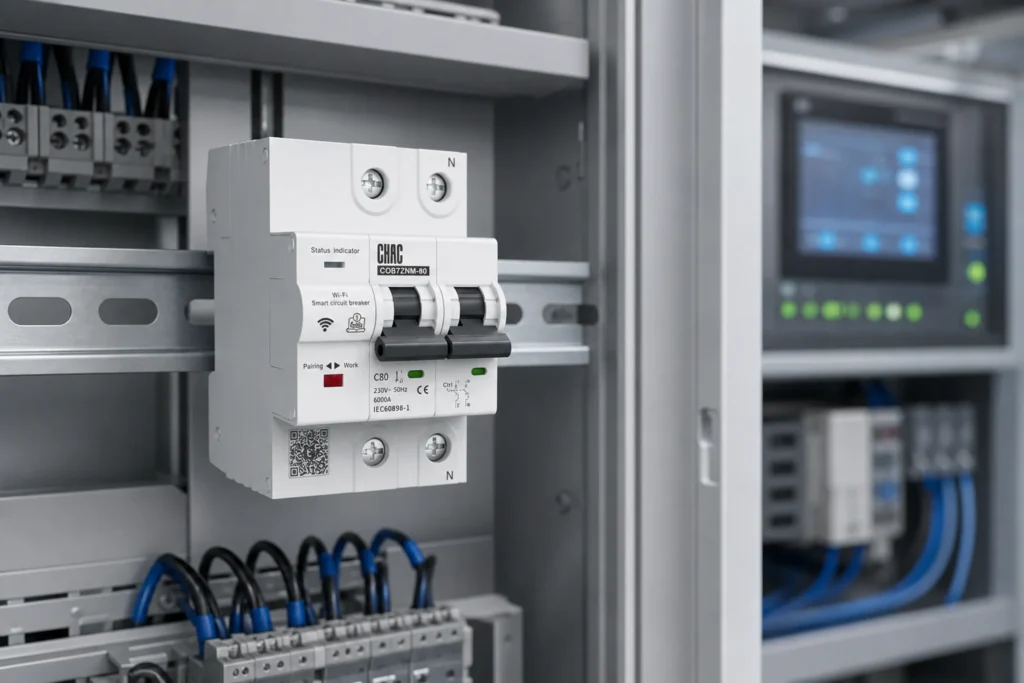
CHAC smart circuit breakers provide a relevant starting point. The published WiFi circuit breaker page identifies the model as CQB7ZNM-80 and lists 1P+N, 230/240V AC and 32/40/63/80A options. Those electrical entries do not prove metering accuracy, third-party integration or the failure-state behavior discussed above.
For device acceptance details, use the smart WiFi breaker integration checklist. Confirm the ordered model and firmware together; the product URL’s shorter legacy name is not the complete model designation.

Which acceptance checks prevent costly rework?
Approve electrical suitability first, then the sensing layout, and finally the software and support arrangements. Match each dashboard circuit label to a physical circuit. Establish monitorowanie energii acceptance criteria using documented accuracy and timing requirements, not a screenshot of plausible numbers. Keep protective-function commissioning within the manufacturer’s procedures and qualified personnel’s scope.
Często zadawane pytania
Can a smart panel use conventional breakers?
Yes, depending on its approved design. Monitoring may use separate meters or sensors; that does not automatically provide remote breaker control.
Does every connected breaker measure energy?
No. Confirm the actual quantities, accuracy and export functions for the selected model.
Can one app combine devices from different suppliers?
Only where the documented interfaces and platform support allow it. Shared WiFi does not establish interoperability.
Can a remote OFF command replace isolation?
No. Follow the applicable isolation and absence-of-voltage verification procedure.
Should cached readings be used during a communication outage?
They can be retained as historical data, but must be identified as stale rather than presented as current circuit conditions.
What should be agreed before the cloud service ends?
Document local functionality, data export, support notices and any replacement or migration path. Do not assume the account and data will remain accessible indefinitely.
Przypisy
- NIST Cybersecurity for IoT Program and 2026 manufacturer-guidance announcement.
- NIST IR 8259 Series: IoT manufacturer guidance.
The right architecture gives the project the information and control it needs without blurring their roles. Decide whether whole-panel or branch-level data is required, identify where it is measured, and establish how it reaches the users who need it. Then review electrical compatibility, failure behavior and lifecycle support as separate acceptance decisions. A connected interface must not turn protection, isolation or billing accuracy into an assumption. CHAC’s published device information can support the component shortlist; undocumented software functions need confirmation before approval. Skontaktuj się z CHAC with the circuit layout, measurement requirements and intended data platform to discuss the relevant configuration.
Więcej informacji na temat powiązanych selekcji można znaleźć w How Do Smart Breakers and.