Product innovation in low-voltage electrical equipment depends on disciplined engineering as much as on new ideas. CHAC Electric’s R&D work connects product definition, sample review, testing and production feedback so that a design can be understood and repeated by the teams who will manufacture, specify and install it.
Where low-voltage research creates practical value
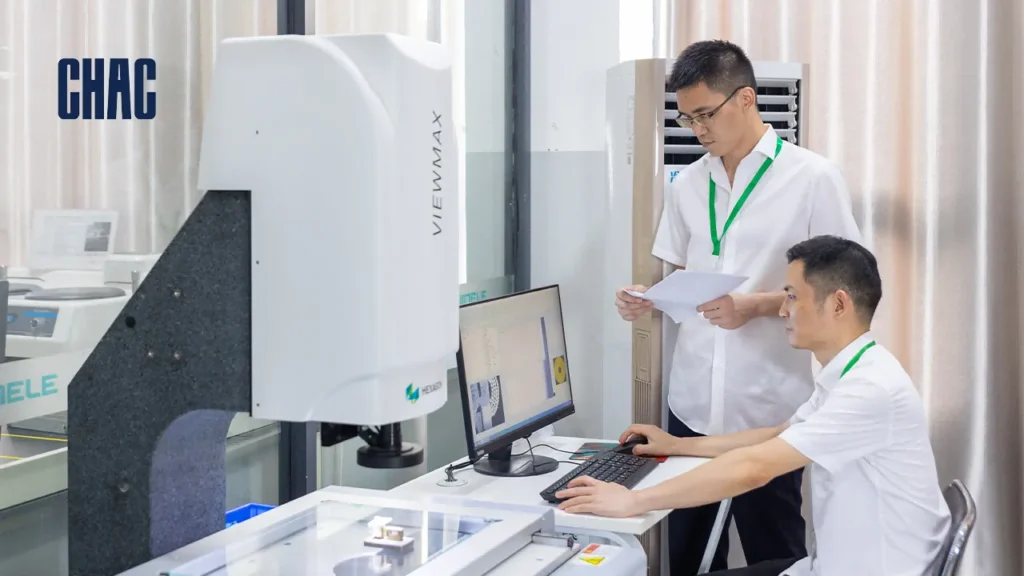
For a protection device, development work has to connect the electrical function with the physical product. Engineers review the intended circuit, rated values, pole arrangement, terminals, accessories, enclosure constraints and the documentation required by the customer’s market. The result should be a specification that can be checked, not a claim that relies on a marketing adjective.
CHAC’s low-voltage electrical R&D supports product families such as MCBs, MCCBs, RCCBs, RCBOs, contactors and distribution equipment. The IEC 60898-1 publication page provides a public reference point for the standards work that engineers may need to review; the applicable edition and product scope still need to be confirmed for each project.

How an engineering idea becomes a reviewable product
A useful development cycle starts with a written requirement, then moves through design review, prototype or sample evaluation, verification, controlled changes and production release. At each stage, the open questions should be visible: what is being measured, which configuration is under review, what evidence is required, and who signs off the result.

This approach is especially important for circuit protection products used in OEM panels. The same family name may cover multiple frame sizes or configurations, so the buyer should match the exact model data, accessories and installation conditions to the panel design.

Why collaboration improves the final specification
OEM and ODM projects benefit when the manufacturer receives the application context early. Drawings, target markets, annual demand, packaging rules and inspection expectations can be reviewed together. That reduces late changes and lets the final product documentation reflect what was actually approved.
CHAC’s OEM/ODM development discussions can cover standard product selection, configuration boundaries and the evidence needed for a responsible release. Product-specific claims should always be checked against the relevant technical documents.
For procurement and engineering teams, the value of an R&D center is also visible in the handover materials: a controlled drawing, a sample record, a test request and a revision note. These records give a distributor or panel builder a practical way to compare a new revision with the version already approved in a project. They also make future customization requests easier to scope because the team can see which features are fixed and which are open to review.
When a project crosses markets, the team should confirm the applicable standard edition, installation environment and local documentation expectations before release. Public standards resources such as the IEC 60898-1 publication page can help frame that conversation, but they do not replace a product-specific conformity review.
R&D also has a commercial role. A well-defined design review helps a buyer understand which options are already available, which requests affect tooling or testing, and which questions should be settled before a purchase order. That transparency is useful for distributors as well as for OEM engineering teams because it reduces surprises when the product moves into installation documentation.
For CHAC and its partners, innovation is therefore measured by the quality of the handover as well as by the novelty of a design. A product that can be specified, verified, manufactured and supported consistently is more valuable than a feature that cannot be documented for the intended application.
Further reading
IEC 60898-1 publication page · CHAC Electric company profile