Em uma oficina hipotética em Birmingham, um engenheiro de manutenção instala um disjuntor com curva D para evitar que o circuito de um transformador desarme durante a partida. O disparo indesejado desaparece, mas a revisão do projeto revela que a corrente de falta na extremidade mais distante nunca foi verificada. A solução do problema de partida não concluiu o projeto de proteção.
Resumo: Um disjuntor do tipo D é considerado para cargas com alta corrente de inrush quando sua característica tempo-corrente completa se adequa à carga e a instalação ainda atende aos tempos de desconexão de falha exigidos. As curvas IEC 60898-1 D são geralmente descritas por uma faixa magnética 10–20 em função da corrente nominal. Confirme o padrão do produto real e a curva do fabricante; essa faixa não representa sua capacidade de interrupção.
Uma curva D altera a resposta à corrente de partida.
A Disjuntor do tipo D Combina uma resposta térmica retardada à sobrecarga com uma resposta magnética em correntes mais elevadas. A alteração da letra modifica uma característica dessa resposta; ela não permite que o cabo protegido suporte uma corrente contínua mais alta.
Transformadores, motores e algumas fontes de alimentação podem apresentar um pico de corrente de partida. Compare a magnitude e a duração desse pico com a curva tempo-corrente fornecida pelo fabricante, levando em conta as tolerâncias, a frequência de partidas e as condições ambientais. Apenas a categoria de carga não é suficiente para garantir que o dispositivo D seja a escolha adequada.
For IEC 60898-1 products, the familiar B, C and D descriptions commonly use magnetic bands of 3–5, 5–10 and 10–20 times rated current respectively. Industrial devices assessed under IEC 60947-2 can have model-specific characteristics. Always use the declared curve for the exact breaker, not a generic internet diagram.
Fault current must still produce timely disconnection
Increasing the magnetic threshold can make fault disconnection harder on a circuit with significant impedance. The design needs both the maximum prospective fault current for breaking-duty assessment and the minimum relevant fault current for disconnection-time assessment. These are different ends of the same installation problem.
For an illustrative 16 A device, multiplying 16 by the upper D-band factor of 20 gives 320 A. This is an arithmetic illustration of a generic characteristic boundary, not a guaranteed trip time or an approval calculation. The full curve, tolerances and applicable disconnection requirements remain necessary.
A tripping curve should be reviewed together with conductor length, cross-section and the earthing arrangement. Do not convert a nuisance-tripping complaint into an unverified curve change. A qualified person should first exclude overload, damaged insulation, loose connections and an incorrect operating sequence.
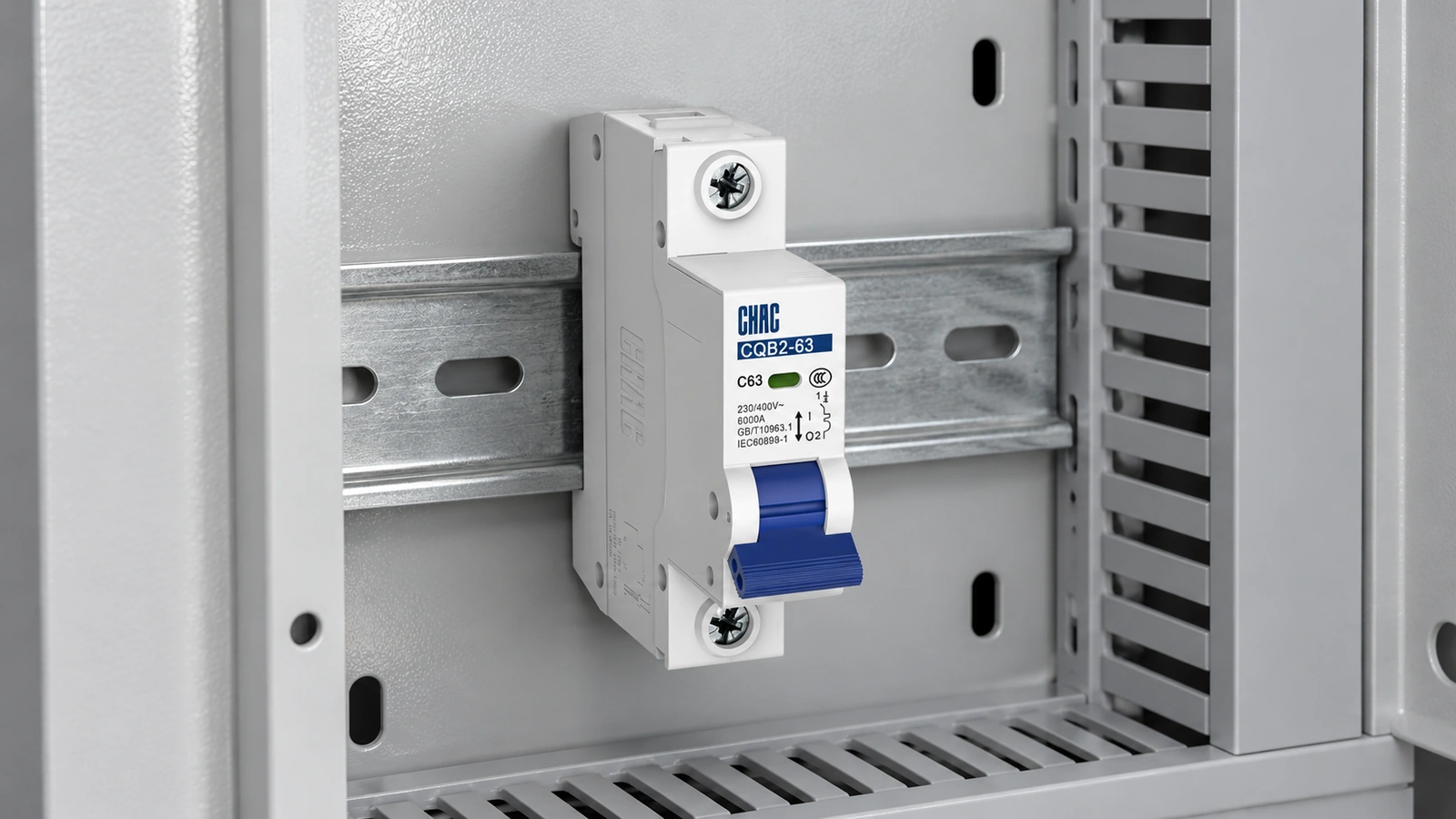
Breaking capacity and coordination need separate checks
Breaking capacity states the fault duty a device can interrupt under specified conditions. It is independent of whether the breaker has a B, C or D characteristic. A higher magnetic threshold does not raise a 6 kA device’s declared fault-interruption rating.
Upstream and downstream protection also need coordination. Manufacturer-tested combinations can sometimes support backup protection or discrimination, but a common brand or matching letter does not establish either. Retain the exact coordination table and voltage conditions with the design.
The cost of changing a curve can include design review, fault-loop verification, labeling and replacement stock. An apparently cheap substitution becomes expensive if the installation must be retested or the intended upstream discrimination is lost. Compare the complete approved arrangement, not only the individual breaker.
Compare os critérios de seleção
| Característica | Common IEC 60898-1 magnetic band | Selection consideration |
|---|---|---|
| B | 3–5 × Em | Lower inrush where suitable |
| C | 5–10 × Em | Moderate inrush where suitable |
| D | 10–20 × Em | Higher inrush with verified fault disconnection |
Verifique as condições que alteram a seleção
| Load situation | Check before choosing D | Possible alternative to investigate |
|---|---|---|
| Transformer startup | Inrush duration and minimum fault current | Starting arrangement or a different verified device |
| Início do motor | Start time, repeated starts and overload protection | Coordinated motor starter |
| Long cable run | Fault-loop conditions and voltage drop | Conductor or circuit redesign |
| Viagens inexplicáveis repetidas | Actual trip cause and load records | Repair the underlying fault |
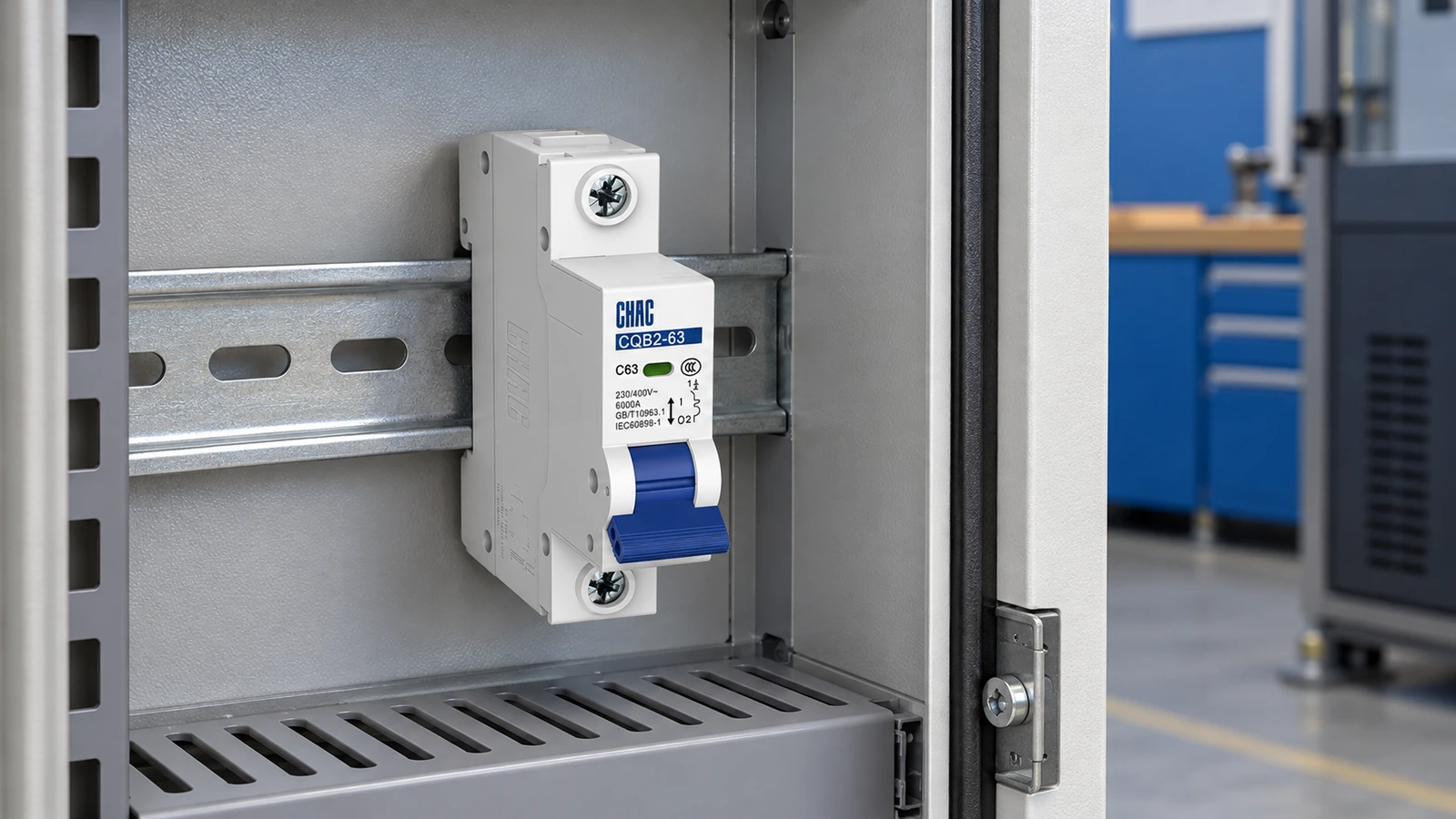
Aplique os padrões e o escopo de aprovação corretos
IEC 60898-1 covers certain AC circuit breakers for household and similar installations; IEC 60947-2 covers low-voltage circuit breakers for broader industrial use. The declared product standard, curve and voltage conditions must match the design. A D marking is not a destination-market approval or proof of interchangeability with another manufacturer’s panel.
O que é necessário confirmar antes de efetuar um pedido
Ask CHAC to confirm the exact curve, pole configuration and documents for the Disjuntor miniatura CQB2-125 before selecting a variant. Review Opções de MCB against the load profile and short-circuit breaking capacity, then provide the project fault level and required coordination. Avoid requesting a D curve solely because the existing circuit trips.
Para obter detalhes sobre seleção relacionados, leia o guia. tamanho e classificação do disjuntor.
Perguntas frequentes
What is the difference between Type C and Type D circuit breakers?
Their magnetic-trip bands differ. A D curve tolerates a higher short surge in the relevant characteristic range, but requires its own check of fault-disconnection performance.
What is the difference between B, C and D curve circuit breakers?
For common IEC 60898-1 curves the magnetic bands are 3–5, 5–10 and 10–20 times rated current. These do not replace the complete manufacturer time-current curves.
Are all Square D circuit breakers the same?
No. Square D is a brand name, while D curve describes a tripping characteristic. Panel family, ratings, poles and protective functions must all be checked.
What is a Type D MCB?
It is an MCB with the manufacturer’s declared D characteristic. Verify its governing standard and full curve rather than assuming every device uses identical thresholds.
What is a Type D circuit breaker used for?
It may suit loads with substantial starting current, such as certain transformers or motors. Application names alone do not establish suitability.
How does a Type D circuit breaker work?
Its thermal element responds to sustained overload and its magnetic element responds to high current. It does not automatically include motor overload, residual-current or arc-fault functions.
Referências
- Schneider Electric — miniature circuit breakers and B, C and D tripping ranges
- Catálogo de normas da IEC — normas de disjuntores IEC 60898-1 e IEC 60947-2
- OSHA 1910.303 — requisitos para equipamentos elétricos e instalações
Para seleção específica de modelos, consulte Detalhes do produto CHAC e envie as condições de aplicação, quantidade e requisitos de destino através do página de contacto.