Consider a hypothetical battery-system buyer in Rotterdam who replaces a contactor with one carrying the same ampere rating. The replacement carries normal load, but the shutdown review fails because its interruption duty was never documented. The purchasing error was treating a carry rating as a complete switching specification.
Резюме: Source a DC contactor by its verified making, carrying and breaking duties, operating voltage, current direction and coil requirements. IEC 60947-4-1 provides a contactor and motor-starter framework, but the exact device data and application conditions decide suitability. Compare suppliers against one common duty specification before comparing prices.
The DC contactor market contains several different buying decisions
The DC contactor market serves battery systems, charging equipment, industrial DC drives and other switching applications. These are useful sourcing segments, not interchangeable product classes. A precharge circuit, a main battery disconnect and a frequently cycled industrial load can ask very different things of their contacts.
A market-size estimate cannot tell a buyer whether a device will interrupt a particular circuit. This guide therefore compares observable application requirements rather than quoting an unverified market forecast. Start with the actual operating voltage range, continuous current, expected switching events and the load present when opening is commanded.
Current can reverse in energy-storage systems. A contactor may carry current in both directions while having a more restrictive breaking capability. Sensata’s application guidance on direction of current flow highlights this distinction. Obtain the exact model’s directional switching limits rather than interpreting a bidirectional carry statement as approval for every interruption.
A current rating does not describe the whole switching duty
Specify normal load breaking separately from emergency interruption and prospective short-circuit current. Include the circuit inductance or the manufacturer’s required load-time-constant information. A device that carries a large current does not automatically clear a battery fault; the fuse or other protective device must have its own coordinated interrupting function.
Coil voltage is independent of the main circuit voltage. Check the complete control-supply range, pickup and dropout limits, duty cycle, suppression and any economizer requirements. In a hypothetical design with 1,000 operating hours, an extra 2 W of hold power consumes 2 kWh. That illustrates an energy calculation only; actual heat, reliability and cost depend on the selected coil and enclosure.
Treat DC contactor switching duty as a documented operating envelope. Ask for electrical-life evidence at comparable voltage, current and load conditions. Mechanical endurance with no load is a different test and should not be used as the expected life of loaded contacts.
Qualification should reproduce the conditions that can cause failure
Before purchase approval, define one normal switching test and the relevant abnormal conditions with the equipment designer. Control-supply sag, repeated start attempts and failure to complete precharge can expose weaknesses that a simple room-temperature coil check misses. Do not create a live test bench without the appropriate expertise and protective equipment.
A welded contact may continue conducting after the coil is de-energized. Auxiliary feedback can be useful, but its relationship to the main contacts must be established by the manufacturer. A continuity check alone cannot establish the device’s remaining breaking capability, insulation condition or loaded endurance.
For a failed unit, preserve the operating history before changing suppliers: load at opening, ambient temperature, control waveform, switching frequency and fault records. Contacts may pit because of unsuitable switching duty or unstable control, so replacing the part without correcting the cause can reproduce the damage.
Compare the selection criteria
| Buying factor | Useful supplier evidence | Insufficient substitute |
|---|---|---|
| Continuous current | Conditions, temperature rise and mounting arrangement | A headline ampere value |
| Breaking duty | Voltage, current, load and direction limits | Carry current in both directions |
| Life | Loaded endurance at stated conditions | Mechanical operations only |
| Control coil | Supply window, suppression and hold behavior | Nominal coil voltage alone |
Check the conditions that change the selection
| Приложение | Priority question | Evidence to request |
|---|---|---|
| Battery main switching | Can the device open the specified load in either required direction? | Directional breaking curves and coordinated protection |
| Precharge | Does the intended switching sequence match the contact duty? | Circuit sequence and permissible current |
| Industrial DC load | How often will it interrupt an inductive load? | Utilization duty and loaded endurance |
| Export equipment | Which approvals apply to the exact model? | Model-specific certificates and installation conditions |
Apply the correct standards and approval scope
IEC 60947-4-1 addresses contactors and motor-starters. Equipment-specific rules and destination-market approvals may add requirements. A reference to the standard is not proof that every model, coil or voltage variant is certified. Specify the exact approval scope and retain the supporting documents with the approved sample.
What to confirm before placing an order
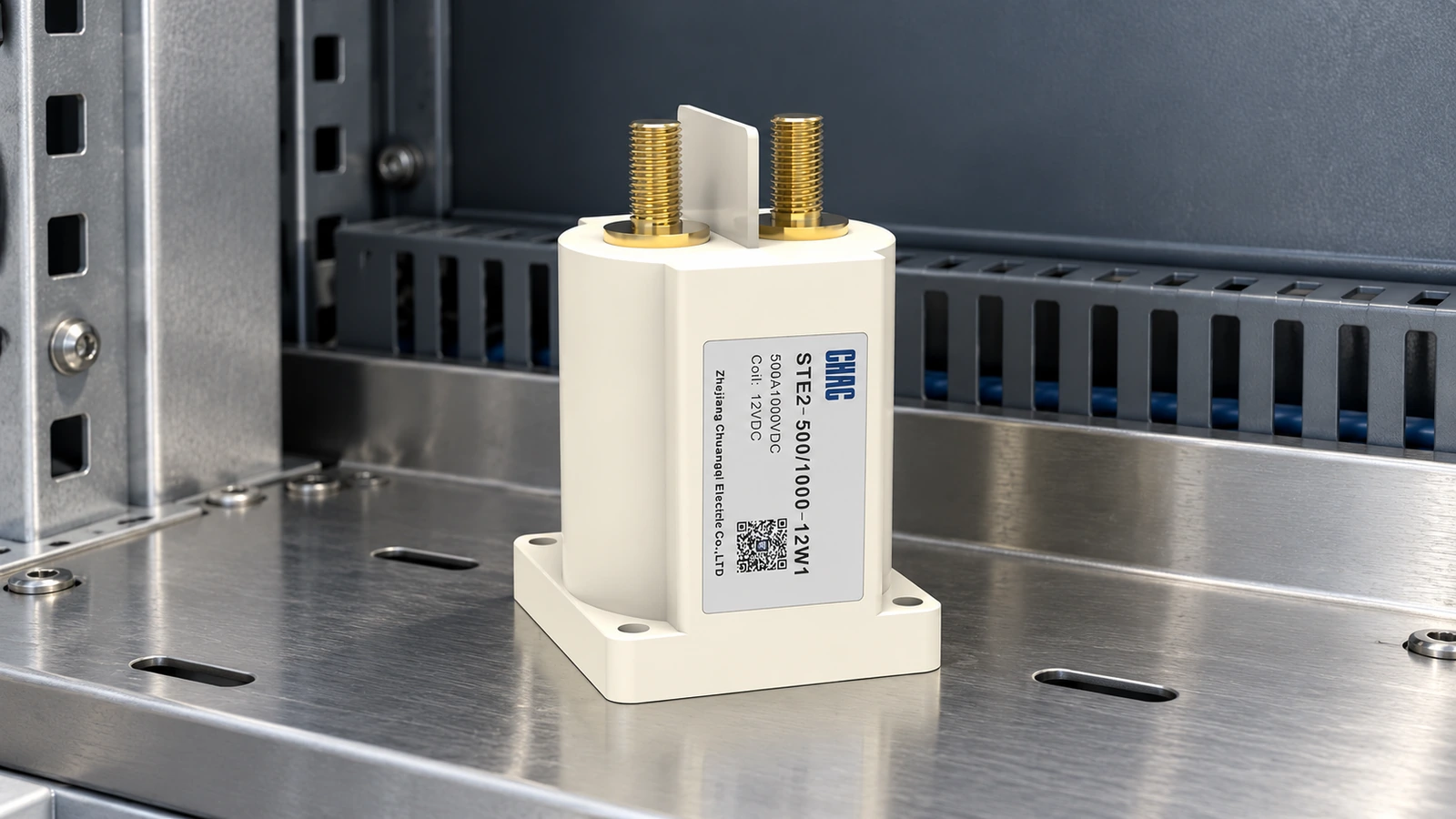
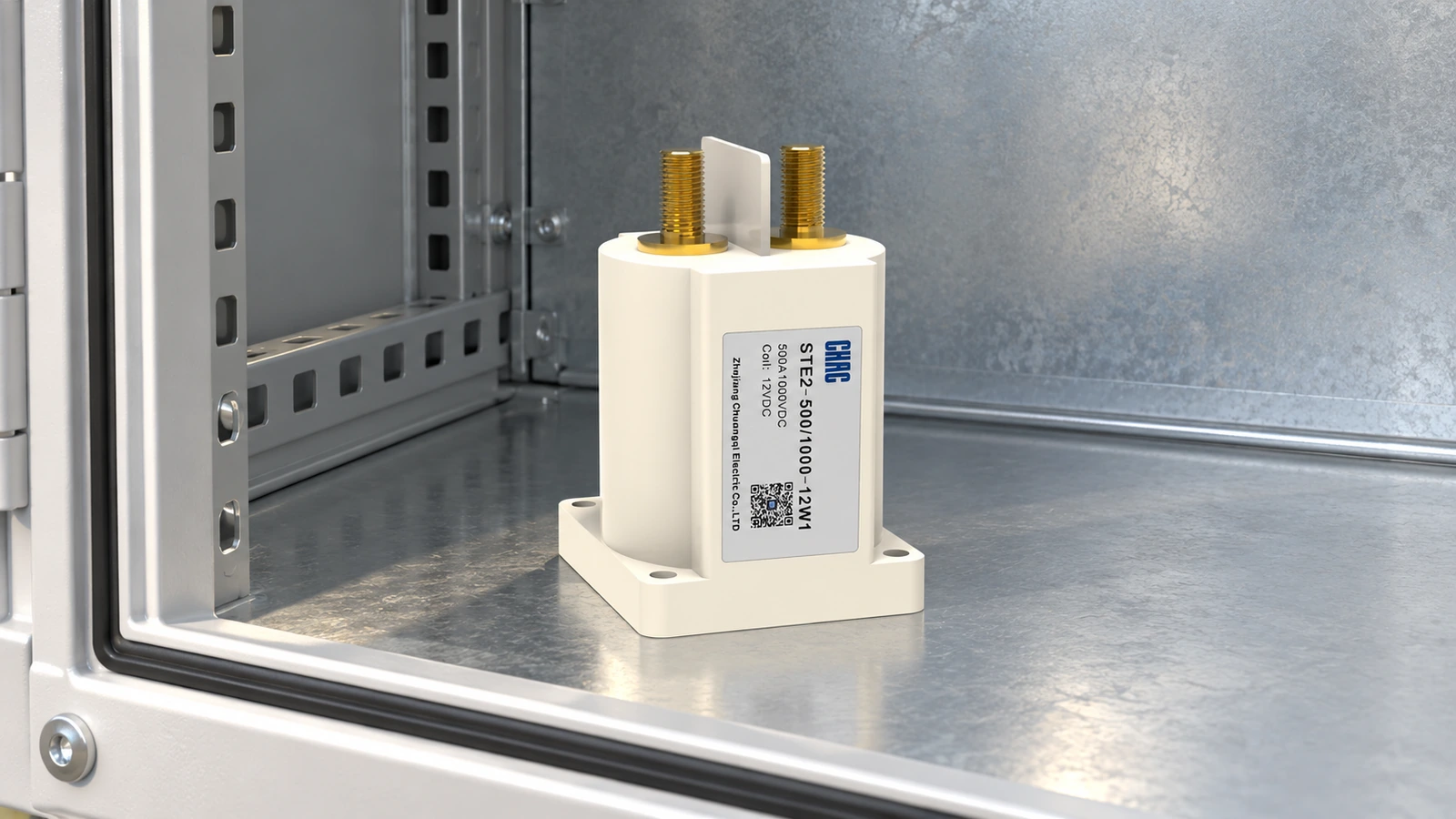
For CHAC sourcing, use the Высоковольтный постоянный токопроводящий контактор product page as an entry point for a model-specific discussion, and distinguish it from an Контактный клапан переменного тока. A DC contactor supplier should confirm the complete suffix, control supply, mounting orientation, terminal requirements and switching envelope in writing. Agree on sample approval, production change notice, traceability, lead time and spare units before releasing a recurring order.
For related selection details, read the guide to AC vs DC Contactors.
Часто задаваемые вопросы
Is there a DC contactor?
Yes. DC contactors are designed and rated for switching specified DC circuits. Choose a model with documented voltage, load and breaking conditions rather than relying on its appearance.
Can an AC contactor be used for DC?
Only when the manufacturer explicitly provides the required DC rating and connection arrangement. AC duty does not establish DC interruption capability because DC has no periodic current zero.
How much does a contactor cost?
Price depends on switching duty, coil design, approvals, quantity and supply terms. Compare quotations for the same validated specification; a low unit price can be offset by qualification work and downtime.
What is the difference between AC and DC contactors?
Their arc-control arrangements and specified operating duties can differ. The control coil may itself use AC or DC independently of the main-contact circuit, so check both ratings.
What does a DC contactor do in a control circuit?
A coil-operated mechanism connects or disconnects a power circuit under the control system’s command. It normally works with separate fault protection and must be selected for the load it switches.
How is a DC contactor different from a relay?
Both may use an electromagnetic switching mechanism. Contactors are generally selected for power switching, while many relays serve control or signal duties; the exact ratings and utilization category decide the distinction.
Ссылки
- Sensata — direction of current flow for contactors
- IEC standards catalogue — IEC 60947-4-1 contactors and motor-starters
- OSHA 1910.303 — electrical equipment and installation requirements
For model-specific selection, review the CHAC product details and send the application conditions, quantity and destination requirements through the contact page.