

Replacing a bimetallic overload relay with an electronic one is not automatically an upgrade. The new device may offer useful diagnostics, but its reset logic, current range or thermal-memory behavior may differ from the starter it replaces. Conversely, a simple thermal relay can be the appropriate choice when its documented response matches the motor duty and no additional functions are needed. The practical comparison is therefore between two complete protection proposals, not two technology labels. This guide examines sensing, starting duty, recovery and retrofit evidence, with manufacturer examples that show where additional features genuinely matter and where assumptions can undermine protection.
The short answer is to choose a bimetallic overload relay for a documented thermal-protection application it can meet, and evaluate an electronic overload relay when adjustable characteristics or specific diagnostics solve a defined need. Neither sensing method guarantees every protective function. Rockwell’s motor-protection paper explains the underlying approaches; Schneider’s TeSys Giga FAQ gives a concrete electronic example with class 5e/10e/20e/30e and manual or remote reset. Those are product-specific features, not universal electronic-relay capabilities. Motor starting, thermal limits, short-circuit coordination and restart behavior still govern the final decision.
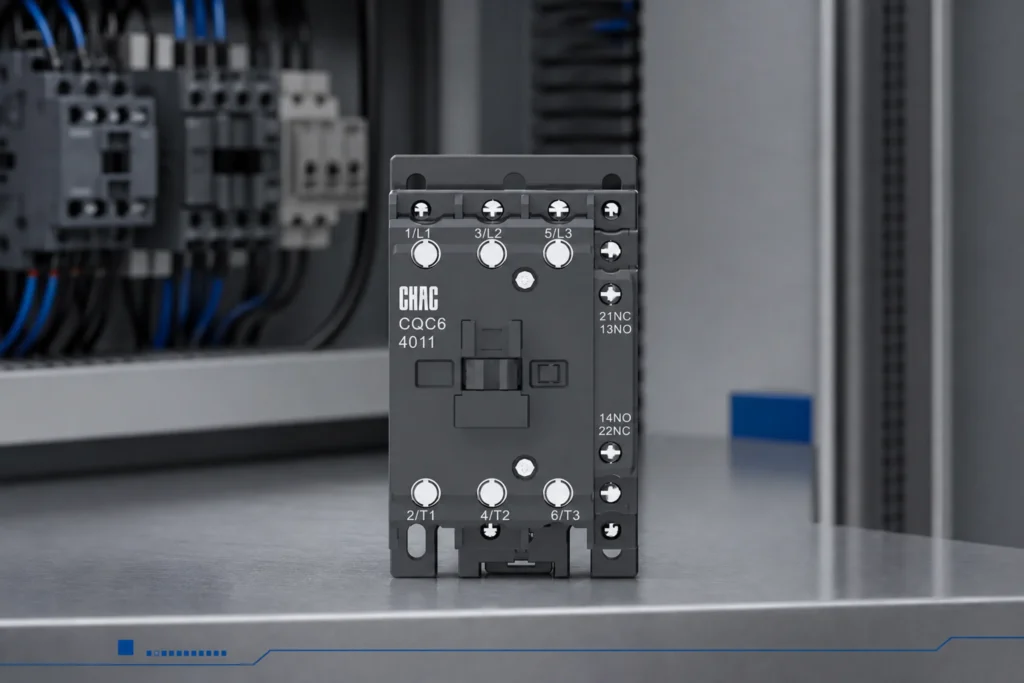
What motor problem must the relay solve?
Define whether the concern is sustained overload, a difficult start, repeated hot starts, loss of a phase or lack of useful trip information. The solution differs for each. A larger setting or a longer permitted start is not an acceptable substitute for understanding an overloaded motor or driven machine.
Use nameplate current, motor connection, starting method, acceleration time and duty cycle. Include the relay’s location in the circuit. The overload relay normally acts through the starter control circuit; it does not independently replace the upstream short-circuit protective device.
How do the sensing methods differ?
Rockwell’s Low Voltage Motor Protection paper describes heater-driven bimetal elements that move with temperature, versus electronic current sensing and protection logic. The paper includes North American code discussion and specific product examples; its ranges and features should not be copied into every IEC product specification.
| Decision point | Bimetallic approach | Electronic approach |
|---|---|---|
| Overload evaluation | Thermal response of the sensing mechanism | Current measurement and documented protection logic |
| Trip characteristic | Use the actual relay’s curve | Check fixed or selectable functions |
| Additional information | Check indication and contact options | Confirm supported diagnostics and interfaces |
| Recovery | Cooling and reset conditions | Thermal model, supply and reset rules |
When is a bimetallic relay sufficient?
A bimetallic relay remains a reasonable candidate when its adjustment range, time-current response, environmental limits and reset mode meet the application. Do not assume it lacks phase-loss sensitivity or temperature compensation: some models document those features.
CHAC’s CQR2 record, for example, lists phase-loss protection, temperature compensation and manual/automatic reset. That is a useful reminder to compare actual functions rather than describing all thermal relays as basic devices with identical behavior.
Which electronic functions justify a change?
An electronic option can be worth evaluating when the application needs selectable trip characteristics, more informative trip indications or a supported remote-reset function. Write each required function as an acceptance item and ask which exact model provides it.
Schneider’s TeSys Giga LR9G FAQ lists selectable classes, motor-ON and trip LEDs, trip indication and manual/remote reset. It does not establish that every electronic relay provides communications, every imbalance function or the same reset options. A remote-reset facility is also not permission to restart machinery without the appropriate command logic.
What happens to thermal memory after power loss?
The motor can remain hot after a supply interruption. Ask how the exact relay represents that condition when power returns. Electronic protection may have model-specific memory and initialization behavior; do not assume its thermal estimate survives every outage.
For a bimetallic example, Schneider’s LRD reset guidance, modified August 2026, states that reset time depends on the trip, thermal condition and ambient temperature. No single waiting period applies. Compare restart frequency and available cooling against the documented response.
Motor protection and restart permission are separate decisions. A relay may become ready while a maintained run command still exists. Review power recovery, manual reset, automatic reset and remote reset in the complete control circuit.
What must a retrofit comparison include?
| Check | Evidence required before replacement |
|---|---|
| Mechanical fit | Contactor interface, independent mounting and dimensions |
| Electrical fit | Current range, control-contact ratings and any supply requirements |
| Защита | Time-current response, supported functions and coordinated upstream device |
| Recovery | Thermal memory, reset mode and restart sequence |
| Техническое обслуживание | Settings record, spare variant and diagnostic access |
Compare installation effort and support needs as well as purchase cost. Extra diagnostics are useful only if the operator can interpret them and retain the associated settings. This is a function-based comparison, checked against public manufacturer documents on October 10, 2026, not a performance ranking or claim of tested interchangeability.
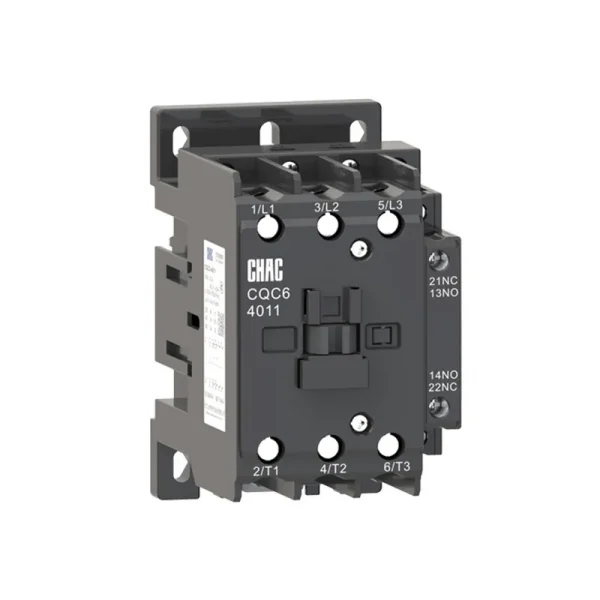
The retained contactor photo shows starter context, not the internal construction or capabilities of an electronic overload relay.
Which CHAC records support starter selection?
The thermal overload relay product record provides CQR2 variant and setting information. Compare it with the proposed AC contactor and the exact documented interface. The trip-class and reset selection guide explains the separate motor-duty and recovery checks.
Часто задаваемые вопросы
Is an electronic relay always more accurate or safer?
Do not assume so from the technology label. Compare the exact response, functions and application evidence.
Can a bimetallic relay detect phase loss?
Some can. Check the selected model’s specified function and test conditions rather than ruling it out by sensing method.
Does electronic mean adjustable trip class?
Not necessarily. Some electronic designs have fixed characteristics; use the exact variant documentation.
Can a new relay plug directly into the old contactor?
Only with a documented mechanical and electrical match. Similar dimensions do not establish compatibility.
Does power cycling clear the motor’s thermal condition?
No. The motor may remain hot; the relay’s recovery behavior must account for the application’s thermal requirements.
Can remote reset replace a deliberate restart?
No. Reset restores protection-device availability; the approved control sequence determines whether starting is permitted.
Ссылки
- Rockwell Automation: Low Voltage Motor Protection, sensing methods and product-specific examples.
- Schneider Electric: TeSys Giga electronic overload relay functions.
- Schneider Electric: LRD thermal overload relay reset time, modified August 2026.
Select the relay that meets a defined motor duty, not the one with the more sophisticated label. Start with current, acceleration and thermal conditions, then compare the actual trip and diagnostic functions. Check mounting, short-circuit coordination and power-loss recovery before approving a retrofit. Finally, document how reset interacts with the run command so a protection upgrade does not introduce a restart problem. CHAC’s starter-component records can support the mechanical and electrical shortlist, but additional electronic functions require their own product evidence. Contact CHAC with the motor data and required functions to review the appropriate documented combination.
Для получения дополнительной информации по соответствующей категории материалов см. Where Should Motor Starter Teams.


