Khi một giám sát viên bảo trì ở Atlanta kết nối hai máy sưởi di động vào cùng một mạch điện 20, ổ cắm vẫn mát nhưng aptomat lại nhảy sau khi hoạt động liên tục. Giả định ban đầu cho rằng aptomat bị lỗi; tuy nhiên, sau khi kiểm tra, người ta phát hiện rằng tổng công suất ghi trên nhãn thiết bị, chế độ hoạt động liên tục và việc chia sẻ mạch điện mới là nguyên nhân thực sự.
Tóm tắt: Ở điện áp 120 volt, một mạch điện có dòng điện 20 amp sẽ có công suất lý thuyết là 2,400 watt, được tính bằng cách nhân điện áp với dòng điện. Đối với giới hạn tải liên tục thông thường là 80 phần trăm, các nhà thiết kế thường coi 1,920 watt là mức trần trong quy hoạch cho các tải dự kiến chạy từ ba giờ trở lên. Câu trả lời cho thế nào nhiều oát trên mạch khuếch đại 20 vẫn phụ thuộc vào điện áp, khả năng mang dòng của dây dẫn, hướng dẫn của thiết bị, điều kiện môi trường xung quanh và NEC được áp dụng tại địa phương.
Điện áp, dòng điện và chu kỳ nhiệm vụ thay đổi công suất như thế nào?
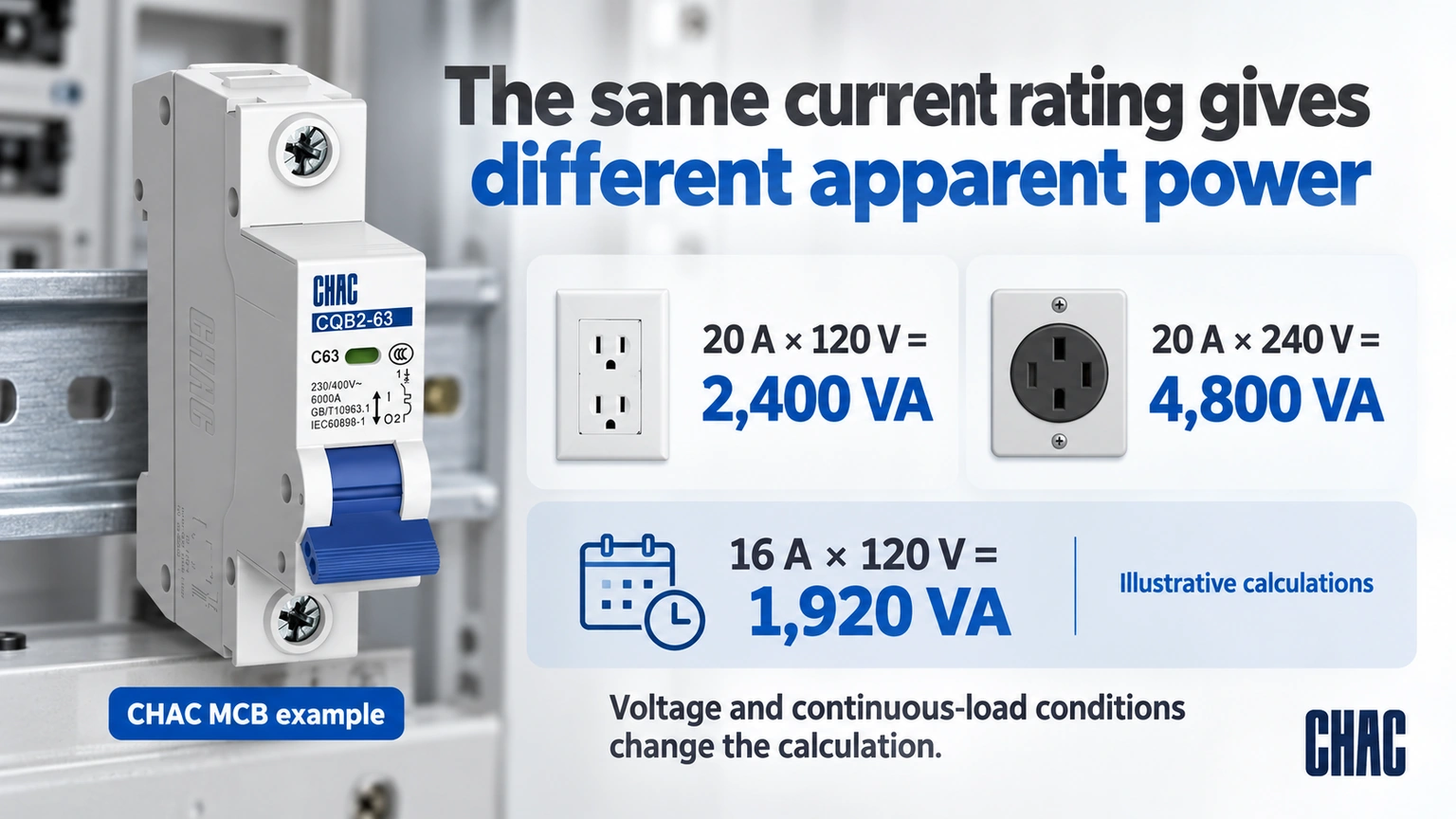
Công suất không phải là một đặc tính cố định của cầu dao. Sử dụng công thức P = V x I đối với tải điện trở, sau đó tính đến hệ số công suất và hiệu suất đối với động cơ, nguồn điện tử và thiết bị HVAC. Một mạch 20 ampe, 120 volt có công suất biểu kiến khoảng 2,400 VA, trong khi một mạch 20 ampe, 240 volt có công suất biểu kiến khoảng 4,800 VA. Cách bố trí cực của cầu dao và nhãn thiết bị phải phù hợp với nguồn cung cấp.
Theo NEC 210.20(A), nói chung, thiết bị bảo vệ quá dòng của mạch nhánh phải có định mức ít nhất bằng 125 phần trăm của phụ tải liên tục cộng với phụ tải không liên tục. Đây là lý do tại sao một mạch điện 20 amp thường được thiết kế với dòng điện liên tục khoảng 16 amp, hoặc 1,920 watt ở điện áp 120 volt, thay vì 2,400 watt theo lý thuyết. Các sửa đổi địa phương và các quy định cụ thể cho thiết bị sẽ quyết định thiết kế cuối cùng.
| Calculation step | Example at 120 V | Những điều cần xác minh |
|---|---|---|
| Nominal circuit capacity | 20 A x 120 V = 2,400 VA | Actual supply voltage and pole arrangement |
| Continuous planning value | 16 A x 120 V = 1,920 VA | Whether the load meets the continuous definition |
| Mixed loads | Heater plus tools or electronics | Simultaneous operation and inrush |
| Voltage-drop check | Long run can reduce usable performance | Length, conductor resistance, and target drop |
Can two 1,500 watt heaters run together?
Two 1,500 watt heaters draw 3,000 watts at 120 volts, or 25 amps, before any other load. That exceeds a 20 amp breaker and will normally open the circuit. Even one 1,500 watt heater consumes about 12.5 amps, leaving limited capacity for other equipment; if it runs continuously, the 80 percent planning value matters.
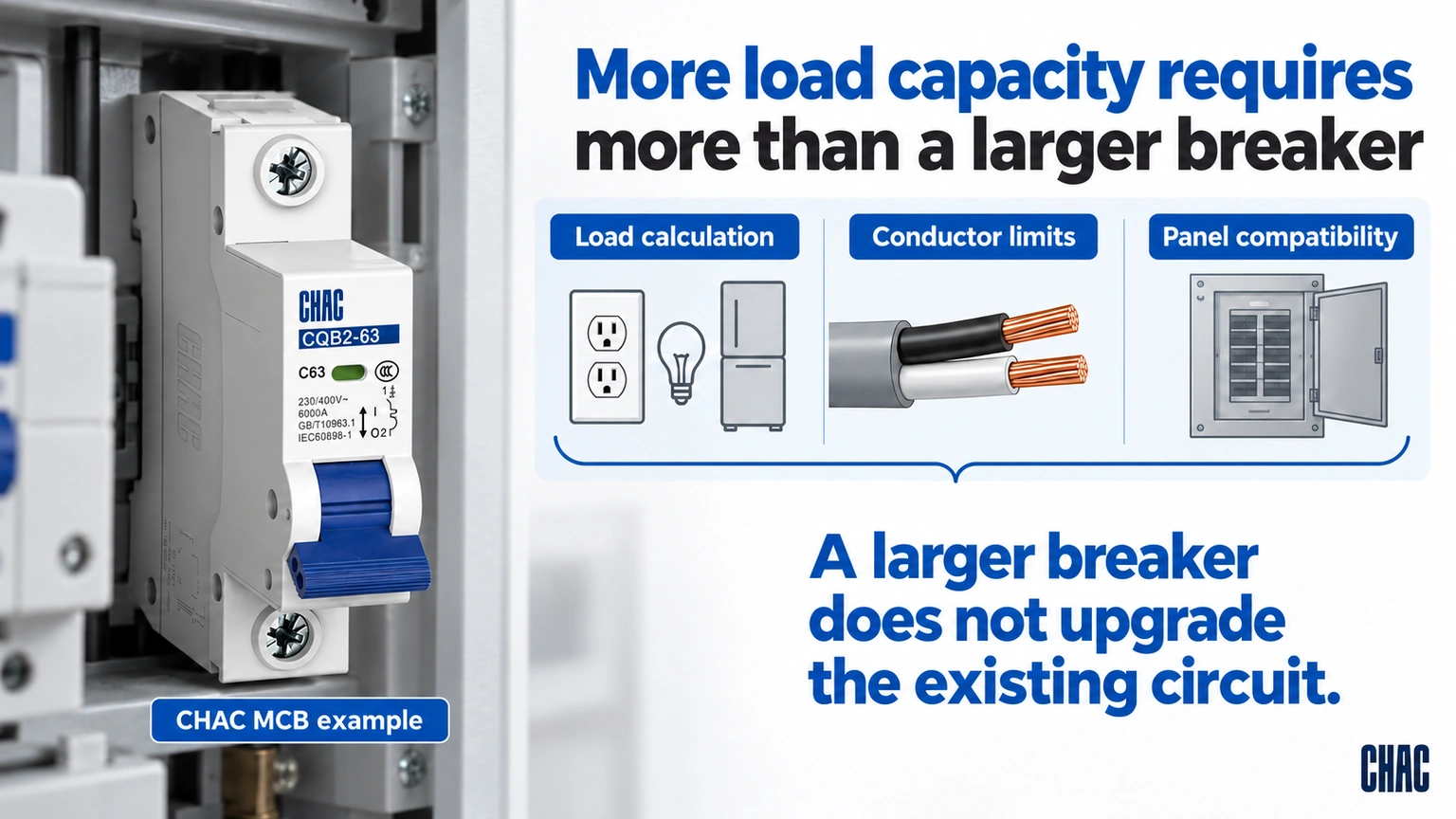
Do not solve an overload by installing a larger breaker. The conductor, receptacles, panel bus, and wiring method may be rated only for 20 amps. Instead, separate the heaters onto correctly designed circuits, reduce simultaneous demand, or follow the equipment manufacturer’s installation instructions.
How do wire gauge, distance and material affect wattage?
12 AWG copper is commonly associated with 20 amp branch circuits, but the complete ampacity calculation still applies. A 20 amp breaker protects the conductor; it does not authorize any 12 AWG cable in any environment. Ambient heat, bundling, insulation temperature, terminals, and cable type can change the answer.
Voltage drop becomes more visible as distance increases. Informational guidance often targets 3 percent on a branch circuit and 5 percent for the feeder-plus-branch path. Use the actual route and load current. A larger conductor may improve voltage at a distant motor or heater, while a longer extension cord can create heating and performance problems even when the breaker does not trip.
| Load type | Wattage behavior | Planning concern | Better check |
|---|---|---|---|
| Resistive heater | Near nameplate watts at rated voltage | Continuous operation and thermal load | 125 percent continuous-load calculation |
| Động cơ hoặc máy nén | Starting current exceeds running current | Nuisance trips and voltage sag | Nameplate, locked-rotor data, start method |
| Electronic equipment | Power factor and harmonics vary | Shared neutral and waveform effects | Manufacturer data and measured demand |
| Mixed receptacle circuit | Users can add loads unpredictably | Unknown simultaneous demand | Load schedule and dedicated circuits |
Protection and panel coordination
Check the breaker interrupting rating, panel compatibility, receptacle rating, grounding path, and AFCI or GFCI requirements for the location. Test devices using the manufacturer’s procedure. A residual-current device detects imbalance; an overcurrent breaker responds to excessive current. Some products combine functions, but the data sheet must say so.
For an organized panel, a listed 20 amp miniature circuit breaker can be matched to a suitable enclosure such as the CQMG20B distribution box. Where leakage protection is required, review a product such as the PXB6L-63 RCBO only after confirming system voltage, pole count, residual-current type, and local requirements.
Standards and a practical selection method
Use the adopted NFPA 70 NEC for U.S. work. IEC 60898-1 addresses certain Bộ ngắt mạch requirements, while IEC 61009-1 covers residual-current circuit breakers with integral overcurrent protection. A standard’s scope matters: a product standard is not a blanket approval for a building installation.
Before buying, record every load, its voltage, running current, duty cycle, starting behavior, and manufacturer instructions. Calculate conductor ampacity and voltage drop, then check the breaker and panel listings. Keep the calculation and inspection record so future operators understand the actual capacity rather than relying on a wattage guess.
Các câu hỏi thường gặp
Can I run two 1500 watt heaters on a 20 amp breaker?
No, not on a 120 volt 20 amp circuit. Together they draw about 25 amps, which exceeds the breaker rating and the conductor design. Use separately designed circuits or reduce the simultaneous load.
Can a 20 amp breaker handle 1800 watts?
At 120 volts, 1,800 watts is about 15 amps. It may fit a 20 amp circuit if the conductor, receptacle, ambient conditions, and duty cycle are suitable; continuous operation still needs the 125 percent calculation. Check other loads on the same circuit.
How far can I run 12/2 wire on a 20 amp breaker?
There is no single distance limit. Calculate voltage drop with the actual route and current, and apply ampacity corrections for the wiring method. A long run may justify a larger conductor while retaining a 20 amp protective device.
Can I run 240V on a 20 amp breaker?
Yes, when the panel, two-pole breaker, wiring, disconnects, and load are all rated for 240 volts. A 20 amp, 240 volt circuit has a different wattage capacity than a 120 volt circuit. Follow the equipment nameplate and local code.
What wire size is normally used for how many watts on a 20 amp circuit?
12 AWG copper is a common reference for a 20 amp branch circuit, but wattage alone does not select wire. Ampacity, installation conditions, terminals, and voltage drop still govern. Have the final circuit reviewed by a qualified electrician.
How does copper compare with aluminum for how many watts on a 20 amp circuit?
Conductor material changes resistance, ampacity, termination, and sometimes the practical gauge. Use the correct table and listed lugs; do not swap aluminum for copper at the same gauge without recalculating. Follow preparation and torque instructions.
Các nguồn chính thức nào nên được người mua xác minh?
The useful answer is not a single watt number; it is a documented load calculation that respects voltage, duty cycle, wiring, and protection. For coordinated 20 amp protection, review CHAC Electric’s 20 amp breaker options with your schedule and contact the technical team when product documentation must match a specific market.