Khi một quản lý dự án tại Rotterdam làm theo hướng dẫn đấu dây và chấp nhận một báo giá chi phí thấp cho một tủ điều khiển mới, danh sách kiểm tra nghiệm thu có vẻ đã hoàn tất. Chỉ trong vòng hai giờ, các sự cố nhảy rơ-le liên tục đã làm dừng băng tải, mạch cảm biến hiển thị các giá trị không ổn định, và tủ điều khiển không vượt qua được bài kiểm tra cách điện. Các thiết bị không phải “xấu”; vấn đề nằm ở việc lựa chọn phối hợp các chức năng tín hiệu, đóng cắt và bảo vệ mà không phù hợp với các giả định về mạch điện. Đó là lý do tại sao câu hỏi thực tế không chỉ là một thiết bị điện tử là gì, mà còn là nó hoạt động như thế nào. thiết bị và mạch điện tử nên được chẩn đoán như một hệ thống phối hợp.
Tóm tắt: Bắt đầu khắc phục sự cố bằng cách tách biệt các đường điện nguồn, điều khiển và tín hiệu; kiểm tra điện áp, dòng điện, cực tính, nối đất và loại tải; sau đó thử nghiệm thiết bị bảo vệ theo yêu cầu tương ứng của tiêu chuẩn IEC. Một quy trình đo lường kéo dài năm phút có thể giúp tránh được hàng giờ phải đấu nối lại dây điện, trong khi việc phối hợp đúng đắn giữa MCB, RCCB/RCBO, SPD và các linh kiện điều khiển sẽ giảm thời gian ngừng hoạt động cũng như rủi ro không tuân thủ.
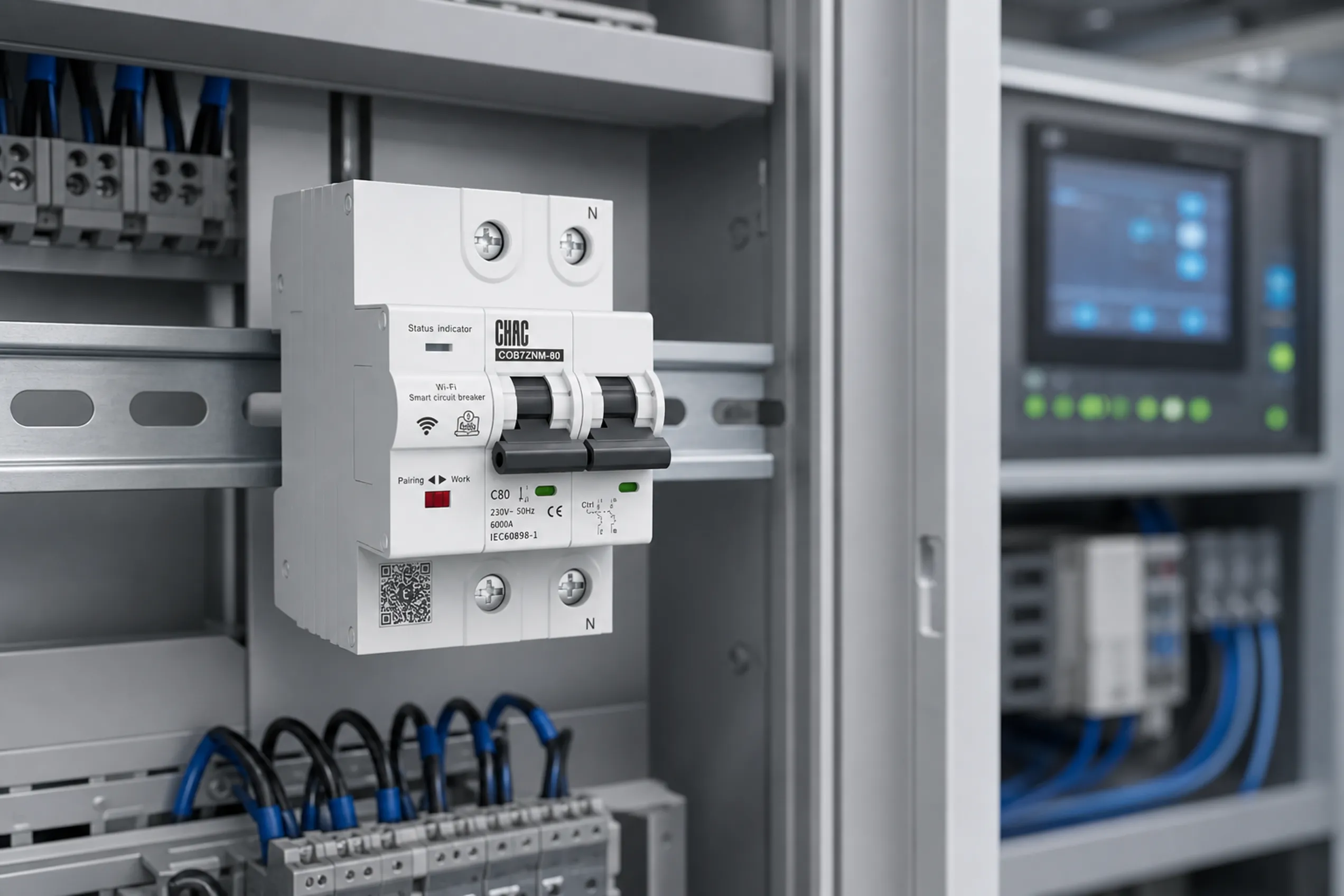
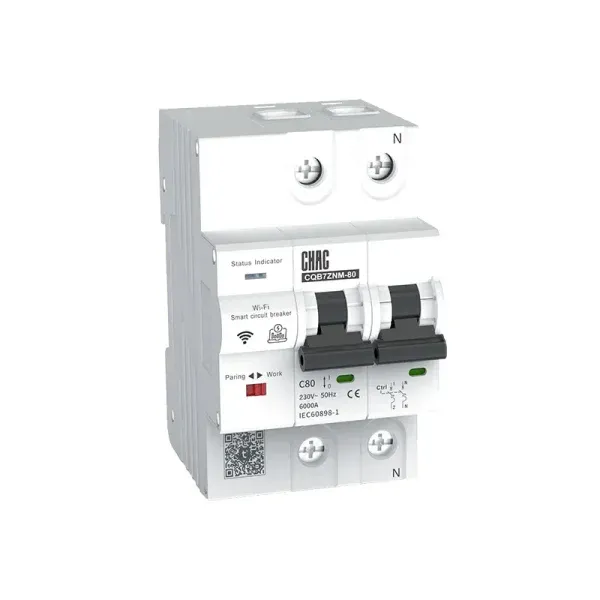
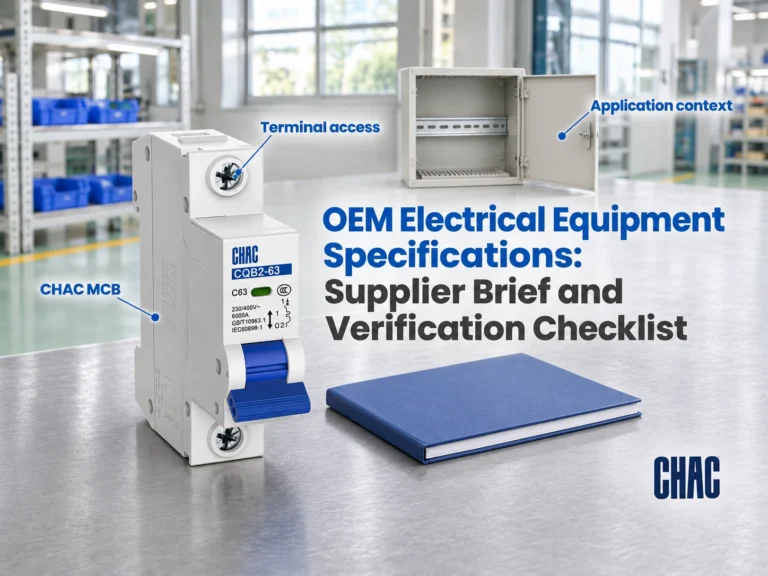
Giao diện ứng dụng: một cầu dao tự động thông minh được tích hợp vào tủ điều khiển gắn trên thanh ray DIN.
Thiết bị điện tử là gì, và mạch điện tử là gì?
Một thiết bị điện tử là một linh kiện có chức năng điều khiển, biến đổi, cảm nhận hoặc bảo vệ năng lượng điện; còn mạch điện tử là đường dẫn kết nối giúp các chức năng đó hoạt động phối hợp với nhau. Trong một bảng điều khiển, ranh giới hữu ích mang tính chức năng hơn là mang tính học thuật, và một cái nhìn rõ ràng về mạch điện tử giúp tách biệt các đường truyền nguồn điện và tín hiệu:
Đường truyền điện: nguồn cấp, cách ly, bảo vệ quá dòng và tải cuối cùng.
Đường điều khiển: contactor, rơ-le, thiết bị bảo vệ động cơ, bộ định thời và I/O của PLC.
Đường truyền tín hiệu: cảm biến, thiết bị chỉ báo, giao diện truyền thông và phản hồi mức thấp.
Sự phân biệt này giải thích nhiều lỗi tưởng chừng như bí ẩn. Một cảm biến VDC 24 có thể hoạt động bình thường trong khi nguồn tham chiếu V 0 dùng chung lại bị nhiễu; một contactor có thể đóng mạch trong khi MCB phía trước bị chọn công suất quá nhỏ; và một SPD có thể bảo vệ tủ điện trong khi đường nối đất kém vẫn cho phép xuất hiện điện áp dư gây hư hại.
Một tủ điều khiển thông thường có bao nhiêu loại thiết bị điện tử?
Đối với việc khắc phục sự cố tại hiện trường, bốn nhóm đối tượng bao quát hầu hết các cụm thiết bị trong lĩnh vực công nghiệp và thương mại. Các danh mục này có sự chồng chéo, nhưng mỗi nhóm lại hướng đến một phương pháp đo lường khác nhau.
Thiết bị thụ động: điện trở, tụ điện, cuộn cảm, đầu nối và bộ lọc. Kiểm tra giá trị, cực tính (nếu có), hiện tượng nóng lên và các mối nối cơ khí.
Các linh kiện hoạt động: điốt, transistor, mạch tích hợp (IC), cảm biến và bộ điều khiển. Kiểm tra điện áp phân cực, điện áp tham chiếu, trạng thái chuyển mạch cũng như các giới hạn đầu vào/đầu ra.
Switching and control devices: MCBs, contactors, relays, and motor-protection devices. Check trip curve, coil voltage, contact rating, and coordination.
Protection devices: RCCBs/RCBOs and SPDs. Check residual-current sensitivity, short-circuit rating, leakage path, clamping class, and the installation standard.
In practice, electronics and devices fail as a chain: an overvoltage event may damage a controller, but the visible symptom can be a relay that no longer energizes. Record the first abnormal measurement, not just the last component that stopped working. The same discipline applies whenever electronic devices share a control reference.
What Are the Three Fastest Checks for Electronic Circuitry?
1. Confirm the reference points
Measure line-to-neutral, line-to-earth, and control-voltage-to-0 V; the three readings should match the design intent. For a 230 VAC circuit, IEC 60364 practice requires protective measures to be verified at the installation level, not inferred from a nameplate.
2. Separate a supply fault from a load fault
Open the load branch and re-test. If the protective device holds with the load disconnected, inspect inrush, insulation, motor starting current, or a reversed connection. If it still trips, the fault is upstream or in the protective-device choice.
3. Check the device against its ratings
Compare rated current, breaking capacity, trip curve, frequency, temperature derating, and terminal torque. A 6 kA device is not interchangeable with a 10 kA device simply because both are marked “C16.”
Electronic Devices vs. Electronic Circuits: Which Value Should Be Compared?
Procurement teams often compare a single device price; engineering teams should compare the installed result. The table below keeps the decision focused on performance and total cost of ownership.
Khu vực quyết định
Single-device view
Whole-circuit view
Recommended check
Bảo vệ
Rated current and poles
Coordination with cable and load
IEC 60898-1 / IEC 61009-1
Reliability
Bench test result
Heat, vibration, inrush, and duty cycle
Record operating temperature and switching cycles
Tính tương thích
Terminal fit
System voltage, neutral arrangement, accessories
Confirm wiring diagram and interface class
TCO
Purchase price
Downtime, replacement, labor, and spares
Use a five-year cost estimate
The honest answer is that the lower purchase price wins only when the device remains stable under the real duty cycle. For high-utilization panels, preventing one unplanned stop can outweigh a modest component premium; the total result depends on how electronics and devices perform together.
Where Do Electronic Devices Appear in Electrical Protection?
Ứng dụng
Typical devices
Primary risk
Useful design action
Residential and light commercial
MCB, RCCB, RCBO, indicator
Shock, overload, nuisance tripping
Match sensitivity and circuit grouping
Automation panel
MCB, contactor, thermal relay, PLC I/O
Inrush, heat, control-voltage loss
Separate power and signal references
Outdoor or renewable system
DC breaker, isolator, SPD
Transient overvoltage and polarity error
Verify DC rating and earthing path
Motor-driven equipment
Contactor, overload relay, motor protector
Locked rotor and phase imbalance
Set protection from motor nameplate data
Which Standards Apply to Electronic Devices and Electronic Circuitry?
Compliance is a design input, not a final sticker. The following references are commonly relevant to low-voltage assemblies:
IEC 60364-4-41 — protection against electric shock in low-voltage installations.
IEC 60898-1 — circuit-breakers for overcurrent protection in household and similar installations.
IEC 61009-1 — residual current operated circuit-breakers with overcurrent protection.
IEC 61643-11 — surge protective devices connected to low-voltage power systems.
Ignoring the applicable standard can lead to failed type tests, rejected site inspections, warranty disputes, and expensive rework. CE or CB evidence is valuable only when the selected product, circuit arrangement, and installation method remain within the certified scope.
How Should a Buyer Select Electronic Devices?
Write the electrical baseline first: system voltage, frequency, prospective short-circuit current, load type, ambient temperature, and enclosure class.
Specify the failure action: trip, alarm, controlled shutdown, or continued operation with redundancy.
Reserve at least 20% panel space and spare terminals for expansion; crowded wiring hides heat and makes inspection harder.
Ask for test reports, wiring diagrams, and traceable batch information—not only a product photograph.
For repeated projects, standardize the interface and accessories so replacement stock remains interchangeable.
At this stage, CHAC provides thiết bị điện tử kết nối with CE and CB certification options, supported by in-house R&D, tooling, testing, automated assembly, and more than 30 years of low-voltage manufacturing experience. Buyers can also review the thiết bị phân phối điện range and thiết bị điện điều khiển công nghiệp when the project needs coordinated protection and control. For a connected project, the selection should keep electron devices and circuits aligned with the same ratings and documentation.
Electronic circuit troubleshooting works best as a controlled comparison: establish the reference point, confirm the supply under the correct load condition, inspect the signal path, and compare the device with its documented ratings. Disconnect power before any inspection that requires opening equipment, and follow the responsible person’s safety procedure.
Control-panel evidence For a control-panel review, separate the electronic device from the protective and switching equipment around it. CHAC’s terminal protection, thiết bị phân phối, và industrial-control products help frame that system boundary without implying that a breaker diagnosis identifies a failed electronic component.
Device-versus-circuit diagnosis should end with a documented observation: what was measured, under which condition, against which reference, and what remains unverified. That record is more useful for repair and procurement than replacing parts based on a symptom alone.
They are the passive, active, switching, sensing, control, and protection components that create a defined electrical function. The correct list depends on the circuit purpose and voltage level; in a real panel, electron devices and circuits are diagnosed together.
What are the four types of electronic devices?
A practical field grouping is passive devices, active devices, switching/control devices, and protection devices. This is more useful for troubleshooting than memorizing a single academic taxonomy, and it gives procurement teams a common language for electronics and devices.
What are the seven basic electrical devices?
Common basics include a source, conductor, switch, resistor, capacitor, inductor, and load; a real control panel adds protection and measurement devices.
What are the three types of electronic circuits?
Most introductory explanations use analog, digital, and mixed-signal circuits. Industrial panels often contain all three, plus a separate power-protection layer.
How can a technician tell whether a device or circuit is faulty?
Isolate the load, verify reference voltages, test continuity and insulation safely, then compare measured values with the device rating and the approved wiring diagram. Stop and involve the manufacturer when a repeated trip, heat damage, or uncertain compliance boundary remains.
Cá nhân tham khảo và quyết định cuối cùng
Hãy sử dụng các nguồn này khi kiểm tra thiết kế, kế hoạch thử nghiệm hoặc thông số kỹ thuật mua sắm:
The difference is not just in the device on the rail—it is in the measurements, standards, and decisions that let the whole circuit keep working. CHAC builds coordinated low-voltage protection and control solutions for that moment; explore the CHAC product center or contact the engineering team for a project-specific selection review.