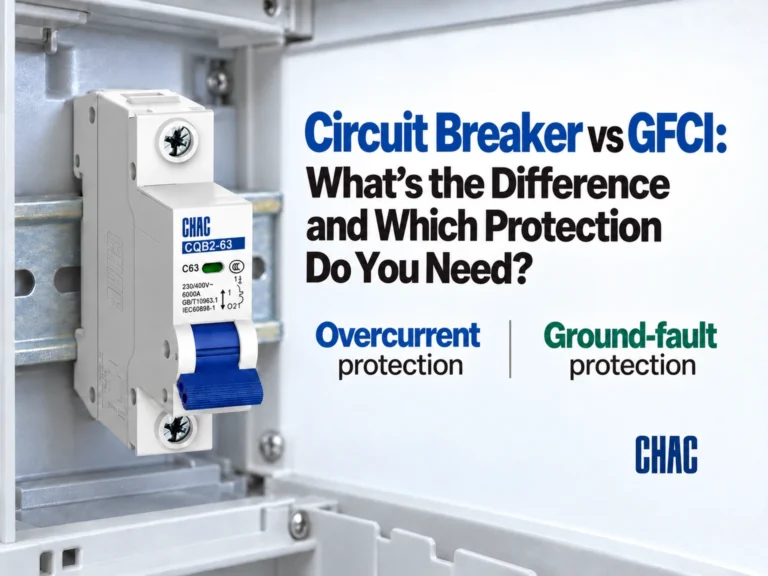

Repeated shutdowns do not automatically mean a Bộ ngắt mạch has failed. A breaker that opens during an overload or electrical fault may be doing its job, while a hot terminal can make the breaker look defective even when the problem lies in the connection. For facilities investigating how to tell if a circuit breaker is bad, the useful distinction is between a protection event, a damaged current path, and an internal device problem. Replacing the device before separating those possibilities can leave the original fault in service. The decision should start with the trip indication and operating record, then move to qualified inspection and the manufacturer’s model-specific checks.
The short answer is that repeated trips, failure to remain set, visible damage, or unusual heat warrant assessment, but none alone proves an internal defect. A reset does not verify protective performance. In US workplaces, 1910.333 Selection and use of work practices requires appropriate isolation and verification before exposed parts are treated as deenergized; it is not a universal licensing rule for every country. Preserve the event record, identify the protected circuit’s problem, and follow the exact equipment instructions before deciding on repair, replacement, or return to service.
How can the event record distinguish a bad breaker from a circuit fault?
Start before someone cycles power or clears an indication. The breaker may have interrupted an overload, short circuit, or ground fault. Poor connections, unsuitable trip characteristics, harsh conditions, and internal defects can also cause trouble. Replacing the breaker too soon can leave the real cause of the shutdown untouched.
Tại sao lịch sử chuyến đi lại cần được lưu giữ trước khi thực hiện việc đặt lại?
Qualified personnel should capture the time, available trip indication, alarms, connected equipment, production state, recent switching, and visible condition. These records may link trips to motor starting, a process change, or a downstream fault. Where electronic trip units or monitoring systems provide logs, save them under the facility’s procedure before power cycling can clear information.
The manufacturer example matters: Schneider Electric’s What to Do When the Circuit Breaker Trips, in the ComPacT NS User Guide DOCA0221EN-02, distinguishes installation faults, device malfunction, and intentional tripping. Its instructions require identification and clearance of the cause before reclosing. The detailed indications and inspection checks apply to the named ComPacT NS equipment, not automatically to every MCB.
Which warning signs need context before replacement?
The most useful Triệu chứng hỏng cầu dao điện are supported by operating evidence. Failure to stay set, case damage, odour, noise, heat, or trips at a stable load warrant attention. Even so, downstream faults can prevent a reset, and poor lugs or bus joints can heat or discolour the surrounding equipment.
| Triệu chứng được quan sát thấy | Nguyên nhân của sự cạnh tranh | Giới hạn bằng chứng | Quyết định bảo trì |
|---|---|---|---|
| Những chuyến đi vào thời điểm sản xuất đạt đỉnh điểm | Quá tải, dòng điện quá mức, chu kỳ làm việc thay đổi hoặc đường cong không phù hợp | Một chuyến đi không thể xác định được nguyên nhân. | Bảo toàn sự kiện; rà soát tải trọng và phối hợp. |
| Sẽ không bị đặt lại thiết lập | Downstream fault, release/accessory operation, or damaged mechanism | Handle position cannot separate these possibilities. | Keep it out of service pending qualified investigation. |
| Nhiệt độ gần một cực | Độ rò rỉ, điện trở của dây dẫn, đường dây hoặc điện trở bên trong | Mức nhiệt độ không có tải không có tính thuyết phục. | Kiểm tra đường dẫn hiện tại và các giai đoạn tương tự. |
| Khắc hoặc theo dõi carbon | Lỗi điện, nhiễm bẩn hoặc quá nóng | External damage may accompany hidden damage. | Loại bỏ khỏi dịch vụ và tuân thủ hướng dẫn của nhà sản xuất. |
Luật 80% có giải thích nguyên nhân của hiện tượng ngắt kết nối liên tục không?
Not by itself. UL Solutions’ Panelboard Application Guide, under Current rating, advises against continuous loading above 80% of an overcurrent device’s rating unless the assembly, including the device, is marked for 100% use. This is US panelboard application guidance, not a universal trip threshold or an IEC device diagnosis. Actual current, duration, ambient conditions, conductors, and device characteristics still need assessment under the locally applicable installation rules.
How can qualified testing separate connection heat from internal breaker heat?
What does a hot spot actually show?
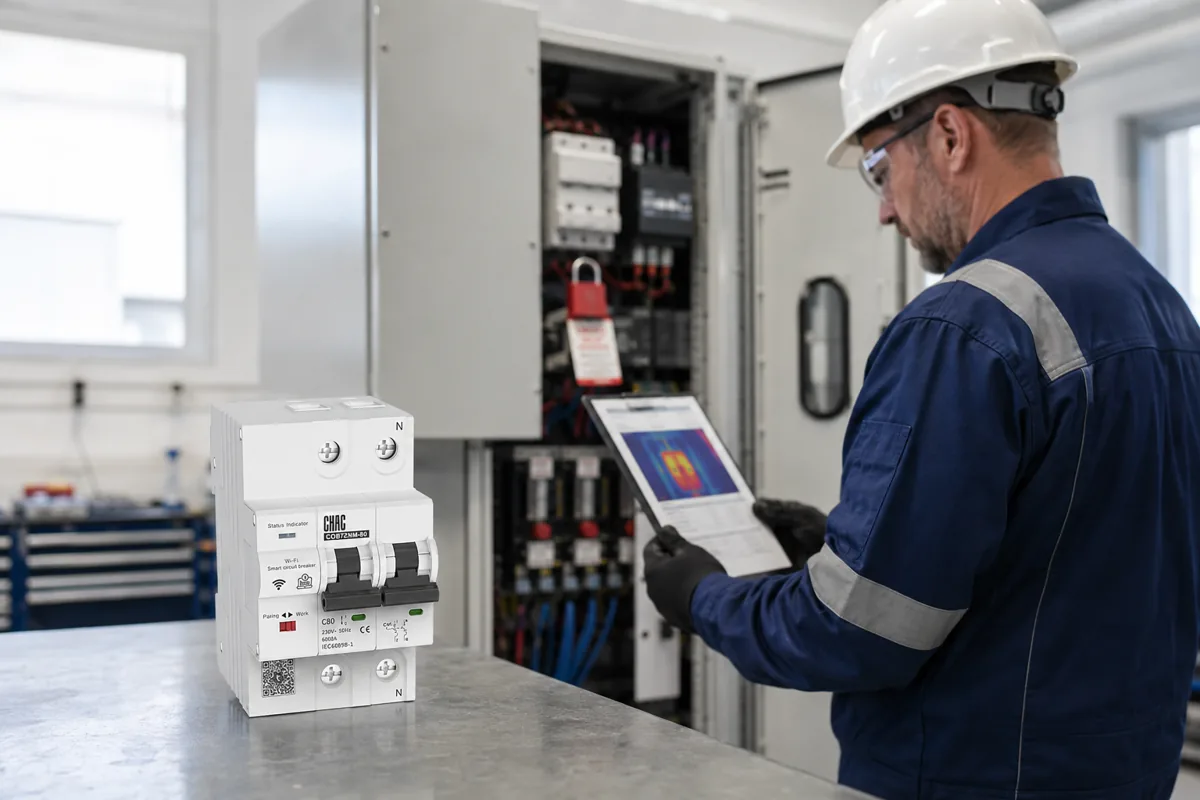
A hot spot identifies an area needing investigation, not its cause. A useful thermal comparison accounts for operating current, ambient temperature, enclosure conditions, surface emissivity, viewing angle, and comparable phases. Heat near a lug, bus contact, or breaker case can guide follow-up, but heat spreads through connected metal and the visible surface may not be the original heat source. Load imbalance can also warm one phase.
Check the connection specification as well as the breaker. The Panelboard Application Guide warns that plug-in clips and blades must be matched to avoid poor connections and overheating; its Wiring terminals section also addresses permitted conductor combinations and marked tightening torque. A new breaker does not repair an incompatible contact, damaged bus joint, or unsuitable conductor termination. A qualified person’s deenergized inspection should establish which parts of the current path require corrective work, using the equipment’s instructions rather than an assumed generic torque value.
Thermography is a screening and trending tool, not a pass/fail verdict. Manufacturer-permitted follow-up may include connection inspection or electrical measurements. Keep the thermal image with load readings, test conditions, and findings so that a later survey compares like conditions and procurement addresses the actual failure point.
Tính ổn định và kiểm tra điện áp thực sự có thể chứng minh được điều gì?
A continuity check can show that a deenergized pole is open or closed, but it cannot confirm calibrated trip time, interrupting performance, or behaviour under load. A voltage reading also depends on circuit configuration, measurement location, induced voltage, and possible backfeed. Neither check alone verifies the protective function.
Qualified personnel should select tests that the exact device’s maintenance instructions permit, with suitable equipment and stated acceptance criteria. Where a thermal trip test is specified, measured current and trip time must be compared with the manufacturer’s data under the specified conditions. Do not use improvised heat sources. A satisfactory trip result does not clear a damaged connection, and a continuity result does not justify returning visibly damaged equipment to service.
For US workplace maintenance, OSHA 1910.333 requires disconnection from all electrical energy sources, appropriate lockout/tagging, and qualified verification of the deenergized condition. Turning the breaker off, stopping machinery through a control button, or unplugging portable appliances does not establish a safe work area inside the panel. This article does not provide instructions for live-panel testing.
What should happen after a fault before the breaker returns to service?
A breaker exposed to a significant fault should not return to service merely because it resets. Record the fault, protective-device operation, condition, and test results, then follow the manufacturer’s instructions and maintenance programme. Cracking, carbonization, damaged terminals, unreliable operation, or out-of-limit results support removal from service and a documented replacement decision.
Keep two findings separate: whether the downstream fault has been cleared, and whether the breaker and its connections remain suitable. The ComPacT NS guide explicitly states that a protection trip does not remedy the electrical fault on downstream equipment. It calls for different maintenance checks according to the fault type, with specific checks of the tripped device after serious or destructive faults. Those check lists are model-specific; an MCB should instead be assessed against its own instructions. Neither blanket replacement after every trip nor blanket reuse after every reset is a defensible rule.
What must a replacement specification verify?
Khi cần thay thế, thiết bị mới phải phù hợp với ứng dụng, không chỉ phải có kích thước khung hoặc có ghi nhãn ampére. cầu dao tự động thu nhỏ lựa chọn Đánh giá nên bao gồm các thông số về cực điện, điện áp, dòng điện, đặc tính ngắt, khả năng ngắt, các đầu nối, cách lắp đặt, vỏ bọc, điều kiện môi trường xung quanh và phối hợp bảo vệ.
| Điểm quyết định | Chứng cứ cần thiết | Hoạt động mua sắm hoặc bảo trì |
|---|---|---|
| Đường cong tải và điểm dừng | Load profile, starting current, and design calculation | Chọn không che chắn để tránh quá tải. |
| Khả năng ngắt kết nối | Available fault current, voltage, and any documented series combination | Verify both device and assembly ratings. |
| Tính tương thích của kết nối | Thông tin về đường dây điện, trạm đầu cuối, xe buýt và lắp đặt | Correct damaged or incompatible joints. |
| Product approval | Panel label, exact catalog designation, and applicable approval documents | Do not substitute on physical fit alone. |
| Kỷ lục về việc trở lại phục vụ | Cause, results, corrective work, and panel schedule | Keep a baseline for maintenance and spares. |
For a US listed panelboard, the Panelboard Application Guide requires identification of permissible field-installed units and explains that classified replacements have specific panelboard conditions. Preserve any applicable series-rating combination. An IEC standard reference or a DIN-rail mounting format does not establish authorization to replace a proprietary UL panel breaker.
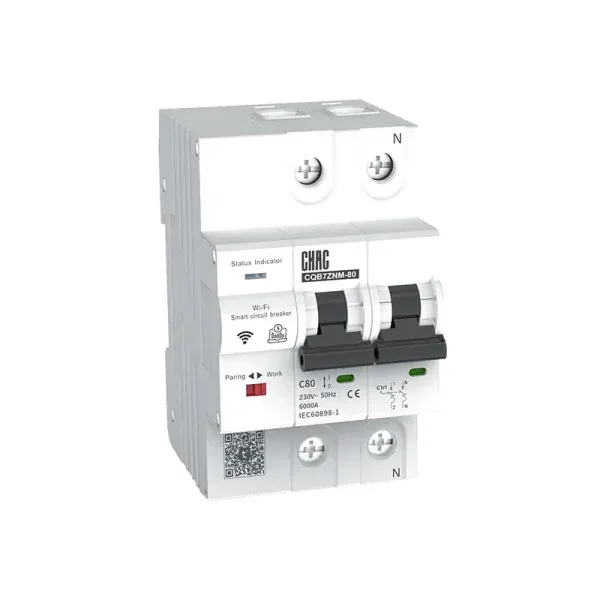
What should a defensible replacement record contain?
Before ordering a replacement, record the circuit identification, breaker catalog number, event time, equipment operating at the time, visible condition, qualified observations, test method, and applicable acceptance criteria. Distinguish an observation such as a hot terminal from a confirmed finding such as a damaged connection. That makes the evidence usable against the panel schedule, design, and maintenance history.
If the record shows repeated heating, insufficient capacity, or a changed load, compare the result with the Hướng dẫn lập kế hoạch nâng cấp bảng điều khiển trước khi chọn một thiết bị có cấp điện cao hơn. Một nhãn điện trở lớn hơn không thể khắc phục được sự thiếu hụt của dây dẫn, sự kết nối không chắc chắn, sự không tương thích dòng điện, hoặc vị trí bảng điều khiển không phù hợp với thiết bị ngắt dòng điện được đề xuất.
What are common questions about circuit breaker condition?
Có những dấu hiệu nào cho thấy cầu dao điện đã bị hỏng?
Repeated unexplained trips, failure to remain set, damage, heat, odour, or out-of-limit test results are warning signs. Overloads, wiring faults, and poor connections can look similar, so a qualified assessment must distinguish the circuit condition from the device condition.
Can a breaker be bad if it trips with nothing plugged in?
Possibly, but unplugged portable appliances do not establish zero load or a fault-free circuit. Fixed wiring, hardwired equipment, neutral problems on devices with additional protection functions, or a connected release accessory may still be involved. Record when the trip occurs and review why a breaker trips with nothing plugged in; do not disconnect panel wiring or perform repeated resets to prove a theory.
Luật 80% của các bộ ngắt mạch là gì?
For the US panelboard applications discussed by UL Solutions, continuous loading above 80% is discouraged unless the complete assembly is marked for 100% use. It is an application limit with conditions, not the current at which every breaker must trip and not a test of whether a breaker is defective.
Các chuyên gia kiểm tra bộ ngắt mạch nhiệt như thế nào?
Where the manufacturer specifies a trip test, qualified personnel use controlled current and compare measured trip time with the device’s published data under defined conditions. Continuity alone cannot verify the thermal trip function, and improvised heating cannot provide a calibrated or safe result.
Làm thế nào để kiểm tra xem cầu MCB có hỏng hay không?
Preserve the trip history and have a qualified person assess overload, downstream faults, and connection problems. Follow the exact manufacturer’s inspection or test instructions; not every MCB supports the same field tests or repairs. Confirmed damage or unreliable performance requires a documented removal and replacement decision.
Khi nào một cơ sở nên gọi thợ điện thay vì reset công tắc điện?
Escalate unknown or repeated trips, failure to remain set, heat, odour, noise, damage, or a significant fault. Staff should not remove covers, touch energized parts, or attempt live-panel tests. Return to service belongs within the qualified person’s investigation and approved equipment procedure.
Which references support the assessment?
- 1910.333 Selection and use of work practices – US OSHA; workplace isolation, lockout/tagging, and qualified verification requirements.
- Panelboard Application Guide – UL Solutions; current ratings, field-installed units, trip indication, and wiring terminals.
- What to Do When the Circuit Breaker Trips – Schneider Electric, ComPacT NS User Guide DOCA0221EN-02; named-equipment guidance, not universal MCB test instructions.
How does the evidence lead to a sound replacement decision?
Reliable decisions begin by separating a correct protective trip from damage to the circuit, its connections, or the breaker itself. Preserve the event, identify and clear the cause, establish the condition of the current path, and only then finalize the replacement specification. Do not skip the panel’s approved-device requirements or the manufacturer’s post-fault instructions for the sake of a quick restart. For projects designed around suitable CHAC low-voltage components, review the relevant thiết bị phân phối điện và Bộ ngắt mạch cỡ nhỏ CQB2-63 documentation with CHAC Electric against the intended application. These links are product research options, not authorization to retrofit CHAC devices into proprietary US panels.