Một tủ điện còn trống các vị trí lắp cầu dao vẫn có thể không đủ công suất để đáp ứng nhu cầu của máy bơm nhiệt hoặc bộ sạc xe điện. Việc sử dụng một vỏ tủ lớn hơn có thể giải quyết vấn đề bố trí mạch điện mà không cần thay đổi dây dẫn nguồn, giới hạn dòng cấp hay nguồn cung từ nhà cung cấp điện. Với hệ thống năng lượng mặt trời và lưu trữ, lại nảy sinh thêm một câu hỏi: những nguồn nào có thể cấp điện cho thanh cái, ngay cả khi thiết bị cắt chính đã mở? Nếu xử lý cả ba vấn đề này chỉ như một yêu cầu thay thế bằng tủ điện lớn hơn thì rào cản thực sự có thể vẫn chưa được giải quyết. Một kế hoạch nâng cấp hiệu quả nên tách biệt việc đánh giá tình trạng thiết bị, tính toán phụ tải dự kiến, số lượng vị trí mạch điện và kết nối nguồn trước khi quyết định sẽ thay thế hay mở rộng phần nào.
Câu trả lời ngắn gọn là bắt đầu bằng một cuộc kiểm toán hiện trường và tính toán phụ tải có tài liệu, sau đó phối hợp sạc xe điện, bơm nhiệt, năng lượng mặt trời, hệ thống lưu trữ và các phụ tải thông thường của tòa nhà như một hệ thống duy nhất. Một thanh cái được đánh dấu 200 A không thiết lập một dịch vụ 200 A hoặc chứng minh khả năng phụ tải dự phòng. Đối với các lắp đặt tại Hoa Kỳ, các ký hiệu trên bảng điện và NEC được áp dụng sẽ xác định các thiết bị và kết nối nguồn được phép. So sánh việc mở rộng công suất với chỉ quản lý phụ tải ở những nơi mà các quy tắc áp dụng cho phép phương pháp điều khiển được đề xuất, sau đó hoàn thiện bằng các nhãn nguồn chính xác và hồ sơ hoàn công.
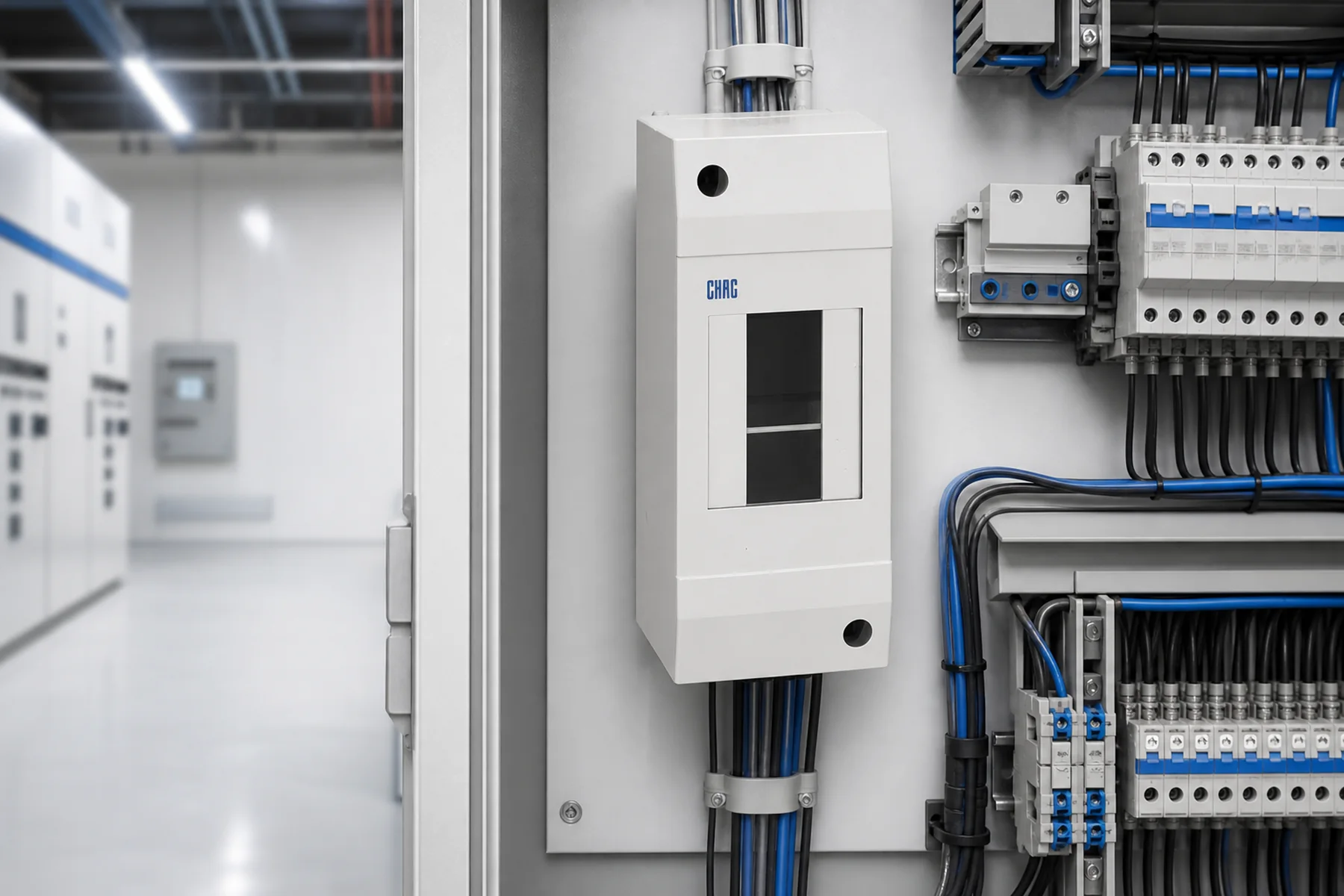
An nâng cấp tủ điện Có thể thay thế một trạm phân phối đã lỗi thời, tạo thêm các mạch điện, hỗ trợ quá trình điện khí hóa, hoặc nâng cao khả năng bảo trì. Nó cũng có thể ảnh hưởng đến dây dẫn dịch vụ, đường dây cấp nguồn, thiết bị đo đếm, hệ thống nối đất và liên kết, định mức dòng sự cố, cũng như các phê duyệt của đơn vị cung cấp điện. Lập kế hoạch nâng cấp tủ điện do đó, bắt đầu từ toàn bộ đường truyền năng lượng thay vì chỉ riêng vỏ bao.
Logic lập kế hoạch được áp dụng cho cả nhà ở và các công trình thương mại, mặc dù các ràng buộc vận hành có sự khác biệt. Cơ quan có thẩm quyền (AHJ), quy định của đơn vị cung cấp dịch vụ tiện ích, bộ quy chuẩn đã được thông qua, hướng dẫn sử dụng thiết bị và điều kiện tại hiện trường sẽ quyết định thiết kế cuối cùng. Một chuyên gia có trình độ cần kiểm tra và xác minh những yếu tố này trước khi đặt hàng thiết bị.
Nên thu thập những dữ liệu theo bảng điều tra và dữ liệu dịch vụ nào hiện có?
Cần kiểm tra những gì ở phía thượng lưu của tấm panel?
Ghi lại điện áp và pha của nguồn cung cấp, định mức thiết bị cắt nối nguồn, định mức của tủ phân phối và thanh cái, kích thước dây dẫn cấp nguồn, thiết bị bảo vệ chính, số lượng mạch điện, phương án nối đất và nối đẳng thế, cũng như các dấu hiệu của nhiệt độ cao, ăn mòn hoặc ẩm ướt. Xác nhận dữ liệu trong bảng thông số kỹ thuật của tủ phân phối và các loại aptomat được phép sử dụng dựa trên nhãn mác ghi trên tủ. Việc xác minh thực địa rất quan trọng, vì một danh mục chỉ ghi “ổ cắm” hoặc “đèn” sẽ không đảm bảo khả năng cách ly an toàn hoặc lập lịch tải đáng tin cậy.
Hỗ trợ việc kiểm tra trực quan bằng các phép thử phù hợp. Nhiệt độ kế hồng ngoại dưới tải trọng tiêu biểu có thể phát hiện các biểu đồ nhiệt bất thường, trong khi hướng dẫn của nhà sản xuất có thể yêu cầu sử dụng dụng cụ siết lực đã được hiệu chuẩn. Các phép thử về điện trở cách điện, tính liên tục hoặc chức năng cũng có thể được áp dụng, nhưng không có kết quả nào đơn lẻ đủ để chứng minh rằng hệ thống lắp đặt là phù hợp. Nhân viên có trình độ chuyên môn nên lựa chọn các phương pháp phù hợp với thiết bị điện tử kết nối và ghi lại các điều kiện cũng như kết quả để so sánh trong tương lai.
Tại sao các thông số như không gian dự phòng, định mức dòng điện của máy biến áp, công suất cung cấp và khả năng chịu tải khi sự cố lại khác nhau?
Các khoảng trống cho biết vị trí mà các thiết bị được phép có thể lắp đặt về mặt vật lý. Dòng điện định mức của bảng phân phối giới hạn dòng điện cung cấp qua các đầu nối chính trong những điều kiện quy định; thiết bị bảo vệ chính hoặc các giới hạn khác được ghi chú có thể áp đặt một định mức sử dụng thấp hơn. Công suất cung cấp phụ thuộc vào thiết bị cấp nguồn, dây dẫn, nguồn điện từ nhà cung cấp và tải tính toán. Dòng ngắn mạch khả dụng là dòng điện tiềm năng tại một điểm trong thời gian xảy ra sự cố; nó phải được so sánh với định mức ngắt của thiết bị và định mức chịu ngắn mạch của cụm thiết bị ở điện áp tương ứng. UL Solutions giải thích các ký hiệu này trong tài liệu của mình. Hướng dẫn ứng dụng bảng điều khiển, dưới mục “Đánh giá hiện tại” và “Đánh giá dòng điện ngắn mạch.”
Một bảng điện có thể có các vị trí trống và không còn khoảng trống thực tế để lắp đặt thiết bị. Ngược lại, một bảng điện đã đầy có thể vẫn đạt công suất tính toán nhưng cần một tủ phân phối phụ phù hợp hoặc một vỏ tủ lớn hơn để lắp đặt thêm các mạch điện. Một Máy phá vỡ cặp đôi Cho phép lắp đặt hai mạch điện trong cùng một ngăn của cầu dao, chỉ khi nhãn mác trên bảng phân phối cho phép; không làm tăng công suất của thanh cái, đường dây cấp nguồn hoặc hệ thống cung cấp điện. Ghi rõ riêng biệt các vị trí dự phòng, đã dành riêng và không thể sử dụng, sau đó nêu rõ phần dư còn lại theo đơn vị ampe hoặc kilovolt-ampe.
Nhu cầu hiện tại nên được so sánh với các phụ tải trong tương lai như thế nào?
NEC Article 220 provides calculation methods for branch circuits, feeders, and services in US installations. Adding every breaker-handle value is not a valid substitute. Continuous loads, motors, electric space heating, cooking, EV supply equipment, and other loads require the treatment specified by the adopted rules. Where an existing-load measurement method is permitted, interval utility data or a correctly installed load logger can help reveal coincident peaks and seasonal patterns. Use the locally adopted edition of NFPA 70: Quy chuẩn điện quốc gia, not a generic online calculation.
Model the current building, the first day after renovation, and a credible expansion case. State which loads can run together and which are controlled. The roadmap should include expected connection dates, voltage and phase, running and starting demand, duty cycle, connection point, and the decision that would trigger another study. This prevents “future-ready” from becoming an unsupported sales phrase.
How do EVs, solar, storage, and heat pumps affect the upgrade?
Electrification loads interact. EV charging may peak when fleet vehicles return, heat pumps may reach high demand during extreme weather, and battery charging may coincide with low electricity prices. Solar generation can reduce imported power during daylight, but it does not guarantee capacity after sunset. A battery inverter changes power direction and operating modes; it also introduces shutdown, isolation, and labeling requirements that a simple load total will not capture.
Build an operating picture before assigning capacity. Identify essential and flexible loads, EV energy needed by departure time, heat-pump backup-heater operation, battery reserve policy, solar export constraints, and demand-charge periods. Use interval data that represents the relevant season, then test equipment ratings against realistic operating scenarios. A measured snapshot cannot replace the required calculation method.
When can load management avoid a service-capacity increase?
EV load management can limit or sequence charging to reduce coincident demand, but its presence does not automatically authorize a smaller service calculation. The designer must identify the provision in the adopted code that permits the proposed method and verify the equipment’s suitability, settings, sensors, control logic, and failure behavior. A scheduling app or a monitor alone is not evidence of an accepted capacity-limiting system.
A service-capacity upgrade may be necessary when required demand exceeds the existing supply, critical loads cannot be shed, or the managed system would disrupt operations. It may involve the meter, service entrance, conductors, transformer interface, grounding-electrode system, and utility network, not just a higher-rated panel. Controls cannot repair a damaged bus or make an incompatible breaker acceptable. Resolve equipment condition and compatibility before comparing managed demand with conventional expansion.
| Upgrade path | Phù hợp nhất | What it does not solve | Key evidence to request |
|---|---|---|---|
| Replace the panel at the same capacity | Obsolete, damaged, or poorly documented equipment with adequate upstream capacity | Does not add service or feeder headroom | Condition report, load calculation, ratings, and test plan |
| Add a subpanel | More circuit positions near a defined load area | Does not bypass feeder limits or bonding rules | Feeder calculation, voltage drop, protection, and location review |
| Use managed demand | Flexible loads with predictable priorities and a method permitted by the adopted rules | Does not cure deteriorated equipment, incompatible devices, or insufficient capacity for nonsheddable loads | Applicable code basis, equipment documentation, failure behavior, and commissioning record |
| Increase service capacity | Higher required demand or expansion that cannot depend on shedding | Does not automatically correct branch wiring or poor documentation | Utility approval, service design, fault-current basis, and outage plan |
Budget comparisons should include engineering, permits, utility work, shutdowns, temporary power, testing, labeling, and finish repair as well as hardware and labor. This Chi phí thay thế bảng điện guide explains why two quotes for apparently similar panel work can cover very different scopes.
Which solar and storage markings must be checked before reserving a breaker space?
Reserve a source connection, not just an empty position. UL Solutions’ Hướng dẫn ứng dụng bảng điều khiển distinguishes supply-side and load-side parallel-source arrangements. For panelboards intended for load-side connections, it describes markings specifying the maximum ampere rating of overcurrent devices for parallel sources. It also describes source-position warnings that prohibit relocating the source breaker in applicable arrangements. Check these instructions and the adopted interconnection calculation together; no universal backfeed allowance follows from the bus nameplate alone.
The upgrade file should identify every source, its connection point, disconnect, operating mode, and affected bus section. Record any specified hold-down kit for a back-fed plug-in unit. Where a power control system is used to limit source output, retain the exact approved system and settings; do not treat EV demand control as interchangeable with source-output control.
For standby or battery-backed operation, also document the transfer or interlock arrangement, whether the neutral is switched, and which circuits remain energized in backup mode. UL’s guide describes panel-specific standby interlock markings and neutral-system markings for panelboards with inlets. These are equipment-specific provisions, not permission to improvise a generator or inverter connection.
How should protection and monitoring be planned together?
How should protection match the actual hazards?
Overcurrent devices address overload and short-circuit conditions; they do not replace ground-fault, arc-fault, residual-current, or surge protection where those functions are required. For US work, apply the adopted NEC requirements for AFCI and GFCI protection. In IEC-based markets, select the appropriate RCD arrangement and type for the load characteristics and local installation rules.
Specify a surge protective device by its installation location, type, voltage configuration, ratings, upstream protection, and conductor routing. Short, direct connections generally improve surge performance, but manufacturer instructions govern the installation. Sites with rooftop equipment, long outdoor feeders, EV chargers, or sensitive controls may need a coordinated surge strategy rather than one device chosen only by a headline rating.
Available fault current deserves its own check whenever utility or transformer conditions change. The installed protective device must have an adequate interrupting rating, and the assembly must have a suitable short-circuit current rating. Commercial designs may also require a coordination study using manufacturer time-current data. Mixing breakers that physically fit is not evidence of permitted compatibility or selective coordination. UL’s panelboard guide describes required field-installed-unit markings and the limited, specific-panel scope of Classified replacement breakers.
What decision should monitoring support?
Panel-level monitoring is most valuable when the team first defines the decision it will support. Whole-building demand data can show when capacity is constrained. Circuit-level metering can separate EV, HVAC, process, tenant, or renewable-energy performance. Revenue or tenant billing may require approved metering rather than a general-purpose energy monitor. Specify measurement accuracy, sampling interval, data retention, communications, time synchronization, access rights, and the party responsible for reviewing alarms.
Monitoring does not create capacity, and a dashboard is not a substitute for protective devices. It can, however, confirm whether load-control logic works, reveal phase imbalance, support demand-charge management, and provide evidence before the next expansion. Keep the baseline data and commissioning settings with the as-built package instead of leaving them in one installer’s mobile account.
How should the outage and acceptance tests account for every source?
Define the shutdown window, essential loads, temporary-supply ratings, isolation points, lockout/tagout steps, absence-of-voltage verification, inspection hold points, and rollback plan. Commercial work may need phased feeder transfers; homes may need continuity for medical equipment, heating, refrigeration, or security. Confirm utility and inspection appointments before removal.
Do not equate an open main handle with a de-energized panel. The UL guide describes warnings that parallel-source disconnect terminals may be energized on both sides while open and that opening one source disconnect does not de-energize the panel. For US workplaces, 29 CFR 1910.333: Selection and use of work practices requires qualified-person testing for de-energization, including possible induced voltage or backfeed. The isolation procedure must follow the actual source diagram and equipment instructions.
| Vùng quyết định | Vấn đề thiết kế | Closeout evidence |
|---|---|---|
| Capacity | Which present and future loads can operate together? | Approved load calculation, assumptions, and measured-demand record where used |
| Bảo vệ | Are device functions and ratings suitable for the system and fault level? | Equipment data, settings, study results where required, and test records |
| Sources | What can energize each bus section in normal and backup modes? | Source diagram, connection and isolation labels, interlock or transfer data, and verified operating sequence |
| Operations | Which loads have priority and what happens if controls or communications fail? | Control narrative, alarm test, override instructions, and owner training |
| Expansion | Which spaces and capacity are spare, reserved, or unavailable? | Panel schedule, reserve register, and documented design trigger |
| Bảo trì | Can technicians identify and isolate every source safely? | Labels, one-line diagram, circuit directory, test results, and as-builts |
How should spare capacity and equipment requirements be documented?
A procurement specification should state the market and adopted standards, voltage, frequency, phase, enclosure environment, service and bus ratings, fault-current basis, incomer and outgoing circuits, protection functions, neutral and grounding arrangements, cable entry, spare requirements, monitoring, labels, and required records. NEC 110.26 addresses access and working space, Article 250 covers grounding and bonding, and Article 408 covers panelboards. In IEC-based markets, local installation rules and the relevant IEC 60364 provisions govern installation; IEC 61439 addresses low-voltage switchgear and controlgear assemblies. These scopes are not interchangeable product certifications.
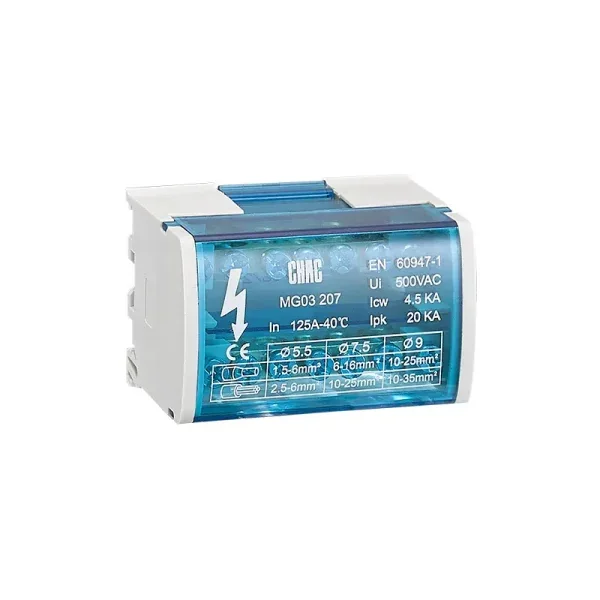
Evaluate equipment against the complete specification and manufacturer documentation. For projects whose market requirements match the proposed equipment, CHAC’s distribution boxes provide a product reference for discussing circuit layout. Exact ratings, permitted devices, installation conditions, and local acceptance still require verification. This is not a recommendation to substitute a CHAC enclosure or DIN-rail device into a proprietary US panelboard.
Closeout is the point at which many otherwise sound upgrades lose long-term value. Replace temporary markings with durable source, circuit, and shutdown labels. Update the one-line diagram and circuit directory after field changes, and include the final load calculation, equipment submittals, protection settings, torque records where required, test results, permits, and inspection outcome. Store editable and controlled PDF versions in the owner’s document system.
Create a reserve-space register that identifies each unused way as spare, reserved for a named project, or unavailable. Record the allowed load, phase, anticipated date, and the condition that requires engineering review. Record source-connection restrictions separately so a future installer does not move a backfeed breaker to free a convenient position. After any later tenant change or electrification project, update the directory and capacity model.
What other questions matter before an electrical panel upgrade?
Should I upgrade the service or install a larger panel?
A larger enclosure is useful when the main problem is circuit space and the existing feeder and service have sufficient calculated capacity. Upgrade the service when justified demand exceeds the existing supply or when utility and conductor limitations prevent the required expansion. Confirm both conditions with a load calculation and an upstream equipment review.
Can smart load management avoid a 200 amp service upgrade?
It can in some projects when flexible loads can be limited by a method permitted under the adopted code. It is not a universal substitute for capacity, damaged-equipment replacement, or breaker compatibility. Verify the required demand, equipment suitability, failure behavior, and local acceptance before comparing the operating compromise with conventional expansion.
Do EV charging and solar automatically require a panel upgrade?
No. EV charging requires a load-capacity assessment, while solar also requires a source-interconnection assessment. A panel may have enough capacity for a charger yet lack an acceptable solar connection arrangement. Check each against the applicable calculation, equipment markings, and utility requirements.
Is a 200 A service automatically enough for future electrification?
No. Service size is only one input. Confirm feeder capacity, bus rating, fault duty, voltage drop, grounding, available spaces, and the documented future-load scenario. Also distinguish the marked bus rating from the rating of the installed service disconnect.
How should solar panels and battery storage affect panel planning?
They change power-flow, protection, isolation, labeling, and operating-mode assumptions. Model generation, battery charging and discharge, backup loads, export limits, and shutdown behavior rather than subtracting solar nameplate output from the building peak. Retain the permitted connection positions and the diagram showing which sources can energize each bus section.
What records should an electrical panel upgrade include?
Keep the approved load calculation, one-line diagram, panel schedule, circuit directory, equipment data, protection settings, permits, inspection record, commissioning results, and as-built drawings. For solar, storage, or standby sources, retain the source isolation and transfer information. Where monitoring or load controls are installed, also retain sensor locations, control logic, account ownership, alarm tests, and baseline data.
How much spare capacity should an upgraded panel have?
There is no reliable universal percentage. Reserve physical spaces and calculated electrical headroom for documented future loads, while checking the bus, feeder, service, phase balance, and fault-current implications. Label reserved ways and review the capacity model whenever a new load or source is proposed.
Which references support the planning checks?
- Hướng dẫn ứng dụng bảng điều khiển, UL Solutions; current, short-circuit, field-installed equipment, standby, and parallel-source markings. Public guidance checked October 7, 2026; code-section numbering may vary by edition.
- NFPA 70: Quy chuẩn điện quốc gia, National Fire Protection Association; use the locally adopted edition for the installation.
- IEC 61439-1: Low-voltage switchgear and controlgear assemblies – Part 1: General rules, International Electrotechnical Commission; assembly requirements, not a substitute for local installation rules.
- 29 CFR 1910.333: Selection and use of work practices, US Occupational Safety and Health Administration; workplace electrical isolation and verification.
The useful distinction is between room for another circuit, capacity for another load, and permission to connect another source. Assess equipment condition first, calculate required demand, then verify the complete supply path and any proposed control method. For solar or storage, check connection limits and normal and backup operating modes before reserving breaker positions. Do not let an open main handle, a monitoring dashboard, or an apparently generous bus rating replace source isolation, equipment instructions, or the required calculation. A documented upgrade leaves the next project team a usable capacity model and a reliable shutdown procedure. Buyers developing a market-specific equipment specification can review CHAC’s thiết bị phân phối điện against that specification without assuming US panelboard compatibility.