Một MCB bị nhảy ngay khi khởi động có thể có đặc tính tác động tức thời không phù hợp, nhưng việc thay đổi đường cong trước khi kiểm tra tải có thể che giấu một sự cố thực sự. Một động cơ, máy biến áp hoặc cụm bộ điều khiển đèn LED tạo ra một dạng sóng dòng điện theo thời gian, chứ không chỉ đơn thuần là một danh mục tải. Thiết bị được chọn phải cho phép dòng khởi động nằm trong giới hạn chấp nhận được, đồng thời vẫn bảo vệ dây dẫn và cắt nhanh các sự cố. Hướng dẫn này so sánh các đường cong B, C và D, giải thích những thông số dòng khởi động nào là quan trọng, và chỉ ra các bước kiểm tra cần thực hiện để tránh việc thay đổi đường cong làm suy yếu thiết kế bảo vệ.
Câu trả lời ngắn gọn là: Sự khác biệt thực tế trong MCB loại B so với MCB loại C so với MCB loại D lựa chọn là dải dòng điện hoạt động tức thời: các dải thường được công bố là từ 3 đến 5 lần dòng định mức đối với loại B, từ 5 đến 10 lần đối với loại C, và từ 10 đến 20 lần đối với loại D; hãy xác minh đường cong thiết bị chính xác và cơ sở thử nghiệm. Lựa chọn dựa trên dòng khởi động đã đo được hoặc do nhà sản xuất công bố của tải, sau đó kiểm tra bảo vệ dây dẫn, dòng sự cố tiềm năng và thời gian ngắt mạch., khả năng phá vỡ, sự phối hợp giữa các bên thượng nguồn và hạ nguồn, cùng với các quy định địa phương của dự án. Một đường cong có độ dốc lớn hơn không phải là giải pháp chung để khắc phục tình trạng nhảy rơle gây phiền toái.
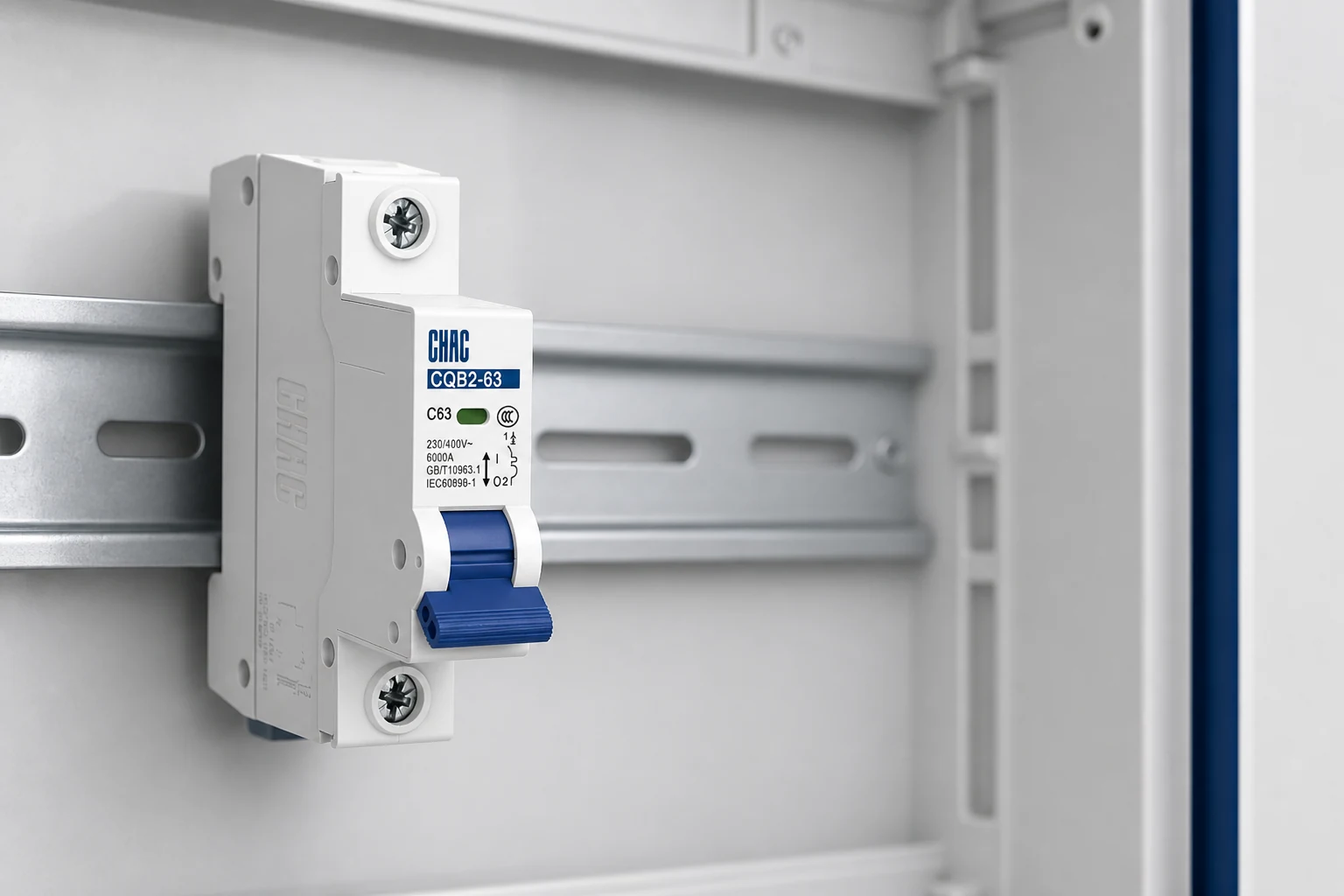
A cầu dao tự động thu nhỏ kết hợp bảo vệ quá tải nhiệt với chức năng cắt ngắn mạch từ tính nhanh. Ký hiệu đường cong chủ yếu mô tả đặc tính phản ứng từ tính; nó không nêu định mức dòng điện, khả năng cắt, điện áp, số cực hoặc trạng thái phê duyệt. Người mua cần so sánh rộng hơn có thể tham khảo các thông tin này. Sự khác biệt giữa MCB và MCCB.
Các đường cong B, C và D thực sự thay đổi những gì?
Các dải tác động tức thời B, C và D thường được công bố lần lượt là 3–5 × In, 5–10 × In và 10–20 × In, trong đó In là dòng điện định mức. Hãy sử dụng dải và đường cong đầy đủ được ghi trong tài liệu của thiết bị được cung cấp thay vì giả định rằng mọi sản phẩm công nghiệp đều sử dụng các giới hạn chính xác như vậy. Vì vậy, đối với một thiết bị 16 A minh họa, vùng từ tính là 48–80 A cho loại B, 80–160 A cho loại C và 160–320 A cho loại D. Đây là các dải tiêu chuẩn hóa, không phải là cam kết rằng mọi thiết bị sẽ tác động ở một giá trị dòng điện chính xác nhất định.
Phần tử nhiệt phản ứng với dòng quá tải kéo dài. Việc thay đổi từ B16 sang C16 không tạo ra mạch dẫn có công suất lớn hơn; nó chỉ thay đổi khả năng chịu đựng của thiết bị trước một xung ngắn trước khi hoạt động theo nguyên lý từ tính. Thời gian ngắt mạch cũng phụ thuộc vào dòng điện, nhiệt độ ban đầu, dung sai và đường cong do nhà sản xuất công bố. Xem phần giải thích ở cấp sản phẩm này về Đường cong ngắt mạch B, C và D.
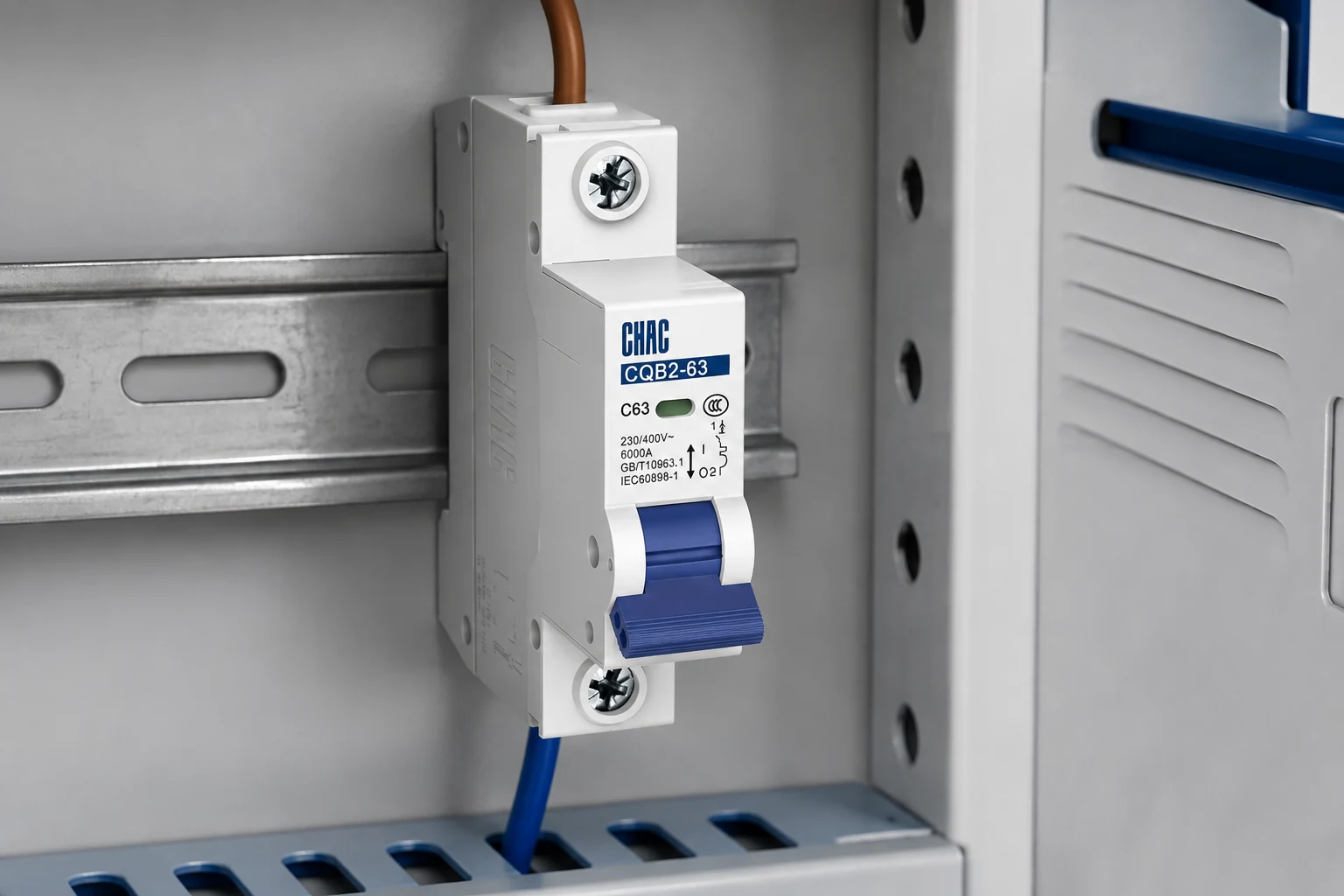
Các đường cong B, C và D so sánh như thế nào đối với cùng một dòng điện định mức?
Đây là bảng sàng lọc, không phải một đặc tính kỹ thuật. Tiêu chuẩn được công bố và đường cong đặc tính của thiết bị cung cấp khung tham chiếu, nhưng tính phù hợp còn phụ thuộc vào các tính toán mạch điện và dữ liệu do nhà sản xuất cung cấp. Các ví dụ mang tính điều kiện vì các sản phẩm trong cùng một hạng mục có dòng khởi động rất khác nhau. Để so sánh giữa MCB loại B và loại C, hãy giữ nguyên dòng định mức và đối chiếu dòng khởi động cũng như thời gian khởi động của tải với các đường cong đã công bố. Các dạng đường cong của cầu dao này không làm thay đổi dòng điện cho phép của dây dẫn.
| Đặc trưng | Đường cong B | Đường cong C | Đường cong D |
|---|---|---|---|
| Dải tần tức thời thường được công bố | 3–5 × Trong | 5–10 × Trong | 10–20 × Trong |
| Khả năng chịu dòng điện khởi động | Thấp nhất trong ba | Vừa phải | Cao nhất trong ba cái |
| Điểm khởi đầu có điều kiện | Mạch cuối kháng hoặc có dòng khởi động thấp | Tải tổng hợp hoặc thiết bị có dòng khởi động trung bình | Thiết bị có dòng khởi động cao được hỗ trợ bởi các tính toán |
| Yêu cầu về dòng sự cố để vận hành từ tính nhanh | Thấp hơn | Cao hơn | Cao nhất |
| Rủi ro trong mua sắm nếu chỉ lựa chọn dựa trên nhãn hiệu | Sự cố gây phiền toái do dòng điện khởi động cao | Tháng Năm vẫn có thể quá nhạy hoặc quá chậm đối với mạch thực tế. | Lỗi có thể không chạm tới dải từ; khả năng phối hợp có thể bị suy giảm. |
| Xu hướng chi phí đơn vị | Chỉ riêng đường cong chi phí hiếm khi là yếu tố so sánh chi phí hữu ích; tài liệu, xếp hạng, giấy chứng nhận phê duyệt, thời gian ngừng hoạt động và nguy cơ phải thiết kế lại mới quyết định tổng chi phí. | ||
Một đường cong quá nhạy có thể làm gián đoạn hoạt động bình thường. Còn một đường cong quá kém nhạy có thể không đáp ứng được thời gian tự động ngắt yêu cầu hoặc làm mất tính chọn lọc. Việc tiết kiệm chi phí đơn vị hiếm khi bù đắp được cho sự chậm trễ trong công tác vận hành thử, các lần gọi kỹ thuật viên đến khắc phục lặp đi lặp lại, hoặc khoảng trống trong phối hợp bảo vệ.
Nên lựa chọn theo kiểu tải và dòng điện khởi động lạnh như thế nào?
Bắt đầu với dạng sóng hiện tại, không phải danh mục thiết bị. Ghi lại dòng điện ổn định, đỉnh dòng khởi động và thời gian kéo dài, số lần khởi động mỗi giờ, hiện tượng đóng điện đồng thời, nhiệt độ môi trường xung quanh và tình huống khởi động nguội khắc nghiệt nhất. Theo nguyên tắc IEC 60364-4-43, dòng tải, định mức thiết bị bảo vệ và khả năng chịu tải của dây dẫn phải luôn được phối hợp; việc thay đổi đường cong đặc tính không bao giờ cho phép sử dụng cáp có tiết diện nhỏ hơn yêu cầu.
| Tải trọng hoặc điều kiện dự án | Bằng chứng cần thu thập | Hướng đường cong có điều kiện | Kiểm tra trước khi phê duyệt |
|---|---|---|---|
| Tải nhiệt hoặc tải điện trở đơn giản | Dòng điện định mức và nhiệm vụ đóng cắt | B có thể phù hợp khi dòng điện khởi động thấp. | Dung lượng dòng điện của dây dẫn, hệ số suy giảm do nhiệt độ môi trường, thời gian ngắt mạch |
| Chiếu sáng | Dòng điện khởi động của bộ điều khiển/ballast và số lượng thiết bị được bật cùng lúc | B hoặc C có thể phù hợp; dòng điện khởi động cao của bộ điều khiển LED có thể làm thay đổi kết quả. | Giới hạn của nhà sản xuất, phương pháp chuyển mạch, kết quả vòng lặp sự cố |
| Ổ cắm và các tải tổng hợp thông thường | Thiết bị kết nối và tính đa dạng có khả năng | B hoặc C tùy thuộc vào quy trình thực hành tại địa phương và đặc tính của tải trọng. | Các yêu cầu về mã áp dụng, cáp, đường dẫn sự cố chạm đất và dòng điện dư |
| Small motor or compressor | Locked-rotor/start current, acceleration time, starting method | C may work; D is considered only when higher inrush is proven | Motor overload protection, short-circuit coordination, start frequency |
| Transformer or bank of power supplies | Manufacturer inrush envelope at energization | C or D may be appropriate; phase angle and cold start matter | Primary conductors, upstream device, fault current, energization sequence |
If a breaker trips, distinguish normal inrush from overload, short circuit, earth leakage, overheating, loose connections, or a defective load. Moving from B to C or D without diagnosis can conceal the cause. This guide to a circuit breaker that keeps tripping explains the risk.
What standards and coordination checks govern the decision?
IEC 60898-1 covers circuit-breakers for overcurrent protection in household and similar installations for AC operation; its requirements and test methods underpin the familiar B, C, and D bands. IEC 60947-2 covers industrial circuit-breakers and uses a different application framework. A catalogue statement that a device was designed to a standard is not, by itself, third-party certification.
IEC 60364-4-43 addresses conductor overcurrent protection. The project also needs fault-loop or prospective-fault-current calculations and the applicable disconnection time. Because D needs more current than B to enter its magnetic band, a long run or higher loop impedance may make D unsuitable even if it stops start-up trips. Breaking capacity must independently meet the prospective short-circuit current.
Verify selectivity and backup protection with manufacturer tables or a time-current study. The market may apply IEC-based national rules, BS 7671, or another code; temperature, grouping, altitude, enclosure approval, residual-current protection, and equipment instructions can alter the answer. Unsupported claims can cause rejected submittals, rework, or shipment delays.
What should buyers verify before ordering a trip curve?
- Define voltage, frequency, poles, load current, cable, installation method, ambient conditions, and prospective fault current.
- Obtain the maker’s inrush curve or measure peak and duration under credible cold and simultaneous starts.
- Compare inrush with the full time-current envelope; calculate earth-fault clearing and short-circuit performance.
- Check conductor protection, breaking capacity, motor overload protection where relevant, selectivity, and enclosure compatibility.
- Confirm local code, exact-model documents, markings, certification requirements, and project approval before purchase.
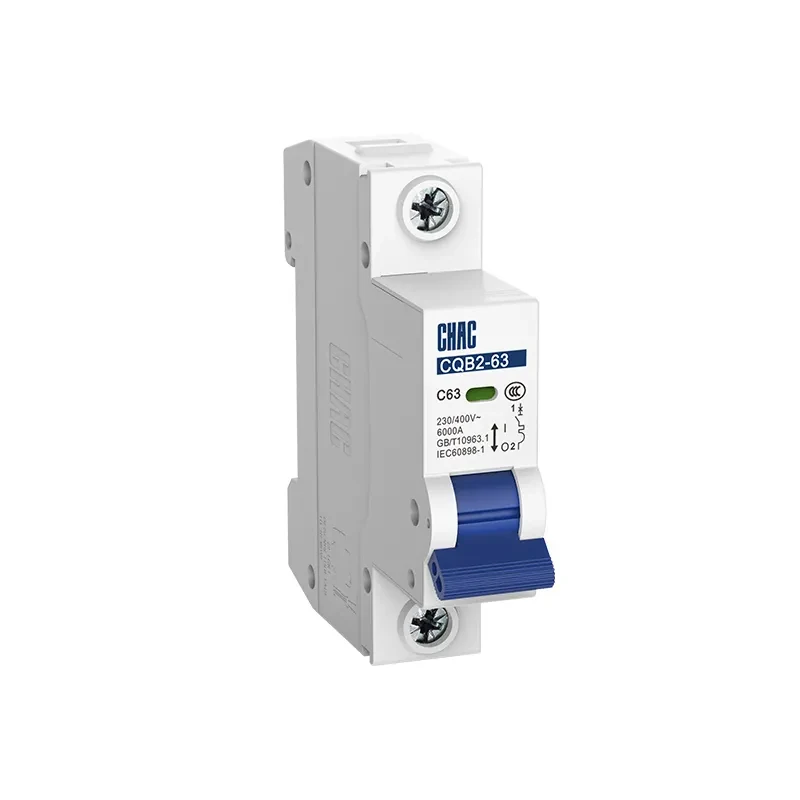
For CHAC Electric, the Lựa chọn cầu dao điện mini review can use the CQB2-63 as a documented product-family reference. The only certification confirmed for this product in this article is CCC. IEC 60898-1 is a standard and test framework, not a certification; buyers should request evidence for the exact model, rating, curve, and destination-market requirement rather than infer approval from a standard number.
Why can a curve change leave the underlying fault unresolved?
A C curve vs D curve MCB decision is conditional: the instantaneous band must tolerate the documented inrush while the thermal element, conductor protection, prospective fault current and disconnection requirements remain suitable. A curve change is not a substitute for checking a motor, transformer, power supply or wiring fault.
| Câu hỏi | Evidence-led answer | Check before changing curve |
|---|---|---|
| Is C curve better than D curve? | Neither is universally better; C and D are selected for different inrush conditions within the device and installation limits. | Load data, inrush waveform or manufacturer starting information. |
| Can a higher curve stop nuisance trips? | It may change instantaneous operation, but a loose connection, undersized conductor or failing load still requires diagnosis. | Terminal condition, conductor calculation and fault checks. |
| Does D curve mean a motor always needs it? | No. Motor duty, starting method, locked-rotor current, number of starts and coordination determine the choice. | Motor data and the complete protection scheme. |
Record MCB inrush current at the point where the protection is selected, and distinguish it from steady-state load current. A short, high motor starting current may be normal, but repeated starts, a jammed rotor, low control voltage or a deteriorating capacitor can produce a different symptom. The CQB2-63 curve guidance linked above can support a shortlist; the exact trip curve and installation conditions must still be confirmed from the ordered model documents.
Why does inrush duration matter as much as the peak?
A peak-current number without duration is an incomplete input. A brief capacitor-charging surge and a motor that takes longer to accelerate can present different operating duties even if their recorded peaks are similar. Compare the manufacturer’s starting envelope or suitable measurements with the full time-current curve, including tolerances. An ordinary meter that misses a short surge cannot establish that no inrush occurred.
For lighting or multiple power supplies, record how many units are energized together and whether cold start or automatic restoration changes that number. Staggering starts may be a design option when the equipment and controls support it, but it is not a substitute for identifying a stalled load, insulation fault or loose termination. Do not increase the ampere rating merely to tolerate a surge.
Công ty Schneider Electric circuit-breaker characteristics guide shows both familiar domestic curve bands and different examples for modular industrial devices. That is why the curve letter must be tied to the exact product. A higher instantaneous threshold also needs sufficient current in the relevant fault path to meet the required clearing time. Confirm that limit before changing B to C or C to D, particularly on long runs or sources with limited fault contribution.
What should be recorded before a trip curve is changed?
For a proposed Đường cong chuyến đi của MCB change, keep the original device identification, the reason for the change and the approved replacement specification together. Record the observed startup condition, including which loads start together and whether the supply mode changes. “Trips occasionally” gives a designer less useful information than a repeatable description of the event.
Ask the designer which assumptions remain valid under generator supply, a long feeder or a changed load group. Then attach the revised fault and disconnection assessment to the change record. Do not use a nuisance-trip improvement alone as proof that the new curve protects the circuit adequately.
Phần short-circuit current and breaking-capacity guide explains the separate maximum-fault check. Keeping that check beside the curve assessment prevents the replacement from being approved on starting behavior alone.
Các câu hỏi thường gặp
What is the difference between C curve and D curve MCBs?
Their instantaneous operating bands are different, so the acceptable inrush and the required fault-current margin are different. Select from the load data and the complete protection design, not from a preference for a higher letter.
Why does an MCB trip when equipment starts?
Inrush may be above the selected instantaneous band, but a fault, low supply voltage, stalled motor or loose connection can create the same symptom. Measure and diagnose the load before changing the curve.
Which is better, a B curve or C curve MCB?
Neither is universally better. B reaches its magnetic operating region at a lower multiple of rated current, while C tolerates more inrush; the correct choice is the one that passes load-starting, cable-protection, fault-clearing, and local-code checks.
Can I replace a B curve MCB with a C curve of the same amp rating?
Not from the amp rating alone. Confirm the load inrush, earth-fault loop or prospective fault current, disconnection time, breaking capacity, conductor protection, panel compatibility, and approval requirements before substituting.
Is a D curve MCB always required for motors?
No. Motor start current and duration vary with motor design, load torque, starter, voltage, and temperature; some circuits coordinate with C, while a documented high-inrush case may justify D. Motor overload protection and short-circuit coordination must also be checked.
Why does an MCB trip when equipment starts in cold weather?
Cold conditions can change lubricant drag, compressor pressure behavior, motor acceleration, transformer magnetizing inrush, or power-supply charging. Measure or obtain the worst-case inrush envelope and inspect for actual faults before changing curve or rating.
Does a higher trip curve increase breaking capacity?
No. B, C, and D describe instantaneous trip-current bands; breaking capacity is a separate rated short-circuit performance. Both must be suitable for the circuit, and neither replaces a coordination study.
Is an inrush peak alone enough to select an MCB curve?
No. Duration, repeated or simultaneous starts and the full device curve also matter. Use equipment starting data or suitable measurements, then verify conductor protection, fault clearing and breaking capacity.
Do all industrial breakers with a D label share one operating band?
No universal assumption should be made. Published industrial characteristics and test frameworks can differ. Read the exact device curve and declared standard before applying a familiar B/C/D screening range.
Tham khảo
- Schneider Electric: Fundamental characteristics of a circuit-breaker; published domestic and industrial curve examples; exact manufacturer curves govern.
- IET: BS 7671 Requirements for Electrical Installations; applicable national edition and circuit design must be verified.
- Schneider Electric: Motor protection functions; motor-protection duties extend beyond an MCB curve.
The durable rule is simple: select the curve from verified load behavior, then prove that the whole protective system still clears faults safely.
Review the CQB2-63 documentation against your single-line diagram and project requirements, then liên hệ Điện lực CHAC with the load profile, conductor details, fault-current calculation, destination market, and required compliance evidence for a focused selection discussion.