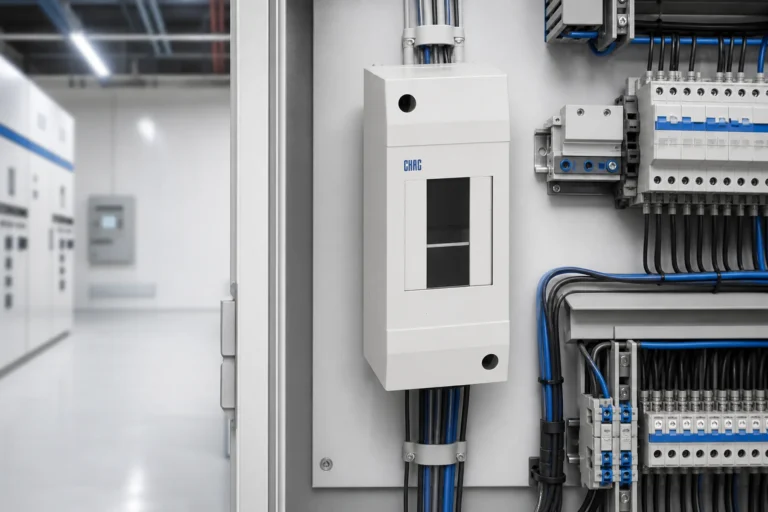
Type b mcb selection selection starts with the circuit role, the project requirement, and selected-model documentation. Type B MCB Selection Questions for Distribution Panels helps panel builders organize those checks before a device is specified or an RFQ is issued. Trip-curve intent remains a circuit-schedule decision confirmed against the selected miniature circuit breaker markings.
Part 1. What decision does a Type B MCB review support?
A Type B review asks whether the branch-circuit design intends a trip curve suited to loads with relatively modest inrush characteristics under the project rules. It is a curve-intent question, not a claim that Type B is always the safest or most available choice.
Part 2. Which load and circuit inputs should be collected first?
Gather the load list, expected inrush behavior, cable data, upstream device, ambient conditions, and the governing project specification. These inputs show whether Type B is being requested for the right circuit character.
Part 3. How should curve intent be written on the drawing?
Name the required trip curve on the circuit schedule and keep pole count, rating evidence, and breaking capacity as separate fields to confirm from the selected model. Avoid burying curve intent inside a vague note such as standard MCB.
مهم: Trip-curve letters are not interchangeable marketing labels; choosing Type B without the load and project rules can produce nuisance trips or inadequate protection relative to the design intent. (المصدر — IEC miniature circuit-breaker standards discovery)
Part 4. Where do nuisance-trip and discrimination questions appear?
If loads have higher inrush or the upstream/downstream arrangement is tight, the design team must revisit whether Type B still matches the intended operating profile. That revisit belongs in the protection review, not in a catalogue substitution email.
Part 5. What belongs in a Type B MCB RFQ?
State circuit role, requested trip curve, pole arrangement, installation context, drawings, documentation pack, and any branding requirements. Ask suppliers to confirm the exact model markings rather than a generic Type B claim.
تسهل قائمة إدخال طلب عرض الأسعار (RFQ) المدمجة مقارنة ردود الموردين:
| يجب على المشتري توفير | لماذا هذا مهم | خطأ شایع |
|---|---|---|
| مجموعة الرسومات الحالية | يحدد حدود الدائرة الكهربائية | إرسال اسم منتج بدون رسم توضيحي |
| الوظائف المطلوبة | تجعل الطلب قابلاً للمراجعة | التعامل مع الخيارات غير المؤكدة كمعايير قياسية |
| سياق التثبيت | يحدد شروط المشروع للتأكيد | باستراض أن نسخ الفئة يمثل موافقة على المشروع |
| طلب توثيق | يربط طلب عرض الأسعار بالدليل الدقيق | قبول المطالبات العامة بدلاً من بيانات النموذج |
| إرسال مع اقتباس | يجعل مقارنة الموردين قابلة للمراجعة | الاقتباس بدون حزمة الأدلة المطلوبة |
للحصول على سياق أوسع، راجع type b mcb selection product family والمتعلقة صفحة خط الإنتاج.
الجزء 6. أي مسار منتج لـ CHAC يبدأ مناقشة المصادر؟
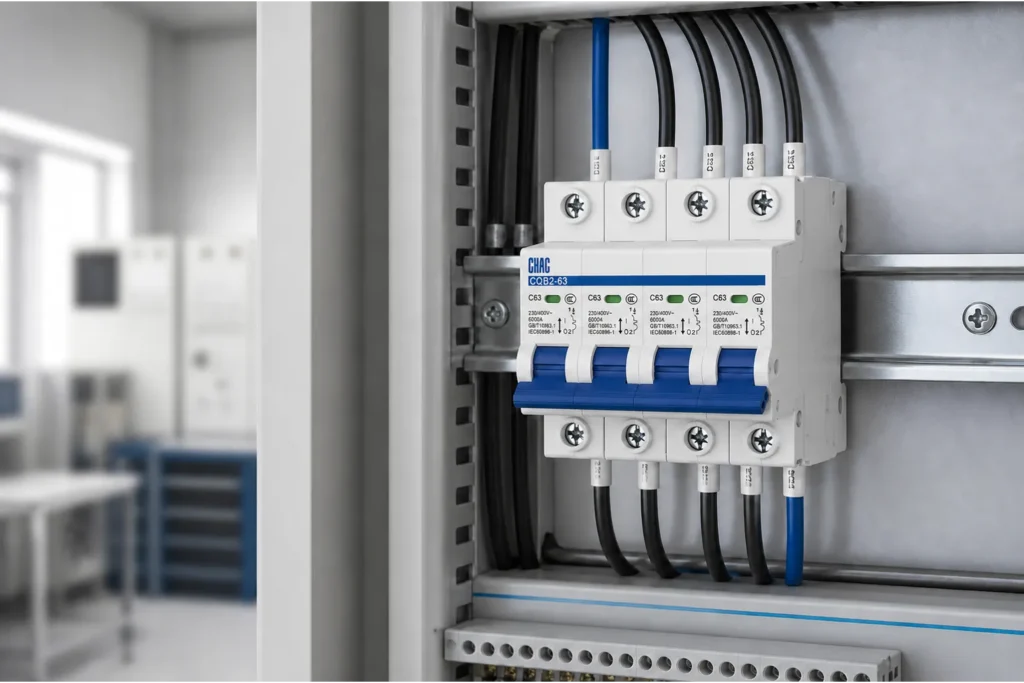
The CQB2-63 miniature circuit breaker product route is a suitable starting point after the curve intent is written, with the MCB category for family context. The product route does not by itself prove every Type B rating option for a given panel.
توصية بالمنتج
قاطع الدائرة المصغر CQB2-63 أنظمة الطاقة | سي إتش إيه سي إليكتريك
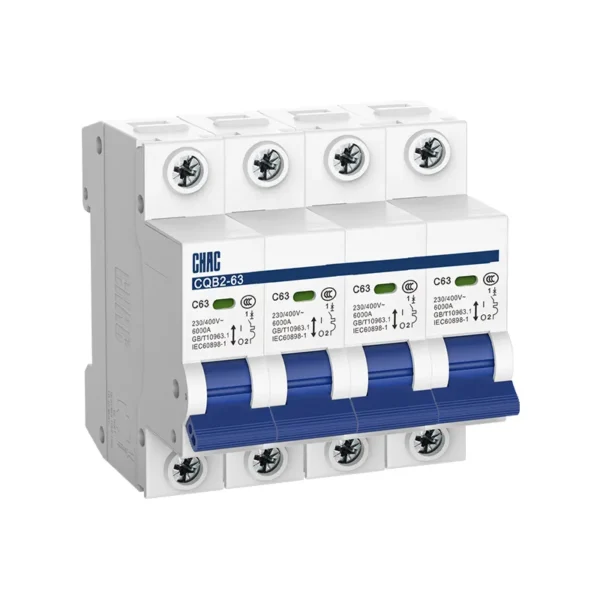
استخدم المنشور صفحة منتج CHAC ذات الصلة as a documented product route starting point for a product discussion only after the RFQ inputs are complete. Private-label MCB packaging requests can use the صفحة تخصيص التوصيلات الكهربائية. Stocking a Type B breaker is not the same as proving the load inrush profile matches that curve intent.
Part 7. Where does Type B curve selection need a protection revisit?
This article supports early branch-circuit specification. It is not a discrimination study, a live panel modification method, or a substitute for selected-model markings and project approval. Record a drawing review of inrush notes next to the Type B request so curve intent is auditable.
Fit Boundary: Type B curve intent support ends before discrimination studies or live panel modifications.
قراءة ذات صلة: مقالٌ أضيق نطاقاً نُشِرَ مسبقاً في مجلة شاك تم ربطه للسياق، وليس كبديل لنطاق قرار هذه المقالة.
Send the branch schedule and curve request to اتصل بـ CHAC Electric for an MCB product-route discussion.
الأسئلة المتكررة
What does Type B refer to on an MCB?
It refers to a trip-curve intent defined by the product standard family and confirmed on the selected model markings.
Can Type B be chosen because it is commonly stocked?
Stock availability is not a design approval; match the curve to the circuit and project rules first.
How is this different from pole-count selection?
Pole count and trip curve answer different questions and should be specified as separate RFQ fields.
What load information helps the curve review?
Provide load type, expected inrush context, and the circuit schedule notes that define operating expectations.
What should the supplier confirm in writing?
Confirm the proposed model identification, marked trip curve, and the documents requested in the RFQ.
When should the curve decision be locked?
Lock it after the load list and protection review are complete, before the panel bill of materials is released.