Imagine a hypothetical home-workshop buyer in Portland ordering a 100 A cable after reading two conflicting charts. One says 4 AWG copper and another says 3 AWG. The discrepancy is resolved only when the designer checks whether the feeder supplies the whole dwelling or a separate workshop.
ملخص: For a qualifying NEC 310.12 dwelling supply, 4 AWG copper or 2 AWG aluminum is a familiar 100 A starting selection. Under ordinary 75°C Table 310.16 conditions, 3 AWG copper or 1 AWG aluminum provides 100 A. Establish the applicable rule before ordering; temperature, grouping, terminals and voltage drop can change the final choice.
The circuit purpose explains why 100 A charts disagree
The correct wire size for 100 amp service depends on the supply covered by the chart. A dwelling allowance and an ordinary feeder ampacity table use different conditions. Neither chart should be copied without those conditions.
For a qualifying dwelling circuit, 100 A × 83% equals 83 A. At the familiar 75°C table values, 4 AWG copper is 85 A and 2 AWG aluminum is 90 A. Their use for the qualifying 100 A supply relies on NEC 310.12, not on changing their ordinary table ratings.
A feeder serving only a workshop or a portion of a building may not meet that allowance. Have the circuit scope established on the approved drawing, along with the locally adopted code edition. Existing cable size is not proof that a new or changed installation satisfies the same rule.
Cable markings and terminals can change the answer
An ordinary 75°C table starting point for 100 A is 3 AWG copper or 1 AWG aluminum. That statement assumes suitable wiring conditions and 75°C equipment terminations. It does not eliminate conductor correction or adjustment requirements.
A 100 amp copper wire size selection also depends on the cable type. Some cable rules use the 60°C ampacity even where individual insulation markings are higher. Check the wiring-method rules rather than lifting a THHN table value for a different cable assembly.
Read all conductors in a cable designation. A description such as 2-2-4 may be shorthand for particular conductor sizes, but it does not establish material, conductor count, wet-location suitability or permission for a new feeder. Verify the actual product marking and required neutral and equipment-grounding arrangement.
Check the route before fixing the purchase quantity
A longer run can justify a larger conductor for voltage drop even after thermal ampacity passes. Include the load, voltage, one-way route length and actual conductor data. Avoid treating a universal distance limit as a substitute for calculation.
Larger conductors affect lug range, bend space, pulling effort and conduit fill. Confirm equipment acceptance before ordering a voltage-drop-driven increase. An approved splice or connector arrangement must itself satisfy enclosure and installation requirements.
For repeat projects, keep a short decision record: circuit scope, selected rule, material, terminal temperature, correction assumptions and route length. This is more useful than retaining a single chart screenshot because another team can see why the selection was made.
Compare the selection criteria
| 100 A selection basis | Copper | Aluminum |
|---|---|---|
| Qualifying NEC 310.12 dwelling supply | 4 AWG | 2 AWG |
| General 75°C Table 310.16 starting point | 3 AWG | 1 AWG |
| Ordinary 75°C rating of the dwelling choices | 4 AWG: 85 A | 2 AWG: 90 A |
Check the conditions that change the selection
| Check | لماذا هذا مهم | Procurement action |
|---|---|---|
| Circuit scope | Determines allowance eligibility | State whole-dwelling or other feeder |
| Cable type | Can change usable temperature basis | Order the exact approved cable marking |
| Terminals | Limit material, size and temperature | Confirm lug range and instructions |
| Route length | Affects voltage drop and installation effort | Coordinate cable size with raceway and enclosure |
Apply the correct standards and approval scope
NEC 310.12, 310.16, 110.14 and the applicable wiring-method and grounding rules must be read together. The examples are conditional starting points, not approval of a particular installation. Utility and local authority requirements can add constraints.
What to confirm before placing an order
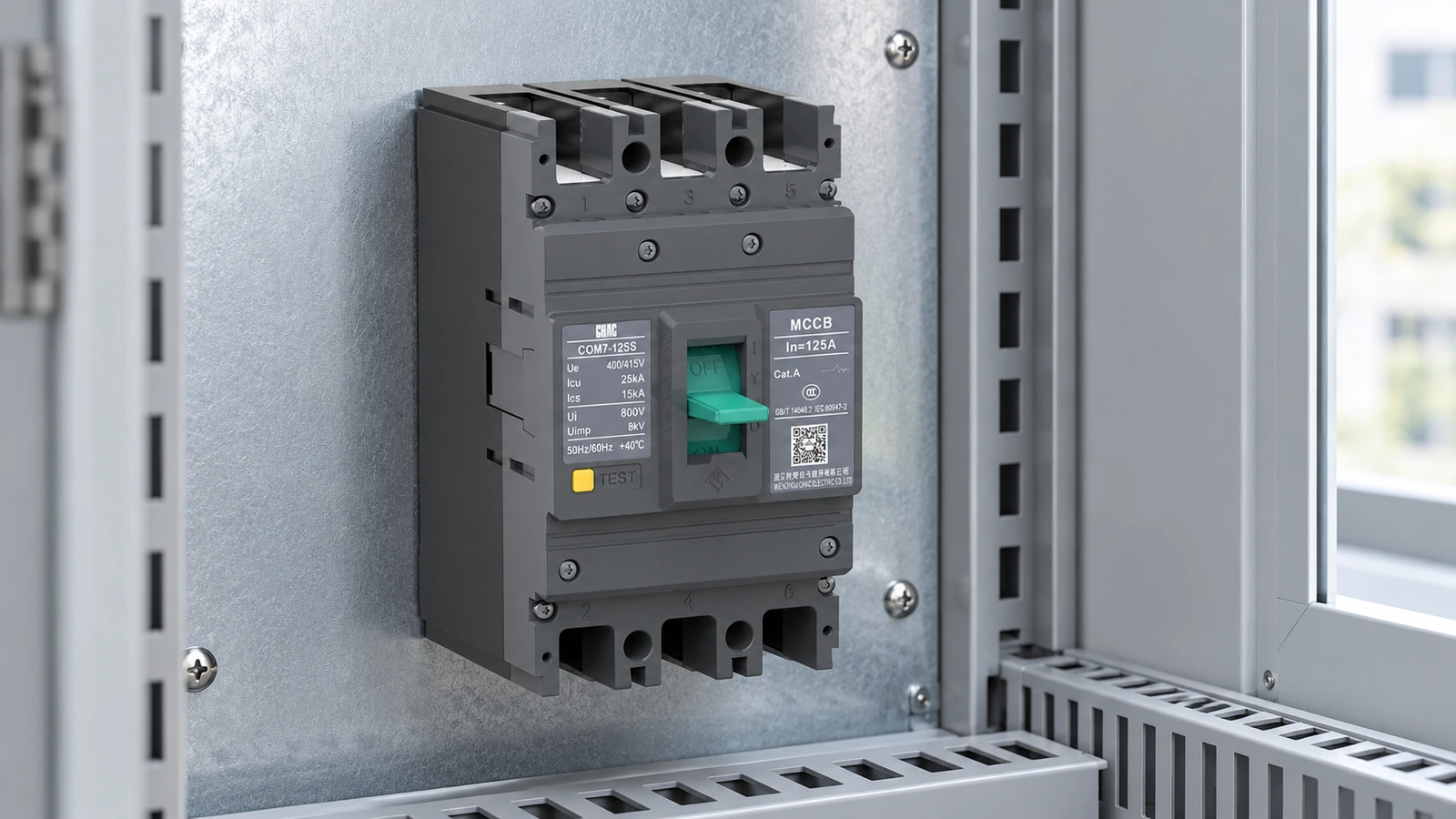
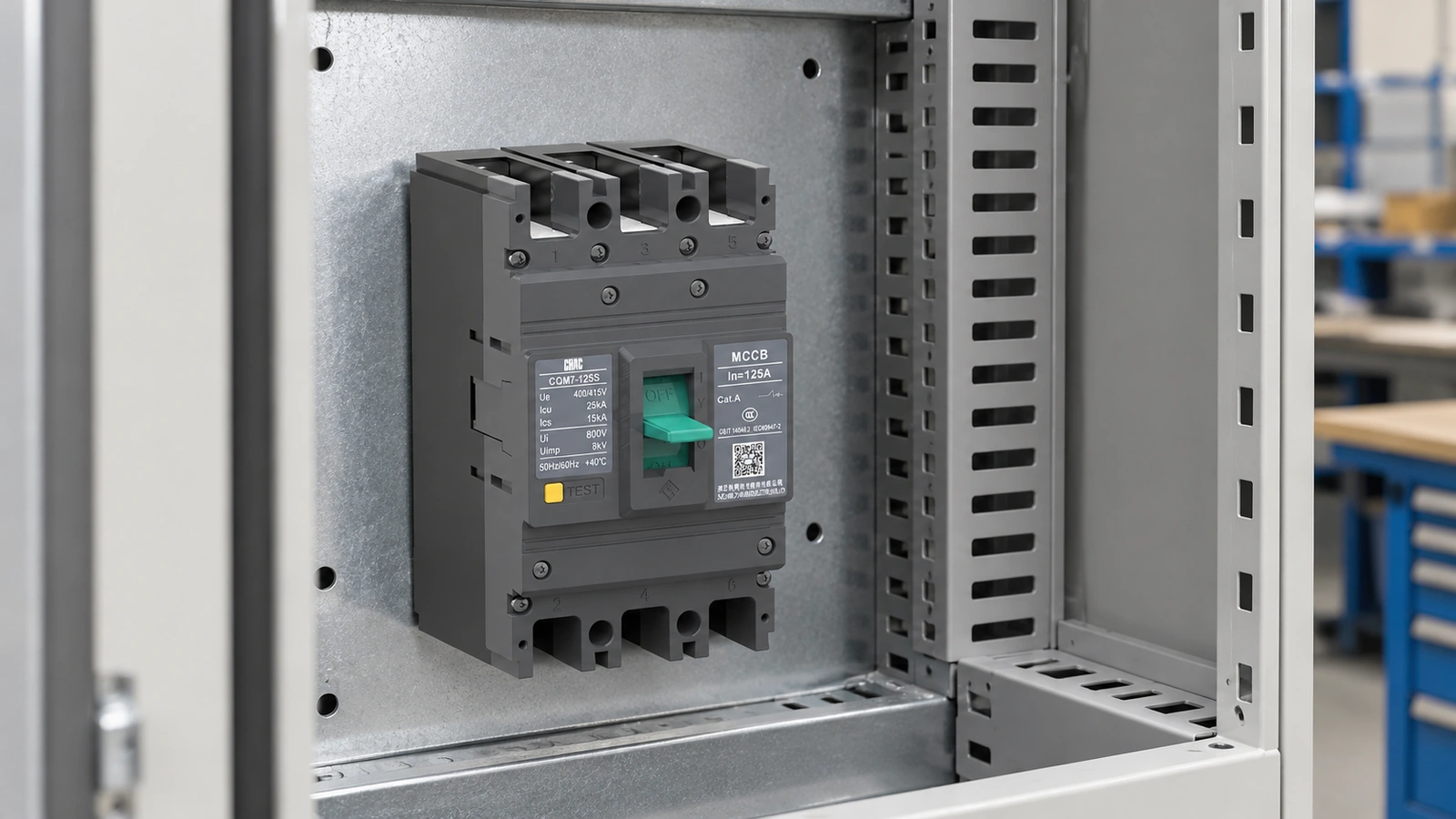
For CHAC 100 A-capable MCB variants أو MCCB configurations, obtain the exact model’s terminal and application data before coordinating the cable. A 100 amp wire size chart cannot establish the breaker’s destination-market listing, panel compatibility or fault rating.
For related selection details, read the guide to circuit breaker size and rating.
الأسئلة الشائعة
Is 2-2-4 wire good for 100 amp service?
The shorthand is insufficient to decide. Verify material, full conductor arrangement, insulation, application and whether a qualifying dwelling allowance applies.
Can 6 gauge wire handle 100 amps?
It is not an ordinary 100 A conductor under the standard table conditions discussed here. Do not enlarge the breaker to 100 A on that basis.
What wire size is normally used for 100 amp service?
Qualifying dwelling supplies commonly use 4 AWG copper or 2 AWG aluminum. Ordinary 75°C feeder starting points are 3 AWG copper or 1 AWG aluminum, before other conditions.
How does copper compare with aluminum for 100 A?
Aluminum normally needs a larger cross-section for comparable ampacity. Compare terminal acceptance, installed space and installation cost as well as cable price.
How does wire length affect 100 amp service?
A longer route increases impedance and voltage drop. The final design may need larger conductors, subject to the equipment’s terminal and enclosure limits.
Which NEC table should be checked for 100 amp service?
Check whether 310.12 applies, then the relevant conductor table and other installation rules. A single table does not resolve every service or feeder condition.
المراجع
- NFPA 70 — National Electrical Code
- Southwire — conductor, voltage-drop and conduit calculation tools
- OSHA 1910.303 — electrical equipment and installation requirements
For model-specific selection, review the CHAC product details and send the application conditions, quantity and destination requirements through the contact page.