A breaker that trips is reporting a condition, not identifying its cause. Replacing it before identifying the load, timing and protection function can leave the original fault in place. Raising its ampere rating can be worse: it may remove the protection the conductors were meant to have.
A circuit breaker can trip because of overload or short circuit. Devices with additional functions may also respond to residual current, arcing, undervoltage or an external trip signal. Heat and connection problems can influence operation too. First identify the exact protective device and any trip indication, then investigate the circuit under a qualified person’s safe work procedure.
What can the timing of a trip tell you?
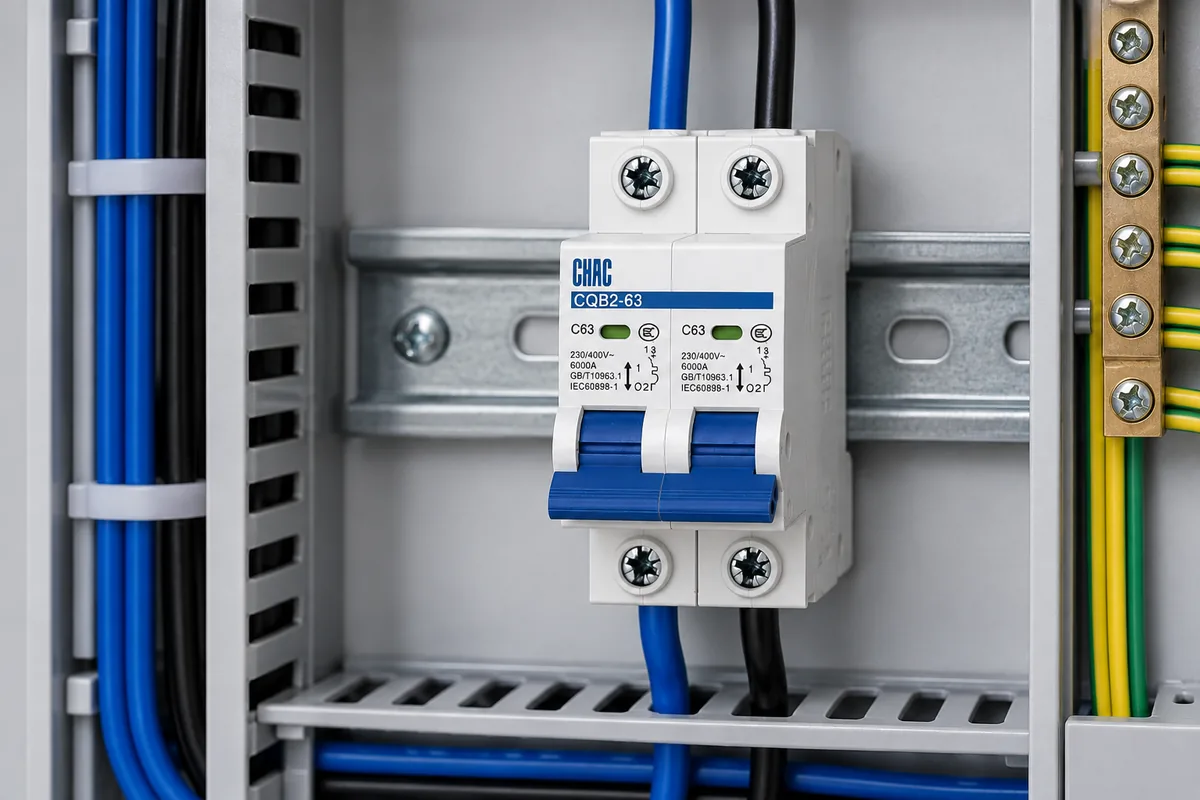
Circuit breaker trip causes are easier to narrow down when the event is recorded accurately. Note whether the breaker opens immediately, during equipment starting, after several minutes or only in wet weather. Timing is a clue, not a diagnosis: different protective functions can operate quickly, and a recently heated thermal element may trip sooner than a cold one.
| Observed pattern | Possible direction for investigation | Evidence a qualified person needs |
|---|---|---|
| Immediate trip on energization | Short circuit, wiring fault or another fast protective function | Trip indication, circuit condition and relevant tests |
| Trip during motor or transformer starting | Starting current, supply issue, fault or unsuitable protection settings | Load data, starting profile and trip curve |
| Trip after sustained operation | Overload, high ambient temperature or connection heating | Load history, derating conditions and termination inspection |
| Trip associated with moisture | Leakage or insulation deterioration, especially on residual-current protection | Device function, environment and isolated circuit tests |
| Trip without an apparent load change | Fixed loads, intermittent faults, control signals or device condition | Complete circuit schedule and recorded event details |
How does an overload differ from a short circuit?
An overload is excessive current in an otherwise intended circuit path. Several loads operating together, a stalled mechanism or equipment under unusual duty can create it. Thermal protection generally has an inverse-time response: the operating time depends on current and the device’s characteristics.
A short circuit creates an unintended low-impedance path and can produce much higher current. A thermal-magnetic breaker may operate through its instantaneous element, depending on the fault magnitude. The ground fault versus short circuit guide explains why the current path and the protective function both matter.
A normal overcurrent breaker is not a complete leakage or arc-fault detector. If the device is an RCBO, GFCI breaker or AFCI, its additional trip functions change the investigation. Use the manufacturer’s indication and instructions rather than assuming that every trip means an overload.
Why can a breaker trip with nothing plugged in?
“Nothing plugged in” may leave hardwired lighting, heating, outdoor equipment or downstream outlets connected. The fault can also be in the fixed wiring. An RCBO or GFCI may respond to moisture or a neutral-related problem even when the apparent load is small.
The useful next step is an accurate circuit inventory and a controlled investigation. It is not repeated reset attempts. In US workplaces, OSHA 1910.334(b)(2) requires a determination that the equipment and circuit can be safely energized after protective-device operation and prohibits repetitive manual reclosing. Its note distinguishes a known overload from a fault requiring examination.
Can heat or a loose connection make a breaker trip?
Yes, but temperature alone does not identify the cause. A thermal element responds to heating, and operating ambient or enclosure conditions can affect thermal-magnetic behavior. A poor termination can add resistance and localized heat. It may damage insulation or equipment without creating the same current pattern as a straightforward overload.
There is no universal external-case temperature at which every breaker must trip. Compare the actual load, manufacturer’s temperature guidance, terminal condition and applicable test limits. A device feeling warm does not prove failure, and an absence of tripping does not prove that a hot connection is safe.
Investigation of abnormal heating belongs to qualified personnel using an approved procedure. Do not remove panel covers, touch exposed connections or tighten energized terminals as a troubleshooting shortcut. The OSHA equipment requirements address sound connections, identified conductors and proper installation.
Can a different trip curve stop an unwanted trip?
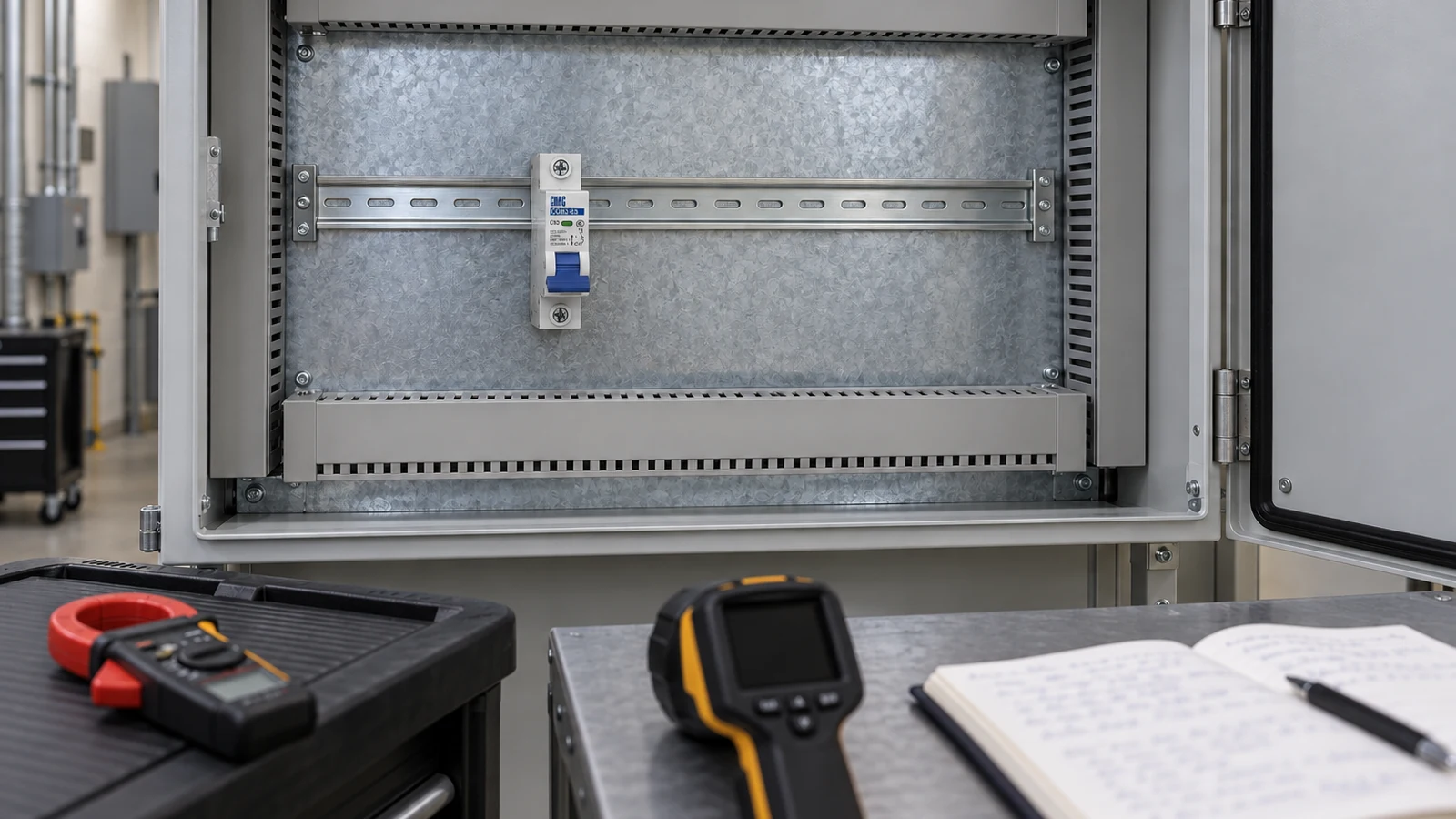
A different curve may suit a particular starting profile, but it also changes protection behavior. The designer has to verify fault current, conductor protection and the required disconnection conditions. Changing from one curve to another solely to keep equipment running is not a diagnosis.
The same restriction applies to increasing the ampere rating. A breaker must remain coordinated with the conductors and load. The MCB and MCCB selection guide explains why a larger or adjustable device is not automatically an acceptable replacement.
When is replacement justified?
Replacement can be appropriate when inspection or testing identifies a defective device, when the manufacturer’s criteria require it after a fault, or when the existing model cannot meet an approved revised design. Confirm the upstream cause first so the replacement is not exposed to the same problem.
Record the exact model, pole configuration, voltage, breaking capacity, trip characteristic, terminal requirements and panel compatibility. A like-looking device can have a different approval or fault rating. The thermal-magnetic circuit breaker description is only one part of that record.
For an MCB product reference, review the قاطع الدائرة الصغير CQB2-63 documentation against the approved circuit requirements. This does not establish suitability for an uninspected installation.
What else should be checked after a breaker trips?
Does repeated tripping mean the breaker is defective?
No. It may be responding correctly to an overload, fault or additional protection function. Device condition is one possible cause and should be assessed alongside the circuit.
How many trips mean a breaker must be replaced?
There is no universal count. Fault magnitude, interruption duty, condition and the manufacturer’s post-fault instructions matter. A severe fault is different from a routine overload trip.
Why does a breaker trip after several minutes?
Sustained overload or heating can produce a delayed thermal trip. Load measurements, ambient conditions and termination inspection help distinguish the causes.
Can a loose connection cause a trip without an overload?
A poor connection can produce localized heating and affect equipment, but it may not cause an ordinary breaker to operate. It still requires investigation and repair.
Is it safe to replace the breaker with a larger one?
Only after an approved design review confirms conductor capacity, load requirements, fault rating and equipment compatibility. Increasing the rating merely to stop trips can leave conductors under-protected.
What information should be given to the electrician?
Provide the device reference, trip indication, loads operating at the time, time to trip, recent changes and any signs of heat, moisture or damage. Keep the circuit out of service where its safety has not been established.
المراجع
- OSHA 1910.334: use of electrical equipment and reclosing after protective-device operation.
- OSHA 1910.303: electrical equipment and connection requirements.
- UL Solutions: Molded Case Circuit Breaker – Marking and Application Guide — trip, temperature, terminal and additional-function markings.
What is the right response to repeated tripping?
The right response is to identify the protective function and investigate the condition that operated it. Record the event, establish whether the issue follows load, starting, heat or moisture, and let a qualified person verify the circuit before re-energization. Avoid treating a reset, a bigger breaker or a different curve as a repair. A protection change belongs to a design review, while a device replacement needs evidence that the selected part suits the existing assembly. For projects requiring a documented استبدال مفتاح الحماية, CHAC’s MCB range can support product comparison after the cause and required ratings have been established.