A production line can lose an entire shift after a small downstream fault if the protection and recovery arrangements were never coordinated. Higher-rated components alone do not solve that problem. The system needs a documented architecture and a practical route back to operation.
Zusammenfassung: Industrial-grade is not one universal certification. Evaluate the actual supply, environment, duty and protection requirements. A complete system assigns functions to incoming protection, feeders, load devices and controls, while retaining clear isolation and recovery procedures.
Assign each protective function to a defined device
Industrial-grade electrical systems combine distribution, switching, control and protection for the intended process. Establish the incoming supply and fault conditions, then map feeders and loads. A circuit diagram should identify what interrupts a fault and which circuits remain available afterward.
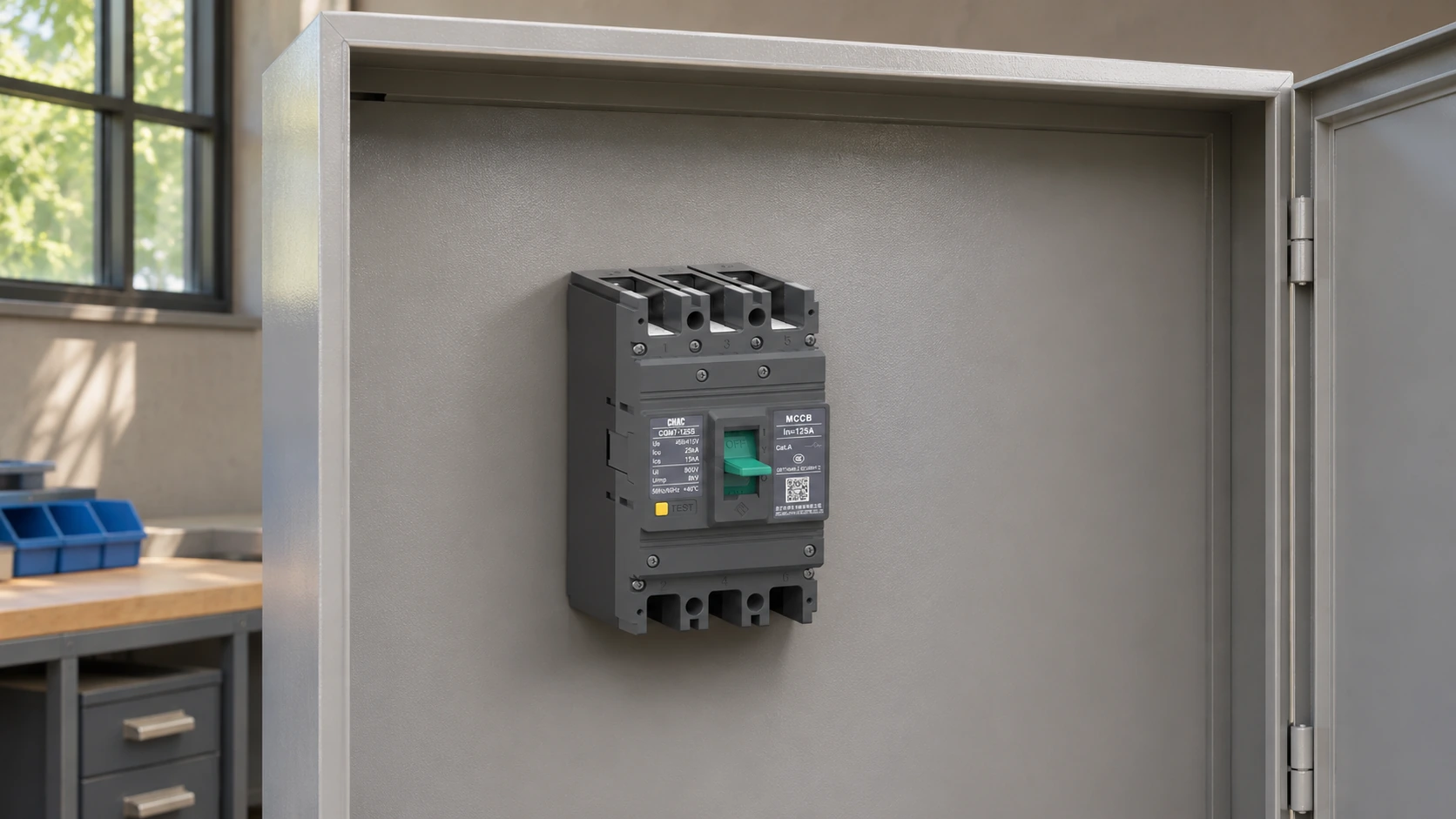
For larger feeders, review Formkörper-Schutzschalter against the actual rating and coordination requirements. For motor switching, AC-Kontaktoren perform a different function. Neither device name establishes complete motor protection or the safety of the finished machine.
Define the environment and operating duty in measurable terms
Nützlich industrial power distribution specification names temperature conditions, enclosure environment, contamination exposure, mounting and maintenance access. Avoid purchasing language such as heavy duty without an agreed meaning. The relevant product documents should show how each component may be used.
Duty matters as much as the maximum current on a label. Frequent operation, starting behavior and control requirements influence selection. Siemens and CHINT publish ranges spanning protection, switching and monitoring, but the project must still select the appropriate combination. Portfolio breadth does not eliminate the need to verify interfaces.
Plan for fault recovery before commissioning
A protection architecture should help the operator identify a problem and isolate the affected part of the system. Keep circuit identification, settings, drawings and fault records aligned. A trip indication that cannot be tied to a physical circuit is difficult to act on.
Define who may authorize re-energization, which checks are required and where replacement information is stored. OSHA 1910.334 addresses safe reclosing and qualified testing in relevant US workplaces. A spare device is useful only when its model, settings and compatibility are known; an unapproved substitute can create a new outage risk.
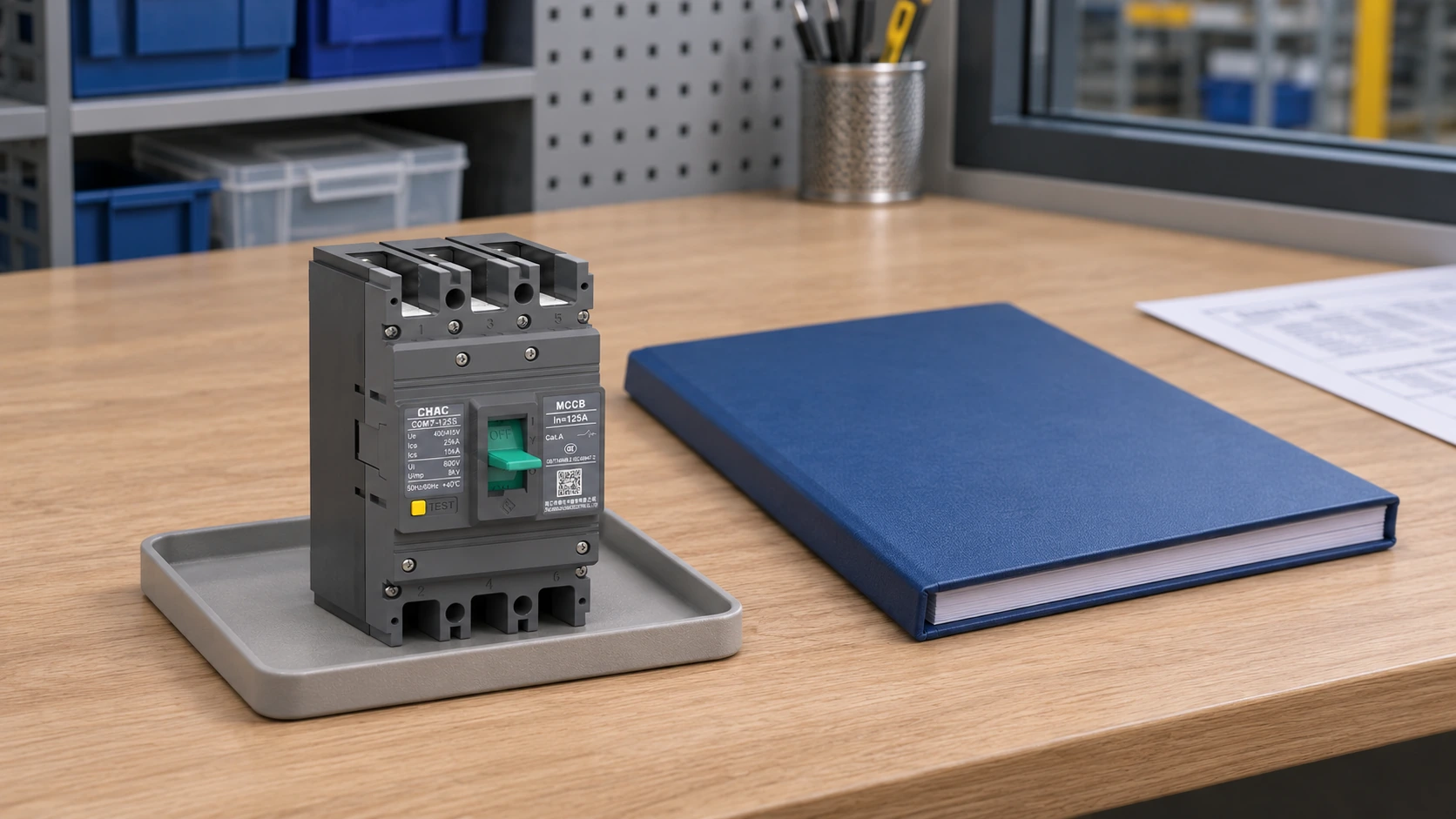
Vergleichen Sie die Optionen für diese Anwendung
| Layer | Main responsibility | Interface to verify |
|---|---|---|
| Incoming supply | Accept the source and overall fault conditions | Utility or upstream system |
| Feeder protection | Protect the outgoing distribution circuit | Conductors and downstream devices |
| Load switching | Operate the intended equipment | Load duty and control supply |
| Monitoring | Report conditions and events | Data quality and response process |
Überprüfen Sie die Bedingungen, die die Entscheidung beeinflussen.
| Projektzustand | Purchasing consequence |
|---|---|
| Continuous process | Recovery and spare strategy need attention |
| Harsh environment | Documented enclosure and component suitability |
| Frequent switching | Duty-specific component selection |
| Expansion plan | Defined electrical and physical allowances |
Die geltenden Regeln und Dokumentation bestätigen
Apply the destination installation rules and the appropriate product or assembly requirements. IEC 60947 covers defined low-voltage switchgear and controlgear functions; referencing it does not certify an entire industrial installation. Specify any required verification and acceptance evidence explicitly.
Verwandeln Sie die Anforderungen in einen Beschaffungsauftrag
Prepare the single-line diagram, load schedule, environment description and acceptance plan before ordering. CHAC Electric can supply protection and switching components for comparison with the approved schedule. Confirm exact models, documents and change-control arrangements.
Häufig gestellte Fragen
What is an industrial electrical system?
It is the power, control and protection arrangement serving an industrial process or facility. Its scope depends on the equipment and installation rather than one fixed collection of components.
What does industrial-grade mean?
The phrase needs supporting specifications. Ask which operating conditions, product requirements and verification records establish suitability for the intended service.
Are there only two types of electrical systems?
No single two-category division covers every use. Systems can be classified by AC/DC supply, voltage, distribution arrangement or application; use the classification relevant to the decision.
What should be included in a quotation?
Include equipment references, drawings, required documents, testing, interfaces, delivery and exclusions. Identify who is responsible for design and assembly acceptance.
How are industrial electrical systems priced?
Cost depends on scope, quantities, duty, environmental requirements and installation constraints. Compare the same bill of materials and acceptance responsibilities.
What improves fault recovery?
Clear circuit identification, usable records, authorized isolation procedures and approved replacement information help. Do not rely on repeated resets or undocumented substitutes.
Weiterführende Lektüre: Gebäudemanagement-elektrische Dienstleistungen: Stromverteilung, Überwachung und Instandhaltung.
Verweise
- Siemens Niederspannungsverteilung
- Elektrische Produkte von CHINT
- OSHA 1910.334 – Verwendung von Geräten
Für eine modellspezifische Anfrage, bitte hier nachlesen. CHAC-Elektroprodukte und Senden Sie die Bewerbungsanforderungen mit dem Bestimmungsort, der Menge und der erforderlichen Dokumentation.