Ein Schalttafelsteuergerät erhält nach dem Senden eines Fernauslösebefehls eine Öffnungsanzeige. Hat der Leistungsschalter tatsächlich geöffnet, ist er ausgelöst worden, oder hat die Rückmeldekette ihren Stromverlust? Werden diese Ereignisse als gleichwertig behandelt, kann dies einen fehlgeschlagenen Befehl verschleiern oder irreführende Alarme auslösen. Für Entwickler von Schaltanlagen ist die sinnvolle Unterscheidung zwischen Positionsrückmeldung, Auslöserückmeldung und befohlenem Öffnen zu treffen. Für jedes dieser Ereignisse muss ein eigener, dokumentierter Ablauf festgelegt werden.
Die kurze Antwort lautet, dass ein Hilfskontakt meldet die Schalterstellung, ein Alarmausgang meldet einen definierten Fahrzustand und ein Abwurfspannungseinheit Die Befehle werden bei Anliegen der vorgegebenen Steuerspannung ausgelöst. Es handelt sich hierbei um drei unterschiedliche Funktionen, die nicht als austauschbare Zubehörteile betrachtet werden können. Die genauen Kontaktzustände, erkannten Auslöseursachen, das Rückstellverhalten sowie die Montagekompatibilität hängen von dem gewählten Leistungsschalter und den entsprechenden Zubehörunterlagen ab. Keines dieser Signale stellt einen Nachweis für die Abwesenheit von Spannung dar.
Worin unterscheiden sich die drei Zusatzfunktionen?
Die Positionsanzeige gibt Auskunft darüber, ob sich der Mechanismus in seinem dokumentierten geöffneten oder geschlossenen Zustand befindet. Die Auslöseanzeige zeigt an, ob ein bestimmtes Auslöseereignis aufgetreten ist. Eine Fernauslösung akzeptiert einen Befehl; sie liefert jedoch an sich keine Bestätigung darüber, ob die befohlene Aktion erfolgreich ausgeführt wurde.
| Zubehör | Hauptrolle | Nützliche Steuerinformationen | Wichtiger Grenzwert |
|---|---|---|---|
| Hilfskontakt | Positionsrückmeldung | Öffnungs-/Schließanzeige oder Sequenzverriegelung | Identifiziert nicht den Grund für die Eröffnung. |
| Alarmausgang | Feedback zur Reise | Reisealarm, der einer Untersuchung bedarf | Erkannte Ereignisse und das Rücksetzverhalten sind modellspezifisch. |
| Shunt-Freigabe | Befehligte Öffnung | Fernöffnung durch eine Steuerschaltung ausgelöst | Requires the specified supply and separate feedback |
Die Schneider Electric FAQ FA115016, modified 21 October 2022, distinguishes alarm contacts that change only on a trip from auxiliary contacts that change whenever breaker contacts change. Its listed scope includes PowerPact H-, J- and P-frame breakers. It explains the distinction, but does not establish identical behavior for CHAC accessories.
Was kann die Schutzschalterrückmeldung tatsächlich feststellen?
An open-position signal cannot distinguish manual opening from protective tripping without additional information. A trip signal does not necessarily identify overload, short circuit or a remote release command. Obtain the manufacturer’s event-to-contact table rather than inferring the cause from one PLC input.
Define contact states for closed, manually open, tripped and reset conditions. For changeover contacts, identify the common terminal and verify what the drawing means by normally open or normally closed. The reference state must be explicit.
A de-energized PLC input is also ambiguous: it may indicate the intended state, broken wiring, a lost signal supply or an input fault. A normally closed circuit can reveal some interruptions, but cannot independently identify their cause. Document how the controller handles unknown or conflicting indications.
Neither position nor trip feedback is an absence-of-voltage measurement. Backfeeds and other supplies may remain present. Electrical work still requires the applicable isolation procedure and verification of voltage absence by competent personnel.
Warum könnte ein Fernauslösbefehl fehlschlagen?
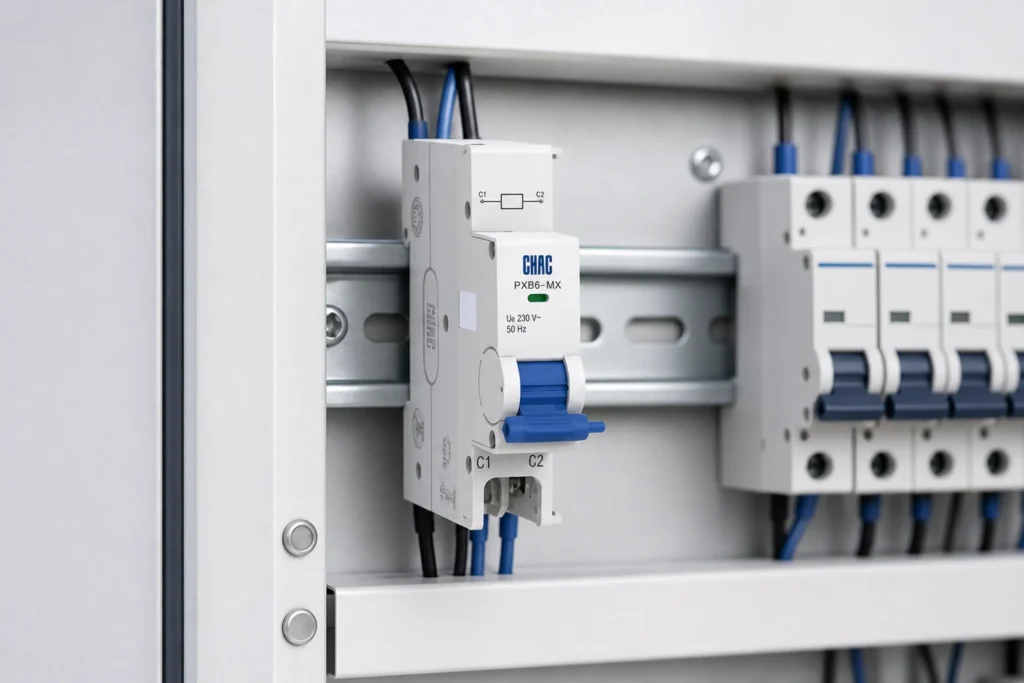
A shunt release depends on energy reaching its terminals. A controller output can operate while a fuse, connection, supply or intervening relay prevents the coil from receiving the required voltage. Confirm the release’s AC/DC designation, voltage range, command duration and duty restrictions before designing the circuit.
Loss of its control supply is not itself a guaranteed opening command. A shunt release should not be treated as an undervoltage release, which has a different operating purpose. If opening is required during supply failure, assess that requirement explicitly rather than relying on the accessory name.
Monitor the resulting breaker state separately from the command. A command-without-confirmation condition should trigger the engineered fault response; an assumed successful trip is not a substitute for feedback.
Wie sollte die Kompatibilität von Zubehör überprüft werden?
Confirm the exact breaker series, accessory reference, mounting interface and permitted accessory combinations. Similar housings or abbreviations do not demonstrate interchangeability. For an MCCB auxiliary contact, include the frame reference as well as the series. Circuit breaker auxiliary contacts also need model-specific contact-state information so the panel designer can distinguish normal opening, a trip indication and loss of feedback power. Also check contact switching ratings against the actual signal circuit, including any documented minimum switching requirements.
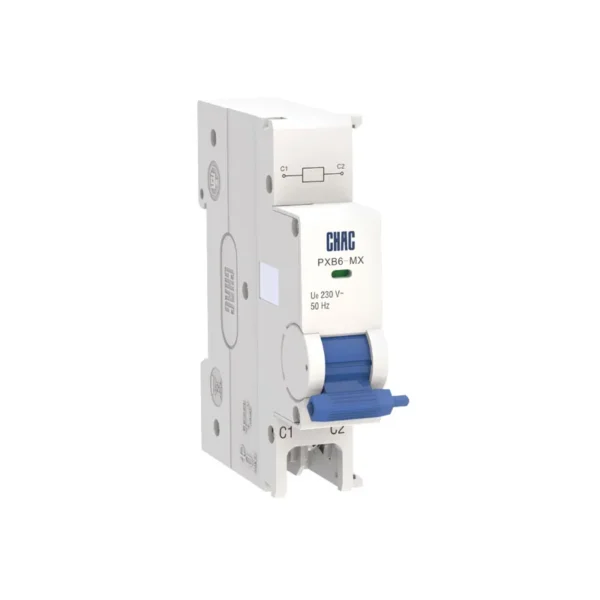
CHAC’s PXB6-OF Hilfskontakt and PXB6-MX Abwurfspannungseinheit pages provide relevant product starting points. The latter describes a remote release for the compatible PXB6 interface. Confirm the selected assembly and wiring instructions before approval; these listings do not establish compatibility with unrelated breaker or alarm-switch families.
Welche Nachweise sollte die Auftragserteilung erfassen?
Use a controlled commissioning plan appropriate to the assembly and manufacturer’s instructions. Retain evidence that connects physical operation, terminal states and controller interpretation:
- Record the installed breaker/accessory references and approved wiring diagram.
- Verify manual open/close indications against the documented contact table.
- Check trip indication using a manufacturer-approved procedure, without deliberately creating a live fault.
- Record release-terminal voltage during the command and the resulting position feedback.
- Verify reset behavior, loss-of-signal handling and the response to command/feedback disagreement.
This record is more useful than an unchecked statement that the remote-trip circuit works. It also reduces later troubleshooting caused by undocumented terminal assignments or inverted software logic.
Welche Fragen stellen sich bei der Regelungsdesign?
Can an auxiliary contact distinguish OFF from TRIPPED?
Position feedback alone generally cannot identify why the breaker opened. Use documented trip indication when the controller must distinguish those events.
Does a trip alarm identify the fault?
Not necessarily. Confirm which events operate the contact; identifying a specific cause may require additional protection-system information.
Does an open indication prove the circuit is safe to touch?
No. Feedback is not verification of voltage absence and does not exclude other sources of energization.
Will a shunt trip open the breaker if control power fails?
Do not assume so. Opening requires the specified energy at the release; assess supply-failure behavior separately.
What should be checked when a remote trip fails?
Under a safe diagnostic procedure, check the command path, release supply, wiring and mechanical compatibility. Compare the actual breaker state with the feedback rather than relying solely on a controller command bit.
Does removing the trip command reset or reclose the breaker?
Do not assume either action. Follow the selected model’s reset instructions and identify any separate mechanism needed for remote reclosing.
Woran sollte sich die endgültige Auswahl der Accessoires orientieren?
Select the function before selecting the accessory: position feedback for operating state, trip feedback for the documented trip event, and a release for commanded opening. Then verify the exact assembly, control supply and contact logic against model documentation. Finally, commission the complete command-and-feedback chain, including its loss-of-signal response and reset sequence. An indication that appears correct must not replace voltage-absence verification or a required safety assessment. CHAC product information can support component review, but unresolved event behavior or compatibility needs confirmation before the panel design is released. Kontaktieren Sie CHAC Electric with the breaker reference, control schematic and required operating sequence.
Which product documents support further review?
- CHAC PXB6-MX shunt release product information: review the published control-supply data alongside installation instructions.
- CHAC CQAS2 alarm switch product information: a separate product reference, not evidence of compatibility with the PXB6 assembly.