Um controlador de painel recebe uma indicação de abertura após enviar um comando remoto de disparo. O disjuntor abriu, foi acionado ou o circuito de feedback perdeu alimentação? Tratar esses eventos como idênticos pode ocultar um comando mal executado ou gerar alarmes enganosos. Para os engenheiros de painéis OEM, a distinção relevante está entre o feedback de posição, o feedback de disparo e a abertura comandada. Cada um requer sua própria sequência operacional documentada.
A resposta curta é que um contato auxiliar informa a posição do disjuntor, um contato de alarme relata uma condição de viagem definida e um disparo de desvio Os comandos são acionados quando alimentados com a tensão de controle especificada. Trata-se de três funções distintas, não sendo acessórios intercambiáveis. Os estados exatos dos contatos, as causas de disparo detectadas, o comportamento após o reset e a compatibilidade de montagem dependem do disjuntor selecionado e da documentação do acessório. Nenhum desses sinais comprova a ausência de tensão.
Em que se diferenciam as três funções acessórias?
A indicação de posição informa se o mecanismo está em seu estado aberto ou fechado conforme documentado. A indicação de disparo informa se ocorreu um evento de disparo específico. Uma liberação remota recebe um comando; por si só, ela não fornece confirmação de que a ação solicitada foi executada com sucesso.
| Acessório | Função principal | Informações úteis de controle | Limite importante |
|---|---|---|---|
| Contacto auxiliar | Feedback de posição | Indicação de aberto/fechado ou intertravamento de sequência | Não identifica o motivo da abertura |
| Contato de alarme | Feedback da viagem | Alarme de viagem que requer investigação | Os eventos detectados e o comportamento de reinicialização são específicos do modelo. |
| Liberação de shunt | Abertura comandada | Abertura remota iniciada por um circuito de controle | Requer a fonte de alimentação especificada e um feedback separado. |
da Schneider Electric FAQ FA115016, modified 21 October 2022, distinguishes alarm contacts that change only on a trip from auxiliary contacts that change whenever breaker contacts change. Its listed scope includes PowerPact H-, J- and P-frame breakers. It explains the distinction, but does not establish identical behavior for CHAC accessories.
O que o feedback do disjuntor pode realmente estabelecer?
An open-position signal cannot distinguish manual opening from protective tripping without additional information. A trip signal does not necessarily identify overload, short circuit or a remote release command. Obtain the manufacturer’s event-to-contact table rather than inferring the cause from one PLC input.
Define contact states for closed, manually open, tripped and reset conditions. For changeover contacts, identify the common terminal and verify what the drawing means by normally open or normally closed. The reference state must be explicit.
A de-energized PLC input is also ambiguous: it may indicate the intended state, broken wiring, a lost signal supply or an input fault. A normally closed circuit can reveal some interruptions, but cannot independently identify their cause. Document how the controller handles unknown or conflicting indications.
Neither position nor trip feedback is an absence-of-voltage measurement. Backfeeds and other supplies may remain present. Electrical work still requires the applicable isolation procedure and verification of voltage absence by competent personnel.
Por que um comando de viagem remota pode falhar?
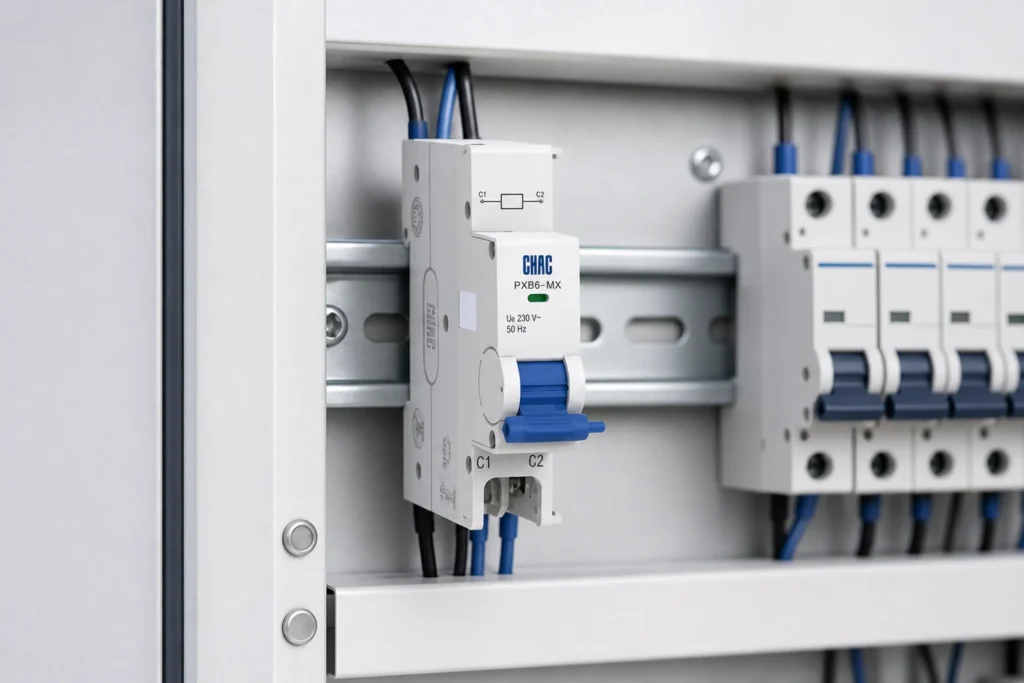
A shunt release depends on energy reaching its terminals. A controller output can operate while a fuse, connection, supply or intervening relay prevents the coil from receiving the required voltage. Confirm the release’s AC/DC designation, voltage range, command duration and duty restrictions before designing the circuit.
Loss of its control supply is not itself a guaranteed opening command. A shunt release should not be treated as an undervoltage release, which has a different operating purpose. If opening is required during supply failure, assess that requirement explicitly rather than relying on the accessory name.
Monitor the resulting breaker state separately from the command. A command-without-confirmation condition should trigger the engineered fault response; an assumed successful trip is not a substitute for feedback.
Como a compatibilidade dos acessórios deve ser verificada?
Confirm the exact breaker series, accessory reference, mounting interface and permitted accessory combinations. Similar housings or abbreviations do not demonstrate interchangeability. For an MCCB auxiliary contact, include the frame reference as well as the series. Circuit breaker auxiliary contacts also need model-specific contact-state information so the panel designer can distinguish normal opening, a trip indication and loss of feedback power. Also check contact switching ratings against the actual signal circuit, including any documented minimum switching requirements.
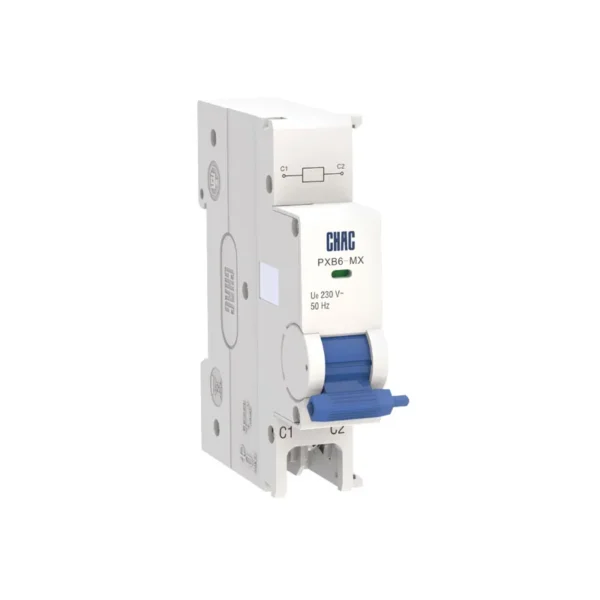
CHAC’s PXB6-OF contato auxiliar and PXB6-MX disparo de desvio pages provide relevant product starting points. The latter describes a remote release for the compatible PXB6 interface. Confirm the selected assembly and wiring instructions before approval; these listings do not establish compatibility with unrelated breaker or alarm-switch families.
Que evidências a comissão deve captar?
Use a controlled commissioning plan appropriate to the assembly and manufacturer’s instructions. Retain evidence that connects physical operation, terminal states and controller interpretation:
- Record the installed breaker/accessory references and approved wiring diagram.
- Verify manual open/close indications against the documented contact table.
- Check trip indication using a manufacturer-approved procedure, without deliberately creating a live fault.
- Record release-terminal voltage during the command and the resulting position feedback.
- Verify reset behavior, loss-of-signal handling and the response to command/feedback disagreement.
This record is more useful than an unchecked statement that the remote-trip circuit works. It also reduces later troubleshooting caused by undocumented terminal assignments or inverted software logic.
Quais questões surgem durante o projeto de controle?
Can an auxiliary contact distinguish OFF from TRIPPED?
Position feedback alone generally cannot identify why the breaker opened. Use documented trip indication when the controller must distinguish those events.
Does a trip alarm identify the fault?
Not necessarily. Confirm which events operate the contact; identifying a specific cause may require additional protection-system information.
Does an open indication prove the circuit is safe to touch?
No. Feedback is not verification of voltage absence and does not exclude other sources of energization.
Will a shunt trip open the breaker if control power fails?
Do not assume so. Opening requires the specified energy at the release; assess supply-failure behavior separately.
What should be checked when a remote trip fails?
Under a safe diagnostic procedure, check the command path, release supply, wiring and mechanical compatibility. Compare the actual breaker state with the feedback rather than relying solely on a controller command bit.
Does removing the trip command reset or reclose the breaker?
Do not assume either action. Follow the selected model’s reset instructions and identify any separate mechanism needed for remote reclosing.
O que deve determinar a seleção final dos acessórios?
Select the function before selecting the accessory: position feedback for operating state, trip feedback for the documented trip event, and a release for commanded opening. Then verify the exact assembly, control supply and contact logic against model documentation. Finally, commission the complete command-and-feedback chain, including its loss-of-signal response and reset sequence. An indication that appears correct must not replace voltage-absence verification or a required safety assessment. CHAC product information can support component review, but unresolved event behavior or compatibility needs confirmation before the panel design is released. Contate a CHAC Electric with the breaker reference, control schematic and required operating sequence.
Which product documents support further review?
- CHAC PXB6-MX shunt release product information: review the published control-supply data alongside installation instructions.
- CHAC CQAS2 alarm switch product information: a separate product reference, not evidence of compatibility with the PXB6 assembly.