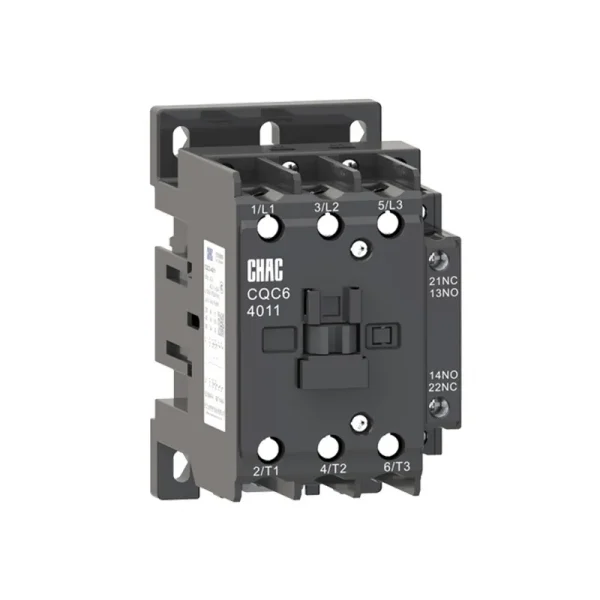
Kalkulator für die Auswahl von Schützeinheiten — AC-1 / AC-3
Schätzen Sie den Strom des AC-Kontaktors und vergleichen Sie dreiphasige AC-3-Lasten mit den Strom- und Motor-kW-Tabellen von CHAC CQC6 bei 230, 400 oder 690 V.
Vergleichen Sie eine dreiphasige AC-3-Last mit den veröffentlichten CQC6-Strom- und Motorleistungsspalten. AC-1 liefert einen Strombezugswert für eine gesonderte Datenblattprüfung.
Ergebnis
AC-3 Tisch-Shortlist
CQC6-25Nur Tischübereinstimmung; keine Starterkoordination verifiziertCQC6-25 ist das erste gelistete Modell, das sowohl die AC-3-Strom- als auch die Motorleistungsanforderungen bei 400 V erfüllt.
I = Pwelle × 1,000 / (√3 × V × PF × η); vergleiche AC-3 Ie und Motor kWDas CQC6-Referenzmodell verwendet sowohl die veröffentlichten aktuellen als auch die kW-Spalten bei der ausgewählten Spannung. Bestätigen Sie vor der Bestellung den tatsächlichen Nennstrom, die Spulenspannung, die Anlaufbelastung, die Schaltfrequenz und die Koordination.
Warum dieses Ergebnis?
Erforderlich AC-3 Ie ≥ 20.75 A; Motornennleistung ≥ 11 kW. Der Strom wird aus der Wellenleistung, dem Leistungsfaktor und dem Wirkungsgrad geschätzt.
Ausgewählte Referenz- und benachbarte aufgeführte Optionen. Die angezeigten Werte sind gerundet; bei Prüfungen werden die nicht gerundeten Werte verwendet.
| Kontaktor | AC-3 aktuell | Motorleistung bei 400 V | Grund |
|---|---|---|---|
| CQC6-18 | 18.00 A · Untenstehende Anforderung | 7.5 kW · Unter Anforderung | AC-3 Strom unter Anforderung; Motorleistungsnennwert unter Anforderung |
| CQC6-25Ausgewählte Referenz | 25.00 A · Erfüllt die Anforderung | 11 kW · Erfüllt die Anforderung | Erstes verzeichnetes Spiel für diese Kontrollen |
| CQC6-32 | 32.00 A · Erfüllt die Anforderung | 15 kW · Erfüllt die Anforderung | Schecks eingehalten; später aufgeführte Option |
Alle 12 geprüften Optionen anzeigen
| Kontaktor | AC-3 aktuell | Motorleistung bei 400 V | Grund |
|---|---|---|---|
| CQC6-6 | 6.00 A · Untenstehende Anforderung | 2.2 kW · Unter Anforderung | AC-3 Strom unter Anforderung; Motorleistungsnennwert unter Anforderung |
| CQC6-9 | 9.00 A · Untenstehende Anforderung | 4 kW · Unter Anforderung | AC-3 Strom unter Anforderung; Motorleistungsnennwert unter Anforderung |
| CQC6-12 | 12.00 A · Untenstehende Anforderung | 5.5 kW · Unter Anforderung | AC-3 Strom unter Anforderung; Motorleistungsnennwert unter Anforderung |
| CQC6-18 | 18.00 A · Untenstehende Anforderung | 7.5 kW · Unter Anforderung | AC-3 Strom unter Anforderung; Motorleistungsnennwert unter Anforderung |
| CQC6-25Ausgewählte Referenz | 25.00 A · Erfüllt die Anforderung | 11 kW · Erfüllt die Anforderung | Erstes verzeichnetes Spiel für diese Kontrollen |
| CQC6-32 | 32.00 A · Erfüllt die Anforderung | 15 kW · Erfüllt die Anforderung | Schecks eingehalten; später aufgeführte Option |
| CQC6-38 | 38.00 A · Erfüllt die Anforderung | 18.5 kW · Erfüllt die Anforderung | Schecks eingehalten; später aufgeführte Option |
| CQC6-40 | 40.00 A · Erfüllt die Anforderung | 18.5 kW · Erfüllt die Anforderung | Schecks eingehalten; später aufgeführte Option |
| CQC6-50 | 50.00 A · Erfüllt die Anforderung | 22 kW · Erfüllt die Anforderung | Schecks eingehalten; später aufgeführte Option |
| CQC6-65 | 65.00 A · Erfüllt die Anforderung | 30 kW · Erfüllt die Anforderung | Schecks eingehalten; später aufgeführte Option |
| CQC6-80 | 80.00 A · Erfüllt die Anforderung | 37 kW · Erfüllt die Anforderung | Schecks eingehalten; später aufgeführte Option |
| CQC6-95 | 95.00 A · Meets requirement | 45 kW · Meets requirement | Schecks eingehalten; später aufgeführte Option |
Noch zu bestätigen
- Confirm coil supply, actual nameplate data and switching duty.
- Ambient derating, endurance and short-circuit coordination have not been verified.
Datenquelle: CHAC CQC6 AC-3 rating table (öffnet sich in einer neuen Registerkarte)
Formel und Methode
Schätzen Sie den Strom des AC-Kontaktors und vergleichen Sie dreiphasige AC-3-Lasten mit den Strom- und Motor-kW-Tabellen von CHAC CQC6 bei 230, 400 oder 690 V.
So verwenden Sie diese Rechner
- Choose AC-3 for normal squirrel-cage motor starting/stopping, or AC-1 for a suitable non-inductive load.
- Use the stated line voltage and shaft power for AC-3. Enter actual nameplate current when available.
- Compare the table shortlist with the exact variant, control-coil voltage and required switching duty.
Berechnungsgrenzen
Three-phase reference only. AC-4, reversing, plugging, frequent inching, capacitor switching, derating and tested starter coordination are not assessed. AC-1 gives a numeric Ie comparison without model selection.
Contactor sizing for AC-1 and AC-3 loads
A contactor’s AC-3 operating current depends on voltage and utilization duty. This tool reads the published CQC6 current and three-phase motor-kW columns at 230, 400 or 690 V. It checks both columns; a matching ampere value alone is insufficient.
Hinweise zum Einlesen
| Input | Was zu überprüfen ist |
|---|---|
| AC-3 or AC-1 | AC-3 uses shaft output and efficiency. AC-1 uses electrical input and gives an operational-current reference without selecting a model. |
| Nameplate current | A positive entry overrides the calculated current. The entered shaft kW still remains part of the AC-3 table check. |
| Voltage and allowance | Select the table’s line-voltage column. A user allowance changes the current reference; it is not a universal required margin. |
Beispielarbeit · Anfangsformate
11 kW three-phase motor at 400 V
AC-3 · PF 0.85 · efficiency 90% · no current override · allowance 1.00
I = 11,000 / (√3 × 400 × 0.85 × 0.90) = 20.75 A
At 400 V, CQC6-25 lists AC-3 Ie 25 A and motor output 11 kW.
CQC6-25
This is the first loaded table row meeting both entered conditions. Confirm the actual motor nameplate, coil supply, switching rate and installation duty.
Contactor sizing: motor current, voltage and duty
Start with the motor nameplate current at the intended supply voltage. When only shaft output is known, estimate three-phase current as I = P × 1,000 / (√3 × V × PF × η), using efficiency η as a decimal. A lower power factor or efficiency increases the estimated current for the same shaft kW.
For an AC-3 shortlist, compare that current and the motor output with the same voltage column in the contactor table. At 400 V, an 11 kW motor in this example draws 20.75 A; CQC6-25 meets both the 25 A operational-current rating and the 11 kW motor rating. A current-only comparison would miss the second requirement.
AC-1 vs AC-3: choose the utilization category first
AC-1 covers non-inductive or slightly inductive loads, such as resistance heating. AC-3 applies to starting squirrel-cage motors and switching them off while running. These duties impose different making and breaking demands, so one contactor can have different ratings for each category.
For AC-1, compare the load with an operational Ie rating explicitly declared for the application. Conventional thermal current Ith describes a different test condition. This calculator does not turn an Ith value into an AC-1 model recommendation.
An AC contactor’s coil voltage is a separate choice
The main contacts carry the load; the coil belongs to the control circuit. A 400 V motor supply does not by itself specify the coil voltage. Check the available control supply, AC or DC coil type, frequency where applicable, auxiliary contacts and mounting arrangement.
Use the model result to open the CQC6 technical data and complete those checks. Frequent jogging, plugging, reversing or capacitor switching needs its own duty assessment rather than the normal AC-3 selection used here.
What the table match does not decide
- Conventional thermal current Ith is not interchangeable with operational current Ie. The published AC-1-labelled thermal row is deliberately not used to choose AC-1 models.
- Starting/stopping duty, AC-4 operation, electrical endurance, ambient derating and short-circuit coordination still require the exact product instructions.
Häufig gestellte Fragen
Why can the same contactor have a lower current at 690 V?
Operational current is voltage- and duty-specific. The CQC6 table lists separate AC-3 columns; the calculator does not carry a 400 V current value into the 690 V column.
Does AC-3 cover reversing or frequent inching?
Do not assume so. Plugging, inching and some reversing duties require a different utilization assessment. This tool is limited to normal AC-3 motor starting and stopping.
Can I enter the actual motor current?
Yes. Enter a positive nameplate current to replace the power-based estimate. Keep the correct shaft kW so the motor-power column is also checked.
Why is there no AC-1 model result?
The available source row is conventional free-air thermal current. The tool instead compares your current with an entered, independently verified AC-1 operational Ie.
What is a contactor used for in a motor circuit?
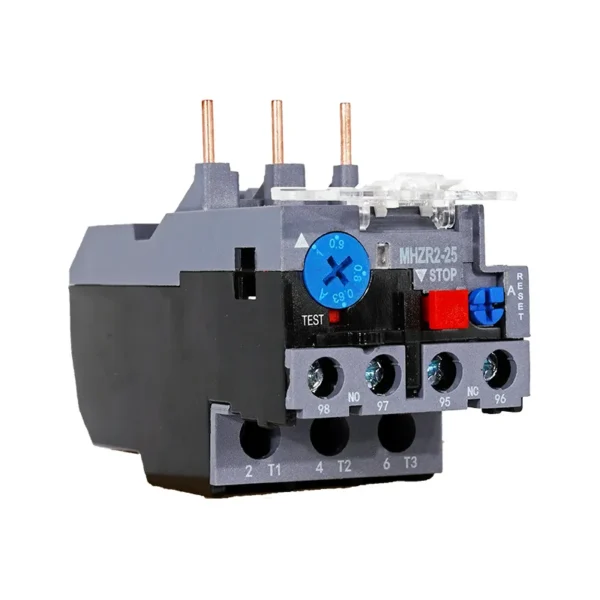
A contactor switches the motor supply through electrically operated main contacts. Its coil is controlled by the control circuit. It does not replace the overload relay or the short-circuit protective device.
Does the motor voltage determine the contactor coil voltage?
No. Main-circuit voltage and coil supply are separate specifications. Check the actual control voltage, coil type and frequency where applicable when ordering the selected contactor.
Hilfen bei der Auswahl eines CHAC-Produkts?
Senden Sie bei Ihrer Anfrage die Systemspannung, den Laststrom und die Installationsbedingungen mit.
CQC6 AC contactor ratings
Published AC-3 operational current and controlled three-phase squirrel-cage motor power. The voltage groups below retain the labels used in the CHAC product table.
Referenzdaten. Berechnen, um die übereinstimmende Zeile hervorzuheben.
Scrollen Sie auf kleinen Bildschirmen horizontal, um alle Spalten anzuzeigen.
| Modellnummer | 220V/230V | 380V/400V | 660V/690V | |||
|---|---|---|---|---|---|---|
| AC-3 Ie (A) | Motor power (kW) | AC-3 Ie (A) | Motor power (kW) | AC-3 Ie (A) | Motor power (kW) | |
| CQC6 -6Aktueller Bezug | 6 | 1.5 | 6 | 2.2 | 4.8 | 3 |
| CQC6 -9Aktueller Bezug | 9 | 2 | 9 | 4 | 6.6 | 5.5 |
| CQC6 -12Aktueller Bezug | 12 | 3.5 | 12 | 5.5 | 8.9 | 7.5 |
| CQC6 -18Aktueller Bezug | 18 | 4 | 18 | 7.5 | 12 | 10 |
| CQC6 -25Aktueller Bezug | 25 | 6 | 25 | 11 | 18 | 15 |
| CQC6 -32Aktueller Bezug | 32 | 7.5 | 32 | 15 | 20.2 | 18.5 |
| CQC6 -38Aktueller Bezug | 38 | 9 | 38 | 18.5 | 20.2 | 18.5 |
| CQC6 -40Aktueller Bezug | 40 | 11 | 40 | 18.5 | 34 | 30 |
| CQC6 -50Aktueller Bezug | 50 | 15 | 50 | 22 | 39 | 33 |
| CQC6 -65Aktueller Bezug | 65 | 18.5 | 65 | 30 | 42 | 37 |
| CQC6 -80Aktueller Bezug | 80 | 22 | 80 | 37 | 49 | 45 |
| CQC6 -95Aktueller Bezug | 95 | 25 | 95 | 45 | 49 | 45 |
Das Lesen dieser Referenz
- The calculator uses the 230, 400 or 690 V selection within the corresponding published voltage group.
- This table covers AC-3 only. The separate conventional free-air thermal current row is not an AC-1 operational Ie selection table.
- Confirm the exact coil supply, switching duty and installation conditions in the product documentation.
Quelle: CHAC CQC6 product technical table (öffnet sich in einer neuen Registerkarte)
Quelle geprüft: . Dies ist das Abrufdatum, nicht das Datum einer Standardausgabe oder Produktrevision.
Beispiel einer Anwendung · Beispielsätze
Matching a 15 kW motor to both CQC6 AC-3 columns
For a pump-control example, enter 15 kW shaft output, 400 V, AC-3 duty and an illustrative 28 A nameplate current, with no added current allowance. The calculator shortlists CQC6-32: the CHAC table lists 32 A and 15 kW in the 380V/400V group. CQC6-25 is below both requirements at 25 A and 11 kW. This is why checking only the model’s ampere value can be misleading. Use the table match to continue the selection, then confirm the coil supply, switching duty, installation conditions and required protection for the actual motor circuit.
Produktinformationen: CQC6-Serie Industrielle AC-Schütze - OEM-Hersteller
Verwandte CHAC-Produkte
Open the CQC6 ratings and CQR2 pairing tables to continue the motor-circuit selection.