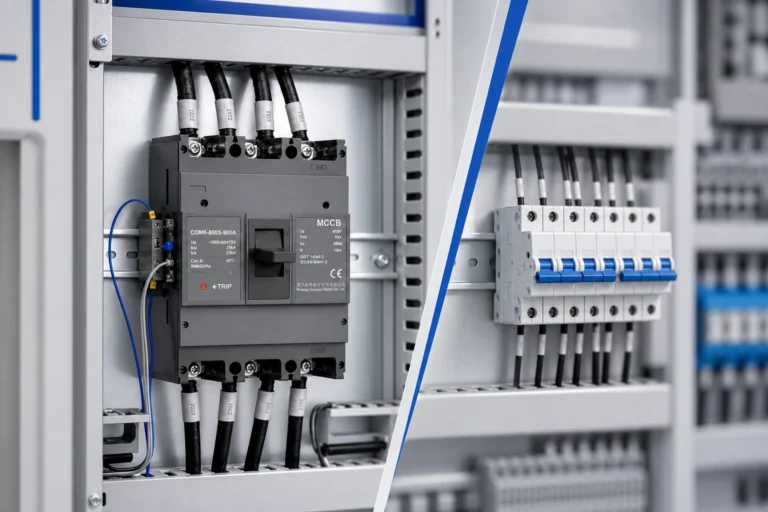
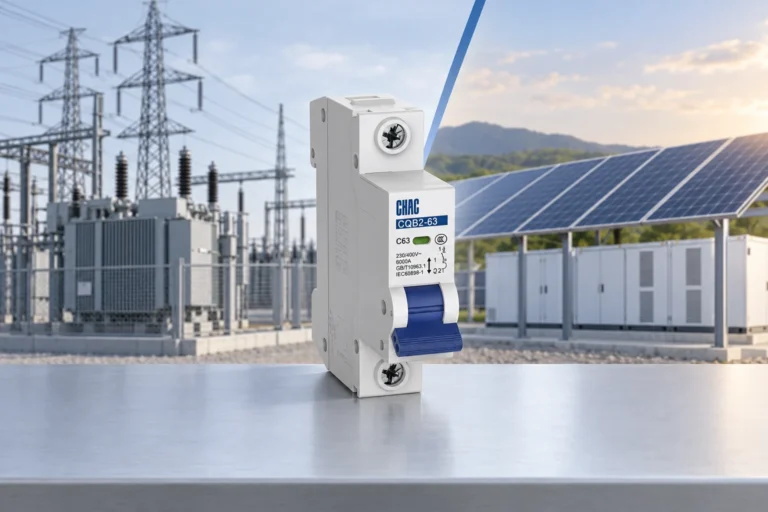
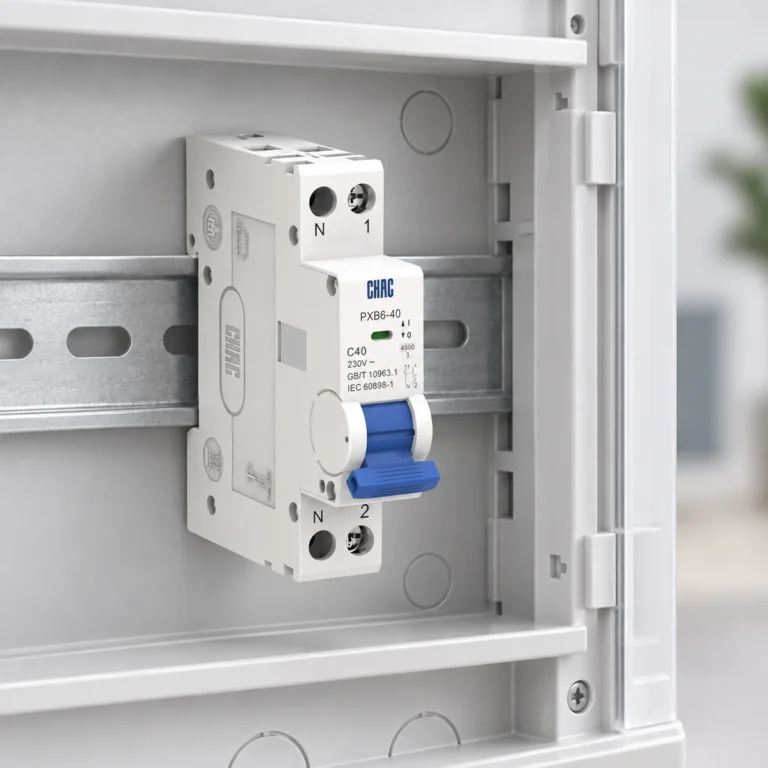
When a solar installer in Valencia reused an AC breaker on a battery string, the arc did not extinguish at the expected voltage. The fix was a DC-rated, polarity-correct device and a revised isolation procedure.
Resumen: AC and DC breakers use different arc-extinguishing assumptions. Verify voltage per pole, polarity, time-current behavior and the manufacturer’s allowed circuit orientation before substitution.
Qué hace este dispositivo y dónde comienza su límite de funcionamiento
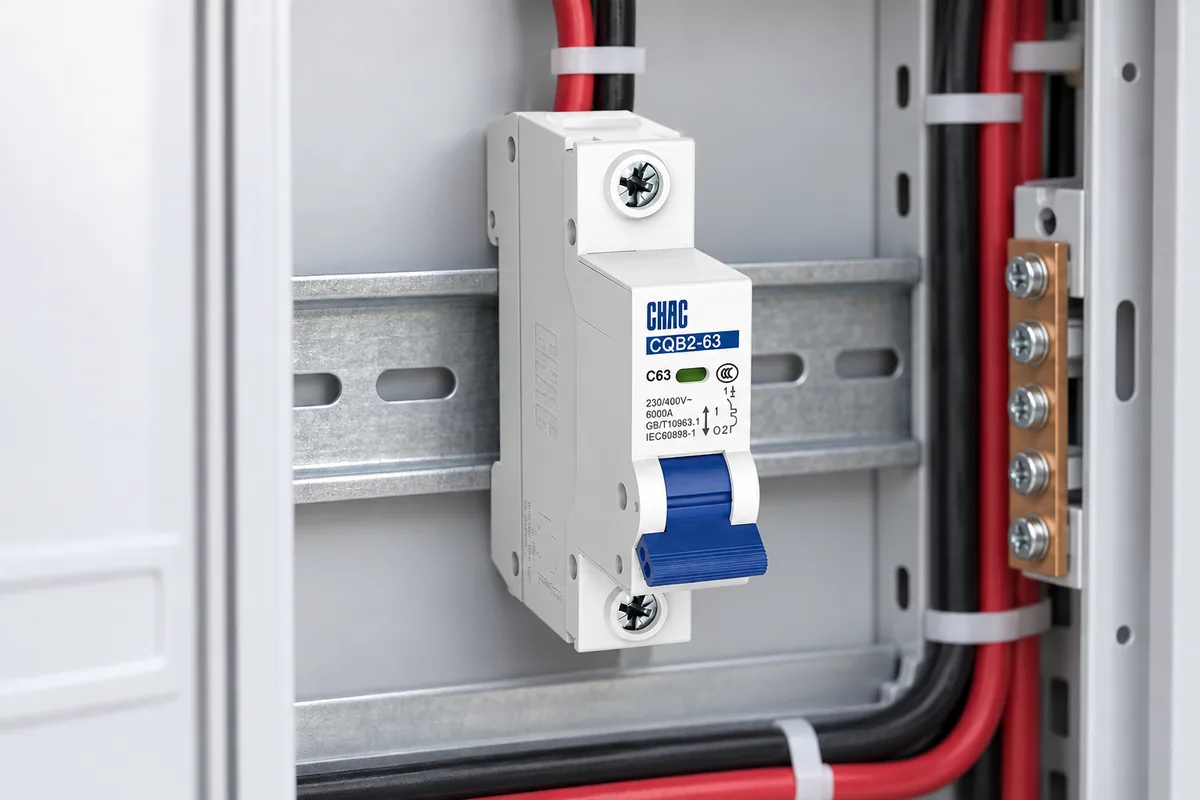
AC and DC breakers use different arc-extinguishing assumptions. Verify voltage per pole, polarity, time-current behavior and the manufacturer’s allowed circuit orientation before substitution. Start by identifying whether the load is line-to-neutral, line-to-line or three-phase, then determine which conductors must open together. The device’s product standard and the installation code have different scopes; a component can be correctly tested yet still be wrong for a particular panel or disconnect function.
Cómo hacer coincidir las capacidades nominales con la carga y el resto del sistema
For DC circuit breaker, compare voltage, continuous current, utilization category, temperature, conductor ampacity and available fault current. Use the manufacturer’s time-current curve or test method, and document assumptions. Coordination with upstream and downstream protection limits nuisance outages; a larger rating can increase let-through energy or violate conductor protection.
Cómo verificar la instalación y la puesta en servicio antes de energizar
Utilice la caja o placa indicada, mantenga las distancias de fuga y en el aire requeridas, apriete los terminales al valor publicado, etiquete los circuitos y verifique la ausencia de tensión. Ponga en servicio con pruebas de continuidad, aislamiento o funcionales apropiadas para el dispositivo, luego mida la corriente con carga e inspeccione para detectar calor anormal. Registre la identificación del instrumento, la fecha, las lecturas y la persona responsable.
Donde los pequeños detalles de instalación pueden generar fallas costosas
Los fallos más costosos suelen ser errores de límite: tensión de accesorio incorrecta, sustitución no compatible, inversión de polaridad, neutro faltante, SCCR inadecuado o un registro de mantenimiento que no puede demostrar el par de apriete. Si un dispositivo se dispara, vibra o se calienta, aísle el circuito y recopile pruebas antes de reiniciarlo o reemplazarlo. Un registro de decisiones breve evita llamadas repetidas y hace que la próxima interrupción sea más segura.
Cómo controlar el coste del ciclo de vida y entregar registros fiables
El precio unitario es solo un factor de coste. Incluya el tiempo de ingeniería, los permisos, las interrupciones planificadas, las pruebas, el etiquetado, los repuestos y la consecuencia de un disparo evitable. Pida a los proveedores que identifiquen los supuestos y exclusiones para poder comparar una alternativa aparentemente más barata en igualdad de condiciones. En la entrega, proporcione la presentación aprobada, el diagrama unifilar marcado, la hoja de par de apriete, las lecturas de las pruebas, los ajustes y el intervalo de mantenimiento. Para cargas críticas, registre la secuencia de bypass o transferencia y la persona autorizada para restablecer el dispositivo. Estos registros hacen que la resolución de problemas futuros sea más rápida y proporcionan a la autoridad competente un claro rastro de pruebas sin depender de afirmaciones sin respaldo. Revise el registro en la próxima interrupción planificada y actualícelo cuando el circuito o el perfil operativo cambien. Conserve fotos de las etiquetas y terminaciones con la fecha de revisión; a menudo resuelven las disputas más rápido que la memoria. Incluya al revisor responsable y la fecha de la próxima revisión para que el archivo siga siendo operativo.
¿Qué criterios importan más al comparar opciones?
| Dimensión | Qué comparar | Evidencia a conservar |
|---|---|---|
| Rendimiento | DC circuit breaker versus alternatives | Placa de características y curvas |
| Compatibilidad | Tensión, polos, envolvente y accesorios | Listado y presentación |
| Mantenimiento | Inspección, par de apriete y prueba funcional | Registro de puesta en marcha |
| Coste total | Dispositivo, interrupción, pruebas y repuestos | Alcance y registro de riesgos |
Cómo la aplicación cambia las prioridades de selección y costo
| Escenario | Decisión prioritaria | Grabar |
|---|---|---|
| Nueva instalación | Carga, nivel de falla y certificación | Línea única y cálculo |
| Reemplazo | Dimensiones, terminales y compatibilidad | Plano conforme a obra y hoja de pares de apriete |
| Sitio duro o crítico | Entorno, selectividad y acceso | Plan de inspección y contingencia |
¿Qué normativas y controles de cumplimiento se aplican al proyecto?
DC MCB AC circuit compatibility; AC MCB in DC circuit; polarity-sensitive breaker; DC arc interruption Standards are not blanket certification claims: confirm the edition adopted by the destination market, the AHJ and the complete assembly. Unsupported ratings or listing language can cause rejection, rework and unsafe operation.
- UL 489 y UL 508 donde se aplica el alcance de homologación norteamericana.
- serie IEC 60947 para equipos de aparamenta y control de baja tensión.
- NFPA 70 o el código de instalación de destino para las reglas de conductores, espaciamiento y permisos.
Cómo convertir la revisión técnica en una decisión de adquisición
- Capture la carga, la tensión del sistema, los datos de los conductores, el entorno y la corriente de falla disponible.
- Iguale los requisitos de la norma del producto, certificación, accesorio, terminal y envolvente.
- Solicite curvas, instrucciones de instalación, valores de par de apriete y un plan de pruebas; etiquete los cálculos ilustrativos.
- Planifique los controles de interrupción, permisos, repuestos y registros de mantenimiento antes de la liberación.
CHAC Electric puede respaldar el abastecimiento documentado a través de su interruptor automático de corriente continua, AC MCB compatibility y el equipo de distribución relacionado. Solicite una revisión cuando la aplicación tenga restricciones ambientales, de coordinación o de falla inusuales.
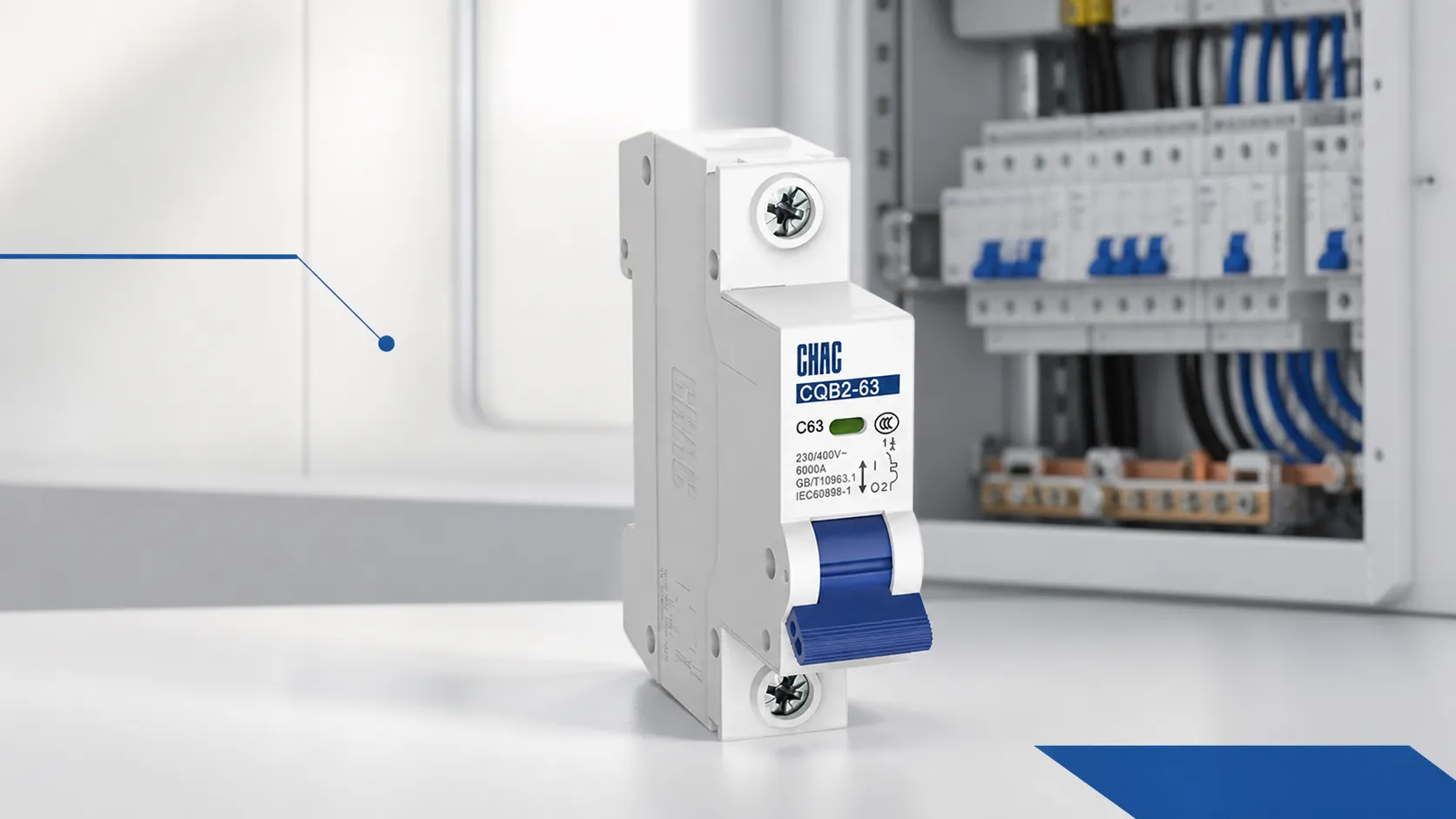
When checking DC MCB AC compatibility, verify the breaker voltage per pole and polarity at the installation point.
How DC arc behavior changes the compatibility decision
The compatibility question is about arc extinction as well as voltage. A DC application can sustain an arc after contacts separate, while an AC waveform naturally crosses zero. Check the per-pole DC rating, polarity marking, series-pole requirement and isolation procedure in the manufacturer documentation before approving a substitution.
Where a DC application is being evaluated, review the exact pole, voltage and interruption data for DC miniature circuit breaker options before approving a device.
Respuestas a las preguntas frecuentes de los compradores
Can AC MCBs be used in DC circuits?
The practical answer depends on the DC circuit breaker application, equipment marking and installation conditions. Verify the relevant standard and have a qualified person document the decision before energizing.
Can a DC circuit breaker be used for AC?
The practical answer depends on the DC circuit breaker application, equipment marking and installation conditions. Verify the relevant standard and have a qualified person document the decision before energizing.
Are AC and DC circuit breakers different?
The practical answer depends on the DC circuit breaker application, equipment marking and installation conditions. Verify the relevant standard and have a qualified person document the decision before energizing.
Can I use an AC switch on a DC circuit?
The practical answer depends on the DC circuit breaker application, equipment marking and installation conditions. Verify the relevant standard and have a qualified person document the decision before energizing.
Why are DC breakers polarity-sensitive?
The practical answer depends on the DC circuit breaker application, equipment marking and installation conditions. Verify the relevant standard and have a qualified person document the decision before energizing.
What happens if an AC breaker is used on DC?
The practical answer depends on the DC circuit breaker application, equipment marking and installation conditions. Verify the relevant standard and have a qualified person document the decision before energizing.
Fuentes para estándares y verificación adicional
- Guía de normas y certificación UL
- normas de la Comisión Electrotécnica Internacional
- NFPA 70, Código Eléctrico Nacional
Principio de cierre: DC MCB AC circuit compatibility is a traceable engineering decision, not a guess based on the handle or catalogue photo. For a project review, Contactar a CHAC Electric con el diagrama unifilar, la placa de características y la fecha de entrega requerida.